
Calculator
Net Carb Calculator
This net carb calculator works from the numbers straight off the nutrition panel. It handles sugar alcohols properly, which is where most net carb maths goes wrong.
From the nutrition panel, per serving
Check the ingredient list. Erythritol subtracts fully. Maltitol should not be subtracted at all.
Panels often show one serving when the package holds two or three.
A note on fiber
US labels list dietary fiber separately and standard keto practice subtracts all of it. UK and EU labels already exclude fiber from the carbohydrate figure, so if your label says “carbohydrate, of which sugars” you can enter 0 for fiber.
Net carb working
- Total carbohydrate22.0 g
- less dietary fiber−5.0 g
- less erythritol−10.0 g
- less allulose−0.0 g
Share of a daily keto budget
Net carbs are a practical convention rather than a regulated term. The US does not define them and most other countries do not use the concept. Anyone with diabetes should count carbohydrate the way their healthcare team advises rather than using net carbs.
A keto bar advertising 3 net carbs might genuinely deliver 13. The difference comes down to which sugar alcohol the manufacturer used, and most net carb calculators subtract all of them equally. This net carb calculator does not, because erythritol and maltitol behave nothing alike in your body.
Below the tool you get the actual subtraction rules, the label traps that catch people out, and an honest note about what net carbs are and are not.
What Net Carbs Actually Are
Net carbs estimate the carbohydrate your body absorbs and converts to glucose.
The basic formula subtracts what passes through largely undigested.
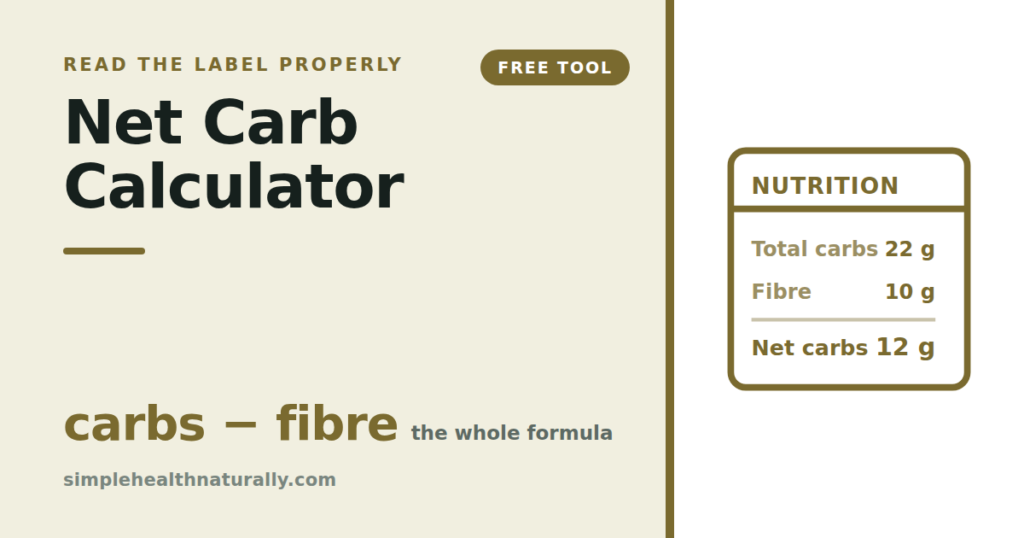
Total carbohydrate, minus fiber, minus the portion of sugar alcohols that does not raise blood sugar.
Fiber comes out because humans lack the enzymes to break down most of it. Sugar alcohols are the complicated part, and that is where calculators go wrong.
One thing worth knowing up front. Net carbs are a practical convention rather than a regulated term. The US does not define them legally, manufacturers can calculate them however they like, and most countries do not use the concept at all.
That is why doing the maths yourself matters.
The Sugar Alcohol Rules
Not all sugar alcohols behave the same way, and their glycemic index tells you how to treat them.
| Sweetener | Glycemic index | Subtract |
|---|---|---|
| Erythritol | 0 | All of it |
| Allulose | 0 | All of it |
| Xylitol | 13 | Half |
| Sorbitol | 9 | Half |
| Isomalt | 9 | Half |
| Mannitol | 0 to 2 | Half |
| Maltitol | 35 to 52 | None |
Erythritol passes through almost entirely unabsorbed. Roughly 90 percent leaves in urine unchanged, and it has essentially no effect on blood glucose. Subtract all of it.
Allulose is technically a rare sugar rather than a sugar alcohol. The FDA exempts it from both total and added sugars on US labels because it is not metabolised for energy. Subtract all of it.
Maltitol is the problem one. Its glycemic index sits between 35 and 52 depending on the form, which is not far below table sugar at 65. A full subtraction produces a number that has no relationship to what your blood glucose does.
Maltitol is also the cheapest bulk sweetener, which is exactly why it turns up in so many products marketed as low carb.
Where Labels Trick You
Four traps catch people repeatedly.
The serving size. A panel shows one serving while the package holds two or three. The 3 net carbs on the front refers to a third of the bag.
Front of pack net carb claims. Manufacturers calculate these however they choose, and subtracting all sugar alcohols is common. Check the ingredient list for maltitol and redo the maths.
Sugar alcohols not listed separately. US labels only require a sugar alcohol line if the product makes a claim about them. Sometimes you have to read the ingredients to find out what is in there.
Fiber already excluded. UK and EU labels list carbohydrate with fiber already removed, so subtracting again double counts. If your label says “carbohydrate, of which sugars”, enter zero for fiber.
Why the Distinction Matters
Take a bar with 22 g total carbohydrate, 5 g fiber and 10 g of sugar alcohol.
If the sweetener is erythritol, net carbs come to 7 g. That fits a strict keto day comfortably.
If it is xylitol, net carbs come to 12 g, which is more than half a strict daily budget in one bar.
If it is maltitol, net carbs come to 17 g. That is most of a day, from a product advertising itself as keto friendly.
Same panel, same numbers, three completely different answers depending on one ingredient.
Does Everyone Need Net Carbs
Not really, and the honest answer depends on why you are counting.
Ketogenic diets. Net carbs are the standard practice and the convention works reasonably well when you handle sugar alcohols properly.
Diabetes management. Follow your healthcare team. Many clinicians prefer counting total carbohydrate for insulin dosing, since individual responses to sugar alcohols vary and the margin for error matters more.
General low carb eating. Total carbohydrate is simpler and works fine. Net carbs add precision most people do not need.
Everyone else. Fiber and whole food carbohydrate are not something to subtract your way around.
Our keto macro calculator sets your daily net carb budget from your own measurements, and this tool tells you what individual foods spend against it.
Sugar Alcohols and Your Gut
A practical caution that gets left out.
Sugar alcohols draw water into the intestine, and gut bacteria ferment them. Both produce gas, bloating and loose stools in a meaningful share of people.
Erythritol is the gentlest because your small intestine absorbs most of it and excreted in urine rather than reaching the colon. Even so, large amounts cause problems for some.
Maltitol, sorbitol and isomalt cause the most digestive complaints. Products carrying them often print a laxative warning for a reason.
Xylitol is toxic to dogs at very small doses. Keep anything containing it well away from pets.
Start small with any new keto product. A whole box of something sweetened with maltitol makes for a memorable mistake.
Net Carbs in Common Foods
Rough figures per typical serving.
| Food | Net carbs |
|---|---|
| Avocado, half | 1 g |
| Spinach, 1 cup raw | 0.4 g |
| Broccoli, 1 cup cooked | 6 g |
| Almonds, 1 oz | 2.6 g |
| Raspberries, half cup | 3.3 g |
| Greek yogurt, plain, 1 cup | 8 g |
| Cheddar, 1 oz | 0.4 g |
| Eggs, 2 large | 1.2 g |
| Cauliflower rice, 1 cup | 3 g |
| Blackberries, half cup | 3.1 g |
Vegetables and berries account for most net carbs in a well built keto day. Our keto cheesecake and fudgy keto brownies both show the carb working so you can check it yourself.
Frequently Asked Questions
How do you calculate net carbs?
Total carbohydrate minus fiber, minus the portion of sugar alcohols that does not raise blood sugar. Erythritol and allulose subtract fully, most other sugar alcohols subtract by half, and maltitol does not subtract at all.
Should you subtract all sugar alcohols?
No. Erythritol and allulose have a glycemic index of zero and subtract fully. Maltitol sits between 35 and 52, close to table sugar, so count it in full.
Do net carbs count fiber?
US labels subtract fiber. UK and EU labels already exclude it from the carbohydrate figure, so subtracting again would double count.
Are net carbs a real thing?
They are a practical convention rather than a regulated term. The US does not define net carbs legally and manufacturers calculate them however they choose.
Should people with diabetes use net carbs?
Follow your healthcare team. Many clinicians prefer total carbohydrate for insulin dosing, since responses to sugar alcohols vary between individuals.
Why did a keto product spike my blood sugar?
Maltitol is the usual culprit. Check the ingredient list rather than the front of pack claim, and recalculate.
Is allulose really zero net carbs?
The FDA exempts allulose from both total and added sugars on US labels because it is not metabolised for energy. Practical keto counting subtracts it fully.
How many net carbs a day for ketosis?
Most people reach ketosis between 20 and 50 g of net carbs daily. Twenty gets you there fastest and some people tolerate more once adapted.
Why do keto sweets upset my stomach?
Sugar alcohols draw water into the intestine, and gut bacteria ferment them. Maltitol and sorbitol cause the most trouble, and erythritol is generally the gentlest.
Why the label can mislead you. Net carbs is not an FDA defined term, so manufacturers calculate it however they like. Harvard’s Nutrition Source explains which fibres actually behave differently in the body, which is the assumption the whole net carb subtraction rests on.
Final Thoughts on Your Net Carb Calculator Result
A net carb calculator is only as good as its sugar alcohol handling. An equal subtraction across all of them turns a 17 gram product into an advertised 7, and it is the reason people wonder why a keto snack knocked them out of ketosis.
Two habits do most of the work. Check the ingredient list for maltitol before trusting any front of pack net carb claim, and check the serving size against how much you are actually eating.
Anyone with diabetes should count carbohydrate the way their healthcare team advises rather than using net carbs.
References
- US Food and Drug Administration. Questions and Answers on Dietary Fiber. fda.gov
- US Department of Agriculture. FoodData Central. fdc.nal.usda.gov
This calculator provides general estimates. Net carbs are a dietary convention rather than a regulated term, and individual blood glucose responses to sugar alcohols vary. Anyone with diabetes should follow the carbohydrate counting method their healthcare team advises. Read our full medical disclaimer and fact checking policy.