
Calculator
Daily Water Intake Calculator
This water intake calculator works out how much fluid you need in a day, how much of it comes from food, and how many glasses that leaves you to drink.
A glass counts as 240 ml or 8 fl oz. A bottle counts as 500 ml or 17 fl oz.
That is roughly 9 glasses to drink
Coffee and tea count. Caffeine is a mild diuretic and the fluid in the cup more than covers it.
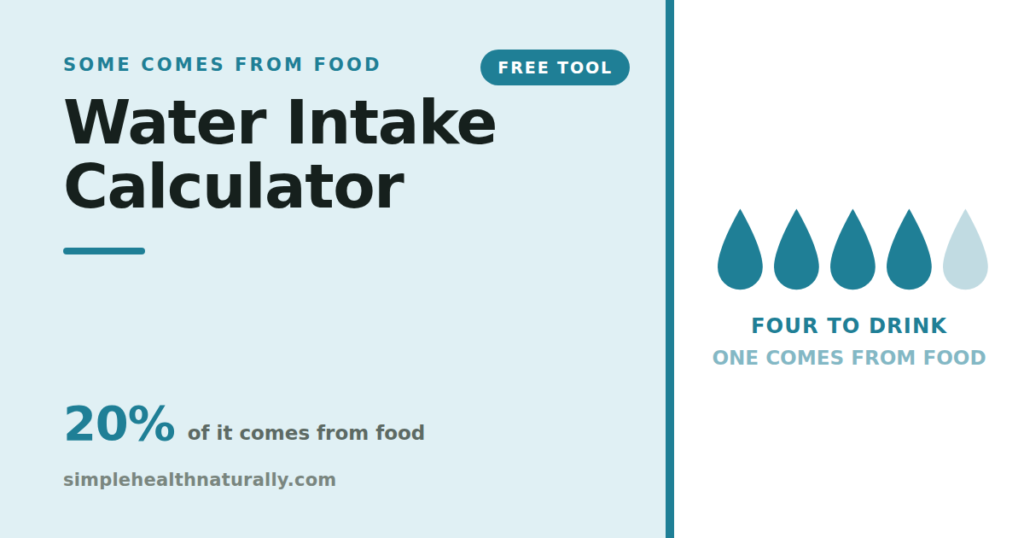
Food supplies about a fifth. Fruit, vegetables, soup and yogurt all add up.
Urine colour is the fastest check. Pale straw means you are doing fine. Dark amber means drink more.
Estimates only. Thirst is a reasonable guide for most healthy adults. Anyone with kidney disease, heart failure or on a fluid restriction should follow their doctor rather than a general target, since drinking more can be harmful in those situations.
Eight glasses a day is a number nobody can trace to a source. This water intake calculator uses your actual weight, how long you exercised and the weather instead. It also shows something most tools leave out entirely: roughly a fifth of your daily fluid arrives through food, so the amount you need to drink is smaller than the total suggests.
Below the tool you get where the numbers come from, why coffee counts, and the situations where drinking more is the wrong advice.
Where the Eight Glasses Rule Came From
Nowhere useful, as far as anyone can establish.
The most likely origin is a 1945 recommendation from the US Food and Nutrition Board suggesting roughly 2.5 litres of water daily for adults. The next sentence noted that most of that quantity comes from prepared food. That sentence got dropped, the number stuck, and eight glasses entered folklore.
Actual guidance comes from the National Academies, which sets adequate intake at about 3.7 litres of total water daily for men and 2.7 litres for women. Both figures cover everything you eat and drink combined rather than plain water alone.
Those are population averages rather than personal targets. A 55 kilogram office worker and a 95 kilogram roofer do not need the same amount, which is why this calculator starts from your weight.
What Actually Changes Your Needs
Five things move the number.
Body size. More tissue needs more water. This is the biggest single factor.
Exercise. Sweat rates vary enormously and 400 to 800 millilitres per hour of activity is a reasonable planning figure. Longer or harder sessions push higher.
Heat and humidity. Hot weather raises losses through sweat and breathing. Humid weather makes sweating less effective, so you sweat more.
Pregnancy and breastfeeding. Pregnancy adds roughly 300 millilitres daily. Lactation adds around 700, since milk is mostly water.
Illness. Fever, vomiting and diarrhoea all raise losses sharply. Dehydration during illness is one of the more common reasons people end up needing medical care.
Altitude, air travel and some medications also increase needs. Diuretics do it by design.
The Part Most Calculators Miss
Food supplies about 20 percent of your daily fluid.
That is not a rounding error. For someone needing 3 litres total, it means 600 millilitres arrives through eating and only 2.4 litres has to come from a glass.
Water rich foods do most of that work. Cucumber runs about 96 percent water, watermelon around 91, and soup, yogurt and most fruit all contribute meaningfully. Our list of the 15 most hydrating foods ranked by water content covers which ones deliver most.
People eating plenty of fruit and vegetables genuinely need to drink less than people living on dry processed food. That difference is real and rarely mentioned.
Coffee and Tea Count
The idea that caffeinated drinks dehydrate you has circulated for decades and does not hold up at normal intakes.
Caffeine has a mild diuretic effect. The fluid volume in the cup more than compensates for it. Research comparing coffee drinkers with water drinkers finds no meaningful difference in hydration status at moderate intakes.
Both count toward your daily total.
Alcohol is genuinely different. It suppresses the hormone that helps your kidneys retain water, so alcoholic drinks produce a net fluid loss. Drink water alongside.
Signs You Need More
Urine colour gives you the fastest and most practical check available.
Pale straw yellow means you are doing fine.
Dark yellow or amber means drink more.
Almost clear for most of the day may mean you are drinking more than you need.
Some vitamins, particularly B vitamins, turn urine bright yellow regardless of hydration. Factor that in.
Other signs worth noticing include dry mouth, headache that eases after drinking, tiredness with no clear cause, difficulty concentrating and fewer bathroom trips than normal.
Thirst works as a reasonable guide for most healthy adults. Older adults are the real exception, since the thirst signal weakens with age and many need a reminder rather than a feeling.
When Drinking More Is Wrong
This section matters for the people it applies to.
Chronic kidney disease. Advanced kidney disease often comes with fluid restrictions, since damaged kidneys cannot clear excess fluid. Follow your nephrologist rather than any general target.
Heart failure. Fluid restriction is common, because excess fluid worsens breathlessness and swelling.
Liver disease with ascites. Fluid and sodium both usually need limiting.
Some medications. Certain drugs affect fluid balance and your doctor may set a specific target.
Hyponatremia risk. Too much fluid dilutes blood sodium. Rare in daily life, genuinely dangerous among endurance athletes who drink heavily without electrolytes during long events. Symptoms include headache, nausea, confusion and swelling.
More water is not automatically better. Your kidneys simply remove the surplus, and beyond a point that surplus causes problems rather than benefits.
How to Make It Easier
Six habits work better than willpower.
Keep a bottle where you can see it. Visible water gets drunk. Water in a cupboard does not.
Drink a glass when you wake up. You finish the night mildly down on fluid after eight hours of breathing and sweating.
Attach it to existing habits. A glass with every meal and every coffee adds three or four without any planning.
Flavour it if plain water bores you. Cucumber, lemon or berries make people drink noticeably more. Our 10 infused water recipes include the infusion times that stop citrus turning bitter.
Eat your water. Fruit, vegetables and soup all count toward the total.
Check your urine rather than counting glasses. Colour tells you the answer faster than any tally.
Frequently Asked Questions
How much water should I drink a day?
Roughly 3.7 litres total for men and 2.7 for women according to the National Academies, covering everything you eat and drink. Your own number shifts with weight, activity, heat and pregnancy. About a fifth of it comes from food.
Is eight glasses a day accurate?
No, and nobody can trace the rule to a source. Eight glasses is roughly 1.9 litres, which sits below the general guidance and ignores body size and activity entirely.
Does coffee count toward water intake?
Yes. Caffeine is a mild diuretic and the fluid in the cup more than covers it. Tea counts too. Alcohol is the exception and produces a net loss.
Can you drink too much water?
Yes. Excessive intake dilutes blood sodium, a condition called hyponatremia. It is rare in ordinary life and a real risk for endurance athletes drinking heavily without electrolytes.
How do I know if I am dehydrated?
Urine colour is the fastest check. Pale straw is good and dark amber means drink more. Dry mouth, headache, tiredness and poor concentration are all common signs.
Does food really count toward hydration?
Yes, roughly 20 percent of your daily total. Cucumber, watermelon, lettuce, soup and yogurt all contribute meaningfully.
Should I drink more water to lose weight?
Water before meals modestly reduces how much people eat at that meal. The effect is real and small. Water does not burn fat.
Do older adults need more water?
Not necessarily more, though they are more likely to fall short. The thirst signal weakens with age, so scheduled drinking works better than waiting to feel thirsty.
How much water during exercise?
Roughly 400 to 800 millilitres per hour of activity, adjusted for heat and how heavily you sweat. Sessions over an hour in heat usually need electrolytes as well as water.
Where these numbers come from. The National Academies set adequate intakes of about 2.7 litres a day for women and 3.7 for men, counting all sources including food, not just what you drink.
Final Thoughts on Your Water Intake Calculator Result
A water intake calculator gives you a starting figure rather than a rule to obey. Your weight, your activity and the weather all move it, and the number changes day to day.
Two things matter more than the total. About a fifth of it arrives through food, so what you actually need to drink is less than the headline number. And urine colour tells you where you stand faster than counting glasses ever will.
Anyone with kidney disease or heart failure should follow their doctor rather than a general target, since drinking more can cause harm in those situations.
References
- Centers for Disease Control and Prevention. Water and Healthier Drinks. cdc.gov
- National Center for Health Statistics. Daily Water Intake Among US Men and Women. cdc.gov
This calculator provides general estimates and does not replace advice from your doctor. Individual fluid needs vary. Anyone with chronic kidney disease, heart failure, liver disease or on a prescribed fluid restriction should follow their healthcare provider’s guidance, which often means drinking less rather than more. Read our full medical disclaimer and fact checking policy.