How much do you actually need? Fluid requirements scale with body weight and activity, so use our daily water intake calculator to see your target and how much of it food can cover.
Your water bottle gets all the credit. Your plate deserves some too. Roughly one fifth of the fluid your body takes in each day arrives through food rather than drinks. That makes the most hydrating foods a quiet but real part of staying well hydrated. Some of them run above 95 percent water by weight.
This guide ranks 15 of them from highest water content down to lowest. You will also get honest answers about how much fluid you actually need and what food cannot do for you.
Why the Food You Eat Counts Toward Your Daily Water
Your body does not care whether water arrives in a glass or a cucumber slice. Water is water once it reaches your gut.
Fruits and vegetables hold water inside their cells. Bite into a peach and you release that water along with fiber, vitamins and minerals. The CDC notes that foods high in water content add to your daily fluid intake right alongside what you drink.
Food brings a bonus that plain water lacks. Produce carries potassium, magnesium and small amounts of sodium. Those minerals help your body hold onto fluid rather than flush it straight through. Fiber slows things down too so the water absorbs more gradually.
One caution before the list. Food supplements your fluid intake. It does not replace drinking. Nobody eats enough cucumber to skip water on a hot day.
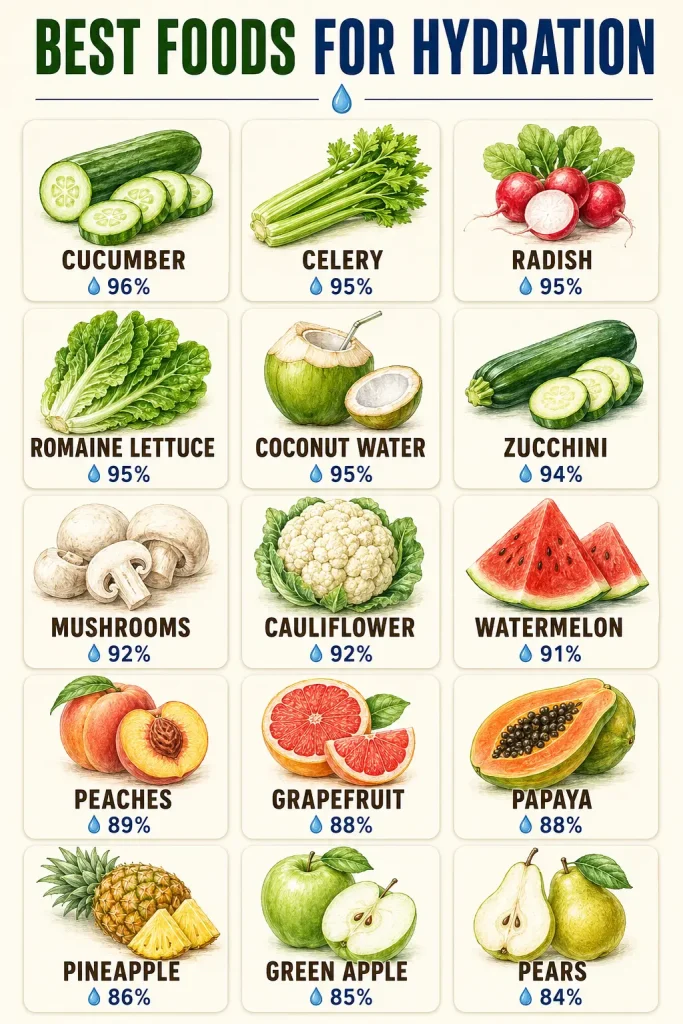
The 15 Most Hydrating Foods Ranked by Water Content
Water percentages come from USDA food composition data. Values shift a little with variety, ripeness and growing conditions so treat these as close estimates rather than exact figures. You can look up any food yourself through USDA FoodData Central.
| Rank | Food | Water Content |
|---|---|---|
| 1 | Cucumber | 96% |
| 2 | Celery | 95% |
| 3 | Radish | 95% |
| 4 | Romaine lettuce | 95% |
| 5 | Coconut water | 95% |
| 6 | Zucchini | 94% |
| 7 | Mushrooms | 92% |
| 8 | Cauliflower | 92% |
| 9 | Watermelon | 91% |
| 10 | Peaches | 89% |
| 11 | Grapefruit | 88% |
| 12 | Papaya | 88% |
| 13 | Pineapple | 86% |
| 14 | Green apple | 85% |
| 15 | Pears | 84% |
1. Cucumber, about 96 percent water
Cucumber takes the top spot and nothing else comes close. Almost the entire vegetable is water held inside crisp cell walls.
Cucumber also delivers vitamin K and a small amount of potassium. The peel holds most of the fiber so leave it on when you can.
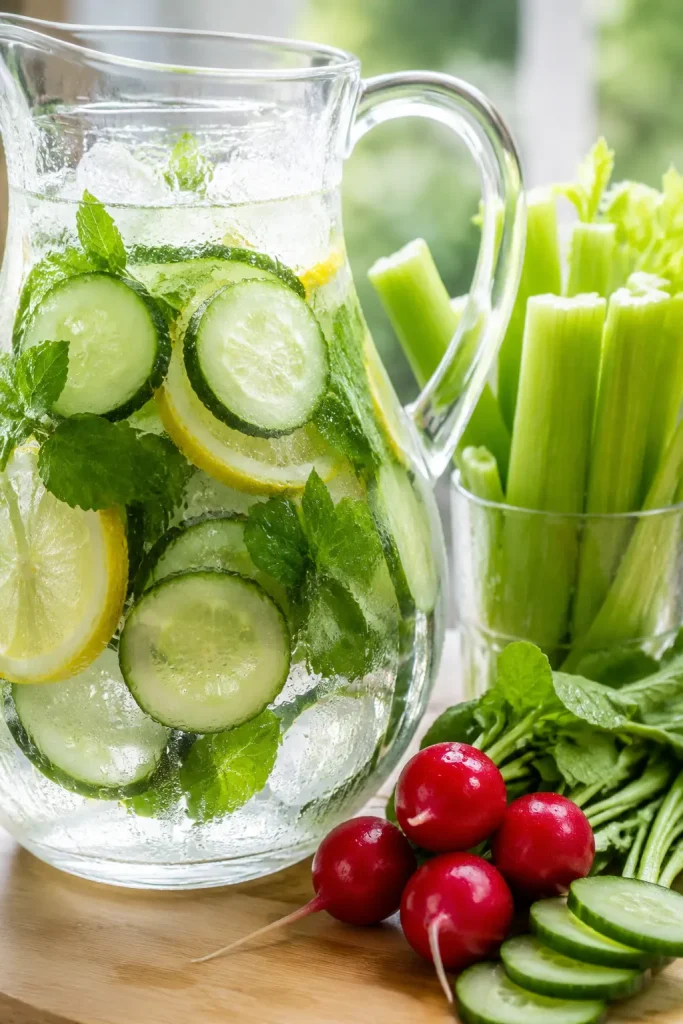
Easy add: Slice a whole one into a jar of water with mint. Drink the water and eat the slices.
2. Celery, about 95 percent water
Celery brings water plus a useful dose of potassium and sodium together. That mineral pair helps your body actually retain the fluid.
Celery stays crisp in the fridge for over a week. That makes it one of the easiest hydrating snacks to keep on hand.
Easy add: Cut stalks into sticks and store them upright in a glass of water.
3. Radish, about 95 percent water
Radishes pack a peppery bite into a very high water vegetable. They also carry vitamin C and folate.
Most people forget radishes exist. That is a shame because they add crunch and color for very few calories.
Easy add: Slice them thin over salads or tacos.
4. Romaine Lettuce, about 95 percent water
Romaine holds far more nutrition than pale iceberg lettuce. You get vitamin A, vitamin K, folate and a lot of water in every leaf.
Romaine also stands up to dressing better than softer greens.
Easy add: Build a big salad base and top it with whatever protein you have.
5. Coconut Water, about 95 percent water
Coconut water earns its spot for the potassium it carries. One cup delivers more potassium than a banana. That matters after you sweat heavily.
Plain water still wins for everyday drinking. Coconut water carries natural sugar and costs far more. Save it for hot days and hard workouts.
Easy add: Choose unsweetened versions. Many brands add sugar you do not need.
6. Zucchini, about 94 percent water
Zucchini cooks fast and takes on whatever flavor you give it. It holds vitamin C, potassium and a little fiber.
Raw zucchini keeps more of its water than cooked. Heat drives some of it off.
Easy add: Spiralize it raw into noodles or grate it into muffins.
7. Mushrooms, about 92 percent water
Mushrooms surprise most people on a hydration list. They hold a lot of water and bring B vitamins and selenium along with it.
Mushrooms exposed to UV light also produce vitamin D. Check the label because some brands do this on purpose.
Easy add: Saute them in a hot pan so they brown rather than steam.
8. Cauliflower, about 92 percent water
Cauliflower gives you water, fiber, vitamin C and choline in one head. It also fills you up for very few calories.
Roasting concentrates the flavor but drives off some water. Raw florets keep the most.
Easy add: Serve raw florets with hummus.
9. Watermelon, about 91 percent water
Watermelon is the fruit most people picture when they think hydration. It earns that reputation.
Watermelon also carries lycopene, the same red pigment found in tomatoes. Our guide to anti-aging foods for skin covers what lycopene does for skin defense.
Easy add: Cube it and freeze the pieces for a hot afternoon.
10. Peaches, about 89 percent water
Peaches bring water along with vitamin C, vitamin A and potassium. Ripe ones taste sweet enough to replace dessert.
The fuzzy skin holds fiber and antioxidants so eat it rather than peel it.
Easy add: Slice one over yogurt or grill halves for a few minutes.
11. Grapefruit, about 88 percent water
Half a grapefruit covers a good share of your daily vitamin C. It also carries water and fiber for very few calories.
One real warning belongs here. Grapefruit interacts with a long list of medications including some statins, blood pressure drugs and immune suppressants. Ask your pharmacist before you make it a habit.
Easy add: Eat it in segments rather than juice so you keep the fiber.
12. Papaya, about 88 percent water
Papaya holds water, vitamin C, folate and an enzyme called papain that helps break down protein.
The flavor divides people. Lime juice over the top helps a lot.
Easy add: Blend cubes into a smoothie with yogurt.
13. Pineapple, about 86 percent water
Pineapple delivers water, vitamin C and manganese. It also contains bromelain, an enzyme studied for its effect on inflammation.
Fresh pineapple beats canned. Canning in syrup adds sugar and heat destroys the bromelain.
Easy add: Cube a whole one and keep it in the fridge for the week.
14. Green Apple, about 85 percent water
Apples run lower on this list but you eat them more often than radishes. Frequency counts for something.
Green apples carry a bit less sugar than red ones plus fiber and vitamin C. Most of that fiber sits in the skin.
Easy add: Slice one with peanut butter for a snack that holds you over.
15. Pears, about 84 percent water
Pears round out the list with water, fiber and a gentle sweetness. One medium pear delivers about six grams of fiber.
Ripeness matters more with pears than most fruit. A hard pear tastes like nothing and a soft one tastes wonderful.
Easy add: Let them ripen on the counter and then move them to the fridge.
How Much Water Do You Actually Need Each Day?
The old eight glasses rule has no real science behind it. Nobody knows where it started.
Actual guidance comes from the National Academies. Their adequate intake sits at about 3.7 liters of total water per day for men and 2.7 liters for women. Those numbers cover everything you eat and drink combined, not just plain water. CDC survey data puts average US intake somewhat below those levels.
Your own number moves with several factors.
Heat pushes it up. Sweat carries a lot of fluid.
Exercise pushes it up. Hard training can double your needs.
Fever, vomiting and diarrhea all push it up sharply.
Pregnancy and breastfeeding push it up.
Body size matters too. Bigger bodies need more.
Thirst works as a decent guide for most healthy adults. Older adults are a real exception because the thirst signal weakens with age. Many older people need a reminder rather than a feeling.
Signs Your Body Wants More Fluid
Watch for these patterns through the day.
- Dark yellow urine rather than pale straw color
- Dry mouth or cracked lips
- A headache that eases after you drink
- Tiredness with no clear cause
- Trouble focusing or a foggy feeling
- Fewer bathroom trips than normal
- Dizziness when you stand up fast
Urine color gives you the fastest read. Pale yellow means you are doing fine. Dark amber means drink more. Certain vitamins turn urine bright yellow though so factor that in.
Severe dehydration is a medical emergency. Confusion, a racing heart, no urine for eight hours or fainting all mean call a doctor rather than reach for a glass.
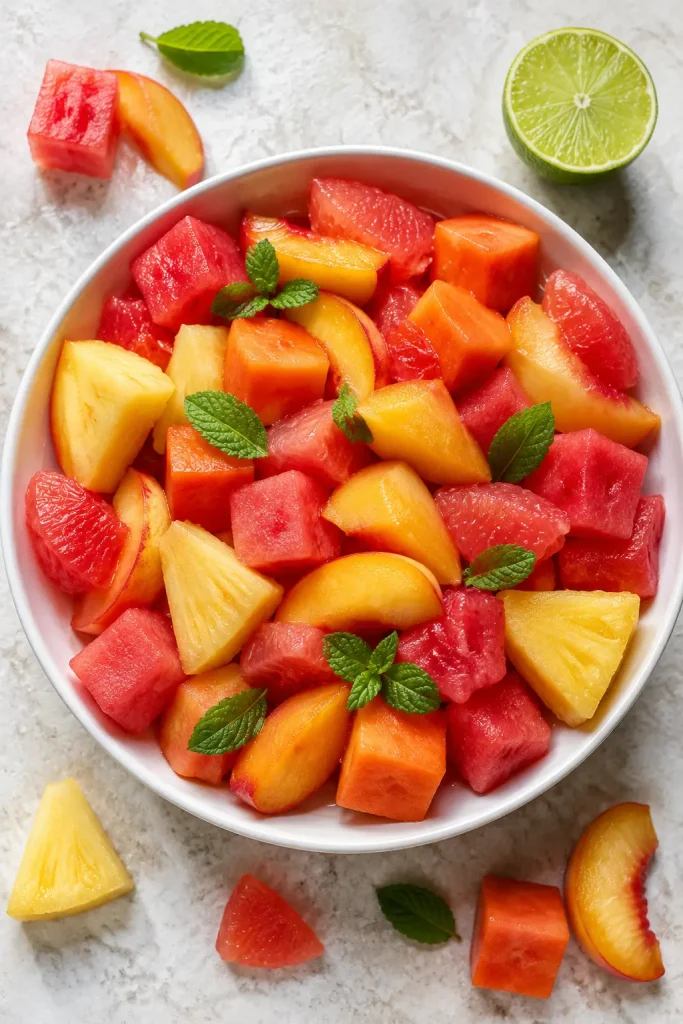
Simple Ways to Eat More of the Most Hydrating Foods
Small habits work better than big plans.
Keep cut vegetables at eye level in your fridge. People eat what they see first.
Start lunch and dinner with a salad or a bowl of soup. Both front load water before the heavier food.
Freeze fruit for hot days. Frozen watermelon and grapes work like popsicles with no added sugar.
Blend a smoothie in the morning. Fruit plus yogurt plus ice gives you fluid and protein together.
Keep a bowl of whole fruit on the counter. Hidden fruit rots and visible fruit gets eaten.
Add cucumber or citrus to your water bottle. The flavor helps some people drink more.
Build a summer meal plan around produce. Our list of body cooling foods for summer overlaps heavily with this one.
What Hydrating Foods Cannot Do
Straight talk keeps you out of trouble.
Food cannot replace drinking water. Roughly 20 percent of your fluid comes from food. The other 80 percent has to come from a glass.
Food cannot keep up with heavy sweating. Long workouts and hot outdoor jobs both demand real fluid volume and often electrolytes too.
Water rich food does not flush toxins. Your liver and kidneys handle that job. No food speeds it up.
Extra hydration beyond your needs adds nothing. Your kidneys simply remove the surplus.
Drinking far too much water can actually harm you. Overhydration dilutes blood sodium and causes a condition called hyponatremia. Rare in daily life but real among endurance athletes who drink heavily without electrolytes.
Some people need to limit fluids rather than increase them. Advanced kidney disease and heart failure both come with fluid restrictions. Follow your doctor rather than a blog post.
Frequently Asked Questions
Which food has the highest water content?
Cucumber at about 96 percent water. Celery, radish, romaine lettuce and coconut water all sit close behind at roughly 95 percent.
Can I get all my water from food?
No. Food supplies about a fifth of your daily fluid. You would need an unrealistic volume of produce to cover the rest. Drink water too.
Does coffee dehydrate you?
Not at normal intakes. Caffeine has a mild diuretic effect but the fluid in the cup more than covers it. Moderate coffee and tea both count toward your daily total.
Is coconut water better than plain water?
Not for everyday hydration. Coconut water carries useful potassium after heavy sweating. It also carries sugar and a much higher price. Plain water handles ordinary days fine.
Do hydrating foods help your skin look better?
Mildly. Dehydrated skin does look duller and shows lines more. Adequate hydration helps with that. No amount of cucumber removes a wrinkle though.
How do I know if I drank enough?
Check your urine color. Pale straw yellow means you are in good shape. Dark yellow or amber means drink more.
How much do you actually need? Fluid requirements scale with body weight and activity, so use our daily water intake calculator to see your target and how much of it food can cover.
Percentage is only half the answer. This page ranks foods by how much of them is water. It does not tell you how much water you actually get, because that depends on portion size. Cucumber is 96 percent water but a serving is small, while an apple is 85.6 percent and delivers 156 g. For the ranking by grams per serving, which reorders this list completely, see our water rich foods ranked by water actually delivered.
Final Thoughts on the Most Hydrating Foods
Hydration adds up in small pieces through the day. The most hydrating foods make those pieces easier to hit without thinking about it. Cucumber, celery, radish, romaine and coconut water all run around 95 percent water. Watermelon, peaches, grapefruit and papaya bring both fluid and real nutrition.
Pick a few you actually like and keep them visible in your kitchen. Pair them with a water bottle you refill through the day. That simple combination handles hydration for most people in most weather.
This article shares general nutrition information. It does not replace advice from your doctor. Talk with a healthcare provider about fluid intake if you have kidney disease, heart failure, or take medications that interact with grapefruit. Read our full medical disclaimer and fact checking policy.
About the Author and Reviewer
Mezbaul Islam, MSc Nutrition owns and writes Simple Health Naturally. He researches each article from public health guidance, clinical guidelines and peer reviewed studies, and traces every figure back to a named source.
Dr. Obeydur Rahman, MBBS, MD in Medicine edits the articles, checks the sources cited and is responsible for the site’s editorial standards. MD in Medicine is the specialty for adult conditions such as liver disease, type 2 diabetes and high blood pressure.
Read more about our authors and reviewers or see our editorial policy.
Edited by Dr. Obeydur Rahman, MBBS, MD in Medicine.