The best foods for people with diabetes are ordinary ones: vegetables, beans, whole grains, fish, nuts and plain yogurt. What most lists do not tell you is that the evidence behind them varies enormously. Beans have 65 randomised trials behind them. Yogurt has an FDA claim that the FDA itself describes as limited. Below are ten foods with carb and protein figures, and an honest ranking of how strong the evidence actually is for each.
Short answer: Non starchy vegetables, beans and lentils, and whole grains have the strongest evidence. Nuts, fatty fish and olive oil come next, mostly for heart protection rather than glucose. No single food lowers blood sugar on its own, and none replaces medication.
How to Use This List
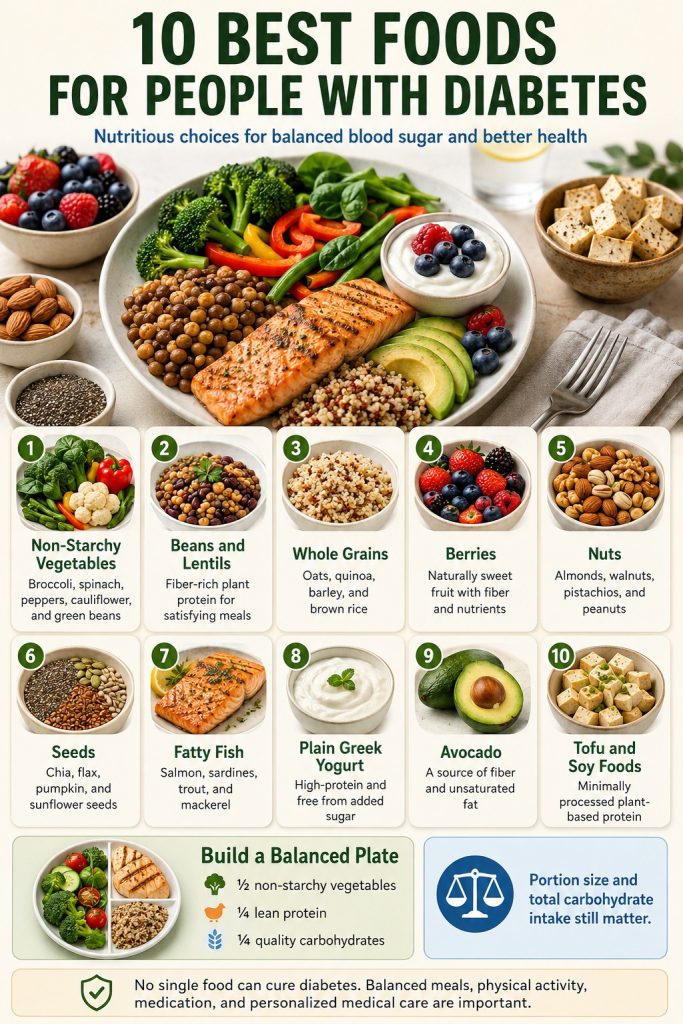
Put these foods into the plate method rather than eating them in isolation: half the plate non starchy vegetables, a quarter lean protein, a quarter quality carbohydrate. The American Diabetes Association makes the same point repeatedly, that no single ingredient does the work and the eating pattern is what matters.
Nutritious does not mean carbohydrate free. Beans, whole grains, fruit, milk and yogurt all raise blood glucose. They simply do it more slowly, and they bring fibre, protein and minerals along with them.
The 10 Best Foods for People with Diabetes
1. Non starchy vegetables
Broccoli, spinach, kale, cabbage, peppers, green beans, mushrooms, courgette, cucumber, tomatoes, cauliflower, aubergine. About 5 g carbs per cup raw, much of it fibre.
These do the most work for the least carbohydrate, which is why they get half the plate. They add volume and fibre so the meal satisfies without the glucose load. Fresh and frozen are equally good; buy canned with no salt added.
2. Beans, lentils and chickpeas
Black beans, kidney beans, chickpeas, pinto beans, red and green lentils, split peas. Half a cup cooked is about 20 g carbs including 7 to 8 g fibre, plus 7 to 9 g protein.
This is the single best evidenced food on the list. A meta analysis of 65 studies covering 2,102 people found that in participants with type 2 diabetes, pulses significantly lowered fasting glucose, HbA1c and insulin resistance, and cut peak post meal glucose in short term trials. Few whole foods have that depth behind them.
Buy dried or no salt added canned. Rinsing regular canned beans removes about 41 percent of the sodium.
3. Oats and whole grains
Rolled and steel cut oats, barley, quinoa, brown rice, bulgur, whole grain bread and pasta. Half a cup cooked is roughly 20 to 25 g carbs; one slice of whole grain bread about 15 g.
Dose response meta analyses link higher whole grain intake with roughly 21 to 32 percent lower incidence of type 2 diabetes, with about 50 g per day the useful threshold and no extra benefit beyond around 60 g. That is prevention data rather than treatment data, but the same swap from refined to whole helps glucose control either way.
Check the ingredient list, not the colour of the loaf. The first ingredient should begin with the word whole.
4. Fatty fish
Salmon, sardines, mackerel, trout, herring, tuna. Three ounces is 0 g carbs and about 20 to 22 g protein.
Twice a week is the standard recommendation, and it applies to people with diabetes too. The benefit here is cardiovascular rather than glycaemic, which matters because most people with type 2 diabetes are more likely to die of heart disease than of anything else. Bake, grill or steam rather than breading and frying.
5. Nuts
Almonds, walnuts, pistachios, peanuts, pecans, hazelnuts. One ounce is about 6 g carbs of which 3 g is fibre, plus 6 g protein and 160 to 200 calories.
Nuts barely move glucose and improve the fat quality of your diet. The catch is energy density, so portion them into a bowl rather than eating from the bag. Unsalted, and nothing coated in honey, chocolate or caramel.
6. Seeds
Chia, ground flaxseed, pumpkin, sunflower, sesame. One tablespoon of chia is about 6 g carbs of which 5 g is fibre, so the net load is close to 1 g.
Chia and ground flax are the easiest way to add fibre without changing how a meal tastes. Buy flaxseed ground, since whole seeds largely pass through undigested.
7. Berries
Strawberries, blueberries, raspberries, blackberries. Half a cup is roughly 6 g carbs for strawberries and 10 g for blueberries.
The lowest carbohydrate fruit by volume, and the easiest swap for a sweet course. Fresh or unsweetened frozen. Skip anything canned in syrup, and treat dried berries carefully since the sugar is concentrated into a much smaller portion.
8. Plain Greek yogurt
Three quarters of a cup plain is about 6 g carbs and 17 g protein.
Worth a note on the evidence, because you may have seen headlines. In March 2024 the FDA announced a qualified health claim allowing manufacturers to say that eating at least 2 cups of yogurt a week may reduce the risk of type 2 diabetes. Read the approved wording carefully though, because the FDA requires the claim to carry its own caveat: “FDA has concluded that there is limited information supporting this claim.”
A qualified claim is a lower bar than an authorised one, the evidence is observational, and the petition came from a yogurt manufacturer. Plain Greek yogurt is genuinely useful for its protein. Just do not buy it expecting the headline. And buy it plain, since flavoured versions often carry two to three times the carbohydrate.
9. Avocado and olive oil
A quarter of a medium avocado is about 3 g carbs with 2 g fibre.
Both are sources of monounsaturated fat that replace saturated fat well, and both slow digestion when added to a carbohydrate meal. Calorie dense, so measure the oil with a spoon rather than pouring. Notably, the FDA’s updated healthy claim now recognises avocados and olive oil, which the old fat based rules excluded.
10. Tofu and minimally processed soy
Tofu, tempeh, edamame, unsweetened soy milk. Three ounces of firm tofu is about 2 g carbs and 9 g protein.
Useful protein with almost no carbohydrate and no saturated fat, and a straightforward substitute for processed or fatty meat. Check labels on marinated tofu and soy burgers, which often add sugar, starch and sodium.
How Strong Is the Evidence, Honestly
Lists like this usually imply all ten items are equally proven. They are not, and knowing the difference helps you prioritise.
- Strongest: beans and pulses, with randomised trial evidence for lower fasting glucose, HbA1c and insulin resistance. Non starchy vegetables, on the simple logic that they displace carbohydrate. Whole grains, with consistent large cohort data.
- Good, mostly for the heart: fatty fish, nuts, olive oil and avocado. These improve cardiovascular risk more than they move glucose, which is still the point, since heart disease is the leading cause of death in type 2 diabetes.
- Useful but thinner evidence: yogurt, where the FDA itself labels the evidence limited. Berries and seeds, which are sensible choices without much disease specific trial data.
None of this makes the weaker items bad choices. It just means the return on adding beans to your week is larger than the return on switching yogurt brands.
Foods to Limit
Nothing is permanently forbidden, but these deliver fast carbohydrate, sodium or saturated fat with little fibre or protein: sugar sweetened soda, sweetened tea and coffee drinks, energy drinks, large servings of juice, sweets and sugary desserts, sweetened cereal, white bread and refined grains in large portions, deep fried food, processed meats, and packaged snacks high in sodium.
Drinks are the highest priority. Liquid sugar arrives fast and produces almost no fullness, which is why replacing them is usually the single most effective change.
Portion and Medication Notes
A nutritious food still raises blood glucose when it contains carbohydrate. Beans, fruit, whole grains, milk and yogurt all count toward your total, even though they are better choices than sugary drinks or refined snacks.
If you use insulin or a medication that can cause hypoglycaemia, do not make significant changes to carbohydrate intake or meal timing without talking to your healthcare team first. People with chronic kidney disease may also need individual advice on protein, potassium, phosphorus and sodium, which changes how several foods on this list should be used.
To put this list into practice, see our beginner diabetes grocery list, diabetes friendly breakfast ideas and snacks that will not spike blood sugar.
Frequently Asked Questions
What is the single best food for diabetes?
If you have to pick one, beans and pulses. A meta analysis of 65 studies covering 2,102 people found that in participants with type 2 diabetes, pulse consumption significantly lowered fasting glucose, HbA1c and insulin resistance, and reduced peak post meal glucose in short term trials. Half a cup of cooked beans gives you protein, 7 to 8 g of fibre and slow carbohydrate for very little money.
Does yogurt really reduce diabetes risk?
The FDA allows a qualified health claim saying that eating at least 2 cups of yogurt a week may reduce the risk of type 2 diabetes, announced in March 2024. Read the required wording though, because FDA mandates the claim carry its own caveat that there is limited information supporting it. The evidence is observational, the petition came from a yogurt manufacturer, and a qualified claim is a lower standard than an authorised one. Plain Greek yogurt is still worth eating for its protein.
Can people with diabetes eat carbohydrates?
Yes. The type, amount and spacing matter more than elimination. Whole grains, beans, vegetables, whole fruit and unsweetened dairy provide fibre and nutrients that refined carbohydrate does not. Roughly 15 g of carbohydrate counts as one carb serving for meal planning, and your individual target depends on your medication, activity and glucose readings.
Can people with diabetes eat fruit?
Yes. Fresh, frozen and canned fruit without added sugar all fit into a diabetes eating plan. Portion matters because fruit contains carbohydrate: half a cup of strawberries is about 6 g and blueberries about 10 g, while a medium banana is closer to 27 g. Whole fruit is better than juice, because the fibre slows absorption and it takes longer to eat.
How much whole grain should I eat?
Dose response meta analyses link higher whole grain intake with roughly 21 to 32 percent lower incidence of type 2 diabetes, with about 50 g per day the useful threshold and little additional benefit beyond around 60 g. In practical terms that is two to three servings daily, such as half a cup of cooked oats plus a slice of whole grain bread. This is prevention data, but the refined to whole swap helps glucose control regardless.
Are nuts good for diabetes despite the calories?
Yes. One ounce supplies about 6 g of carbohydrate of which 3 g is fibre, plus 6 g of protein and unsaturated fat, so the effect on glucose is minimal. The calorie density is the only real caution at 160 to 200 calories per ounce. Portion into a bowl rather than eating from the bag, and avoid honey roasted, candied or chocolate coated versions.
Do any of these foods lower blood sugar immediately?
No, and none should be used that way. These foods work by being part of a regular eating pattern, not as a rescue for high glucose. If your blood sugar is dangerously high, follow the plan your healthcare team gave you and contact them. Never substitute food for prescribed medication.
Is fish better than chicken for diabetes?
Both are reasonable lean proteins with essentially no carbohydrate. Fatty fish such as salmon, sardines and mackerel has the edge because of its omega 3 content, and eating fish twice a week is the standard recommendation. That benefit is cardiovascular rather than glycaemic, which matters given that heart disease is the leading cause of death in type 2 diabetes.
Do I need to buy organic or special diabetic versions of these foods?
No. There is no evidence that organic versions of these foods affect blood glucose differently, and diabetic branded products are not a regulated category, usually cost more and are rarely better than plain whole food. Frozen and canned versions of vegetables, fruit, beans and fish are nutritionally comparable to fresh and often considerably cheaper.
Are sugar free foods a better choice?
Not automatically. Sugar free means under 0.5 g of sugar per serving and says nothing about starch, total carbohydrate, saturated fat, sodium or calories. A sugar free biscuit is still mostly flour. Many also contain sugar alcohols that cause bloating and diarrhoea in larger amounts. Check total carbohydrate and serving size instead of the front of the pack.
Final Thoughts on the Best Foods for People with Diabetes
The best foods for people with diabetes are not exotic and not expensive. They are beans, vegetables, whole grains, fish, nuts, seeds, berries, plain yogurt, avocado and tofu, eaten in sensible portions inside the plate method.
If you want to prioritise, start with beans. They have the strongest trial evidence of anything here, they are cheap, and half a cup brings fibre, protein and slow carbohydrate in one ingredient. Add non starchy vegetables to more meals, swap refined grains for whole, and the rest is refinement.
Be sceptical of headlines about single foods, including the yogurt one. No food lowers blood sugar on its own or replaces prescribed treatment, and the strength of the evidence behind a claim is worth checking before you rearrange your shopping around it.
Related reading: Diabetes grocery list for beginners | 15 diabetes friendly breakfast ideas | 15 snacks that will not spike blood sugar | 25 keto protein snacks
Medical Disclaimer
This article is for general education and is not personalised medical or nutritional advice. Carbohydrate targets and meal plans must be individualised. Work with a doctor, registered dietitian or diabetes care and education specialist before making significant dietary changes, particularly if you use insulin, take glucose lowering medication, are pregnant, or have kidney, heart or digestive disease. See our medical disclaimer, editorial policy and fact checking policy.
Cross checked against the American Diabetes Association, FDA, CDC, USDA FoodData Central and peer reviewed meta analyses. Carbohydrate and protein figures are estimates that vary with brand and portion. Last updated July 2026.
About the Author and Reviewer
Mezbaul Islam, MSc Nutrition owns and writes Simple Health Naturally. He researches each article from public health guidance, clinical guidelines and peer reviewed studies, and traces every figure back to a named source.
Dr. Obeydur Rahman, MBBS, MD in Medicine edits the articles, checks the sources cited and is responsible for the site’s editorial standards. MD in Medicine is the specialty for adult conditions such as liver disease, type 2 diabetes and high blood pressure.
Read more about our authors and reviewers or see our editorial policy.
Edited by Dr. Obeydur Rahman, MBBS, MD in Medicine.