Every glass in these healthy juice recipes contains between 283 and 400 g of whole produce, delivers 105 to 150 calories and 18 to 26 g of natural sugar, and throws away most of the 1.7 to 8.5 g of fibre that produce started with. Those numbers, calculated ingredient by ingredient, are the honest trade juicing asks you to make.
The title promises a goal for each juice, so here are five that the evidence actually supports rather than the usual detox and immunity claims. One genuinely gives you a full day of vitamin C. One is mostly water and works for hydration. One supplies dietary nitrate with real blood pressure data behind it. And one contains so much vitamin K that anyone on warfarin needs to read that section carefully.
Medical Disclaimer: This is educational and is not medical advice. Homemade juice is unpasteurised, which carries a real infection risk for some groups. Speak to a doctor or dietitian before making juice a regular habit, particularly with diabetes, kidney disease, or if you take warfarin or other regular medicines. Read our medical disclaimer, editorial policy and fact checking policy.
What Juicing Actually Does to Your Produce
Two things happen when you juice, and only one of them is good.
The gain: you can get 300 to 400 g of fruit and vegetables into one glass, which is more than many people manage in a day. Vitamins, minerals and potassium come through intact.
The loss: the pulp goes in the bin, and that is where the fibre was. Recipe 5 starts with 8.5 g of fibre in its whole ingredients. Strained, you keep very little of it. The Dietary Guidelines allow 100 percent juice within a healthy pattern while advising that most fruit intake come from whole fruit, and this is precisely why.
There is a simple fix. Blend instead of juice and keep the pulp. You get the same nutrients, the fibre stays, and the drink is more filling. If a recipe below is too thick that way, add water rather than straining.
The Method, Once
- Wash hands for 20 seconds, and wash all equipment before you start
- Rinse produce under running water, including anything you plan to peel, since bacteria transfer from skin to flesh when you cut. Do not use soap or detergent
- Scrub firm produce such as melon, cucumber, carrot and beetroot with a clean brush, and cut away bruised areas
- Juice, or blend with half a cup of cold water and keep the pulp
- Drink it fresh, or refrigerate in a sealed container and finish within 24 hours
The 5 Healthy Juice Recipes, Matched to a Real Goal
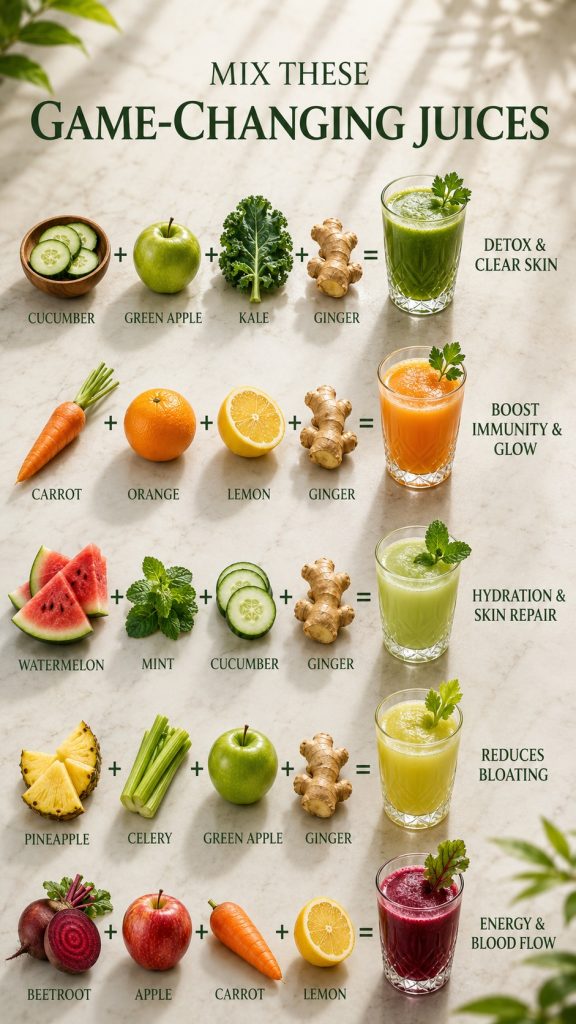
1. Cucumber, Green Apple, Kale and Ginger
321 g produce, 108 kcal, 18 g sugar, 5.2 g fibre if eaten whole, 109 mcg vitamin K.
- Half a medium cucumber
- 1 small green apple
- 1 loosely packed cup of kale, tough stems removed
- Half an inch of fresh ginger
Realistic goal: vitamin K. That 109 mcg is close to a full day’s adequate intake, which is 120 mcg for men and 90 mcg for women. It is not a detox or a skin treatment.
If you take warfarin, read this. The advice is not to avoid kale. Warfarin works against vitamin K, so what destabilises your INR is a sudden change in intake, not vitamin K itself. Adding a kale juice to your routine some days and not others is exactly the pattern that causes problems. Either drink it consistently or leave it out, and tell your anticoagulant clinic either way. The NIH Office of Dietary Supplements covers the interaction in detail.
2. Carrot, Orange, Lemon and Ginger
283 g produce, 120 kcal, 19 g sugar, 7.4 g fibre if eaten whole, 93 mg vitamin C, 669 mg potassium.
- 2 medium carrots
- 1 orange, peeled and deseeded
- Half a lemon, peeled
- Half an inch of fresh ginger
Realistic goal: vitamin C, and this one genuinely delivers. At 93 mg it covers the full adult requirement of 90 mg for men and 75 mg for women in a single glass. The carrots also bring beta carotene for vitamin A. What it will not do is prevent you catching a cold, since vitamin C does not do that in the general population.
Tip: start with a quarter lemon and taste. No sweetener is needed, since the carrot and orange carry 19 g of sugar between them already.
3. Watermelon, Mint, Cucumber and Ginger
400 g produce, 105 kcal, 20 g sugar, 1.7 g fibre if eaten whole, 483 mg potassium.
- 2 cups seedless watermelon cubes
- A third of a medium cucumber
- 6 to 8 fresh mint leaves
- A thin slice of ginger
Realistic goal: hydration. Watermelon is about 92 percent water and cucumber about 95 percent, so this is the largest volume of produce here for the fewest calories. It is also the one juice where you lose almost nothing by straining, because there was only 1.7 g of fibre to begin with.
Worth knowing: it will not treat dehydration from illness, which needs oral rehydration solution rather than fruit juice.
4. Pineapple, Celery, Green Apple and Ginger
320 g produce, 134 kcal, 25 g sugar, 5.4 g fibre if eaten whole, 85 mg vitamin C.
- 1 cup fresh pineapple chunks
- 2 celery stalks
- Half a green apple
- Half an inch of fresh ginger
Realistic goal: a second strong vitamin C option at 85 mg, for people who prefer pineapple to citrus. Celery adds volume and a savoury note for very few calories.
The honest caveat: at 25 g this carries more sugar than the others apart from recipe 5. Celery juice has no evidence for bloating, digestion or anything else it is marketed for, and persistent bloating deserves a medical opinion rather than a juice. Start with one celery stalk if the flavour is new to you.
5. Beetroot, Apple, Carrot and Lemon
326 g produce, 150 kcal, 26 g sugar, 8.5 g fibre if eaten whole, 701 mg potassium.
- 1 small beetroot
- 1 small apple
- 1 medium carrot
- A quarter of a lemon, peeled
Realistic goal: dietary nitrate, and this is the best evidenced juice on the page. A 2024 meta analysis of 11 trials in 349 people with high blood pressure found beetroot juice lowered systolic pressure by 5.31 mmHg, at doses of 200 to 800 mg of nitrate a day. That is a genuine cardiovascular finding, not a wellness claim.
- Highest calorie and sugar of the five, so keep it to a small glass
- Kidney stones: beetroot is high in oxalate, and concentrated juices are a recognised risk for people who form calcium oxalate stones
- Beeturia: pink urine afterwards is harmless and is not blood
- This one is best blended, since 8.5 g of fibre is too much to pour away
The 5 Healthy Juice Recipes Compared
| Juice | Produce | kcal | Sugar | Fibre lost | Best for |
|---|---|---|---|---|---|
| 1. Cucumber apple kale | 321 g | 108 | 18 g | 5.2 g | Vitamin K |
| 2. Carrot orange lemon | 283 g | 120 | 19 g | 7.4 g | Vitamin C, 93 mg |
| 3. Watermelon cucumber mint | 400 g | 105 | 20 g | 1.7 g | Hydration |
| 4. Pineapple celery apple | 320 g | 134 | 25 g | 5.4 g | Vitamin C, 85 mg |
| 5. Beetroot apple carrot | 326 g | 150 | 26 g | 8.5 g | Nitrate and potassium |
The fibre column is the point. Recipe 3 loses almost nothing by juicing, so strain it freely. Recipes 2 and 5 lose the most, so blend those and keep the pulp.
Juice Safety, Including the Rule Most People Do Not Know
Fresh juice is unpasteurised, which means bacteria on the produce end up in the glass. According to the FDA guidance on juice safety, children, older adults, pregnant women and people with weakened immune systems risk serious illness or even death from untreated juice.
Here is the part that surprises people. Packaged untreated juice must carry a warning label. But the FDA does not require that warning for juice sold by the glass, which is exactly how juice bars, farmers markets, roadside stands and many cafes sell it. So the absence of a warning tells you nothing when you buy a fresh juice over a counter. If you are pregnant or immunocompromised, ask directly whether it has been pasteurised.
Symptoms of foodborne illness usually appear within 1 to 3 days, though they can start within 20 minutes or as late as 6 weeks, and include vomiting, diarrhoea, abdominal pain and flu like symptoms.
Who Should Take Care
- Warfarin users: recipe 1 carries 109 mcg of vitamin K. Consistency matters more than avoidance, so decide and stick to it
- Diabetes: these carry 18 to 26 g of sugar with the fibre stripped out, which raises glucose faster than whole fruit. Blend rather than juice, and pair with a meal
- Kidney stones: beetroot and leafy greens are high in oxalate, and juices concentrate them
- Kidney disease or potassium restriction: these range from 454 to 701 mg of potassium per glass
- Pregnancy or a weakened immune system: use pasteurised juice, and ask when buying by the glass
- Reflux or sensitive teeth: the citrus recipes are acidic, so rinse with plain water afterwards
For the wider picture, see our guides to what actually supports your natural detox system, the most hydrating foods, and for blended options that keep the fibre, our low calorie smoothies.
Frequently Asked Questions
Is juicing better than eating whole fruit and vegetables?
No, for one specific reason: juicing discards the pulp, which is where the fibre is. These five recipes start with 1.7 to 8.5 g of fibre in their whole ingredients and strained juice keeps very little of it. The Dietary Guidelines allow 100 percent juice within a healthy pattern but advise that most fruit intake come from whole fruit. Blending and keeping the pulp gives you both.
How much sugar is in homemade juice?
These five contain 18 to 26 g of natural sugar per glass. That is not added sugar and it comes from real produce, but juicing removes the fibre that would normally slow its absorption. The beetroot, apple and carrot juice is highest at 26 g, and the cucumber, apple and kale is lowest at 18 g.
Which juice has the most vitamin C?
The carrot, orange, lemon and ginger at 93 mg, which covers the full adult requirement of 90 mg for men and 75 mg for women in one glass. The pineapple, celery and apple is second at 85 mg. Neither prevents colds, since vitamin C does not do that in the general population.
Can I drink kale juice if I take warfarin?
Possibly, but consistency is the key rather than avoidance. Recipe 1 supplies about 109 mcg of vitamin K, close to a full daily adequate intake. Warfarin works against vitamin K, so sudden swings in intake destabilise your INR. Drinking it some days and not others is the worst pattern. Decide either way and tell your anticoagulant clinic.
Does beetroot juice really lower blood pressure?
There is decent evidence. A 2024 meta analysis of 11 trials in 349 people with high blood pressure found beetroot juice reduced systolic pressure by 5.31 mmHg at 200 to 800 mg of nitrate daily. It is the best evidenced juice here. Beetroot is also high in oxalate, so people who form kidney stones should be cautious.
Is fresh juice from a juice bar safe?
Not necessarily, and this catches people out. Packaged untreated juice must carry a warning label, but the FDA does not require that label for juice sold by the glass, which is how juice bars, farmers markets and cafes sell it. So no warning does not mean it is pasteurised. If you are pregnant or immunocompromised, ask directly.
Can juice detox your body?
No. Your liver and kidneys perform detoxification continuously and no drink speeds that up. Reviews of detox and cleanse programmes have found no compelling evidence for removing toxins or for lasting weight loss, and juice cleanses carry real risks including infection from unpasteurised juice and kidney stones from high oxalate ingredients.
Should I juice or blend?
Blend, in most cases. You keep the fibre, the drink is more filling, and you waste nothing. The exception is the watermelon, cucumber and mint, which contains only 1.7 g of fibre to begin with, so straining costs you almost nothing there. If a blended juice is too thick, add water rather than straining it.
How long does fresh juice keep?
Refrigerate it immediately in a sealed container and drink it within 24 hours. Fresh juice is unpasteurised, so bacteria present on the produce can multiply. Make only what you will drink, and discard anything that smells or looks off.
Is celery juice good for bloating?
There is no evidence for it, despite how widely it is promoted. Celery adds volume and flavour for very few calories, which is a fair reason to include it. Persistent or painful bloating deserves a medical assessment rather than a juice, particularly alongside weight loss or a change in bowel habit.
Final Thoughts
These healthy juice recipes are worth making, provided you know what each one is for. Recipe 2 gives you a full day of vitamin C. Recipe 3 is the best hydrator. Recipe 5 has the only genuine cardiovascular evidence here. Recipe 1 needs a moment’s thought if you take warfarin, and recipe 4 is the sweetest after recipe 5.
The single change that improves all five is to blend rather than juice and keep the pulp. You lose nothing, you keep between 1.7 and 8.5 g of fibre, and the drink actually fills you up. Beyond that, treat juice as a pleasant addition to a diet built on whole vegetables and fruit, not a shortcut around one.
Edited by Dr. Obeydur Rahman, MBBS, MD in Medicine.