A useful diabetes grocery list is shorter than most people expect. You do not need special diabetic products, sugar free versions of everything, or an aisle you have never shopped before. You need a repeatable set of staples organised around the plate method, plus the ability to read two lines on a label. This guide covers what to put in the trolley, what the label terms actually mean, and how to do it on a budget.
Short answer: Fill the trolley with non starchy vegetables, beans and lentils, whole grains, whole fruit, eggs, fish, poultry, plain Greek yogurt, nuts, seeds and olive oil. On packaged food, check total carbohydrate and added sugars, and use 5 percent Daily Value as low and 20 percent as high.
Shop the Plate Method
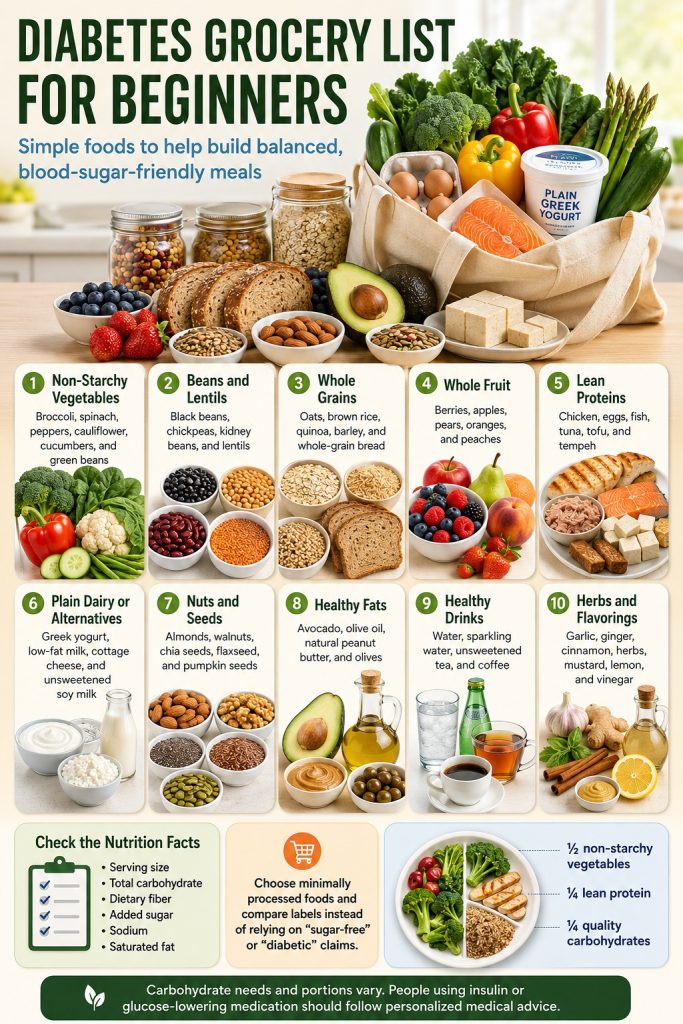
Before the list, the organising principle. The CDC diabetes plate method splits a nine inch plate into three parts: half non starchy vegetables, a quarter lean protein, a quarter carbohydrate foods. Build your shopping around those proportions and portion control mostly takes care of itself.
Practically, that means the largest share of your basket by volume should be vegetables, and the carbohydrate section should be the smallest of the three. Most beginner lists get this backwards.
The Complete Diabetes Grocery List
Vegetables, half the plate
- Fresh: spinach, broccoli, cauliflower, peppers, courgette, green beans, cucumber, tomatoes, salad leaves, onions, mushrooms, cabbage, asparagus
- Frozen: the same vegetables, usually cheaper and nutritionally comparable, since they are frozen soon after harvest. Buy plain, not in sauce or butter.
- Canned: fine when you buy no salt added or reduced sodium. Draining and rinsing canned vegetables cuts sodium by roughly 9 to 23 percent.
- Starchy vegetables such as potatoes, sweet potatoes, corn and peas count as carbohydrate rather than as your half plate. Buy them, just put them in the quarter.
Protein, a quarter of the plate
- Eggs. Cheapest protein per gram in most shops. About 6 g of protein each with almost no carbohydrate.
- Fish and seafood. Salmon, sardines, mackerel and tuna, fresh, frozen or canned. Aim for oily fish twice a week. Canned in water rather than oil, and check sodium.
- Poultry. Chicken and turkey, skinless. Whole birds and thighs cost less than breast fillets.
- Beans, lentils and chickpeas. Dried is cheapest; canned is fine. Rinsing canned beans reduces sodium by about 41 percent, and draining alone by 36 percent, so it is worth the 20 seconds.
- Dairy protein. Plain Greek yogurt, cottage cheese, hard cheese in modest amounts.
- Plant protein. Tofu, tempeh, edamame, unsweetened soy milk.
- Buy less often: bacon, sausages, salami and deli meats. The WHO cancer agency classifies processed meat as a Group 1 carcinogen for colorectal cancer, and these are also high in sodium.
Carbohydrate foods, the smallest quarter
- Whole grains: rolled or steel cut oats, barley, quinoa, brown rice, bulgur, whole grain bread and pasta.
- Whole fruit: berries, apples, pears, citrus, kiwi, plums. Fresh or frozen unsweetened. Berries are the lowest carbohydrate option at roughly 7 g per half cup.
- Skip: fruit juice, fruit canned in syrup, and large bags of dried fruit, which concentrate sugar into a small volume.
Bread is where most people get caught. See the label section below, because the words on the front of a loaf are frequently meaningless.
Fats, dairy and pantry
- Fats: extra virgin olive oil, rapeseed oil, avocados, olives
- Nuts and seeds: almonds, walnuts, pistachios, pumpkin seeds, chia, ground flaxseed. Unsalted and unsweetened. Natural nut butter with no added sugar.
- Milk: unsweetened dairy or fortified soy. Unsweetened almond and coconut drinks are low in carbohydrate but also low in protein.
- Flavour without carbohydrate: herbs, spices, garlic, cinnamon, vinegar, mustard, lemons, hot sauce, no sugar added salsa, low sodium stock.
- Drinks: water, unsweetened tea, coffee, sparkling water.
That is the whole list. For what to do with it, see our diabetes friendly breakfast ideas and snacks that will not spike blood sugar.
How to Read a Label in the Aisle
You do not need to study the whole panel. Four checks cover almost everything, and the FDA Nutrition Facts label is designed around them.
- Serving size first. Every other number depends on it. A small packet is often two servings.
- Total carbohydrate, not sugars. Starch raises glucose too. Roughly 15 g of total carbohydrate counts as one carb serving.
- Added sugars. Listed separately from naturally occurring sugar, which is what makes plain yogurt and flavoured yogurt easy to compare.
- Percent Daily Value. The useful shortcut: 5 percent DV or less is low, 20 percent DV or more is high. Apply it to sodium and saturated fat.
What changed about the word “healthy”
This is worth knowing because it is currently in transition. In December 2024 the FDA finalised a new definition of the “healthy” claim, the first update since 1994. It took effect in April 2025, and manufacturers have until February 2028 to comply, so during that window you will see both old and new standards on shelves.
The new rule requires a food to contain a minimum amount from a recommended food group and to stay under limits for added sugars, sodium and saturated fat. Two consequences for your trolley:
- Newly qualifying: water, avocados, nuts and seeds, higher fat fish such as salmon, and olive oil. These were excluded under the old fat based rules despite being nutritious.
- Losing the claim: fortified white bread, highly sweetened yogurt and highly sweetened cereal.
There is a shortcut buried in the rule. Whole foods with no added ingredients except water, meaning plain vegetables, fruit, whole grains, seafood, eggs, beans, lentils, nuts and seeds, qualify automatically. If a food needs a claim to convince you, it is probably not one of those.
Label terms that mean nothing
- “Multigrain”, “stone ground”, “wheat bread”, “cracked wheat”, “enriched”. None of these guarantees whole grain. Multigrain simply means several grains, any of which can be refined. Look for the word whole as the first ingredient.
- “Sugar free” means under 0.5 g of sugar per serving. It does not mean carbohydrate free, and the product may still be mostly flour or starch. Sugar alcohols can also cause bloating and diarrhoea in quantity.
- “No added sugar” means none was added during processing. Fruit juice concentrate still counts as sugar to your body.
- “Diabetic” or “for diabetics”. Not a regulated standard, usually more expensive, and rarely better than plain whole food.
- “Low carb” or “keto”. Says nothing about sodium, saturated fat, calories or how processed the item is.
Shopping on a Budget
- Plan two or three meals, then write the list. Unplanned shopping is where the budget and the carbohydrate count both go wrong.
- Buy frozen vegetables and fruit. Comparable nutrition, no spoilage, often half the price of fresh out of season.
- Compare unit price, not pack price. The shelf label usually shows price per 100 g or per kg.
- Dried beans and lentils are the cheapest protein and fibre in the shop. Canned is still good value.
- Store brands for staples like oats, frozen vegetables, canned beans and tinned fish are usually identical products at lower cost.
- Cheaper cuts and formats: whole chicken, chicken thighs, eggs, canned salmon and sardines instead of fresh fillets.
- Cook once, eat twice. A batch of lentils or roast chicken covers several meals and removes the reason to buy convenience food later in the week.
- Do not pay for marketing. Diabetic biscuits, protein bars and detox products cost more and deliver less than the plain foods above.
Beginner Mistakes to Avoid
- Buying only products labelled for diabetics. Ordinary whole foods are cheaper and generally better.
- Cutting out all carbohydrate. The goal is choosing better sources in measured portions. Beans, oats and fruit belong on the list.
- Reading only the sugar line. Total carbohydrate is the number that matters for glucose.
- Treating fruit as unlimited. Whole fruit is good and still contains carbohydrate. Portion it.
- Buying healthy food with no plan. Vegetables that rot in the drawer help nobody. Buy what matches the meals you actually wrote down.
- Ignoring sodium. Canned goods, bread, cheese, stock and processed meat add up quickly against the 2,300 mg daily limit.
Frequently Asked Questions
What should someone with diabetes always keep at home?
A workable core is eggs, frozen vegetables, canned beans, canned fish, plain Greek yogurt, rolled oats, whole grain bread, olive oil, nuts and frozen berries. Those cover the plate method, keep for weeks and combine into meals without a recipe. Add fresh vegetables and fruit for the days you will actually use them.
Do I need to buy special diabetic foods?
No. Diabetic branded biscuits, bars and desserts are not a regulated category, usually cost more, and are rarely better than plain whole food. Many also contain sugar alcohols that cause bloating and diarrhoea in larger amounts. Your money goes further on vegetables, beans, eggs, fish and oats.
How do I tell if bread is really whole grain?
Ignore the front of the pack. Multigrain, stone ground, wheat bread, cracked wheat and enriched all sound wholesome and guarantee nothing, since multigrain only means several grains and any of them can be refined. Turn the loaf over and check that the first ingredient begins with the word whole, such as whole wheat flour. Then compare total carbohydrate and fibre per slice, because slice sizes vary a lot.
What does the new FDA healthy label rule mean for shopping?
The FDA finalised an updated healthy claim in December 2024, effective April 2025, with manufacturers required to comply by February 2028. A food must now contain a minimum amount from a recommended food group and stay under limits for added sugars, sodium and saturated fat. Salmon, nuts, seeds, avocado, olive oil and water newly qualify, while fortified white bread, sweetened yogurt and sweetened cereal no longer will. Expect both standards on shelves until 2028.
Should I rinse canned beans?
Yes, it takes seconds and makes a measurable difference. Draining canned beans reduces sodium by about 36 percent and draining plus rinsing by about 41 percent. For canned vegetables the reduction is smaller at roughly 9 to 23 percent. Buying no salt added versions where available is even better, and you can then season them yourself.
Are frozen vegetables as good as fresh?
Yes for practical purposes. Vegetables are usually frozen within hours of harvest, which preserves nutrients well, and frozen versions are often cheaper than out of season fresh produce with none of the spoilage. Buy plain frozen vegetables rather than versions packed in sauce, butter or seasoning, which add sodium and fat.
Can people with diabetes eat bread, rice and potatoes?
Yes, in measured portions. These are carbohydrate foods, so they belong in the quarter of the plate rather than being eliminated. Choosing whole grain bread, brown rice or barley, and keeping potatoes to a fist sized portion works better than cutting them out entirely. Pairing them with protein and vegetables slows the glucose rise.
Does sugar free mean carb free?
No. Sugar free means less than 0.5 g of sugar per serving and says nothing about starch, flour or total carbohydrate. A sugar free biscuit is still mostly flour. Check the total carbohydrate line and the serving size instead of trusting the front of the pack, and be aware that sugar alcohols in these products can cause digestive upset.
Is honey better than sugar for diabetes?
Not meaningfully. Honey is still an added sugar and raises blood glucose in much the same way as table sugar, with a similar carbohydrate content per spoon. It counts toward your carbohydrate total either way. If you enjoy it, measure it rather than assuming it is a free swap.
What is the best breakfast cereal for diabetes?
Plain rolled or steel cut oats generally beat boxed cereal, since most cereals are refined and sweetened even when marketed as healthy. If you buy boxed, look for whole grain as the first ingredient, at least 3 g of fibre and under 6 g of added sugar per serving, then measure the portion rather than filling the bowl and add protein such as Greek yogurt.
Final Thoughts on Your Diabetes Grocery List
A good diabetes grocery list is boring on purpose. Vegetables, beans, eggs, fish, oats, plain yogurt, nuts and olive oil, bought repeatedly, will do more than any product with a claim on the front. Shop the plate method, keep the carbohydrate section the smallest, and let frozen and canned staples carry the weeks when fresh cooking does not happen.
For packaged food, four checks are enough: serving size, total carbohydrate, added sugars, and the 5 and 20 percent Daily Value rule for sodium and saturated fat. Treat front of pack wording with suspicion, particularly on bread, and remember that the FDA healthy claim is mid transition until 2028.
Start with one week. Write three meals, buy only what those meals need plus a few staples, and build from there. Carbohydrate targets are individual, so ask your care team or a registered dietitian to set yours rather than copying a number from an article.
Related reading: 10 best foods for people with diabetes | 15 diabetes friendly breakfast ideas | 15 snacks that will not spike blood sugar
Medical Disclaimer
This article is for general education and is not personalised medical or nutritional advice. Carbohydrate targets, sodium limits and meal plans must be individualised. Consult a doctor, registered dietitian or diabetes care and education specialist before making significant dietary changes, particularly if you use insulin, take medication that can cause hypoglycaemia, are pregnant, or have kidney, heart or digestive disease. See our medical disclaimer, editorial policy and fact checking policy.
Cross checked against the FDA, CDC, USDA and the American Diabetes Association. Last updated July 2026.
About the Author and Reviewer
Mezbaul Islam, MSc Nutrition owns and writes Simple Health Naturally. He researches each article from public health guidance, clinical guidelines and peer reviewed studies, and traces every figure back to a named source.
Dr. Obeydur Rahman, MBBS, MD in Medicine edits the articles, checks the sources cited and is responsible for the site’s editorial standards. MD in Medicine is the specialty for adult conditions such as liver disease, type 2 diabetes and high blood pressure.
Read more about our authors and reviewers or see our editorial policy.
Edited by Dr. Obeydur Rahman, MBBS, MD in Medicine.