Your stomach acts different before your first bite of the day. Acid sits inside with nothing to break down. The lining has no cushion of food to protect it. That is why the foods to avoid on an empty stomach deserve a bit of thought. One wrong choice can hand you a burning chest, a queasy gut or a hard energy crash by ten in the morning. A gentle choice sets up a steady and comfortable day.
This guide walks through six common morning culprits. You will also get six easy swaps that most stomachs handle well.
Why Your Stomach Reacts So Strongly Before Breakfast
Your body makes acid all night long. That acid helps break down food and kills off germs. Food soaks it up like a sponge. No food means no sponge.
Two things happen next. Acid touches the stomach wall with nothing in the way. Sugar and caffeine also rush into your blood much faster than normal.
Your gut lining does have a mucus layer for defense. That layer holds up fine for most people. Some folks have a thinner or more sensitive lining though. Anyone with reflux, gastritis, an ulcer or IBS tends to feel these effects much sooner and much stronger.
Keep one thing in mind as you read. Nutrition science calls this an area of individual variation. Your best friend might drink black coffee at 6 a.m. every day and feel great. You might sip the same cup and feel awful an hour later. Both reactions are normal.
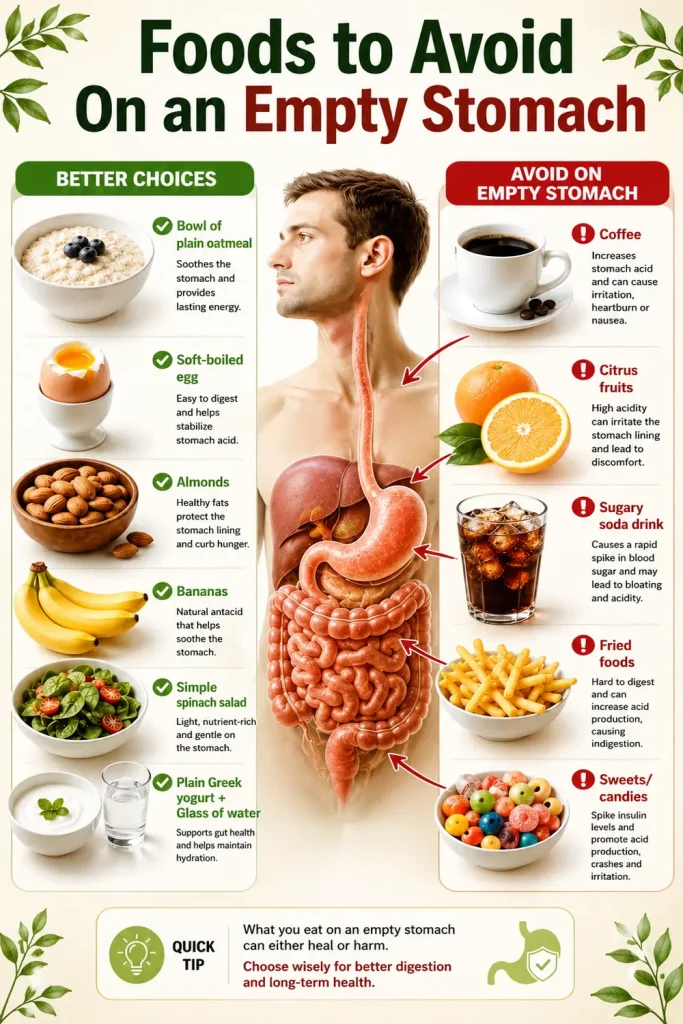
6 Foods to Avoid on an Empty Stomach
Each item below explains what happens inside your body and what you can do instead.
1. Coffee
Coffee tells your stomach to make more acid. It also relaxes the small valve that keeps acid down where it belongs. Those two effects together can spark heartburn or a sour feeling in your throat.
The research here is honest and mixed. Studies do not prove that black coffee damages a healthy stomach. Plenty of people drink it fasted with zero trouble. Symptoms show up most often in people who already deal with reflux or gastritis.
Coffee also spikes cortisol faster on an empty gut. That can leave you jittery and then flat by mid morning. Timing matters more than the coffee itself for most people. Our guide on what research says about coffee and liver health covers the wider picture.
Better move: Eat a few bites first. Even a banana or a handful of nuts changes how the caffeine hits you. A splash of milk helps too.
2. Citrus Fruits
Oranges, grapefruit, lemons and limes carry a lot of citric and ascorbic acid. Your bare stomach lining meets that acid head on. Some people feel a sting or a dull ache within minutes.
Citrus fiber also sits heavy for certain folks. Bloating and gas follow.
Whole fruit treats you better than juice here. Juice strips out the fiber and leaves concentrated acid and sugar.
Better move: Pair citrus with oatmeal or yogurt. The other food buffers the acid.
3. Sugary Soda and Energy Drinks
Cold soda on an empty stomach delivers a double hit. Carbonation puffs your belly with gas. Fast sugar floods your blood in minutes.
Your pancreas answers with a burst of insulin. Blood sugar climbs high and then falls hard. That crash brings shakiness, brain fog and fresh hunger before lunch.
Fructose adds another wrinkle. Many people absorb large fructose loads poorly on an empty gut. Cramping and loose stools can follow.
Better move: Start with water. Add protein and fiber to your first meal so your energy stays level. These healthy snacks that will not spike blood sugar work well as a first bite of the day.
4. Fried Foods
Fat slows down stomach emptying more than protein or carbs. Greasy hash browns or fried dough sit in place for hours. Fullness turns into heaviness and a mild nausea.
Fat also loosens that same valve at the top of your stomach. Reflux gets an easy path upward.
Heavy fried breakfasts trigger complaints most often in people with gallbladder issues or slow digestion. Anyone told to cut back on fried food may want to read our fatty liver diet food list for gentler swaps.
Better move: Cook eggs soft instead of fried. Bake or air fry potatoes rather than deep fry them.
5. Candy and Sweets
Candy behaves a lot like soda. Sugar hits your blood fast and drops just as fast. You feel wired and then wiped out.
Pastries and doughnuts stack a second problem on top. Sugar and fat arrive together. Your stomach has to work through both at once.
Sugar also feeds gut bacteria that produce gas. A bloated feeling shows up an hour later for many people.
Better move: Save sweets for after a real meal. The protein and fat in that meal slow the sugar rush.
6. Spicy Food
Capsaicin gives chili peppers their heat. It also lights up pain receptors in your stomach lining. No food buffer means a stronger burn.
Spice does not cause ulcers. That myth stuck around for years. Spice can absolutely aggravate an ulcer or reflux you already have.
Tolerance varies a lot here. Regular chili eaters often build up comfort with the heat. Someone new to spice may feel it right away.
Better move: Ease into spice after your first meal settles.
6 Better Choices for Your First Meal
Swap the trouble makers for these gentle options.
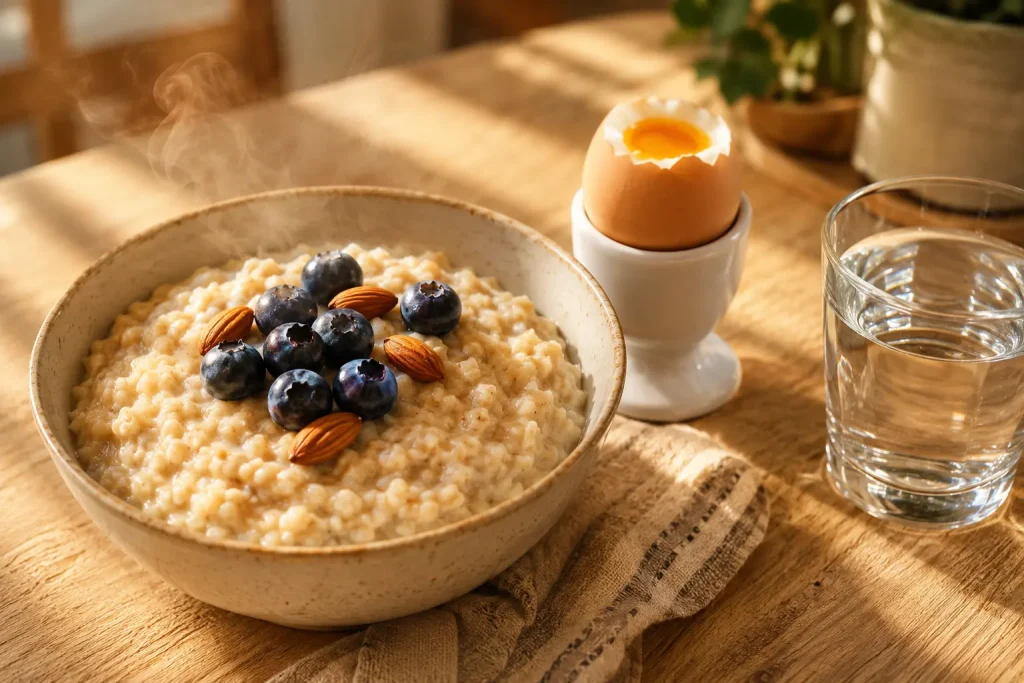
Plain oatmeal. Oats coat the stomach with soluble fiber. That fiber forms a soft gel and slows digestion. You get steady energy for hours.
Soft boiled egg. Eggs bring protein with very little acid. They digest easily and keep you full without weight.
Almonds. A small handful gives you healthy fat, protein and fiber. The fat slows down whatever you eat next. Almonds also curb the urge to grab candy at 10 a.m.
Bananas. Bananas contain natural compounds that soothe the stomach lining. Potassium and gentle carbs make them a solid first bite of the day.
Spinach salad. Leafy greens carry a lot of nutrition and very little acid. Keep the dressing light and simple.
Plain Greek yogurt with water. Yogurt adds protein and live cultures that support gut health. A full glass of water rehydrates you after a night of sleep.
Notice the pattern across all six. Each one brings protein, fat or soluble fiber. Each one skips fast sugar and heavy acid.
Want more morning options built on that same pattern? Our roundup of balanced breakfast ideas gives you fifteen more plates that keep energy steady.
Warning Signs Your Breakfast Does Not Agree With You
Pay attention to these patterns in the hour after you eat.
- A burning feeling behind your breastbone
- A sour or bitter taste creeping up your throat
- Nausea with no clear reason
- Bloating that makes your waistband tight
- Sharp hunger and shakiness before lunch
- Cramping or an urgent trip to the bathroom
One rough morning means very little. A pattern across two weeks means something. Keep a short note on your phone for a few days. Write down what you ate and how you felt two hours later. That simple log finds your personal triggers faster than any general list.
Some symptoms need a doctor rather than a food swap. Book an appointment for heartburn several times a week, trouble swallowing, weight loss you did not plan, vomiting that keeps coming back or black stools. Those signs point to problems that diet changes alone will not fix. The National Institute of Diabetes and Digestive and Kidney Diseases explains how regular reflux differs from occasional heartburn.
Small Habits That Protect Your Stomach Each Morning
A few easy changes go a long way.
Drink a glass of room temperature water when you wake up. Water rehydrates you and dilutes overnight acid. Very cold water can cramp a sensitive stomach so warm it slightly.
Wait about 20 minutes between that water and your coffee. Your stomach gets a buffer period.
Chew slowly. Digestion starts in your mouth and rushed bites arrive as bigger chunks.
Stay upright for 30 minutes after eating. Gravity keeps acid where it belongs.
Eat something within a couple hours of waking on most days. Long gaps leave acid sitting alone for hours.
Frequently Asked Questions
Is coffee bad on an empty stomach?
Coffee causes trouble for some people and none at all for others. It raises stomach acid and relaxes the valve above your stomach. People with reflux or gastritis notice this most. A healthy stomach usually handles black coffee fine. Eat a small bite first and see whether your symptoms fade.
Can I eat a banana on an empty stomach?
Yes. Bananas rank among the gentlest first foods you can pick. They soothe rather than irritate. Older advice warned about magnesium in bananas but that claim never held up under real evidence.
Why does orange juice hurt my stomach in the morning?
Juice packs acid and sugar without the fiber that whole fruit provides. That combination irritates a bare stomach lining. Try eating a whole orange after some food instead.
How long should I wait after waking up to eat?
No single number fits everyone. Most people feel best eating within two hours of waking. People who fast on purpose often do fine with longer gaps. Anyone with reflux or blood sugar issues usually does better eating sooner.
Does an empty stomach cause ulcers?
No. Research from the NIDDK points to H. pylori bacteria and regular use of pain relievers like ibuprofen as the two main causes. An empty stomach can make an existing ulcer hurt more. It does not create one.
Final Thoughts on Foods to Avoid on an Empty Stomach
Your first meal shapes how the rest of your day feels. The foods to avoid on an empty stomach share a few traits. They bring acid, fast sugar or heavy grease to a stomach with no protection. Coffee, citrus, soda, fried food, candy and spice top that list.
Your body still gets the final word. Try a swap for one week and pay attention to how you feel. Oatmeal, eggs, almonds, bananas, greens and yogurt work well for most people. Small changes at breakfast add up over months.
This article shares general nutrition information. It does not replace advice from your doctor. Talk with a healthcare provider about ongoing stomach symptoms or before you make big changes to your diet, especially with a diagnosed condition. Read our full medical disclaimer and fact checking policy.
Edited by Dr. Obeydur Rahman, MBBS, MD in Medicine.