Your skin renews itself with the raw material you hand it. Protein, vitamins, healthy fat and antioxidants all show up in that process. That is why anti-aging foods for skin deserve a spot on your plate week after week. No single meal erases a wrinkle. A steady pattern of good food may help your skin stay firmer, brighter and better protected as the years pass.
This guide covers 15 foods with real research behind them. You will also learn what food cannot do, which matters just as much.
How Food Affects the Way Your Skin Ages
Skin ages in two separate ways.
The first way comes built in. Your body slows down collagen production as you get older. Collagen gives skin its structure and bounce. Less collagen means thinner skin and more lines. Nobody escapes this part.
The second way comes from the outside. Sun exposure, smoke, pollution and stress all speed things up. Scientists call this photoaging or extrinsic aging. Most of the wrinkles people notice come from this second group.
Food plays a supporting role in both. Antioxidants help your body handle free radicals from sun and pollution. Vitamin C works as a required building block for collagen. Healthy fats support the skin barrier that holds moisture in.
Keep your expectations realistic though. Nutrition research on skin uses mostly observational studies and small trials. The signal points in a good direction. The effect size stays modest. Food supports your skin. It does not replace sunscreen.
15 Best Anti-Aging Foods for Younger Looking Skin
1. Salmon
Salmon delivers omega-3 fats called EPA and DHA. These fats help calm inflammation across the body. Skin research links a higher omega-3 intake with a stronger skin barrier and better moisture retention.
Salmon also brings complete protein and a mineral called selenium. Both feed the repair work your skin does overnight.
Easy add: Two servings a week covers most of the benefit. Canned salmon works fine and costs much less than fresh.
2. Broccoli
Broccoli packs vitamin C, vitamin K and a plant compound called sulforaphane. Vitamin C does double duty here. It neutralizes free radicals and your body needs it to build collagen.
Sulforaphane shows promise in lab studies on skin cell protection. Human research remains early so treat that part as a bonus rather than a promise.
Easy add: Steam it lightly. Long boiling leaks vitamin C straight into the water.
3. Tomatoes
Tomatoes carry lycopene, the pigment that makes them red. Lycopene collects in skin tissue and may offer mild protection against sun damage.
Small trials found that people who ate tomato paste daily for several weeks showed slightly less redness after UV exposure. Note the word slightly. Lycopene supports your sunscreen rather than replacing it.
Easy add: Cooked tomatoes beat raw ones here. Heat and a little olive oil both help your body absorb lycopene.
4. Green Tea
Green tea holds polyphenols known as catechins. EGCG leads that group. These compounds mop up free radicals and may reduce some markers of UV damage in skin.
Green tea also gives you a gentler caffeine lift than coffee. Our guide on green tea benefits, risks and safe intake covers how much makes sense per day.
Easy add: Two or three cups daily. Let it cool a minute before you sip so the catechins survive.
5. Walnuts
Walnuts stand out among nuts for their plant based omega-3 called ALA. They also deliver vitamin E, an antioxidant that sits inside skin cell membranes and shields them from damage.
Copper and zinc round out the package. Your body uses both minerals during collagen formation.
Easy add: A small handful daily. Store them in the fridge because their oils turn rancid fast at room temperature.
6. Kiwi
One kiwi covers your entire daily vitamin C need. That matters because your body cannot make vitamin C or store much of it. You need a fresh supply every single day.
Vitamin C sits at the center of collagen production. The NIH Office of Dietary Supplements lists collagen formation as one of its core jobs in the body.
Easy add: Slice one into your morning yogurt. The skin is edible and holds extra fiber.
7. Sweet Potato
Sweet potatoes glow orange thanks to beta carotene. Your body converts beta carotene into vitamin A, which drives skin cell turnover and repair.
One honest caution belongs here. Beta carotene from whole food is safe and useful. High dose beta carotene supplements are a different story and research has linked them to raised lung cancer risk in smokers. Stick with the vegetable.
Easy add: Roast wedges with olive oil. Fat helps you absorb beta carotene.
8. Dark Chocolate
Dark chocolate carries flavanols that may improve blood flow to the skin. Better circulation means better nutrient delivery. A few small trials reported modest gains in skin hydration and thickness after regular cocoa flavanol intake.
Percentage matters a lot. Aim for 70 percent cocoa or higher. Milk chocolate carries mostly sugar and very few flavanols.
Easy add: One or two squares after a meal. Our list of snacks that will not spike blood sugar has more options in this range.
9. Spinach
Spinach delivers lutein, zeaxanthin, folate, vitamin C and vitamin E in one leaf. Lutein and zeaxanthin gather in skin tissue where they help absorb some blue and UV light.
Spinach also supplies iron and nitrates that support circulation.
Easy add: Toss a handful into eggs, soup or a smoothie. It wilts down to almost nothing.
10. Blueberries
Blueberries rank among the highest antioxidant fruits by weight. Their deep blue color comes from anthocyanins, compounds that fight oxidative stress.
Oxidative stress breaks down collagen and elastin over time. Antioxidants help slow that process.
Easy add: Frozen blueberries hold nearly the same nutrition as fresh and cost far less.
11. Avocado
Avocado supplies monounsaturated fat, vitamin E and lutein. That fat helps your skin barrier hold moisture, which keeps fine lines less visible.
One observational study found that women with higher healthy fat intake showed better skin elasticity. Correlation only, so read it as a hint rather than proof.
Easy add: Half an avocado on toast or in a salad. The fat also helps you absorb nutrients from the other vegetables on your plate.
12. Olive Oil
Extra virgin olive oil brings polyphenols along with its healthy fat. Those polyphenols survive only in the extra virgin version. Refined olive oil loses most of them.
Mediterranean diet research consistently links olive oil rich eating patterns with lower signs of skin aging.
Easy add: Use it raw as a finishing drizzle. Heat destroys some of the polyphenols.
13. Red Bell Peppers
Red bell peppers hold more vitamin C than an orange by weight. They also carry carotenoids that support skin defense against UV damage.
Color tells you the story. Red peppers ripened longest and hold the most nutrition. Green ones hold the least.
Easy add: Eat them raw in strips. Vitamin C breaks down under heat.
14. Pomegranate
Pomegranate seeds contain punicalagins and ellagic acid. Lab research suggests these compounds may help protect collagen from breakdown.
Human trials stay small and short. The evidence looks promising rather than settled.
Easy add: Sprinkle the seeds over yogurt or salad. Whole seeds beat juice because juice drops the fiber and concentrates the sugar.
15. Water Rich Foods
Cucumber, watermelon, celery and lettuce run above 90 percent water. Skin cells need adequate hydration to look plump and function well.
Water alone will not smooth deep wrinkles. Dehydrated skin does look duller and more lined though, so this one is easy and worth doing.
Easy add: Keep cut cucumber or melon in the fridge for a quick snack.
What These Anti-Aging Foods for Skin Have in Common
Look across all 15 and a clear pattern shows up.
Color. Deep reds, oranges, greens and purples all signal antioxidant pigments. A plate with more colors gives your skin more protection.
Vitamin C. Kiwi, peppers, broccoli and blueberries all deliver it. Your body needs a fresh supply daily to build collagen.
Healthy fat. Salmon, walnuts, avocado and olive oil support the barrier that locks moisture into your skin.
Whole rather than processed. Every item on this list arrives close to its natural state. Whole foods carry fiber and a mix of compounds that work together.
That last point matters more than any single food. Research keeps showing that overall eating patterns predict skin outcomes better than individual superfoods do.
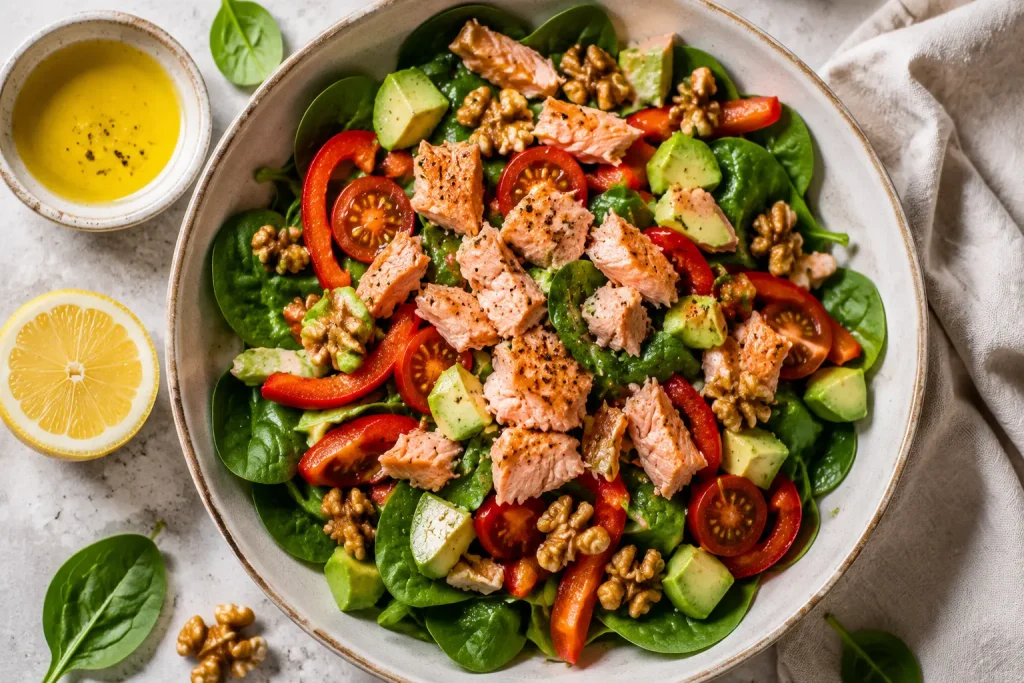
A Simple Day of Anti-Aging Meals
Here is what the list looks like on an actual plate.
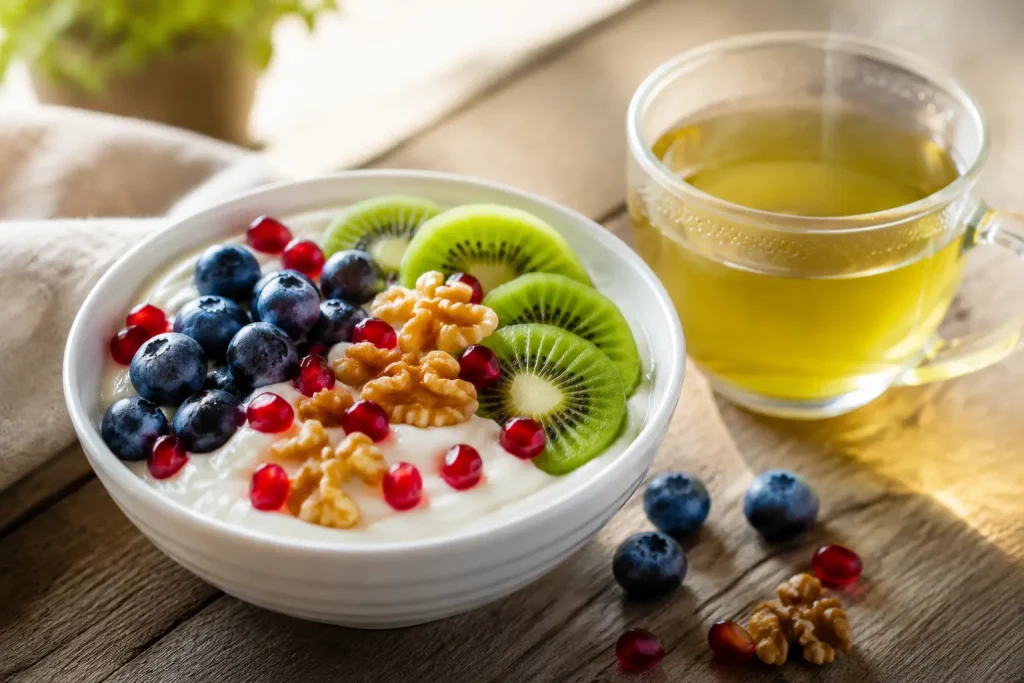
Breakfast: Greek yogurt with blueberries, kiwi slices and a small handful of walnuts. Green tea on the side.
Lunch: Spinach salad with red bell pepper strips, avocado and canned salmon. Dress it with extra virgin olive oil and lemon.
Snack: Cucumber sticks and two squares of dark chocolate.
Dinner: Roasted sweet potato wedges with steamed broccoli and a cooked tomato sauce. Pomegranate seeds over the top.
That single day hits every food on the list. Real life will not look this tidy most days and that is fine. Pattern beats perfection.
What Food Cannot Do for Your Skin
Honesty serves you better here than hype.
Food will not reverse deep wrinkles. Once collagen breaks down at that depth, diet cannot rebuild it.
Food will not undo sun damage you already have. Age spots and leathery texture come from years of UV exposure.
Food will not replace sunscreen. Sun protection remains the single most effective anti-aging step available to you. The National Institute on Aging recommends broad spectrum sunscreen with SPF 15 or higher, applied 15 to 30 minutes before you go outside and reapplied every two hours.
Food will not work overnight. Skin cells turn over across weeks. Give any dietary change at least two to three months before you judge it.
Nobody selling a miracle skin food will tell you this. That is exactly why it belongs in this article.
Habits That Matter as Much as Diet
A few daily habits carry serious weight.
Wear sunscreen every day, even under clouds. UV rays pass right through cloud cover and window glass.
Sleep seven to nine hours. Your skin does most of its repair work overnight.
Skip smoking entirely. Smoking damages collagen and elastin faster than almost anything else.
Drink enough water through the day. Thirst is a late signal so do not wait for it.
Moisturize while your skin is still damp. That traps water in the barrier.
Manage stress where you can. Chronic stress raises cortisol and cortisol breaks down collagen.
Frequently Asked Questions
How long before anti-aging foods show results?
Give it two to three months at minimum. Skin cells replace themselves over several weeks and collagen changes take longer still. Anyone promising results in a week is selling something.
Do collagen supplements work better than food?
Some randomized trials do report modest gains in skin density and wrinkle depth from collagen peptides. The research quality varies and many studies come from supplement companies. Whole food remains the safer starting point because it costs less and delivers other nutrients alongside.
Can food replace sunscreen?
No. Lycopene and other antioxidants may add a small amount of internal protection. That effect measures far below what sunscreen provides. Use both.
Is drinking more water enough for better skin?
Adequate hydration helps skin look plumper and less dull. Extra water beyond your needs will not add further benefit. Your kidneys simply flush the excess.
Which nutrient matters most for collagen?
Vitamin C. Your body cannot build collagen without it and cannot make or store much vitamin C on its own. Protein matters too since collagen is a protein.
Do I need to eat all 15 foods?
No. Pick four or five you actually enjoy and eat them often. Consistency does more for your skin than variety you cannot maintain.
Final Thoughts on Anti-Aging Foods for Skin
Your plate shapes your skin slowly and quietly over years. The best anti-aging foods for skin share a simple profile. They bring color, vitamin C, healthy fat and antioxidants in whole food form. Salmon, broccoli, tomatoes, green tea, walnuts, kiwi, sweet potato, dark chocolate, spinach, blueberries, avocado, olive oil, red bell peppers, pomegranate and water rich produce all fit that profile.
Start with a few rather than all 15. Add sunscreen, sleep and no smoking on top. That combination beats any single superfood or expensive cream. Small choices repeated over years show up on your face.
This article shares general nutrition information. It does not replace advice from your doctor or dermatologist. Talk with a qualified professional about skin concerns or before you make big changes to your diet, especially with a diagnosed condition. Read our full medical disclaimer and fact checking policy.
About the Author and Reviewer
Mezbaul Islam, MSc Nutrition owns and writes Simple Health Naturally. He researches each article from public health guidance, clinical guidelines and peer reviewed studies, and traces every figure back to a named source.
Dr. Obeydur Rahman, MBBS, MD in Medicine edits the articles, checks the sources cited and is responsible for the site’s editorial standards. MD in Medicine is the specialty for adult conditions such as liver disease, type 2 diabetes and high blood pressure.
Read more about our authors and reviewers or see our editorial policy.
Edited by Dr. Obeydur Rahman, MBBS, MD in Medicine.