Articles about herbs for blood pressure almost always say the effect is small and stop there, which tells you nothing useful. Small compared with what? This guide gives the actual figures in mmHg for each of the six herbs, and puts them beside what diet, exercise and medication achieve, so you can see exactly where a herb sits.
The short version: two of these six have measurable trial data, garlic at roughly 8 mmHg systolic and hibiscus at around 7, both in people who already have hypertension. Three have essentially none. One, hawthorn, carries genuine safety concerns. And a change in eating pattern outperforms all of them.
Medical Disclaimer: This is educational and is not medical advice. High blood pressure usually causes no symptoms and can cause stroke, heart attack and kidney damage if untreated. Never stop, reduce or replace a prescribed blood pressure medicine with a herb. Read our medical disclaimer, editorial policy and fact checking policy.
Know Your Number First
An effect size means nothing until you know where you are starting. The 2025 ACC and AHA hypertension guideline uses these categories:
- Normal: below 120 systolic and below 80 diastolic
- Elevated: 120 to 129 systolic and below 80 diastolic
- Stage 1 hypertension: 130 to 139 systolic or 80 to 89 diastolic
- Stage 2 hypertension: 140 or above systolic, or 90 or above diastolic
The treatment goal is below 130/80 for all adults, with the guideline encouraging below 120/80 for most. Two practical points follow from the 2025 update. Lifestyle change is explicitly first line therapy, not an afterthought. And for stage 1 hypertension at low cardiovascular risk, medication is recommended if blood pressure is still 130/80 or above after a 3 to 6 month trial of lifestyle change, which means that window is a real opportunity rather than a delay tactic.
Two more things worth knowing. Herbal effect sizes measured in people with hypertension usually shrink or disappear in people with normal readings, so if your blood pressure is already fine these numbers do not apply to you. And a herb that lowers blood pressure can push it too low if you are already on medication.
What 10 mmHg is actually worth
This is the figure that makes the rest of the article meaningful. Every 10 mmHg reduction in systolic pressure is associated with substantially lower risk:
- Stroke: 27 percent lower
- Heart failure: 28 percent lower
- Coronary heart disease: 17 percent lower
- All major cardiovascular events: 20 percent lower
- Death from any cause: 13 percent lower
So a 7 or 8 mmHg change is not trivial. It is also why the 2025 guideline added a strong recommendation to get systolic below 130 specifically to reduce the risk of cognitive impairment and dementia, which is a consequence of high blood pressure that rarely gets mentioned.
The 6 Herbs for Blood Pressure, With Their Actual Numbers
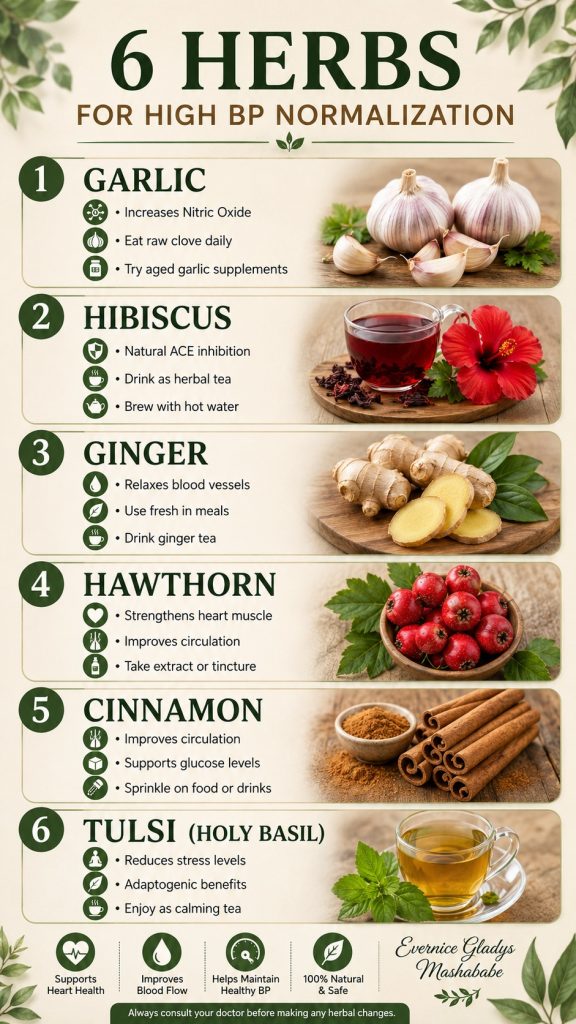
1. Garlic
Roughly 8.3 mmHg systolic and 5.5 mmHg diastolic, in supplement form, in people with hypertension.
Garlic has the largest effect size of the six. A meta analysis pooling 12 trials in 553 hypertensive participants found those reductions, which is genuinely comparable to what a single low dose medicine achieves.
Now the caveat that most articles omit. Every one of those trials used a standardised garlic supplement, usually aged garlic extract or a dried powder tablet, not cloves from a kitchen. Culinary garlic has never been shown to produce this effect, and you would struggle to eat the equivalent.
- Bleeding risk: garlic supplements can add to aspirin, warfarin and other blood thinners, and should be stopped before surgery
- Common effects: abdominal discomfort, gas, reflux and noticeable breath and body odour
- Verdict: the only one here with an effect size worth taking seriously, and it belongs in a conversation with your doctor rather than a self prescription
2. Hibiscus
Roughly 6.7 to 7.1 mmHg systolic, from drinking the tea.
Hibiscus, from the dried calyces of Hibiscus sabdariffa or roselle, is second on effect size and first on practicality, because unlike garlic the studied form is the drink itself. A systematic review and meta analysis of 13 randomised trials in 1,205 participants found a mean systolic reduction of 6.67 mmHg against placebo, and a separate pooling of 17 longer trials found 7.10 mmHg.
The effect appeared clearest in people who had hypertension alone rather than hypertension alongside metabolic syndrome, in adults over 50, and in trials running longer than four weeks. In other words it is not a one cup fix.
- How it was used: typically two to three cups of unsweetened brewed tea daily for four weeks or more
- Do not sweeten it: added sugar works against the cardiovascular goal
- Caution: it can add to blood pressure medication and push readings too low, and it may affect blood glucose. Avoid medicinal amounts in pregnancy
3. Ginger
No reliable blood pressure evidence.
Ginger is frequently listed as a vessel relaxing herb, but the research behind it concerns nausea, particularly in pregnancy, at roughly 1,000 to 1,500 mg of dried ginger daily. Blood pressure control is not among its supported uses. Enjoy it for flavour, and note that strong ginger can aggravate reflux and may add to blood thinners.
4. Hawthorn
Insufficient evidence, and the only genuine safety signal on this list.
Hawthorn has a long traditional reputation for heart complaints, which is exactly why it needs the clearest warning. Evidence of cardiovascular benefit is uncertain, and one study raised the concern that a particular hawthorn preparation may have been associated with earlier progression of heart failure, possibly through interaction with participants’ medicines. Its safety beyond about 16 weeks has not been established.
Do not use hawthorn without medical supervision if you have heart failure, angina, an irregular heartbeat, or take any cardiovascular medicine. Reported effects include dizziness, nausea, vomiting, diarrhoea and muscle pain.
5. Cinnamon
Not supported for blood pressure, and one species carries a liver caveat.
Research does not clearly support cinnamon for blood pressure, blood sugar or circulation. It is a spice, and a good one.
The detail worth knowing is the species. Most supermarket cinnamon is cassia, which contains coumarin, a compound that can stress the liver in substantial regular amounts. Ceylon cinnamon contains far less. Labels often do not specify which you are buying, so treat large daily doses of cinnamon supplements with caution. Never attempt to swallow dry cinnamon powder, which can cause serious lung injury.
6. Tulsi, or Holy Basil
Preliminary research only, no established dose for blood pressure.
Human studies have looked at tulsi for stress and metabolic markers, and a systematic review found a scattering of small trials. None establishes it as a hypertension treatment, and there is no agreed medicinal dose. Concentrated extracts behave differently from ordinary tea.
Seek advice before using tulsi supplements if you are pregnant or breastfeeding, preparing for surgery, or taking medicines for blood pressure, diabetes or clotting.
Herbs for Blood Pressure Against Everything Else, in mmHg
This is the comparison that actually answers the question.
| Approach | Typical systolic reduction | Evidence |
|---|---|---|
| DASH eating pattern | About 11 mmHg | Strong, trial based |
| One standard BP medicine | About 10 mmHg | Strong |
| Garlic supplement | About 8.3 mmHg | Meta analysis, hypertensive only |
| Hibiscus tea | About 6.7 to 7.1 mmHg | Meta analysis, modest quality |
| Regular aerobic exercise | About 5 to 8 mmHg | Strong |
| Cutting sodium | About 5 to 6 mmHg | Strong |
| Reducing alcohol | About 4 mmHg | Strong |
| Losing weight | About 1 mmHg per kg lost | Strong |
| Ginger, cinnamon, tulsi | No reliable effect | Insufficient |
Two things stand out. Garlic and hibiscus are not trivial, and they sit in the same range as some proven measures. But they are single interventions, whereas lifestyle changes stack: eating the DASH pattern, cutting sodium, losing some weight and walking regularly can combine to a reduction no herb approaches.
What Beats Every Herb for Blood Pressure
- The DASH pattern: vegetables, fruit, whole grains, beans, nuts, fish, poultry and low fat dairy, with less sodium, saturated fat and sweets. The single most effective dietary change
- Sodium: below 2,300 mg a day, and moving toward 1,500 mg gives a further 2 to 7 mmHg. Most sodium comes from packaged food and restaurant meals, not the salt shaker
- Weight: the 2025 guideline sets a goal of at least 5 percent loss for anyone with hypertension and excess weight
- Movement: around 150 minutes a week of moderate activity, with resistance work adding more
- Alcohol: cutting back is worth roughly 4 mmHg on its own
- Taking prescribed medicines as directed: the most reliable intervention there is
Potassium rich foods help too, though anyone with kidney disease must not increase potassium without medical advice. Our guides to foods that support healthy circulation and foods for heart, liver, brain and gut health cover the eating side in more detail.
Herbs That Can Raise Your Blood Pressure
This gets far less attention than it deserves, because these turn up in ordinary teas and supplement blends.
- Liquorice root: the clearest offender. Glycyrrhizin causes sodium and water retention and potassium loss, and can produce genuinely dangerous rises and irregular heartbeat. Check herbal tea blends, since liquorice is a common background ingredient
- Bitter orange: contains synephrine, a stimulant, and appears in many weight loss products
- Ephedra: banned in supplements in the United States for good reason
- Ginseng: can raise blood pressure in some people and interacts with several medicines
Also worth checking: non steroidal anti inflammatory painkillers such as ibuprofen, and decongestants containing pseudoephedrine, both of which raise blood pressure and are bought without a prescription.
When It Is an Emergency
A reading of 180/120 mmHg or above needs immediate attention. Wait a minute or two and measure again.
If it stays that high and you have chest pain, breathlessness, back pain, numbness or weakness, vision changes or difficulty speaking, call emergency services immediately. That combination suggests organ damage is occurring. If the reading is that high without symptoms, contact your doctor the same day.
Do not attempt to manage this with garlic, hibiscus or any home remedy.
Frequently Asked Questions
Which herbs actually lower blood pressure?
Only two of the six have measurable trial data. Garlic supplements reduced blood pressure by about 8.3 mmHg systolic and 5.5 mmHg diastolic in a meta analysis of 12 trials in 553 people with hypertension. Hibiscus tea reduced systolic pressure by roughly 6.7 to 7.1 mmHg across meta analyses. Ginger, cinnamon and tulsi have no reliable blood pressure evidence, and hawthorn carries safety concerns.
Is garlic in food as effective as a garlic supplement?
No, and this is the most commonly missed point. Every trial showing a blood pressure effect used a standardised supplement, usually aged garlic extract or a dried powder tablet. Culinary garlic has never been shown to produce the same result, and reaching an equivalent dose through cooking is not realistic.
How much hibiscus tea do you need to drink?
Trials typically used two to three cups of unsweetened brewed tea daily for at least four weeks. Effects were clearest in people over 50, in those with hypertension alone rather than alongside metabolic syndrome, and in longer trials. Do not add sugar, and note it can add to blood pressure medication.
Can herbs replace blood pressure medication?
No. Never stop, reduce or substitute a prescribed medicine with a herb. Even the best performing herb here sits below what the DASH eating pattern achieves, and lifestyle changes combine in a way single supplements do not. If you want to reduce medication, that is a conversation with your prescriber based on your readings.
What is the blood pressure target now?
The 2025 ACC and AHA guideline sets a treatment goal below 130/80 mmHg for all adults and encourages below 120/80 for most. Normal is below 120/80, elevated is 120 to 129 systolic, stage 1 is 130 to 139 or 80 to 89, and stage 2 is 140 or above or 90 or above.
Which herbs raise blood pressure?
Liquorice root is the clearest, because glycyrrhizin causes sodium and water retention and potassium loss, and can trigger dangerous rises and irregular heartbeat. Bitter orange, ephedra and ginseng can also raise it. Check herbal tea blends and weight loss products, since these often appear as background ingredients.
Is hawthorn safe for high blood pressure?
Not without medical supervision. Evidence of benefit is uncertain and one study raised concern that a hawthorn preparation may have been associated with earlier heart failure progression, possibly through interaction with participants’ medicines. Its safety beyond about 16 weeks is unestablished. Avoid it if you have heart failure, angina, an irregular heartbeat or take cardiovascular medicines.
What lowers blood pressure the most without medication?
The DASH eating pattern, worth roughly 11 mmHg systolic. Cutting sodium adds about 5 to 6 mmHg, regular aerobic exercise 5 to 8, reducing alcohol about 4, and weight loss roughly 1 mmHg per kilogram. These stack, which is why lifestyle change outperforms any single herb.
When is high blood pressure an emergency?
A reading of 180/120 mmHg or above. Wait a minute or two and measure again. If it remains that high and you have chest pain, breathlessness, back pain, numbness, weakness, vision changes or difficulty speaking, call emergency services immediately. Without symptoms, contact your doctor the same day.
Do these herbs work if my blood pressure is normal?
Probably not. The effect sizes come from trials in people with hypertension, and herbal effects generally shrink or disappear in people with normal readings. There is also a risk of going too low if you combine a blood pressure lowering herb with medication.
Final Thoughts on Herbs for Healthy Blood Pressure
Judged on numbers rather than reputation, the six herbs for blood pressure sort cleanly. Garlic supplements and hibiscus tea have real measured effects of roughly 8 and 7 mmHg systolic. Ginger, cinnamon and tulsi are pleasant flavours with no blood pressure evidence behind them. Hawthorn is the one to leave alone unless a doctor is supervising.
Keep the comparison in view though. Changing how you eat is worth more than any of them, and lifestyle changes add together in a way a single supplement cannot. Waist size is the measurement most worth watching alongside the cuff, because central fat pushes blood pressure up, and our waist to height ratio calculator needs one tape reading. Our weight loss percentage calculator marks the 5 percent loss where blood pressure starts to move. Use herbs to make a lower sodium diet taste good, take your readings seriously, and make any decision about medication with the person who prescribed it.
Edited by Dr. Obeydur Rahman, MBBS, MD in Medicine.