The relationship between green tea and liver health is more complicated than either side of the internet suggests. Brewed green tea is a reasonable unsweetened drink that may modestly help some liver and metabolic markers. Concentrated green tea extract is a recognised cause of serious liver injury. Same plant, very different risk, and the difference comes down to dose.
Here is the uncomfortable detail most articles skip: the extract doses that produced measurable liver benefits in trials, roughly 500 to 1,100 mg of catechins daily, overlap with the doses regulators associate with raised liver enzymes. The therapeutic window, if one exists at all, is narrow.
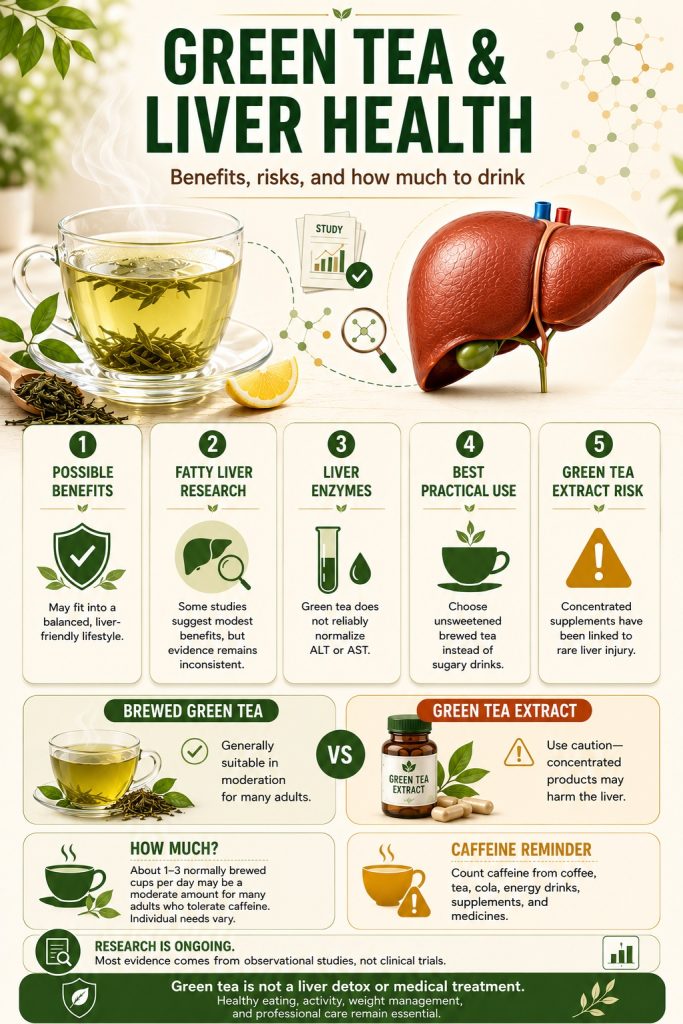
Short answer: One to three cups of unsweetened brewed green tea a day is fine for most adults and may help mainly by replacing sugary drinks. Green tea extract capsules, fat burners and detox blends are a different product with a real risk of liver injury, and are not recommended for fatty liver.
What the Evidence Shows on Green Tea and Liver Health
Green tea comes from Camellia sinensis, the same plant as black and oolong tea, but it is steamed and dried rather than fermented, which preserves polyphenols called catechins. The main one is epigallocatechin gallate, or EGCG. Green tea also supplies caffeine and L-theanine.
Worth noting up front: the only green tea preparation the FDA has ever approved as a drug is a topical ointment for genital warts. Nothing about green tea is approved for any liver condition.
Fatty liver disease and MASLD
MASLD, previously called nonalcoholic fatty liver disease, is fat accumulation in the liver alongside metabolic risk factors. Several small randomised trials using catechin rich green tea extract at 500 to 1,100 mg daily for 12 to 24 weeks reported improvements in ALT, AST, lipids, BMI and insulin resistance.
Those results sound encouraging until you look at the design. The trials were small, short, used different products at different doses, and tested extracts rather than the drink. A 2025 scoping review of bioactive compounds for MASLD concluded the evidence remains too inconsistent to treat green tea or its catechins as standard care. A 2024 genetic analysis found no clear evidence that tea intake causally lowers the risk of developing fatty liver.
The practical reading: unsweetened green tea fits comfortably into a fatty liver friendly diet, but do not expect it to clear liver fat. Its most reliable contribution is displacing soda, sweetened iced tea, juice drinks and sugary coffee.
Liver enzymes: ALT and AST
Pooled analyses show a pattern rather than a clean result. Across all participants the effect of green tea on liver enzymes was not statistically significant. In subgroup analysis limited to people who already had fatty liver, there was a moderate reduction. Among healthy participants, findings were not consistently favourable and some studies showed enzymes moving the wrong way.
So green tea does not reliably normalise liver enzymes, and abnormal results need investigation rather than self treatment. Normal enzymes also do not rule out significant fat or fibrosis, which is why clinicians use risk scores and imaging alongside bloodwork.
Chronic liver disease and liver cancer
Observational studies have linked regular green tea drinking with less chronic liver disease, but tea drinkers tend to differ from non drinkers in diet, activity, alcohol, smoking and access to healthcare, so association is not causation here.
On cancer, NCCIH reports that the many studies of green tea and various cancers have produced inconsistent overall results. Green tea is not a proven way to prevent liver cancer, and it does not replace hepatitis B vaccination, hepatitis treatment, alcohol reduction, metabolic management, or ultrasound surveillance for people with cirrhosis.
What green tea does do, modestly
NCCIH summarises the better established effects. Catechins and caffeine may have a modest effect on body weight. Green tea products produced small reductions in total and LDL cholesterol, with no effect on HDL or triglycerides, and most of those trials used extracts rather than the beverage. Lower coronary heart disease risk has been observed in Asian populations but not Western ones.
These are real but small effects, and none of them amounts to treatment for obesity, diabetes, high cholesterol or fatty liver.
Brewed Tea Versus Green Tea Extract
This is the single most important distinction in the topic, and the numbers make it concrete.
- A cup of brewed green tea delivers roughly 50 to 100 mg of EGCG, though this varies widely with leaf quantity, water temperature and steeping time. Typical daily intake for regular tea drinkers falls around 90 to 300 mg.
- A single extract capsule can deliver several hundred mg of EGCG in one dose, often taken on an empty stomach.
- The concern threshold identified by the European Food Safety Authority is 800 mg of EGCG per day from supplements, at which point serum transaminases rose significantly compared with controls.
EFSA judged catechins from traditional green tea infusions to be generally safe, and NCCIH reports no general safety concerns for green tea consumed as a beverage by adults. But EFSA also estimated that very heavy tea drinkers can reach up to 866 mg of EGCG daily, which is a useful reminder that “it is only tea” stops being true at extreme intakes.
Why extracts carry more risk
- Far higher catechin concentration per dose
- The whole dose arrives at once rather than sipped over an hour
- Weight loss products are often taken fasted, which increases catechin absorption
- Multi ingredient fat burners add stimulants and other botanicals
- Actual content often differs from the label
- Individual genetic susceptibility, covered below
Extracts turn up in capsules, tablets, powders, pre workout blends, weight loss formulas and detox teas. A product labelled green tea, natural or antioxidant is not automatically safe for your liver. Our guide to lifestyle habits that support liver health covers the wider supplement picture.
The Liver Injury Risk, in Numbers
LiverTox, the NIH database of drug induced liver injury, identifies green tea extract as a well established cause of clinically apparent liver injury. Most cases resemble acute hepatitis. A minority have progressed to acute liver failure, transplant or death.
Keep this in proportion. Injury is uncommon relative to how many people use these products, and it is largely confined to extracts rather than the drink. The problem is that it is unpredictable, and until recently there was no way to know who was vulnerable.
The HLA-B*35:01 gene variant
Research published in Hepatology identified a specific immune system gene variant that dramatically raises susceptibility. The numbers are striking:
- 72 percent of confirmed green tea extract liver injury cases carried HLA-B*35:01, against a background prevalence of 5 to 15 percent in the general population
- Carriers developed injury faster, at a median 66 days versus 139 days
- Carriers were younger, median age 40 versus 47
- Carriers had far higher peak ALT, a median 2,329 U/L versus 696 U/L, and more severe injury overall
Laboratory work since has shown EGCG can activate T cells in donors carrying the variant, supporting an immune mediated mechanism. The practical problem is that roughly one in ten people carry this allele and essentially nobody has been tested for it. You cannot know in advance whether you are in the susceptible group.
Warning signs to act on
Stop the product and seek medical advice promptly for yellowing skin or eyes, dark urine, pale stools, persistent nausea or vomiting, appetite loss, unusual fatigue, upper right abdominal pain, or generalised itching. Vomiting blood, black stools, severe confusion, fainting or rapidly deepening jaundice needs urgent care.
Tell the clinician exactly what you took, including the brand, and bring the bottle. Supplement related injury is frequently missed because people do not think to mention it.
How Much Green Tea Should You Drink?
There is no established dose of green tea for treating fatty liver or protecting the liver. For adults who tolerate caffeine, one to three cups of normally brewed, unsweetened green tea daily is a sensible moderate amount. That is a beverage suggestion, not a prescription.
Caffeine is usually the limiting factor before catechins are. The FDA lists roughly 37 mg of caffeine in a 12 fluid ounce serving of green tea and cites 400 mg daily as an amount not generally associated with negative effects in healthy adults. That ceiling covers every source combined: coffee, black tea, cola, energy drinks, chocolate and caffeine containing medicines.
More is not better. Very high intakes bring insomnia, anxiety, palpitations, headaches, nausea, stomach irritation and blood pressure changes, without any evidence of extra liver benefit.
Practical preparation
- Steep loose leaf or a tea bag per the package directions and drink it plain, or with lemon or mint
- Skip routine sugar, honey and syrup, which cancel the main benefit
- Check bottled green tea labels, since many contain substantial added sugar in large servings
- Never combine tea with extract capsules, detox powders or fat burners
- Matcha uses the whole powdered leaf, so it delivers more caffeine and catechins per serving. A normal culinary portion is fine; multiple large servings plus other caffeine sources is not
- Decaffeinated green tea still contains some caffeine and retains plant compounds, though processing alters catechin levels
Who Should Be Cautious
- Anyone with liver disease. With hepatitis, MASH, fibrosis, cirrhosis, abnormal liver tests or a past supplement related injury, avoid green tea extract entirely unless a clinician specifically recommends and monitors it. Brewed tea is often acceptable, but ask.
- People on medication. NCCIH documents that high dose green tea reduces blood levels and effectiveness of nadolol, a beta blocker. Green tea extract lowers atorvastatin levels, and an NCCIH funded study found an interaction with raloxifene. Other interactions are possible, so check with a pharmacist.
- Pregnancy. Green tea counts toward total caffeine. ACOG advises staying under 200 mg daily. Green tea supplements should not be used in pregnancy without professional guidance.
- Breastfeeding. Caffeine passes into breast milk. Low to moderate intake is usually well tolerated; high intake may cause infant fussiness and poor sleep.
- Caffeine sensitivity. Green tea can worsen anxiety, tremor, palpitations, insomnia, reflux and headaches. Decaf is a reasonable swap.
- Children and teenagers. No child needs green tea for liver health, and energy drinks are not a substitute for anything.
What Green Tea Cannot Do
The liver is already the body’s detoxification organ. Green tea does not flush toxins, melt liver fat, or regenerate scarred tissue. Treat these claims as marketing: seven day liver cleanse, green tea melts liver fat, EGCG reverses cirrhosis, detox tea repairs the liver, drink this before bed to cleanse your liver.
It also cannot offset excess calories, frequent sugary drinks, large refined carbohydrate portions, inactivity, heavy alcohol use, poorly controlled diabetes or untreated high triglycerides. For people with MASLD and excess weight, losing 3 to 5 percent of body weight reduces liver fat and 7 to 10 percent may improve inflammation and fibrosis. No beverage competes with that. Our roundup of foods that may support liver health and the evidence on coffee and liver health are both better places to start.
Frequently Asked Questions
Is green tea good for fatty liver?
Brewed green tea fits into a fatty liver friendly diet and may modestly help some liver and metabolic markers, but it is not a treatment for MASLD. Trials showing benefit mostly used concentrated extracts at 500 to 1,100 mg of catechins daily rather than the drink, and evidence reviews still call the findings inconsistent. The clearest practical benefit is replacing sugary drinks.
Can green tea damage your liver?
Brewed green tea rarely does. Green tea extract is a recognised cause of drug induced liver injury, and LiverTox documents cases resembling acute hepatitis, with rare progression to liver failure or transplant. The European Food Safety Authority identified 800 mg of EGCG per day from supplements as the point at which liver enzymes rose significantly. A brewed cup supplies roughly 50 to 100 mg.
Who is most at risk of green tea liver injury?
People carrying the HLA-B*35:01 gene variant. Research in Hepatology found 72 percent of confirmed green tea extract injury cases carried it, against 5 to 15 percent of the general population. Carriers developed injury sooner, at a median 66 days versus 139, were younger, and had far higher peak ALT levels. Most people have never been tested and cannot know in advance.
How many cups of green tea a day is safe?
One to three cups of unsweetened brewed green tea daily suits most adults who tolerate caffeine. There is no liver specific dose. Caffeine is usually the limiting factor: the FDA lists about 37 mg per 12 fluid ounce serving and cites 400 mg daily from all sources as generally without negative effects in healthy adults. Pregnancy is the exception, with ACOG advising under 200 mg.
Does green tea lower ALT and AST?
Not reliably. Pooled analyses found no significant overall effect on liver enzymes, though subgroup analysis limited to people who already had fatty liver showed a moderate reduction. Results in healthy participants were not consistently favourable. Abnormal liver enzymes need medical evaluation rather than an attempt to move the numbers with tea or supplements.
Should I take green tea extract for fatty liver?
No, not as a self prescribed strategy. The doses that showed benefit in trials overlap with doses linked to raised liver enzymes, product quality varies, undisclosed ingredients are common, and there is a genuine risk of severe liver injury in susceptible people. Anyone with abnormal liver tests or diagnosed liver disease should avoid extracts unless a clinician recommends and monitors them.
Is matcha better than regular green tea for the liver?
No. Matcha uses the whole powdered leaf, so it delivers more caffeine and catechins per serving than steeped tea, but there is no evidence it is a superior liver option. Higher catechin intake is not automatically better, and sweetened matcha lattes can carry significant added sugar. A normal culinary serving is fine.
Does green tea interact with any medications?
Yes. NCCIH documents that high dose green tea reduces blood levels and effectiveness of nadolol, a beta blocker used for blood pressure and heart conditions. Green tea extract lowers levels of atorvastatin, and an NCCIH funded study found an interaction with raloxifene. Other interactions are possible, so check with a doctor or pharmacist before using concentrated products alongside regular medication.
Can green tea prevent liver cancer?
There is no reliable evidence that it does. NCCIH reports that studies of green tea and various cancers have produced inconsistent overall results. Established measures matter far more: hepatitis B vaccination, testing and treatment for viral hepatitis, reducing alcohol, managing metabolic risk factors, and following recommended surveillance if you have cirrhosis.
Final Thoughts on Green Tea and Liver Health
The honest summary of green tea and liver health is that the drink is fine and the pills are not worth the gamble. One to three cups of unsweetened brewed green tea daily is safe for most adults, tastes good, and helps most by taking the place of something sweetened. Any direct effect on liver fat or liver enzymes is modest at best and inconsistent across studies.
Green tea extract is a different proposition. It carries a documented risk of serious liver injury, that risk concentrates in people carrying a gene variant roughly one in ten of us has and almost nobody has been tested for, and the doses studied for benefit sit uncomfortably close to the doses that raise liver enzymes. For a supplement with unproven liver benefits, that is a poor trade.
Enjoy the tea. Skip the capsules. Put your effort into the things with real evidence behind them: balanced eating, regular movement, gradual weight loss where appropriate, limited alcohol, and proper medical follow up.
Related reading: Lifestyle habits that support liver health | Fatty liver diet: foods to eat and limit | Can coffee support liver health?
Medical Disclaimer
This article is for general education and does not diagnose, prevent or treat liver disease. Green tea supplements and concentrated extracts can cause liver injury and interact with medicines. Consult a qualified healthcare professional before using them, particularly with abnormal liver tests, fatty liver disease, hepatitis, fibrosis, cirrhosis, pregnancy, breastfeeding or regular medication use. See our medical disclaimer, editorial policy and fact checking policy.
Cross checked against NCCIH, the NIH LiverTox database, the European Food Safety Authority, FDA caffeine guidance and peer reviewed research in Hepatology. Last updated July 2026.
About the Author and Reviewer
Mezbaul Islam, MSc Nutrition owns and writes Simple Health Naturally. He researches each article from public health guidance, clinical guidelines and peer reviewed studies, and traces every figure back to a named source.
Dr. Obeydur Rahman, MBBS, MD in Medicine edits the articles, checks the sources cited and is responsible for the site’s editorial standards. MD in Medicine is the specialty for adult conditions such as liver disease, type 2 diabetes and high blood pressure.
Read more about our authors and reviewers or see our editorial policy.
Edited by Dr. Obeydur Rahman, MBBS, MD in Medicine.