A good diabetes friendly breakfast pairs a measured portion of fibre rich carbohydrate with protein and a little healthy fat. What most articles leave out is why breakfast deserves more care than lunch or dinner: morning is when your body handles carbohydrate worst. Below are 15 ideas with approximate carb and protein counts, sorted from lowest carbohydrate to highest, so you can pick one that fits your targets.
Short answer: Aim for at least 15 to 20 g of protein and keep carbohydrate lower at breakfast than at other meals. The lowest carb options here are the smoked salmon plate at about 7 g and the tofu scramble at 9 g. Classic oatmeal with berries is the highest at roughly 35 g, which surprises people.
Why Breakfast Is the Hardest Meal for Blood Sugar
Between roughly 4am and 8am, your body releases growth hormone, cortisol, glucagon and adrenaline to prepare you to wake up. Those hormones raise insulin resistance, so glucose climbs before you have eaten anything. This is the dawn phenomenon, and it is not rare: it affects around 54 percent of people with type 1 diabetes, 55 percent with type 2, and roughly 30 percent of people with prediabetes or insulin resistance.
The part that matters for meal planning is what happens next. Research summarised in Diabetes Care shows the dawn phenomenon raises glucose not only before breakfast but to a greater extent after it. The same bowl of oats that behaves reasonably at 3pm can produce a much larger spike at 7am.
That has a practical consequence. A randomised trial in adults with type 2 diabetes compared a low carbohydrate breakfast with a standard higher carbohydrate one and found that restricting carbohydrate at breakfast alone lowered mean glucose, peak glucose, glycaemic variability and time above range, while increasing time in range across the whole 24 hours. Changing one meal shifted the entire day.
None of this means breakfast must be carb free. It means breakfast is the meal where portion size and protein content earn you the most, and where the traditional cereal or toast breakfast tends to work least well. If you have a meter or monitor, breakfast is the meal most worth testing.
If you wake up consistently high, that is worth raising with your care team rather than solving with food alone, since it may relate to medication timing. The American Diabetes Association covers the causes of high morning glucose in more detail.
What Makes a Breakfast Diabetes Friendly
- Protein first, and more of it than you think. Eggs, plain Greek yogurt, cottage cheese, tofu, fish, beans, nuts and seeds. Aim for 15 to 20 g or more. Protein blunts the glucose rise and carries you to lunch.
- Fibre rich carbohydrate, measured. Oats, whole grain bread, beans, lentils, whole fruit. For meal planning, CDC counts about 15 g of carbohydrate as one carb serving. Most people do better with one to two servings at breakfast rather than three.
- Vegetables or whole fruit. Volume, fibre and nutrients for very little carbohydrate in the case of vegetables.
- A moderate amount of unsaturated fat. Avocado, nuts, seeds, olive oil, natural nut butter. Slows digestion but is calorie dense, so measure it.
Read total carbohydrate rather than total sugars, since starch counts too. Bread slices, tortillas and English muffins vary enormously between brands, so check the pack rather than assuming.
15 Diabetes Friendly Breakfast Ideas
Figures are approximate for the serving described and vary with brand, bread size and fruit size.
Lowest carbohydrate, under 15 g
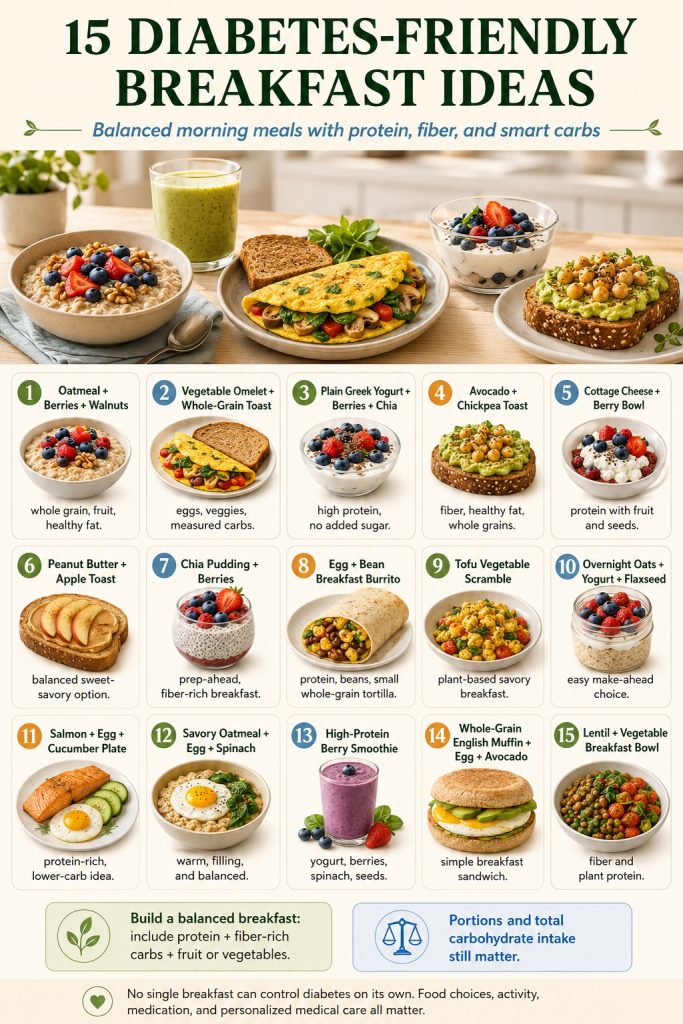
- Smoked salmon, egg and cucumber plate. One boiled egg, a small portion of smoked salmon, cucumber and tomato, a quarter avocado. About 7 g carbs, 16 g protein. The lowest carb option here and the best fit if you run high in the mornings. Smoked salmon is high in sodium, so fresh or canned salmon works better if you limit salt.
- Tofu and vegetable scramble. Five ounces firm tofu crumbled with spinach, mushrooms, peppers, turmeric and paprika. About 9 g carbs, 15 g protein. Egg free and dairy free. Add a slice of toast only if your numbers allow.
- Cottage cheese and berry bowl. Three quarters of a cup cottage cheese, half a cup berries, 1 tbsp pumpkin seeds, cinnamon. About 14 g carbs, 24 g protein. The highest protein breakfast on this list. Compare brands for sodium.
Moderate, 15 to 25 g
- Plain Greek yogurt with berries and chia. Three quarters of a cup yogurt, half a cup berries, 1 tbsp chia seeds. About 19 g carbs including 7 g fibre, 19 g protein. Plain only. Flavoured yogurt can carry two to three times the carbohydrate.
- High protein berry smoothie. Three quarters of a cup plain Greek yogurt, half a cup berries, spinach, unsweetened milk, 1 tbsp chia. About 20 g carbs, 19 g protein. No juice, honey or sweetened protein powder. Drink it slowly, since liquid meals empty faster and satisfy less than chewed food.
- Vegetable omelette with whole grain toast. Two eggs, spinach, mushrooms, tomatoes, peppers, one slice of toast. About 21 g carbs, 16 g protein. A reliable everyday option.
- Chia pudding with berries. 2 tbsp chia soaked overnight in unsweetened milk, half a cup berries, cinnamon. About 22 g carbs of which 11 g is fibre, 10 g protein. Net carbohydrate is closer to 11 g, which is lower than the headline number suggests. Use fortified soy milk to lift the protein.
- Lentil and vegetable breakfast bowl. Half a cup cooked lentils, spinach, tomatoes, mushrooms, topped with an egg. About 25 g carbs including 9 g fibre, 15 g protein. Cheap, filling and unusual enough to break breakfast monotony.
Higher carbohydrate, portion with care
These are still nutritious. They simply need a smaller portion, a bigger protein addition, or a day when your morning numbers are behaving.
- Peanut butter and apple toast. One slice whole grain toast, 1 tbsp natural peanut butter, thin apple slices, cinnamon. About 28 g carbs, 7 g protein. Protein is on the low side, so add an egg if you can.
- Avocado and chickpea toast. One slice bread, a quarter avocado, a quarter cup rinsed chickpeas mashed with lemon and pepper. About 29 g carbs, 8 g protein. Both bread and chickpeas count.
- Whole grain English muffin with egg and avocado. About 29 g carbs, 11 g protein. English muffins often carry more carbohydrate than two slices of bread, so check the label.
- Breakfast burrito with egg and beans. Small whole grain tortilla, one egg, a quarter cup black beans, spinach, peppers, salsa. About 31 g carbs, 13 g protein. Tortilla size is the main variable; a large one can double this.
- Overnight oats with yogurt and flaxseed. A third of a cup oats, half a cup plain Greek yogurt, 1 tbsp ground flax, a small portion of berries. About 31 g carbs, 17 g protein. The yogurt is what makes this work.
- Savoury oatmeal with egg and spinach. Half a cup oats cooked in water or low sodium broth, spinach, mushrooms, topped with an egg. About 31 g carbs, 11 g protein. No sugar needed at all.
- Oatmeal with berries and walnuts. Half a cup dry rolled oats, half a cup berries, 1 tbsp walnuts, cinnamon. About 35 g carbs, 7 g protein. The classic diabetes breakfast is actually the highest carbohydrate and lowest protein option on this list. Use a quarter cup of oats and add Greek yogurt or an egg to rebalance it.
For portable options between meals, see our guide to 15 snacks that will not spike blood sugar.
Build Your Own in Four Steps
- Start with protein. Eggs, plain Greek yogurt, cottage cheese, tofu, beans, lentils, fish, unsweetened soy milk, nuts or nut butter.
- Add a measured carbohydrate. Rolled oats, whole grain bread, a small tortilla, beans, lentils, quinoa or whole fruit. One to two carb servings for most people.
- Add vegetables or fruit. Spinach, mushrooms, peppers, tomatoes for almost no carbohydrate. Berries, apple or pear if you want sweetness.
- Finish with a little fat. Avocado, nuts, seeds, olive oil or nut butter, measured with a spoon.
Some foods cover two steps at once. Beans and lentils give carbohydrate, fibre and protein together, which is why they punch above their weight at breakfast.
Breakfast Foods Worth Limiting
Nothing is permanently banned, but these combine fast carbohydrate with little protein or fibre, which is the worst pairing for a morning when insulin resistance is already high: sugar sweetened cereal, large bakery muffins, doughnuts and pastries, pancakes with syrup, sweetened instant oatmeal, flavoured yogurt, breakfast bars low in protein, white toast with sugary spreads, sweetened coffee drinks, fruit juice, and oversized restaurant breakfast sandwiches.
Two specifics worth naming. Fruit juice raises glucose faster than whole fruit because the fibre is gone and it goes down in seconds. Processed breakfast meats such as bacon, sausage and ham are high in sodium and saturated fat, and the WHO cancer agency classifies processed meat as a Group 1 carcinogen for colorectal cancer, so leaner protein most mornings is the better habit.
Should You Skip Breakfast?
Meal timing is individual. Some people manage well without breakfast. For others it backfires, particularly anyone using insulin or a medication that can cause hypoglycaemia, where skipping meals raises the risk of a low.
There is also a practical trap. Skipping breakfast often means a larger, faster lunch, and morning insulin resistance does not fully resolve until later anyway. If you skip and then find your mid morning readings climbing regardless, that is the dawn phenomenon rather than hunger.
Changes to meal timing belong in a conversation with your care team, not a decision made from an article. For the wider eating pattern, see our best foods for people with diabetes and beginner grocery list.
Frequently Asked Questions
What is the best breakfast for diabetes?
There is no single best breakfast, but the pattern that works is high protein with a measured carbohydrate. Cottage cheese with berries and seeds delivers about 24 g of protein for 14 g of carbohydrate, and a tofu scramble or a smoked salmon and egg plate come in under 10 g of carbohydrate. Aim for at least 15 to 20 g of protein and one to two carb servings, then test your own response.
Why is my blood sugar highest in the morning?
This is usually the dawn phenomenon. Between about 4am and 8am the body releases growth hormone, cortisol, glucagon and adrenaline, which raise insulin resistance and push glucose up before you eat. It affects roughly 54 percent of people with type 1 diabetes, 55 percent with type 2 and 30 percent with prediabetes. It also makes the rise after breakfast larger than after other meals. Persistent morning highs are worth discussing with your care team.
Should breakfast be lower in carbs than other meals?
For many people, yes. Because morning insulin resistance is at its peak, the same carbohydrate portion produces a bigger rise at breakfast than later in the day. A randomised trial in adults with type 2 diabetes found that restricting carbohydrate at breakfast alone lowered mean glucose, peak glucose and glycaemic variability and increased time in range across the full 24 hours. Your individual targets still come from your care team.
Can people with diabetes eat oatmeal?
Yes, but portion and toppings matter more than most people expect. Half a cup of dry rolled oats with berries and walnuts comes to roughly 35 g of carbohydrate with only 7 g of protein, making it the highest carb and lowest protein option on this list. Use a quarter cup of oats, add Greek yogurt or an egg for protein, and skip brown sugar, syrup and sweetened dried fruit.
How many carbs should a diabetes breakfast have?
There is no universal number. For meal planning, CDC counts about 15 g of carbohydrate as one carb serving, and one to two servings suits many people at breakfast given higher morning insulin resistance. Your target depends on your diabetes type, insulin dose, other medicines, activity and glucose readings. Anyone using insulin should follow the carbohydrate to insulin ratio their team provided.
Are eggs good for people with diabetes?
Eggs are a useful protein food with about 6 g of protein and almost no carbohydrate each, which makes them well suited to a meal where carbohydrate tolerance is low. Cook them with vegetables rather than pairing them with processed breakfast meats. If you have been given specific cholesterol or cardiac dietary advice, follow that instead.
Can I eat bananas for breakfast with diabetes?
Yes, with attention to portion. A medium banana carries around 27 g of carbohydrate, which is close to a whole breakfast allowance for some people. Half a banana paired with plain Greek yogurt, eggs or peanut butter works better than a whole one eaten alone, since the protein and fat slow absorption. Berries are a lower carbohydrate alternative at roughly 7 g per half cup.
Is skipping breakfast good for diabetes?
It depends on your medication and your patterns. Some people do fine without it. For anyone using insulin or a medicine that can cause hypoglycaemia, skipping meals raises the risk of a low and should not be started without medical advice. Skipping also tends to produce a larger, faster lunch. Discuss changes in meal timing with your healthcare team.
Is fruit juice okay at breakfast?
Whole fruit is the better daily choice. Juice has had the fibre removed and is swallowed in seconds, so glucose rises faster and higher, which is a poor match for a morning when insulin resistance is already elevated. Measured juice may have a role in treating hypoglycaemia if your care plan specifies it, but that is a different situation from a regular breakfast drink.
Are low carb breakfast products automatically better?
No. A low carb label says nothing about saturated fat, sodium, calories or how processed the product is, and many low carb bars and shakes score badly on those. Read the full Nutrition Facts panel and the ingredient list. A plate of eggs and vegetables usually beats a packaged low carb product on every measure.
Final Thoughts on Diabetes Friendly Breakfast Ideas
The most useful thing to know about a diabetes friendly breakfast is that morning is your least forgiving window. Insulin resistance peaks overnight, the rise after breakfast is bigger than after other meals, and trial evidence shows that trimming carbohydrate at this one meal improves glucose across the whole day.
So load the protein, measure the carbohydrate, and be honest about the oatmeal. If you want the easiest wins from this list, start with cottage cheese and berries, a tofu or vegetable scramble, or Greek yogurt with chia. All three clear 15 g of protein and stay at or under 20 g of carbohydrate.
Then check your own numbers. Individual responses vary, and the breakfast that works for you is the one your meter agrees with and you will actually make on a Tuesday.
Related reading: 15 snacks that will not spike blood sugar | 10 best foods for people with diabetes | Diabetes grocery list for beginners | 25 keto protein snacks
Medical Disclaimer
This article is for general education and is not personalised medical or nutritional advice. Carbohydrate targets, meal timing and insulin dosing must be individualised. Consult a doctor, registered dietitian or diabetes care and education specialist before changing carbohydrate intake or meal timing, particularly if you use insulin, take medication that can cause hypoglycaemia, are pregnant, or have kidney, heart or digestive disease. See our medical disclaimer, editorial policy and fact checking policy.
Cross checked against the American Diabetes Association, CDC, USDA FoodData Central and peer reviewed research in Diabetes Care and the American Journal of Clinical Nutrition. Carbohydrate and protein figures are estimates that vary with brand and portion. Last updated July 2026.
Edited by Dr. Obeydur Rahman, MBBS, MD in Medicine.