The most useful snacks that won’t spike blood sugar follow one rule: pair a measured portion of carbohydrate with protein, fibre or fat, rather than eating fast carbohydrate on its own. That combination slows digestion and blunts the rise in glucose. Below are 15 options with approximate carb and protein counts, so you can match a snack to your own targets instead of guessing.
One honest caveat first. No food is spike proof. Your response depends on portion, medication, activity, sleep, stress and your own physiology, and research using continuous glucose monitors shows people can react quite differently to identical meals. These are foods that are less likely to cause a sharp rise, not foods that cannot.
Short answer: Build every snack from two parts, a carbohydrate you have measured plus a protein or fat. Around 15 g of carbohydrate counts as one carb serving. The lowest carb options here are tuna cucumber bites, celery with nut butter and a hard boiled egg, all under 6 g.
What Makes a Snack Blood Sugar Friendly
Four components do the work, and a good snack has at least two of them.
- Protein. Slows gastric emptying and adds fullness. Greek yogurt, cottage cheese, eggs, tuna, cheese, tofu, edamame, nuts.
- Fibre. Not digested into glucose the way starch and sugar are, so it lowers the effective carb load. Vegetables, whole fruit, beans, chia, flax.
- Healthy fat. Slows digestion further. Nuts, seeds, avocado, olives, nut butter, olive oil. Calorie dense, so measure it.
- A measured carbohydrate. The goal is portion control, not elimination. For meal planning, CDC counts about 15 g of carbohydrate as one carb serving. How many servings suit a snack depends on your medication, activity and targets.
Read total carbohydrate on the label rather than total sugars, since starch counts too. The American Diabetes Association makes the same core point: combine protein, healthy fat and fibre, with or without carbohydrate.
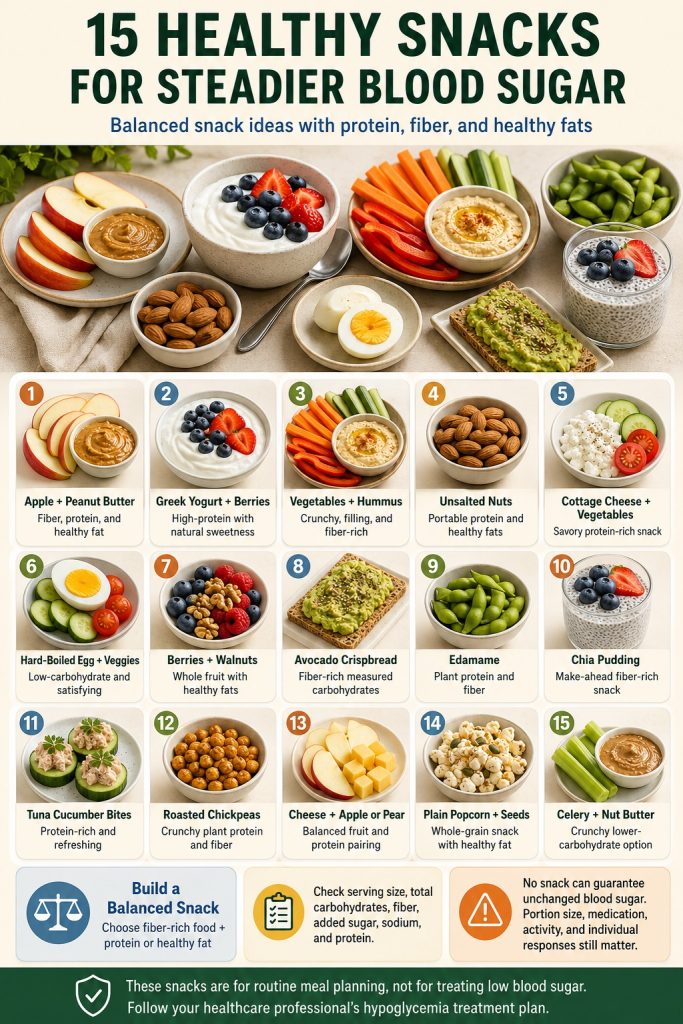
15 Healthy Snacks That Won’t Spike Blood Sugar
Figures are approximate for the serving described and vary with brand and fruit size. Check labels for packaged items.
Lowest carbohydrate, under 8 g
- Tuna stuffed cucumber bites. Half a can of tuna in water mixed with plain yogurt or mashed avocado, spooned onto thick cucumber slices. About 3 g carbs, 15 g protein. The highest protein per carb on this list. Choose lower sodium tuna where you can.
- Celery with peanut or almond butter. Two to three stalks, 1 tbsp natural nut butter. About 5 g carbs, 4 g protein. Add cinnamon rather than honey.
- Hard boiled egg with vegetable sticks. One egg plus celery, pepper strips, cherry tomatoes or radishes. About 6 g carbs, 7 g protein. Boil a batch on Sunday.
- Cottage cheese with cucumber and tomato. Half a cup, black pepper and herbs. About 7 g carbs, 15 g protein. Cottage cheese can be high in sodium, so compare brands if you manage blood pressure.
Around one carb serving, 9 to 15 g
- Plain Greek yogurt with berries. Three quarters of a cup plus a quarter cup of berries. About 10 g carbs, 18 g protein. Plain only. Flavoured yogurts often carry two to three times the carbohydrate.
- Berries with walnuts. Half a cup of berries, 2 tbsp chopped walnuts. About 10 g carbs, 3 g protein. Fresh or unsweetened frozen, not packed in syrup.
- Cheese with apple or pear slices. One ounce of cheese, half a small fruit. About 11 g carbs, 7 g protein.
- Avocado on whole grain crispbread. One crispbread, a quarter avocado, tomato and lemon. About 11 g carbs, 2 g protein. Check the pack, since some list several crackers as one serving.
- Apple slices with natural peanut butter. Half a small apple, 1 tbsp peanut butter. About 13 g carbs, 5 g protein. Peanuts should be the main ingredient.
- Chia pudding. 2 tbsp chia seeds soaked in half a cup of unsweetened milk with cinnamon. About 13 g carbs of which 10 g is fibre, 8 g protein. The net carb load here is very low.
- Edamame. Half a cup shelled, plain or lightly salted. About 8 g carbs with 4 g fibre, 9 g protein.
- Raw vegetables with hummus. One to two cups of non starchy vegetables, 3 tbsp hummus. About 14 g carbs, 5 g protein.
- A small handful of unsalted nuts. One ounce, roughly 28 g. About 6 g carbs of which 3 g is fibre, 6 g protein. Avoid honey roasted and chocolate coated versions.
Higher carbohydrate, worth measuring
- Roasted chickpeas. A third of a cup, seasoned with paprika, cumin or garlic. About 15 g carbs with 5 g fibre, 5 g protein. Portion into a bowl rather than eating from the bag.
- Air popped popcorn with pumpkin seeds. Three cups popcorn, 1 tbsp seeds. About 19 g carbs with 4 g fibre, 6 g protein. The highest carb option here, and the easiest to overeat. Skip caramel, kettle corn and cinema sized portions.
For higher protein options that stay lower in carbohydrate, our roundup of 25 keto protein snacks overlaps well with this list.
Three Habits That Matter as Much as the Snack
Which food you pick is only part of the picture. These three changes affect post meal glucose independently of what is on the plate.
Eat the carbohydrate last
Meal sequencing is one of the more striking findings in recent nutrition research. Eating vegetables and protein before the carbohydrate portion, rather than everything together, lowers the glucose peak and reduces variability. A 2025 study in Diabetes Care found a carbohydrates last order improved time in range and cut glycaemic variability.
The mechanism is a delay in gastric emptying plus a stronger GLP 1 response. Practically: eat the cheese before the apple, the hummus before the crackers. It costs nothing and takes no willpower.
Walk for a few minutes afterwards
You do not need a workout. Research on interrupting sitting found that as little as 2 to 5 minutes of light walking after eating measurably lowered post meal glucose, and short walking breaks were nearly as effective as one continuous 15 minute walk. Pooled analyses put the reduction in peak glucose at roughly 17 to 24 percent compared with sitting.
Timing helps. Moving soon after eating works better than waiting an hour.
Portion before you start
Nuts, chickpeas, popcorn and hummus are all reasonable snacks that become something else entirely when eaten from the container. Put the serving in a bowl and put the bag away. This single habit does more for total carbohydrate intake than swapping one snack for another.
Why the Same Snack Affects People Differently
If a snack that works for a friend does nothing for you, that is expected rather than a failure. Continuous glucose monitoring research has repeatedly shown large differences between people eating identical meals, driven by factors including gut microbiome, insulin sensitivity, meal timing and genetics.
There is a second layer of honesty worth adding. Studies giving the same person the same meal twice have found that individual glucose readings are less reproducible than the personalised nutrition industry tends to suggest. So treat single readings as noisy signals and look for patterns over weeks.
The practical upshot: if you have a meter or a monitor, test your own reaction to the snacks you eat regularly. Your data beats any list, including this one.
Snacks That Raise Blood Sugar Fast
These are high in refined carbohydrate or added sugar with little protein or fibre to slow them down: sweets, biscuits, doughnuts, pastries, cereal bars, regular soda, sweet tea, energy drinks, large servings of juice, sweetened yogurt, caramel popcorn, flavoured rice cakes, sugary granola, plain refined crackers eaten alone, and dried fruit in large portions.
None is permanently banned. They are simply easier to overeat and faster to hit the bloodstream. Drinks are the worst offenders because liquid sugar arrives quickly and produces almost no fullness.
Label traps to watch
- Serving size. Every number applies to the stated serving. A small bag is often two.
- Total carbohydrate, not total sugars. Starch raises glucose too.
- “Sugar free” is not carb free. Flour, starch and milk still count, and large amounts of sugar alcohols can cause bloating and diarrhoea.
- Protein bars. Many carry substantial added sugar and refined starch. Compare the numbers rather than trusting the front of the pack.
- Sodium and saturated fat. Crackers, cheese, jerky and cottage cheese can be high in salt, which matters if you manage blood pressure, heart or kidney disease.
Treating Low Blood Sugar Is a Different Situation
This matters and is easy to get wrong. A balanced snack is for routine management. It is not the right treatment for hypoglycaemia, because the protein, fat and fibre that make these snacks useful also slow absorption, which is the opposite of what you need when glucose is low.
Follow the hypoglycaemia plan your healthcare team gave you, which usually specifies a measured amount of fast acting carbohydrate. Once glucose is recovering, a balanced snack containing protein and carbohydrate may be appropriate. Severe hypoglycaemia with confusion, unconsciousness, inability to swallow or seizures is a medical emergency. Never give food or drink to someone who is unconscious.
Do You Even Need to Snack?
Not everyone does. Snacks earn their place when there is a long gap between meals, when hunger wrecks portion control at the next meal, when activity raises energy needs, when a medication schedule requires food, or when a clinician has recommended a bedtime snack. Unplanned grazing usually just adds carbohydrate and calories.
If you take insulin or a medication that can cause hypoglycaemia, changes to snack timing are a conversation for your care team rather than something to adjust from an article. For wider eating patterns, see our best foods for people with diabetes and diabetes friendly breakfast ideas.
Frequently Asked Questions
What snack will not raise blood sugar at all?
None can be guaranteed to. Foods made mostly of protein, fat or non starchy vegetables contain the least carbohydrate, so tuna with cucumber, a hard boiled egg with vegetable sticks, or celery with nut butter come closest at 3 to 6 g of carbohydrate. Even then individual responses vary. Focus on portion, total carbohydrate and your own readings rather than hunting for a zero impact food.
How many carbs should a snack have?
There is no universal number. For meal planning, CDC counts about 15 g of carbohydrate as one carb serving, and many snacks land at one serving or less. How many suit you depends on your diabetes type, insulin dose, other glucose lowering medicines, activity, time until the next meal and whether you have had recent hypoglycaemia. Your care team can set a target.
Does eating order really affect blood sugar?
Yes, and the effect is meaningful. Eating vegetables and protein before the carbohydrate portion of a meal lowers the glucose peak compared with eating everything together or carbohydrate first. A 2025 study in Diabetes Care found a carbohydrates last order improved time in range and reduced glycaemic variability. The likely mechanism is slower gastric emptying and a stronger GLP 1 response.
Does walking after eating lower blood sugar?
Yes, and it does not take much. Research on breaking up sitting found that as little as 2 to 5 minutes of light walking after a meal measurably reduced post meal glucose, with short frequent walks nearly matching one continuous 15 minute walk. Pooled analyses suggest peak glucose drops by roughly 17 to 24 percent versus sitting. Moving soon after eating works better than waiting.
Are nuts a good snack for blood sugar?
Yes. One ounce of unsalted nuts supplies about 6 g of carbohydrate, of which 3 g is fibre, plus 6 g of protein and unsaturated fat. That combination has minimal effect on glucose. Because nuts are calorie dense at roughly 160 to 200 calories per ounce, portion them into a bowl. Avoid honey roasted, candied and chocolate coated versions.
Is fruit bad for blood sugar?
No. Whole fruit fits into a diabetes eating pattern, and the fibre slows absorption in a way juice does not. Portion is what matters: half a small apple is about 10 g of carbohydrate, half a cup of berries around 6 to 9 g. Pairing fruit with cheese, nuts, yogurt or nut butter slows the rise further. Large glasses of juice are a different matter.
Why does the same snack affect me differently to someone else?
Continuous glucose monitoring studies show large differences between people eating identical meals, influenced by gut microbiome, insulin sensitivity, meal timing, sleep, stress and genetics. Research has also found that the same person eating the same meal twice can get noticeably different readings, so single measurements are noisy. Look for patterns across several weeks rather than reacting to one number.
Are sugar free snacks safe for diabetes?
Sugar free does not mean carbohydrate free. A sugar free biscuit still contains flour and starch, both of which raise glucose. Many also contain sugar alcohols that can cause bloating, gas or diarrhoea in larger amounts. Check total carbohydrate and serving size on the Nutrition Facts panel rather than trusting the front of the pack.
Can I have a snack before bed?
It depends on your medication, insulin schedule, dinner timing, evening activity and overnight glucose pattern. Some people benefit from a bedtime snack, particularly if there is a risk of overnight hypoglycaemia. Others simply run higher overnight or add unnecessary calories. This is worth asking your healthcare professional about rather than deciding from general advice.
Is popcorn okay for diabetes?
Plain air popped popcorn is a whole grain and can fit, but it is the highest carbohydrate option on this list at roughly 19 g for three cups. Portion it and pair it with pumpkin seeds or nuts to add protein and fat. Avoid caramel corn, sweet kettle corn and large cinema servings, which change the numbers completely.
Count what you are actually eating. Added sugar hides in places most people never check, so our added sugar calculator converts a day of food into teaspoons. See also the fibre intake calculator.
Final Thoughts on Snacks That Won’t Spike Blood Sugar
The best snacks that won’t spike blood sugar are not exotic. They are a measured carbohydrate plus a protein or fat: yogurt with berries, apple with peanut butter, vegetables with hummus, tuna on cucumber, an egg with pepper sticks. Most land at or below one carb serving, and the lowest come in under 6 g.
Then add the two free upgrades. Eat the carbohydrate part last, and walk for a few minutes afterwards. Both lower the glucose peak without changing what you eat at all.
Finally, trust your own numbers over any list. People respond differently to identical foods, so if you have a meter or monitor, use it to learn which of these work for you. No snack replaces prescribed treatment or guarantees stable glucose.
Related reading: 10 best foods for people with diabetes | 15 diabetes friendly breakfast ideas | Diabetes grocery list for beginners | 25 keto protein snacks
Medical Disclaimer
This article is for general education and is not personalised medical advice. Carbohydrate targets, snack timing and hypoglycaemia treatment must be individualised. Consult a doctor, registered dietitian or diabetes care and education specialist before changing carbohydrate intake or snack timing, particularly if you use insulin, take medication that can cause hypoglycaemia, are pregnant, or have kidney, heart or digestive disease. See our medical disclaimer, editorial policy and fact checking policy.
Cross checked against the American Diabetes Association, CDC, USDA FoodData Central and peer reviewed research in Diabetes Care and Cell. Carbohydrate and protein figures are estimates that vary with brand and portion. Last updated July 2026.
Edited by Dr. Obeydur Rahman, MBBS, MD in Medicine.