Beet juice genuinely lowers blood pressure. Lemon water does nothing for your liver. Both claims circulate with equal confidence, which is the whole problem with health drinks as a category. This guide rates ten popular ones by the strength of actual human research.
You get an honest verdict on each, the doses used in trials, and one safety warning that matters enormously for a group these drinks are often marketed to.
Read This First If You Have Kidney Disease
Two drinks on this list can genuinely harm people with reduced kidney function.
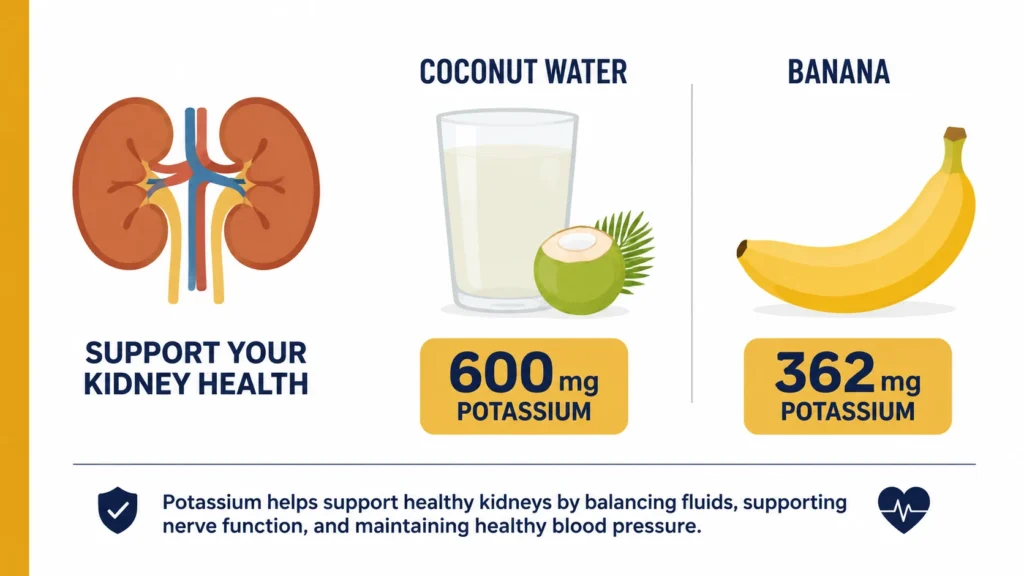
Coconut water is very high in potassium. One cup carries roughly 600 mg, more than a medium banana. Healthy kidneys remove excess potassium without difficulty. Damaged kidneys cannot, and potassium builds up in the blood. That condition, hyperkalemia, causes irregular heartbeat and in severe cases cardiac arrest.
The National Kidney Foundation advises limiting high potassium foods with chronic kidney disease. Coconut water sits near the top of that list, and the fact that it is marketed as a natural health drink makes it more dangerous rather than less.
Most juices on this list carry the same problem. Beet juice, orange juice and carrot juice all deliver substantial potassium.
Cranberry juice raises a different concern. Cranberries are high in oxalate, which can increase the risk of calcium oxalate kidney stones.
Healthy kidneys and diseased kidneys need opposite advice. Anyone with chronic kidney disease should follow their nephrologist rather than any general chart, including this one.
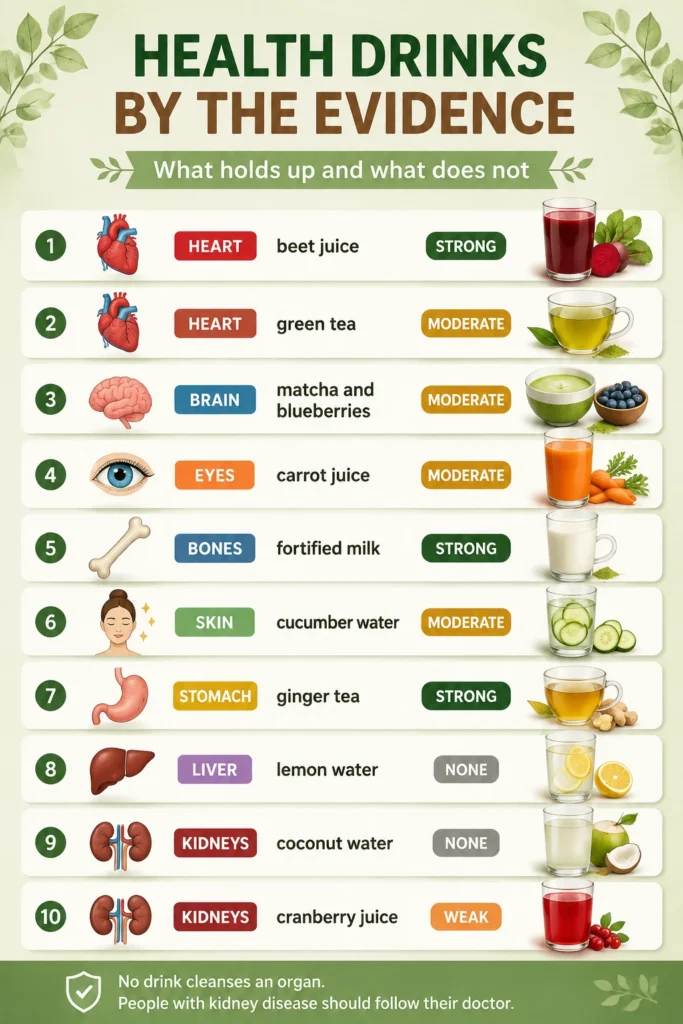
List of Popular Drinks
| Drink | Claimed For | Evidence | Verdict |
|---|---|---|---|
| Beet juice | Heart | Strong | Works, modest effect |
| Green tea | Heart, general | Moderate | Reasonable |
| Lemon water | Liver | None | Hydration only |
| Cranberry juice | Kidneys | Weak for kidneys | Wrong organ |
| Coconut water | Kidneys | None, plus risk | Skip with CKD |
| Matcha and blueberries | Brain | Moderate | Promising |
| Ginger tea | Lungs | None for lungs | Good for nausea |
| Carrot juice | Eyes | Moderate | Real but limited |
| Aloe water | Skin | Weak, safety concerns | Choose cucumber water |
| Fortified milk | Bones | Strong | Works, check the label |
Only one reaches strong. That number is the honest summary of this whole category.
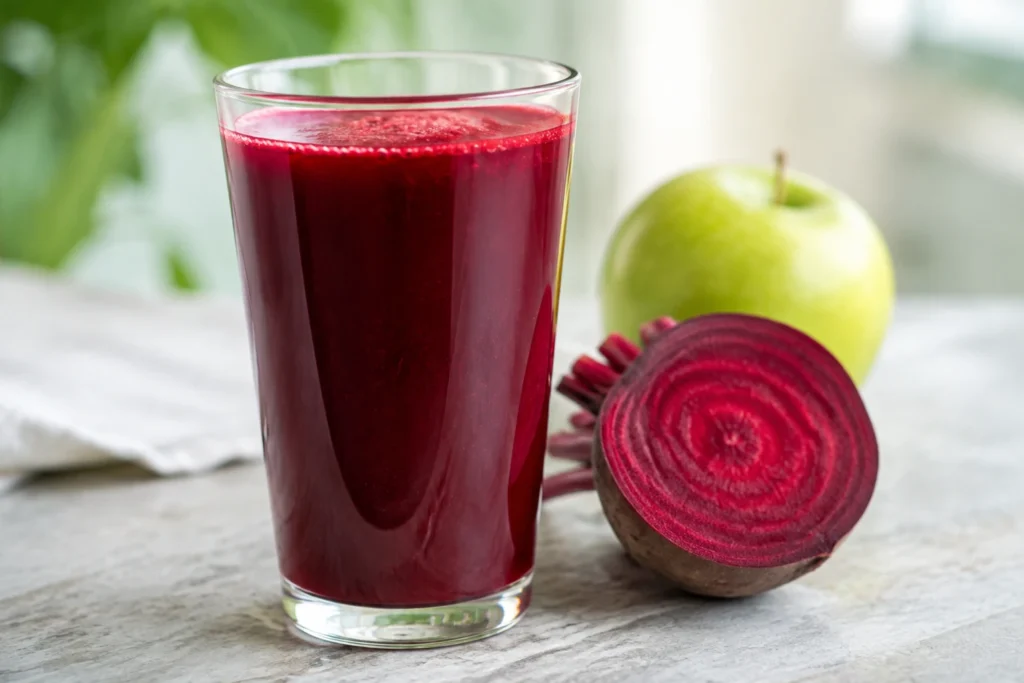
1. Beet Juice for Heart Health
Evidence: strong.
Beets are high in dietary nitrate. Your body converts it to nitric oxide, which relaxes blood vessel walls. Meta-analyses find average systolic blood pressure reductions of roughly 4 to 5 mmHg.
Trials use 250 to 500 ml daily. Effects build over two to four weeks rather than appearing after one glass.
What it does not do. It will not replace blood pressure medication, and the effects add together with your prescription.
Our full guide to beetroot juice recipes and dosing covers the timing and one common habit that cancels the effect entirely.
2. Green Tea
Evidence: moderate.
Green tea contains catechins, particularly EGCG. Trials show modest improvements in cholesterol and inflammatory markers. Population studies link regular consumption with lower cardiovascular disease rates.
Two to three cups daily appears throughout the research.
What it does not do. The weight loss claims run far ahead of the evidence. Effects on metabolism are small and short lived.
One caution. Concentrated green tea extract supplements have been linked to liver injury in rare cases. Drinking the tea carries no such concern.
3. Lemon Water for Liver
Evidence: none.
This claim has no research behind it and no plausible mechanism. Your liver processes waste continuously without assistance. Nothing you drink speeds it up, cleanses it or detoxifies it.
What it actually does. Hydrates you and adds a small amount of vitamin C. Warm water first thing genuinely helps some people feel better after eight hours without fluid.
One real downside. Citric acid erodes tooth enamel. Sipping lemon water throughout the day exposes your teeth to constant acid. Use a straw, rinse with plain water afterward and wait 30 minutes before brushing.
Drink it because it makes you drink more water. That reason is good enough and it happens to be true.
4. Cranberry Juice for Kidneys
Evidence: weak, and aimed at the wrong organ.
Cranberry has modest evidence for preventing recurrent urinary tract infections in women who get them repeatedly. UTIs affect the bladder and urethra, not the kidneys.
The proposed mechanism involves compounds called proanthocyanidins, which may stop bacteria adhering to the bladder wall.
What it does not do. It does not treat an existing UTI, which needs antibiotics. It does not cleanse or support kidney function.
Two cautions. Cranberry is high in oxalate and can raise kidney stone risk. Cranberry juice also interacts with warfarin. Most supermarket cranberry cocktail carries substantial added sugar, so choose unsweetened if you drink it.
5. Coconut Water for Kidneys
Evidence: none, and a real risk for some.
No clinical evidence supports coconut water improving kidney function. The pairing appears to come from its reputation as a natural hydrating drink rather than from research.
What it actually does. Hydrates well and replaces electrolytes after heavy sweating. Roughly 600 mg of potassium per cup makes it genuinely useful after a long workout in heat.
Who should avoid it. Anyone with chronic kidney disease, anyone told to limit potassium, and anyone taking potassium sparing diuretics or ACE inhibitors without checking first.
The marketing problem is real here. A drink labelled natural and healthy feels safe, and that perception is exactly what makes it risky for the people who need to avoid it.
6. Matcha and Blueberries for Brain
Evidence: moderate.
Blueberries carry anthocyanins, and several small trials in older adults report modest improvements on memory tasks after regular intake. Doses run one to two cups daily.
Matcha delivers concentrated catechins plus L-theanine, an amino acid that pairs with caffeine to improve focus without the jitteriness of coffee alone. That combination has reasonable trial support for attention.
What it does not do. Neither prevents dementia. The trials are small, short and measure test performance rather than long term outcomes.
Read it as promising. Both are harmless and enjoyable, which makes the modest evidence easy to act on.
7. Ginger Tea for Lungs
Evidence: none for lungs, strong for something else.
Nothing supports ginger tea improving lung function. That pairing appears to come from ginger’s general anti-inflammatory reputation rather than any respiratory research.
What it does have. Ginger is one of the best studied foods in this entire category, with dozens of randomized trials supporting it for nausea from pregnancy, motion sickness and chemotherapy. A meta-analysis also found it reduced menstrual pain comparably to NSAIDs in trials.
Use it for that instead. Steep fresh grated ginger for 10 minutes. Trial doses run 750 to 2000 mg of ginger powder daily.
Our list of anti-inflammatory foods with real evidence covers where ginger genuinely earns its reputation.
8. Carrot Juice for Eyes
Evidence: moderate, and narrower than people assume.
Carrots deliver beta carotene, which your body converts to vitamin A. Vitamin A is genuinely required for vision in low light, and deficiency causes night blindness.
What it does not do. Carrots will not improve normal vision or reduce your need for glasses. That myth came from British wartime propaganda designed to hide radar technology.
What actually protects aging eyes. Lutein and zeaxanthin, found in higher amounts in spinach, kale and other leafy greens. Those compounds gather in the retina and show better evidence for age related macular degeneration than beta carotene does.
One caution. Very high beta carotene intake turns skin slightly orange. Harmless, though it surprises people.
9. Aloe Water and Cucumber Water for Skin
Evidence: weak for aloe, none for cucumber.
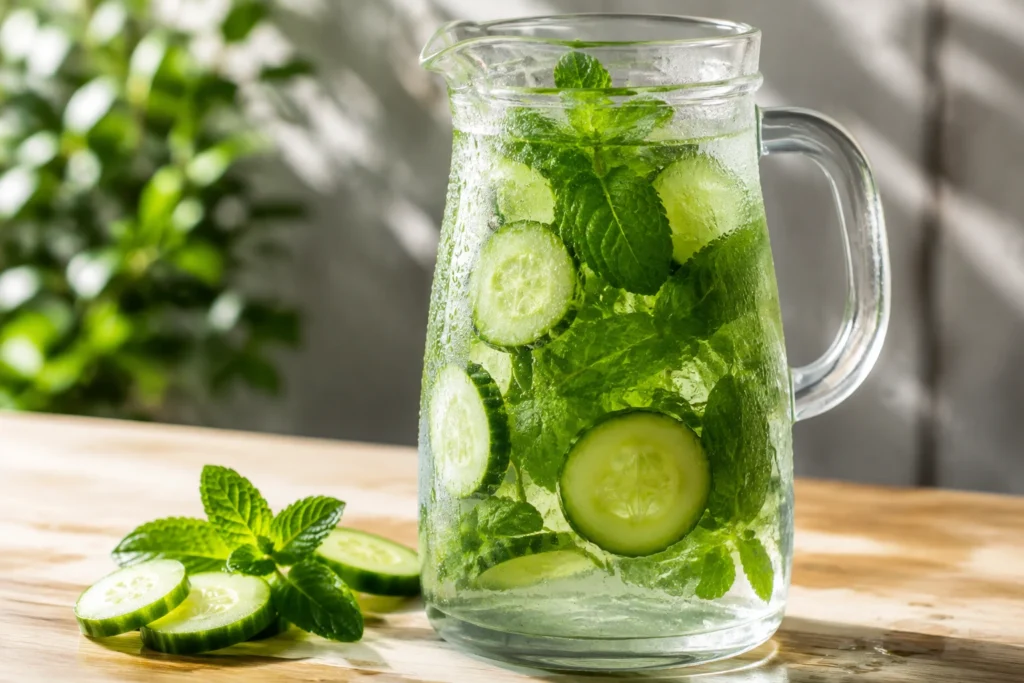
Cucumber water. Hydrates you and tastes pleasant. That is the entire mechanism. Dehydrated skin does look duller and shows lines more, so adequate fluid genuinely helps appearance. Cucumber contributes nothing beyond the water it sits in.
Aloe water needs a real warning. Most aloe skin research involves applying it topically for burns and wounds, where the evidence is reasonable. Drinking it is a different matter.
Aloe latex, the yellow layer just under the leaf skin, works as a stimulant laxative. The FDA removed aloe latex from over the counter laxative products in 2002 because manufacturers did not supply the safety data required.
The International Agency for Research on Cancer classifies non-decolorized whole leaf aloe extract as a possible human carcinogen, following gastrointestinal cancers in rats and mice. A 2023 review of drinkable aloe products containing no more than 10 parts per million of aloin found no evidence of genotoxicity, which is exactly why the decolorized versions matter. Oral aloe leaf extracts have also been linked to cases of acute hepatitis.
What to do. Choose decolorized or purified aloe products if you drink it at all, and check the label. Skip it during pregnancy. Anyone taking medication should ask a pharmacist, since the laxative effect affects absorption.
Cucumber water carries none of these concerns and does the same hydration job.
10. Fortified Milk and Almond Milk for Bones
Evidence: strong for fortified dairy, misleading for almond milk.
These two do not belong in the same row, and pairing them is the most misleading thing on most organ charts.
| Per cup | Dairy milk | Fortified almond milk | Unfortified almond milk |
|---|---|---|---|
| Calcium | About 300 mg | About 450 mg added | Around 15 mg |
| Protein | 8 g | 1 g | 1 g |
| Vitamin D | Fortified, about 100 IU | Usually fortified | None |
Three things follow from that table.
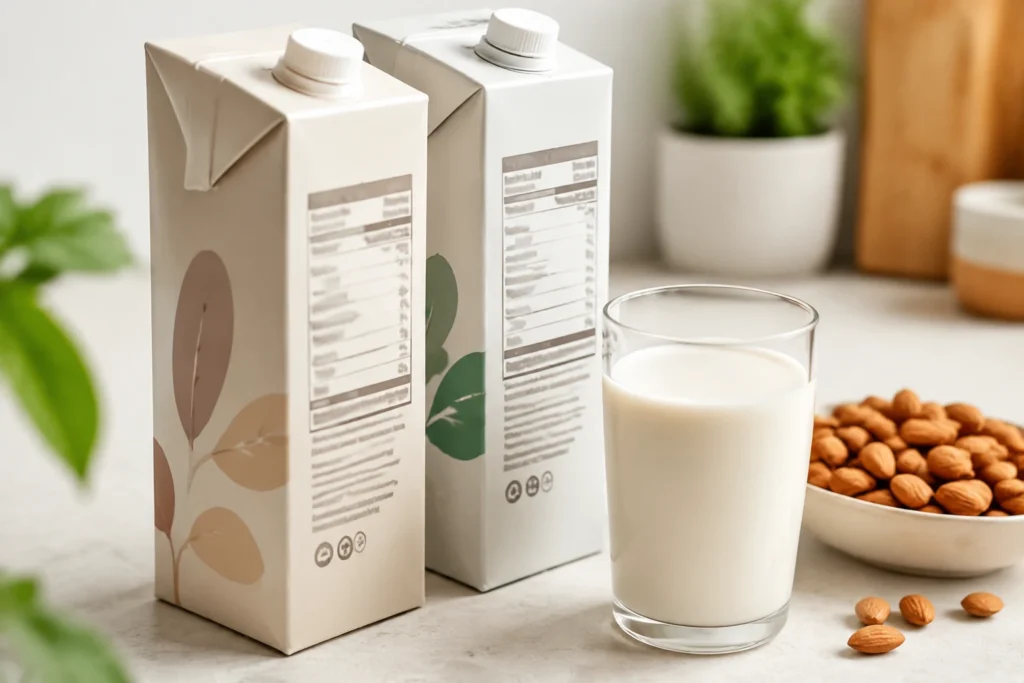
Fortified almond milk matches or beats dairy on calcium. Manufacturers add calcium carbonate, and the amount often exceeds dairy. Read the label, since fortification is not universal.
Unfortified almond milk delivers almost nothing. Around 15 mg of calcium per cup against dairy’s 300. Homemade almond milk falls into this category.
Protein is the real gap. Bone is roughly half protein by volume. Almond milk gives you 1 gram per cup against 8 in dairy. That difference matters for bone maintenance and no fortification fixes it.
Shake the carton. Added calcium settles at the bottom. Pouring without shaking means the last servings carry most of it and the first ones carry little.
What actually builds bone. Calcium and vitamin D together, adequate protein, and weight bearing exercise. Drinks alone do not maintain bone density. Resistance training does more than any beverage on this list.
Our guide to vitamin food sources for all 13 vitamins covers the vitamin D piece, which is the hardest of the two to get from food.
What No Drink Does
Straight talk saves money.
Nothing detoxifies an organ. Your liver and kidneys work continuously. No drink assists them, and any product promising a cleanse is selling a story.
Nothing repairs organ damage. Cirrhosis, kidney disease and heart failure all need medical treatment.
Nothing replaces medication. Beet juice lowers blood pressure a little. Your prescription lowers it a lot.
Juice is not the same as whole food. Juicing removes fiber and concentrates sugar. Eating the beet, carrot or orange beats drinking it for most purposes.
Supplements differ from drinks. Trials using concentrated extracts do not transfer to a glass of juice.
The genuine benefits here are small and slow. That combination is less exciting than the marketing and more useful than it sounds.
Which Ones Are Actually Worth It
Drink beet juice if you want blood pressure support and your doctor agrees.
Drink green tea because it is pleasant, hydrating and modestly beneficial.
Drink matcha with blueberries for the focus effect and because it tastes good.
Drink ginger tea for nausea or menstrual cramps, where the evidence is strongest.
Drink lemon water purely because it makes you drink more water.
Skip cranberry juice for kidneys. Consider it only for recurrent UTI prevention, and check with your doctor.
Skip coconut water for kidneys entirely. Use it after heavy sweating if your kidneys are healthy.
Eat carrots rather than juicing them, and add leafy greens for eye protection.
Choose cucumber water over aloe water for skin. Same hydration, none of the safety questions.
Check the label on plant milks. Fortified versions carry calcium. Unfortified ones carry almost none, and none of them match dairy for protein.
Frequently Asked Questions
Which health drink has the strongest evidence?
Beet juice, with meta-analyses showing consistent blood pressure reductions of around 4 to 5 mmHg. Ginger tea comes close for nausea and menstrual pain specifically.
Does lemon water really help your liver?
No. No research supports it and no mechanism explains it. Your liver processes waste continuously without help from any drink.
Is coconut water good for kidneys?
Not for anyone with kidney disease. One cup carries roughly 600 mg of potassium, and damaged kidneys cannot clear it. Healthy kidneys handle it fine.
Does cranberry juice help kidneys?
Cranberry has modest evidence for preventing recurrent bladder infections, which is a different organ. It also carries oxalate that can raise kidney stone risk.
Can drinks detox your organs?
No. Your liver and kidneys handle that continuously. Any drink marketed as a detox or cleanse is flavored liquid with marketing attached.
Are carrots really good for your eyes?
For preventing vitamin A deficiency, yes. They will not improve normal vision. Leafy greens have better evidence for protecting aging eyes.
Should I juice or eat the whole food?
Eat it where you can. Juicing strips the fiber and concentrates sugar. Beet juice is the main exception, since research doses require more beets than most people would eat.
How long before these drinks make a difference?
Beet juice effects on blood pressure build over two to four weeks. Ginger works for nausea within an hour. Most other effects take months if they appear at all.
Is drinking aloe vera safe?
Choose purified decolorized products. Aloe latex acts as a stimulant laxative and the FDA removed aloe laxatives from over the counter sale in 2002. The International Agency for Research on Cancer classifies non-decolorized whole leaf extract as a possible human carcinogen. Topical aloe carries none of these concerns.
Is almond milk as good as dairy milk for bones?
Only if fortified, and only for calcium. Fortified almond milk often matches or beats dairy on calcium. Protein is the gap, at roughly 1 gram per cup against 8 in dairy, and no fortification fixes that.
Why should I shake plant milk?
Added calcium settles at the bottom of the carton. Pouring without shaking means early servings carry little and late ones carry most of it.
Does drinking water improve your skin?
Adequate hydration helps skin look less dull and shows fine lines less. Extra water beyond your needs adds nothing, and no drink removes a wrinkle.
Final Thoughts on These Health Drinks
Evidence separates the useful health drinks from the marketed ones, and the gap is wider than most charts suggest. Beet juice works. Ginger works, just not for lungs. Green tea, matcha and blueberries all show modest support. Lemon water hydrates you and does nothing for your liver.
Two entries need real caution. Coconut water and cranberry juice both get recommended for kidneys, and both can cause problems for people with actual kidney disease. That group needs a nephrologist rather than a chart.
Pick the two or three you enjoy and expect small effects over months. Anything promising more than that is selling you something.
References
- National Kidney Foundation. Potassium and Your CKD Diet. kidney.org
- National Institute of Diabetes and Digestive and Kidney Diseases. Eating Right for Chronic Kidney Disease. niddk.nih.gov
This article shares general nutrition information. It does not replace advice from your doctor. Anyone with chronic kidney disease, heart failure or on potassium affecting medication should follow their healthcare provider rather than general dietary guidance. Talk with a doctor before drinking beet juice regularly alongside blood pressure medication. Read our full medical disclaimer and fact checking policy.
About the Author and Reviewer
Mezbaul Islam, MSc Nutrition owns and writes Simple Health Naturally. He researches each article from public health guidance, clinical guidelines and peer reviewed studies, and traces every figure back to a named source.
Dr. Obeydur Rahman, MBBS, MD in Medicine edits the articles, checks the sources cited and is responsible for the site’s editorial standards. MD in Medicine is the specialty for adult conditions such as liver disease, type 2 diabetes and high blood pressure.
Read more about our authors and reviewers or see our editorial policy.
Edited by Dr. Obeydur Rahman, MBBS, MD in Medicine.