
Your tongue reflects a few things about your health and far fewer than most charts claim. Common tongue changes usually trace back to hygiene, diet, medication or a mild infection rather than anything hidden. A small number genuinely need a dentist.
This guide covers eight changes with the ordinary explanation first, the treatment that usually works and one rule that matters more than any colour on this page.
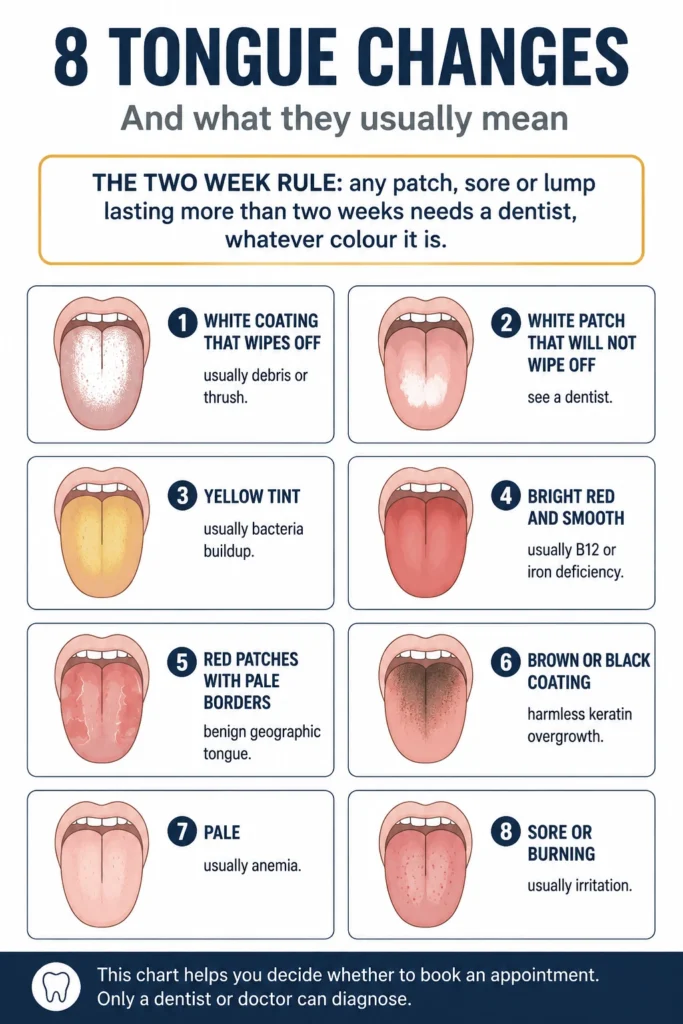
The Two Week Rule
One principle beats every colour chart ever made.
Any patch, sore or lump in your mouth that lasts more than two weeks needs a dentist.
That applies whatever colour it is. White, red, mixed or nothing unusual at all. Two weeks is the standard threshold across oral health guidance.
The reason matters. A white patch that cannot be wiped away is called leukoplakia. Most cases turn out benign. Some show early precancerous changes, and white areas mixed with red areas carry higher risk than white alone. MD Anderson advises seeing a doctor or dentist if a patch has not gone away or at least improved within two weeks.
Leukoplakia often causes no pain at all, which is exactly why it goes unnoticed. Smoking, chewing tobacco, heavy alcohol and betel nut all raise the risk.
Remember that rule and you can read the rest of this article calmly.
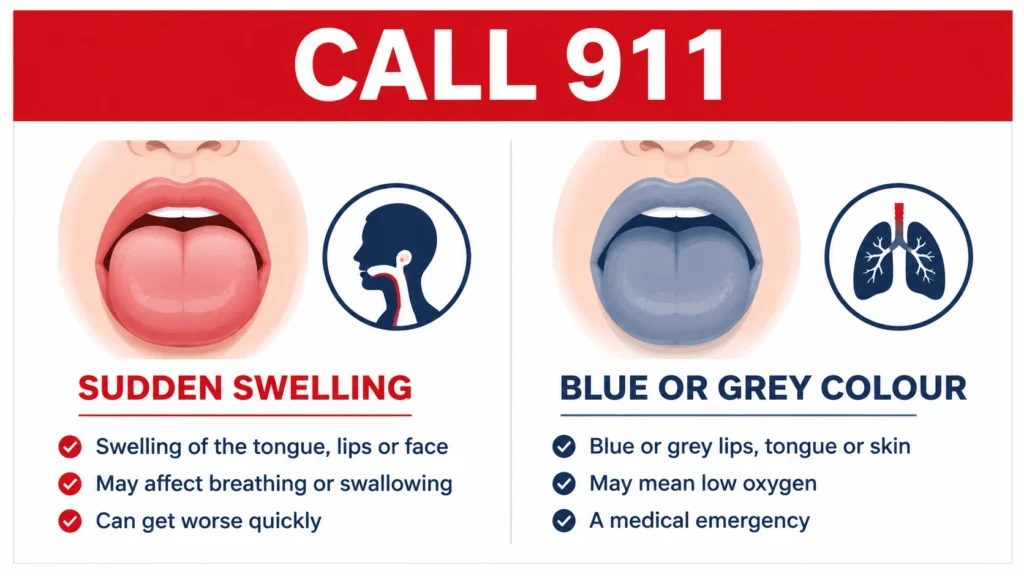
Call 911 For These
Two situations need emergency care rather than an appointment.
Sudden tongue or lip swelling. Swelling that comes on within minutes to hours can block your airway. Signs include a thick or swollen tongue, swollen lips, difficulty swallowing, a tight throat, changes to your voice or trouble breathing.
Two causes matter most. Anaphylaxis from a food, drug or insect sting usually brings hives, vomiting or faintness alongside it. Angioedema from ACE inhibitor blood pressure medication produces swelling with no rash, and it can start years after you began taking the drug. Lisinopril, enalapril and ramipril all carry this risk.
Use an epinephrine auto injector if you have one and call 911 anyway.
Blue or grey lips, gums or tongue. That colour indicates low blood oxygen, called cyanosis. Doctors look for it in the lips and gums more reliably than the tongue.
Blue lips with difficulty breathing, chest pain or confusion means calling 911 rather than searching a chart.
Everything else on this list can wait for an appointment.
The 8 Changes at a Glance
| Change | Usually | What Helps |
|---|---|---|
| White coating that wipes off | Debris, dry mouth, mild thrush | Tongue scraping, hydration |
| White patch that will not wipe off | Leukoplakia or lichen planus | See a dentist |
| Yellow tint | Bacteria and debris buildup | Brushing, scraping, hydration |
| Bright red and smooth | B12, folate or iron deficiency | Blood test |
| Red patches with pale borders | Geographic tongue, benign | Nothing needed |
| Brown or black furry coating | Keratin overgrowth | Scraping, quit tobacco |
| Pale or very light pink | Anemia | Blood test |
| Sore or burning tongue | Deficiency, dry mouth, irritation | Depends on cause |
1. A White Coating That Wipes Off
Usually. Dead cells, food debris and bacteria collecting between the small bumps on your tongue. Dry mouth, mouth breathing, dehydration, smoking and poor tongue hygiene all make it worse.
Sometimes oral thrush. A yeast infection producing creamy white patches that wipe away leaving a red sore surface underneath. More common after antibiotics, with inhaled steroids for asthma, with diabetes, with dentures and in people with weakened immune systems.
What helps. Brush your tongue or use a tongue scraper daily. Drink more water. Rinse after using a steroid inhaler.
See a doctor if the patches keep returning, hurt, or come with difficulty swallowing. Thrush responds well to antifungal treatment.
2. A White Patch That Will Not Wipe Off
This is the one that matters.
A thickened white patch you cannot scrape away is called leukoplakia. It develops from chronic irritation, most often tobacco, alcohol, a rough tooth or a poorly fitting denture.
Most cases are benign. Some show precancerous changes, and a biopsy is the only way to tell. Patches mixed with red areas carry higher risk.
Lichen planus produces lacy white lines rather than solid patches, usually on the inside of the cheeks. It is an immune condition and needs monitoring rather than urgency.
What helps. Remove the irritation. Quit tobacco, cut alcohol, fix the dental problem. Patches often resolve within weeks once the cause goes.
See a dentist if it lasts more than two weeks. No exceptions to that one.
3. A Yellow Tint
Usually. Bacteria and debris building up on the tongue surface, sometimes with a mild overgrowth. Yellow often precedes the brown or black coating covered further down.
Common causes. Dry mouth, smoking, mouth breathing, poor oral hygiene, dehydration and some mouthwashes.
What helps. Daily tongue scraping does more than brushing alone. Drink more water. Cut back on tobacco.
See a doctor if yellow appears alongside yellowing of the skin or eyes. That combination points toward the liver rather than the mouth and needs blood tests.
4. Bright Red and Smooth
Usually a deficiency. A tongue that turns bright red and loses its normal texture often signals low vitamin B12, folate or iron. Doctors call the smooth appearance atrophic glossitis.
This is not a heart disease sign. That pairing circulates on charts and has no basis.
Other causes. Scarlet fever produces a strawberry tongue with fever and a rash. Kawasaki disease causes the same appearance in children and needs urgent assessment.
Any child with several days of fever plus a bright red tongue needs a doctor promptly. Kawasaki disease responds much better to early treatment.
What helps. A blood test identifying which deficiency, then correcting it. Our guide to vitamin food sources for all 13 vitamins covers B12 and folate sources, though a persistent smooth red tongue needs testing rather than dietary guesswork.
5. Red Patches With Pale Borders
Usually geographic tongue. Smooth red patches with slightly raised white edges that move around over days or weeks. The pattern looks like a map, which gives it the name.
Completely benign. It affects roughly 1 to 3 percent of people, often runs in families and needs no treatment.
Not an allergy sign. Charts pairing red patches with allergies get this wrong.
What helps. Nothing needed. Some people find spicy, acidic or very salty foods sting the affected areas, so avoiding those during a flare helps comfort.
See a dentist if patches stop moving, grow steadily or last more than two weeks in one place. Geographic tongue migrates. A fixed patch is a different thing.
6. Brown or Black Furry Coating
Usually keratin overgrowth. The small bumps on your tongue, called papillae, normally shed. When they do not, they grow longer and trap bacteria and pigment from food and drink. Doctors call it black hairy tongue.
Looks alarming and is harmless. Common causes include smoking, heavy coffee or tea, antibiotics, dry mouth, poor oral hygiene and mouthwashes containing peroxide or bismuth.
Pepto Bismol turns tongues black too. That version resolves within days of stopping.
What helps. Gentle tongue scraping twice daily, stopping tobacco, and cutting back on the mouthwash. Most cases clear within a couple of weeks.
7. Pale or Very Light Pink
Usually anemia. A pale tongue often accompanies pale inner eyelids and pale skin. Iron deficiency is the most common cause, though B12 and folate deficiency do it too.
Other signs to check. Fatigue that rest does not fix, shortness of breath during easy activity, cold hands and feet, brittle nails and headaches.
What helps. A blood count and iron studies. Our list of iron-rich vegetables ranked by iron content covers dietary iron, though a confirmed deficiency usually needs supplements rather than food alone.
One point deserves emphasis. Unexplained iron deficiency in men or in women past menopause needs investigation rather than just supplements, since it can signal slow bleeding somewhere.
8. A Sore or Burning Tongue
Usually. Biting it, hot food, braces, a rough tooth, acidic foods or a canker sore. Those account for the vast majority and settle within a week.
Burning mouth syndrome produces a persistent burning sensation with a normal looking tongue. Causes include nutritional deficiencies, dry mouth, acid reflux, certain medications, diabetes and hormonal changes.
What helps. Identify and remove the irritant. Avoid acidic and spicy foods while it heals. Salt water rinses ease canker sores.
See a dentist if soreness lasts more than two weeks, or a sore keeps returning in the same place.
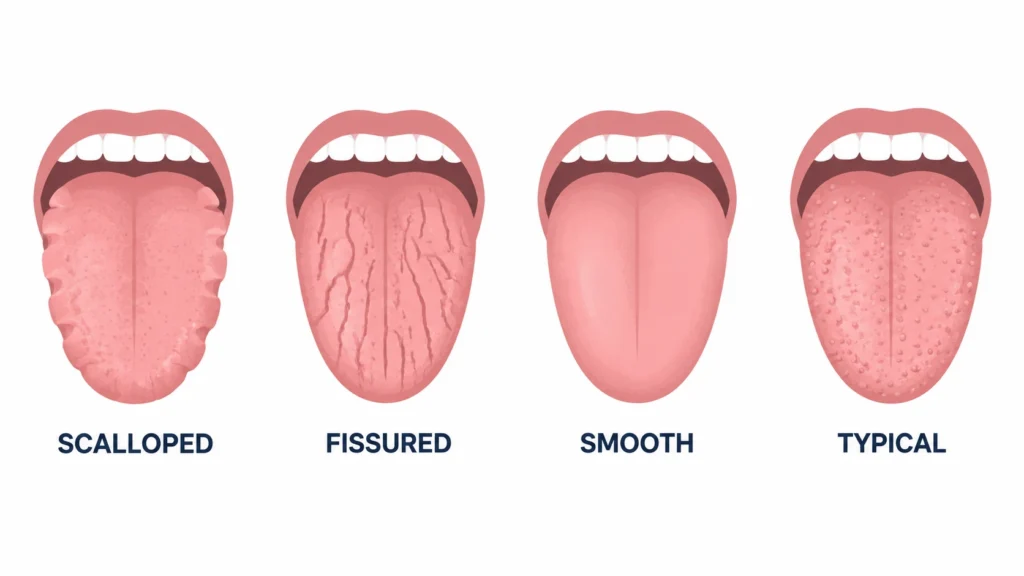
Texture and Shape Changes
Colour gets all the attention and texture tells you just as much.
Scalloped or wavy edges. Indentations along the sides where your teeth press against the tongue. Common causes include teeth grinding, clenching, a tongue that sits forward in the mouth, and swelling from any cause. Scalloping alongside loud snoring and daytime tiredness is worth mentioning to a doctor, since it appears in some people with sleep apnea.
Deep grooves or cracks. Called fissured tongue. Affects a few percent of people, often runs in families and increases with age. Completely benign. Food can trap in the grooves though, so gentle brushing helps prevent irritation.
A smooth tongue with no visible bumps. Loss of papillae, usually from B12, folate or iron deficiency. Worth a blood test.
Enlarged tongue developing slowly. Different from sudden swelling. Gradual enlargement can occur with an underactive thyroid, acromegaly or amyloidosis. Rare, and worth mentioning if you notice it over months.
A lump, thickened area or hard spot. Any firm lump that persists needs a dentist within two weeks. That applies especially on the side or underside of the tongue.
Ridges, bumps and small variations are normal. Tongues differ enormously between healthy people.
Medications That Change Your Tongue
Plenty of tongue changes trace straight back to something in your medicine cabinet.
| Medication | Effect |
|---|---|
| Antibiotics | Thrush, black hairy tongue |
| Inhaled steroids for asthma | Thrush, especially without rinsing |
| Bismuth subsalicylate | Temporary black tongue |
| Chlorhexidine mouthwash | Brown staining, altered taste |
| Iron supplements | Dark staining |
| ACE inhibitors | Swelling, dry cough |
| Antihistamines and antidepressants | Dry mouth, coating |
| Chemotherapy | Sore tongue, ulcers, taste changes |
Three practical points follow.
Rinse after every steroid inhaler dose. That single habit prevents most inhaler related thrush.
Bismuth staining resolves within days of stopping the product. It alarms people who have not read the label.
Dry mouth drives most coating problems. Many common medications cause it, including antihistamines, antidepressants and blood pressure drugs. More water and sugar free gum both help.
Never stop a prescribed medication over a tongue change. Bring it up at your next appointment instead.
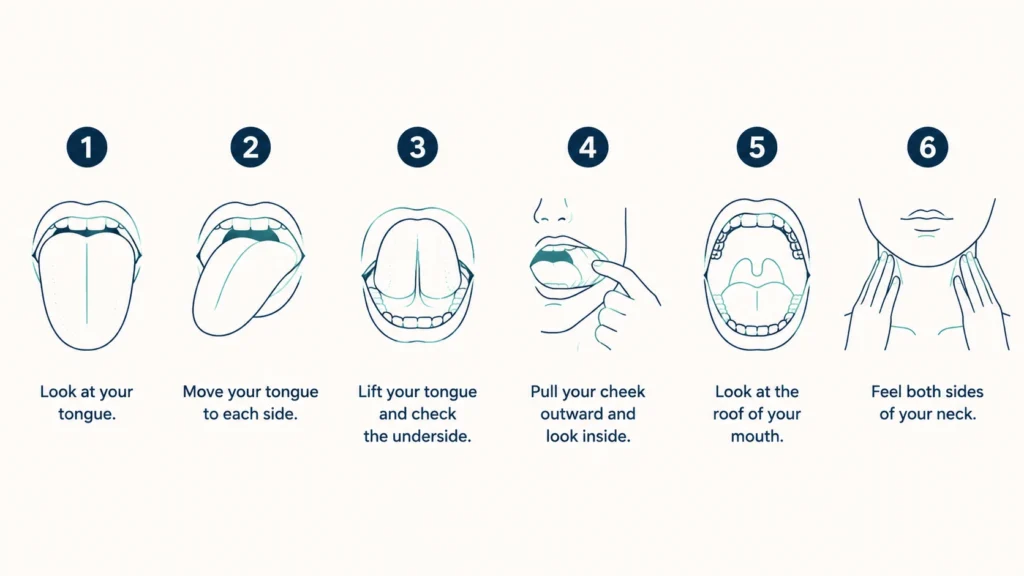
How to Check Your Own Mouth
Five minutes a month catches things early. Use a mirror and bright light.
- Look at the top of your tongue. Note the colour and any patches.
- Stick it out and move it side to side. Check both edges, since that is a common site for problems.
- Lift the tip to the roof of your mouth and look underneath, plus the floor of your mouth. This area gets missed most and matters most.
- Pull each cheek out with a clean finger and look inside.
- Look at your gums and the roof of your mouth.
- Feel your neck and under your jaw for lumps.
What you are looking for. Any patch that will not wipe off, a sore that has not healed, a lump or thickened area, a red patch, numbness, or anything that has changed since last month.
Additional signs worth a prompt appointment. A lump in the neck, persistent ear pain on one side, difficulty swallowing, loose teeth with no dental cause, numbness in the mouth or lip, or a sore that bleeds easily.
Anyone who smokes, chews tobacco or drinks heavily should have regular dental checks regardless. Dentists screen for oral cancer as part of a routine examination, and that screening finds things earlier than self checks do.
What Your Tongue Cannot Tell You
Honest limits protect you here.
No colour diagnoses an internal disease. Tongue colour reflects blood supply, coating, hydration and hygiene. It does not report on your heart, kidneys or circulation.
Purple tongue is not a Western diagnostic sign. That reading comes from Traditional Chinese Medicine, which is a different framework with different assumptions. It is not part of standard clinical assessment.
Coating thickness varies enormously between healthy people. So does colour. There is no single correct tongue.
Bad breath usually comes from the tongue rather than the stomach. Bacteria on the back of the tongue produce most of it. Scraping helps more than mints.
Absence of tongue changes proves nothing. Plenty of serious conditions cause no oral signs at all.
Simple Tongue Care
Five habits cover most of it.
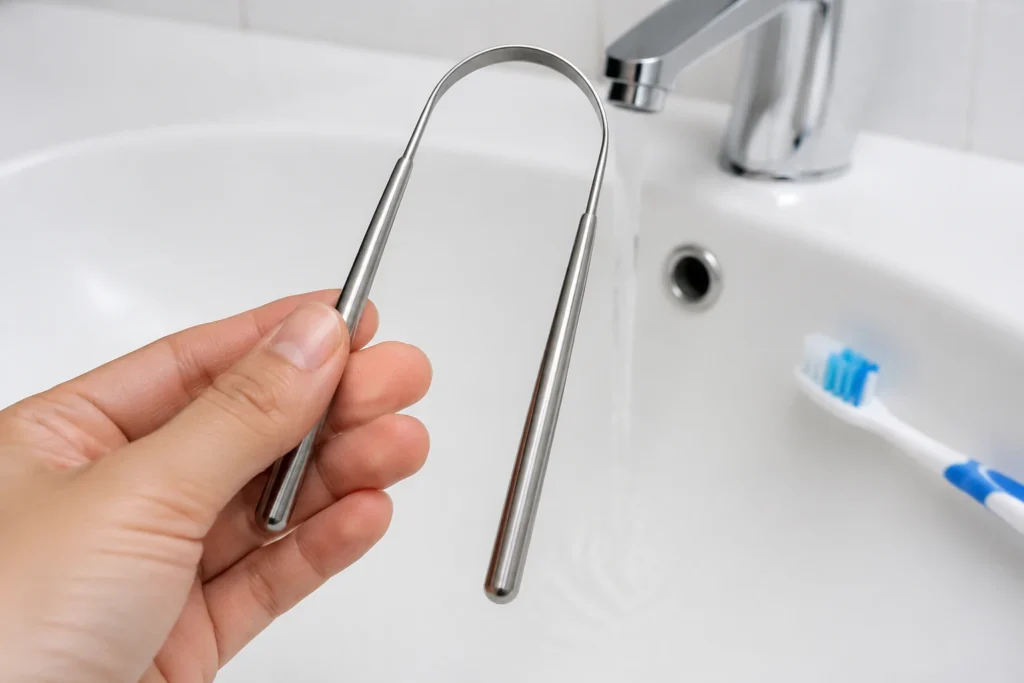
Scrape daily. A tongue scraper removes more coating than a toothbrush. Work from back to front, rinse between passes and go gently.
Stay hydrated. Dry mouth causes more tongue problems than almost anything else.
Skip harsh mouthwashes. Peroxide and high alcohol formulas irritate the tongue surface. Some also kill bacteria your body uses for other purposes.
Rinse after inhaled steroids. Asthma inhalers raise thrush risk significantly and a rinse prevents most of it.
Check your mouth monthly. Use a mirror and good light. Look at the sides and underneath of your tongue, which is where problems hide.
Anyone who smokes, chews tobacco or drinks heavily should get regular dental checks regardless of symptoms. Dentists screen for oral cancer as part of a routine examination.
Frequently Asked Questions
Why is my tongue white?
Usually debris and bacteria collecting on the surface, often with dry mouth. Daily scraping and more water fix most cases. A white patch that will not wipe off is different and needs a dentist.
What does a yellow tongue mean?
Bacterial buildup in nearly all cases. Yellow skin or eyes alongside it points to the liver instead and needs a blood test.
Does a red tongue mean heart disease?
No. A bright red smooth tongue usually signals B12, folate or iron deficiency. In children with fever it can indicate scarlet fever or Kawasaki disease, both of which need prompt medical attention.
Is black hairy tongue dangerous?
No. It comes from keratin building up on the tongue papillae and looks far worse than it is. Scraping and stopping tobacco clear most cases within weeks.
When should I worry about my tongue?
Any patch, sore or lump lasting more than two weeks. Also difficulty swallowing, a lump in the neck, persistent numbness, or a sore that bleeds easily.
Can my tongue show vitamin deficiency?
Yes. A smooth bright red tongue is a recognized sign of B12, folate or iron deficiency. A blood test identifies which one.
Should I use a tongue scraper?
Yes, and it works better than a toothbrush for removing coating. Once or twice daily, gently, from back to front.
What is geographic tongue?
Smooth red patches with pale raised borders that move around over time. It is benign, affects a few percent of people and needs no treatment.
Why does my tongue have wavy edges?
Teeth pressing against it, usually from clenching, grinding or a forward tongue posture. Scalloped edges with loud snoring and daytime tiredness are worth mentioning to a doctor.
Can medication change my tongue?
Yes, commonly. Antibiotics and inhaled steroids cause thrush, bismuth turns it black temporarily, chlorhexidine stains it brown and many drugs cause dry mouth. Never stop a prescription over a tongue change.
When is tongue swelling an emergency?
Sudden swelling with difficulty swallowing or breathing means calling 911. Anaphylaxis and ACE inhibitor angioedema both cause it, and the second can start years into taking the medication.
Are cracks in my tongue normal?
Usually yes. Fissured tongue affects a few percent of people, often runs in families and is benign. Gentle brushing stops food trapping in the grooves.
Final Thoughts on Tongue Changes
Most tongue changes trace back to hygiene, hydration, diet or a mild infection. Scraping, drinking more water and cutting tobacco resolve the majority of what people worry about.
Two things override every colour chart. Any patch, sore or lump lasting more than two weeks needs a dentist regardless of its appearance. And blue lips or tongue with breathlessness means 911 rather than research.
Charts pairing a tongue colour with a specific disease overstate what your mouth can reveal. Use this guide to decide whether to book an appointment, then let a dentist or doctor do the diagnosing.
References
- MD Anderson Cancer Center. Leukoplakia as an oral cancer symptom. mdanderson.org
- National Institute of Dental and Craniofacial Research. Oral Health Information. nidcr.nih.gov
This article shares general health information. It does not replace advice from your dentist or doctor and it cannot diagnose any condition. Call emergency services for blue lips or tongue with breathlessness. See a dentist about any patch, sore or lump in your mouth lasting more than two weeks. Read our full medical disclaimer and fact checking policy.
About the Author and Reviewer
Mezbaul Islam, MSc Nutrition owns and writes Simple Health Naturally. He researches each article from public health guidance, clinical guidelines and peer reviewed studies, and traces every figure back to a named source.
Dr. Obeydur Rahman, MBBS, MD in Medicine edits the articles, checks the sources cited and is responsible for the site’s editorial standards. MD in Medicine is the specialty for adult conditions such as liver disease, type 2 diabetes and high blood pressure.
Read more about our authors and reviewers or see our editorial policy.
Edited by Dr. Obeydur Rahman, MBBS, MD in Medicine.