Thirteen vitamins keep your body running and food supplies almost all of them. This vitamin food sources chart pairs each one with the foods that carry it, the amount adults need per day and the signs that show up when you run low.
Most people cover their needs through ordinary meals without thinking about it. A few vitamins deserve closer attention, and a few carry real risks in supplement form. All of that sits below.
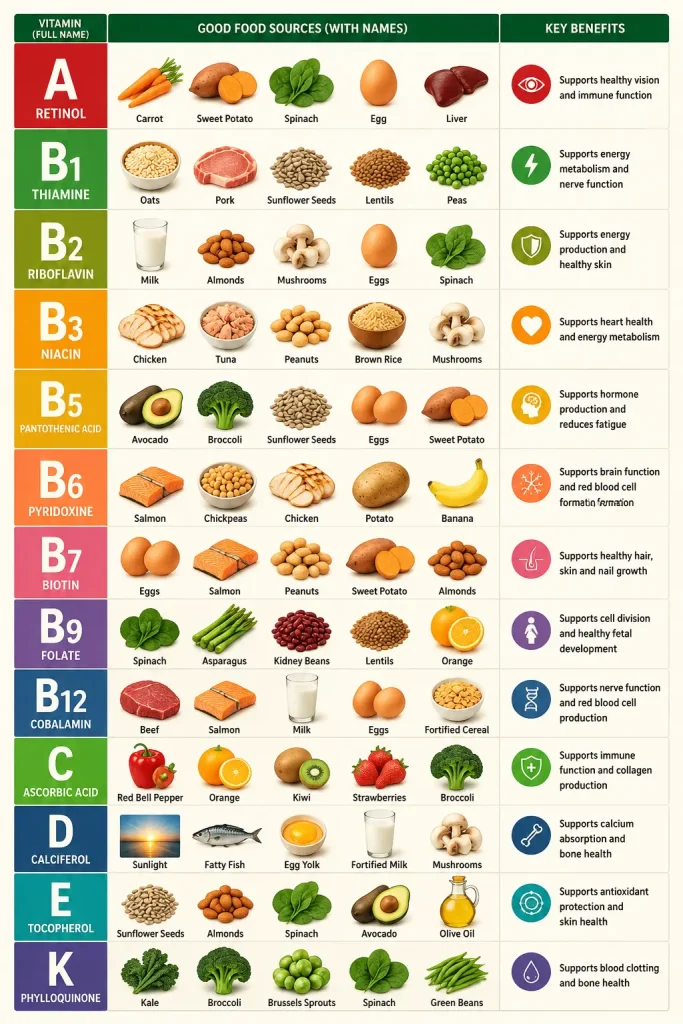
The Complete Vitamin Food Sources Chart
| Vitamin | Best Food Sources | Adult Daily Amount | Main Job |
|---|---|---|---|
| A (retinol) | Liver, sweet potato, carrots, spinach, eggs | 900 mcg men, 700 mcg women | Vision, immune function, skin |
| B1 (thiamine) | Pork, oats, sunflower seeds, lentils, peas | 1.2 mg men, 1.1 mg women | Turns food into energy, nerve function |
| B2 (riboflavin) | Milk, eggs, almonds, mushrooms, spinach | 1.3 mg men, 1.1 mg women | Energy release, red blood cells |
| B3 (niacin) | Chicken, tuna, peanuts, brown rice, mushrooms | 16 mg men, 14 mg women | Metabolism, skin, nervous system |
| B5 (pantothenic acid) | Avocado, broccoli, eggs, sweet potato, sunflower seeds | 5 mg | Energy production, hormone synthesis |
| B6 (pyridoxine) | Salmon, chickpeas, chicken, potatoes, bananas | 1.3 mg | Protein metabolism, brain function |
| B7 (biotin) | Eggs, salmon, peanuts, sweet potato, almonds | 30 mcg | Hair, skin, nails, fat metabolism |
| B9 (folate) | Spinach, asparagus, lentils, kidney beans, oranges | 400 mcg | Cell growth, pregnancy health |
| B12 (cobalamin) | Beef, salmon, milk, eggs, fortified cereal | 2.4 mcg | Nerve function, red blood cells |
| C (ascorbic acid) | Bell peppers, oranges, kiwi, strawberries, broccoli | 90 mg men, 75 mg women | Collagen, immune support, iron absorption |
| D (calciferol) | Fatty fish, egg yolks, fortified milk, sunlight | 15 mcg (600 IU) | Calcium absorption, bone health |
| E (tocopherol) | Sunflower seeds, almonds, spinach, avocado, olive oil | 15 mg | Antioxidant, cell membrane protection |
| K (phylloquinone) | Kale, spinach, broccoli, brussels sprouts, green beans | 120 mcg men, 90 mcg women | Blood clotting, bone health |
Values come from the National Academies and reflect adults aged 19 to 50. Needs shift with age, pregnancy and certain medical conditions.
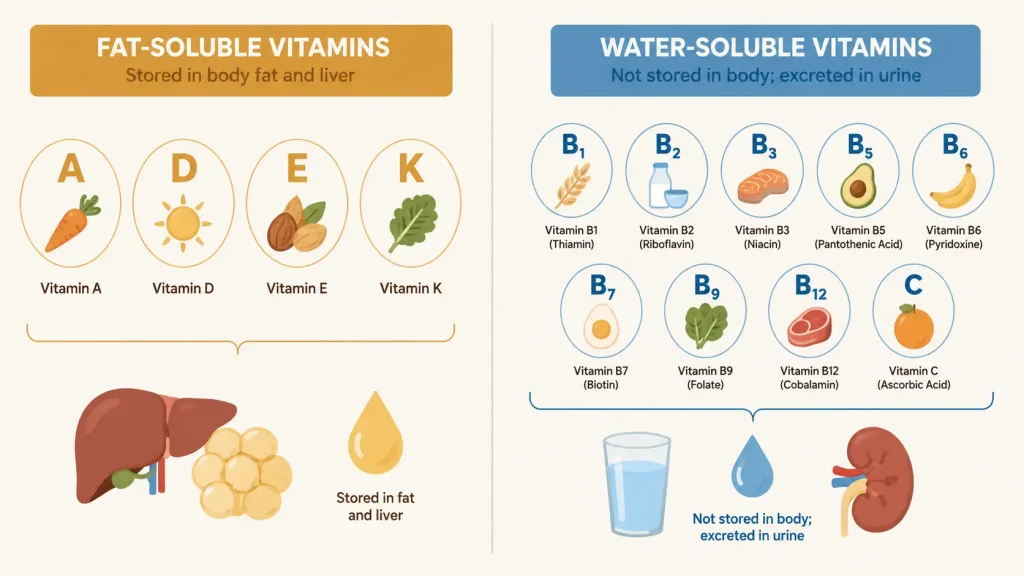
Fat Soluble and Water Soluble Vitamins
The single most useful distinction in this whole subject.
Fat soluble vitamins are A, D, E and K. Your body stores them in liver and fat tissue. They absorb best alongside dietary fat. Storage means you do not need them daily, and it also means large supplement doses can build up to harmful levels.
Water soluble vitamins are the eight B vitamins and vitamin C. Your body stores very little. Excess amounts leave through urine. Regular intake matters more, and overdose risk stays low for most of them.
That difference explains a lot. Eat carrots with olive oil and you absorb far more vitamin A. Skip vitamin C for a few days and levels drop quickly. Take high dose vitamin D for months and it can accumulate to a dangerous level.
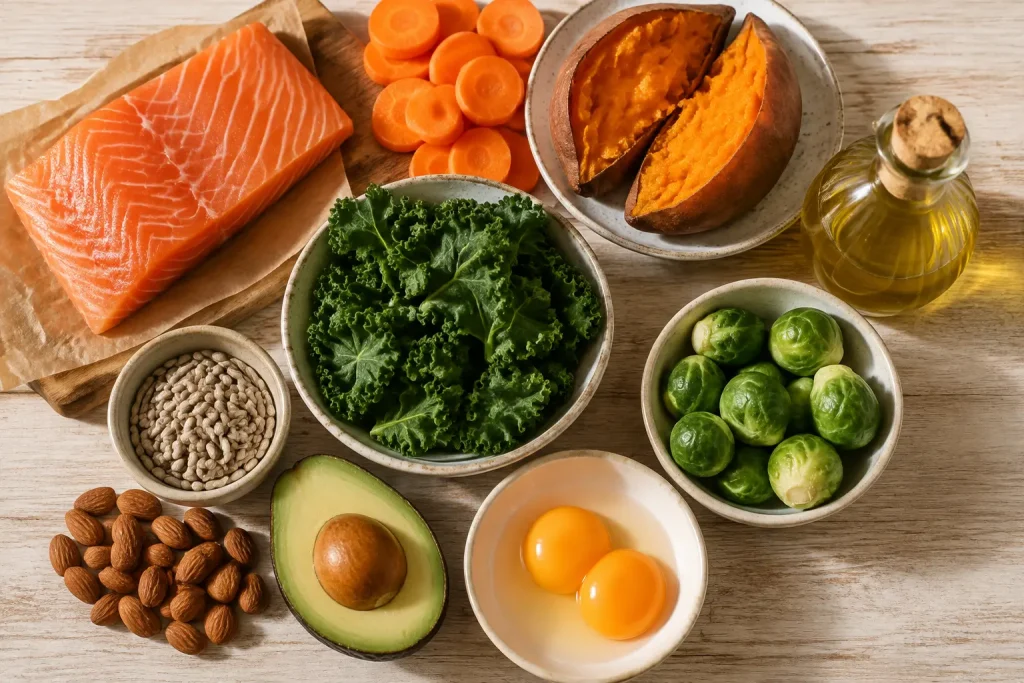
Fat Soluble Vitamins
Vitamin A
What it does. Vitamin A drives vision in low light, supports immune cells and keeps skin and mucous membranes working properly.
Best sources. Beef liver holds far more than anything else. Sweet potato, carrots, spinach, kale, eggs and dairy all contribute. Orange and dark green vegetables carry beta carotene, which your body converts to vitamin A as needed.
Daily amount. 900 mcg RAE for men and 700 mcg for women.
Signs you might be low. Night blindness comes first. Dry eyes, dry skin and frequent infections follow.
Worth knowing. Preformed vitamin A from animal foods and supplements carries a real upper limit of 3,000 mcg per day. Beta carotene from plants does not, because your body converts only what it needs. Pregnant women should avoid high dose vitamin A supplements and liver, since excess raises birth defect risk.
Vitamin D
What it does. Vitamin D lets your gut absorb calcium. Without it, bones weaken regardless of how much calcium you eat.
Best sources. Fatty fish leads the list. Salmon, mackerel, sardines and trout all deliver. Egg yolks, UV exposed mushrooms and fortified milk contribute smaller amounts. Sunlight on skin produces it too.
Daily amount. 15 mcg or 600 IU for adults up to 70. Adults over 70 need 20 mcg or 800 IU.
Signs you might be low. Bone pain, muscle weakness and fatigue. Deficiency often causes nothing noticeable until it becomes severe.
Worth knowing. Vitamin D is the hardest one to get from food alone. Very few foods contain much. Darker skin, northern latitudes, indoor work and sunscreen all reduce what your body makes. A blood test tells you where you stand, and this is the vitamin most likely to justify a supplement.
Vitamin E
What it does. Vitamin E works as a fat soluble antioxidant that protects cell membranes from oxidative damage.
Best sources. Sunflower seeds, almonds, hazelnuts, wheat germ oil, sunflower oil, spinach, broccoli and avocado.
Daily amount. 15 mg for adults.
Signs you might be low. True deficiency is rare in healthy people. It shows up mainly in conditions that block fat absorption, causing nerve problems and muscle weakness.
Worth knowing. High dose vitamin E supplements carry an upper limit of 1,000 mg and can increase bleeding risk, especially alongside blood thinners. Food sources carry no such concern.
Vitamin K
What it does. Vitamin K activates the proteins your blood needs to clot. It also helps direct calcium into bone tissue.
Best sources. Dark leafy greens dominate. Kale, spinach, collards, broccoli, brussels sprouts and green beans. A small amount comes from gut bacteria too.
Daily amount. 120 mcg for men and 90 mcg for women.
Signs you might be low. Easy bruising and slow clotting. Deficiency is uncommon in adults eating a normal diet.
Worth knowing. Anyone taking warfarin needs steady vitamin K intake rather than none. Sudden changes in leafy green consumption interfere with the medication. Talk to your doctor rather than avoiding greens entirely.
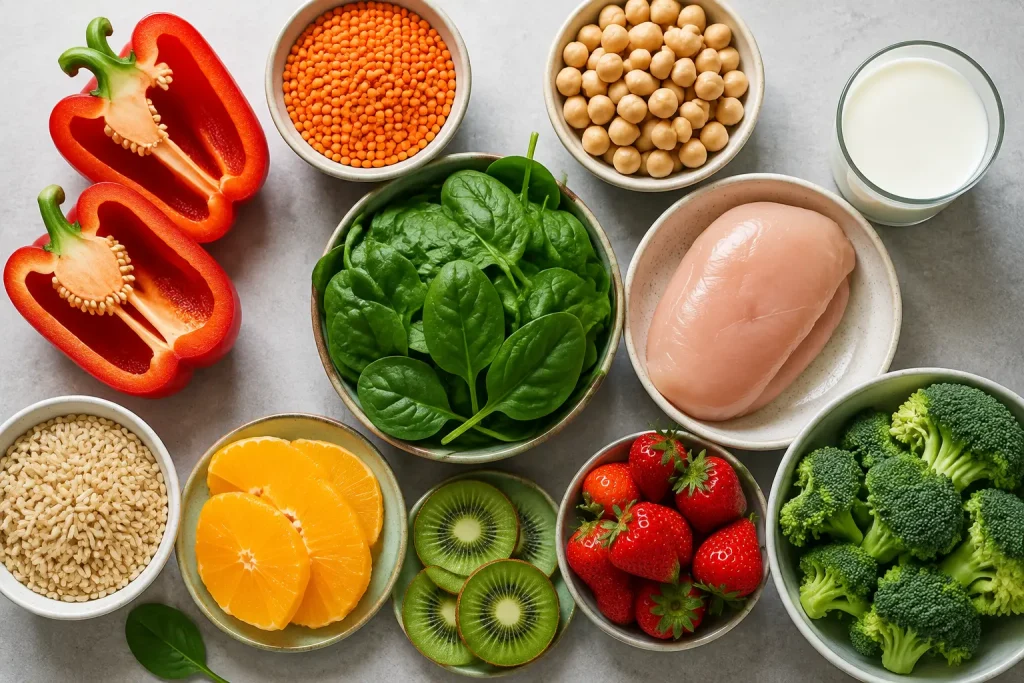
Water Soluble Vitamins
Vitamin B1 (Thiamine)
What it does. Thiamine helps convert carbohydrate into usable energy and supports nerve signaling.
Best sources. Pork, sunflower seeds, oats, lentils, black beans, peas and fortified grains.
Daily amount. 1.2 mg for men and 1.1 mg for women.
Signs you might be low. Fatigue, irritability, poor appetite and tingling in hands and feet.
Worth knowing. Heavy alcohol use blocks thiamine absorption and ranks as the most common cause of deficiency in developed countries.
Vitamin B2 (Riboflavin)
What it does. Riboflavin helps release energy from food and supports red blood cell production.
Best sources. Milk, yogurt, eggs, almonds, mushrooms, spinach and fortified cereal.
Daily amount. 1.3 mg for men and 1.1 mg for women.
Signs you might be low. Cracks at the corners of the mouth, sore throat and a swollen tongue.
Worth knowing. Light destroys riboflavin, which is why milk comes in opaque containers rather than clear glass.
Vitamin B3 (Niacin)
What it does. Niacin supports metabolism in every cell, plus skin health and nervous system function.
Best sources. Chicken, turkey, tuna, salmon, peanuts, brown rice and mushrooms.
Daily amount. 16 mg NE for men and 14 mg for women.
Signs you might be low. Severe deficiency causes pellagra, marked by dermatitis, diarrhea and confusion. It is rare where food is plentiful.
Worth knowing. High dose niacin supplements cause flushing, itching and in large amounts liver damage. The upper limit for supplemental niacin sits at 35 mg.
Vitamin B5 (Pantothenic Acid)
What it does. Pantothenic acid helps produce energy and synthesize hormones.
Best sources. Almost everything. Chicken, eggs, avocado, broccoli, sweet potato, mushrooms and sunflower seeds.
Daily amount. 5 mg for adults.
Signs you might be low. Deficiency is very rare because the vitamin appears so widely in food.
Worth knowing. The name comes from a Greek word meaning everywhere, which describes how easy it is to get.
Vitamin B6 (Pyridoxine)
What it does. B6 handles protein metabolism, helps make neurotransmitters and supports immune function.
Best sources. Salmon, tuna, chicken, chickpeas, potatoes, bananas and fortified cereal.
Daily amount. 1.3 mg for adults up to 50. Slightly more after that.
Signs you might be low. Cracked lips, a sore tongue, mood changes and a weakened immune response.
Worth knowing. This one carries a genuine supplement risk. Long term high dose B6 causes nerve damage in hands and feet. The upper limit is 100 mg per day and some supplements exceed it.
Vitamin B7 (Biotin)
What it does. Biotin supports fat and carbohydrate metabolism and contributes to hair, skin and nail structure.
Best sources. Eggs, salmon, pork, peanuts, sunflower seeds, sweet potato and almonds.
Daily amount. 30 mcg for adults.
Signs you might be low. Thinning hair, brittle nails and a scaly rash. Deficiency is rare.
Worth knowing. Biotin supplements only help people who are actually deficient, which is uncommon. High dose biotin also interferes with laboratory tests including thyroid panels and heart attack markers. That interference has caused real misdiagnoses, so tell your doctor if you take it.
Vitamin B9 (Folate)
What it does. Folate drives cell division and DNA synthesis. It matters enormously in early pregnancy.
Best sources. Spinach, asparagus, brussels sprouts, lentils, kidney beans, oranges and fortified grains.
Daily amount. 400 mcg DFE for adults. Pregnant women need 600 mcg.
Signs you might be low. Fatigue, mouth sores and a specific type of anemia with enlarged red blood cells.
Worth knowing. Folate deficiency in early pregnancy raises the risk of neural tube defects. That risk exists before most women know they are pregnant, which is why anyone who could become pregnant is advised to take 400 mcg of folic acid daily.
Vitamin B12 (Cobalamin)
What it does. B12 keeps nerves healthy and helps form red blood cells.
Best sources. Animal foods only. Beef, liver, salmon, tuna, dairy, eggs and fortified products like nutritional yeast and plant milks.
Daily amount. 2.4 mcg for adults.
Signs you might be low. Fatigue, weakness, numbness or tingling, memory problems and balance issues.
Worth knowing. Two groups need attention here. Vegans get no B12 from unfortified plant foods and need a supplement or fortified products. Adults over 50 absorb it less efficiently from food, and metformin and long term acid reducing medications both interfere with absorption. Nerve damage from prolonged deficiency can become permanent.
Vitamin C
What it does. Vitamin C builds collagen, supports immune cells, works as an antioxidant and helps you absorb iron from plant foods.
Best sources. Red bell peppers hold more than oranges by weight. Kiwi, strawberries, broccoli, brussels sprouts, oranges and tomatoes all deliver.
Daily amount. 90 mg for men and 75 mg for women. Smokers need an extra 35 mg.
Signs you might be low. Bleeding gums, slow wound healing, easy bruising and fatigue. Severe deficiency causes scurvy.
Worth knowing. Heat and water both destroy vitamin C, so raw or lightly cooked sources deliver more. Doses above 2,000 mg cause digestive upset and raise kidney stone risk in some people.
Which Vitamins Are Hardest to Get
Most vitamins take care of themselves. Four deserve real attention.
Vitamin D. Very few foods contain much and sun exposure varies enormously. This is the most common insufficiency in the US.
Vitamin B12 for vegans. No unfortified plant food supplies it. A supplement or fortified foods are not optional here.
Folate for anyone who could become pregnant. Timing matters more than amount, since the critical window opens before most pregnancies are confirmed.
Vitamin B12 for older adults. Absorption declines with age and common medications make it worse.
Everything else generally sorts itself out through a varied diet.
Symptom Lookup: Which Vitamin Might Be Low
Symptoms rarely point to one vitamin on their own. This table shows where to start looking rather than what to conclude.
| Symptom | Vitamins Worth Checking |
|---|---|
| Cracks at the corners of the mouth | B2, B6, B9, B12 |
| Sore or swollen tongue | B2, B3, B9, B12 |
| Bleeding gums | C |
| Easy bruising | C, K |
| Slow wound healing | C, A |
| Brittle nails | B7, plus iron |
| Hair thinning | B7, A, D, plus iron |
| Numbness or tingling in hands and feet | B12, B6, B1 |
| Night vision trouble | A |
| Bone pain or muscle weakness | D |
| Persistent fatigue | B12, B9, D, plus iron |
| Memory or balance problems | B12 |
| Dry scaly skin | A, B7, E |
| Frequent infections | A, C, D |
| Mood changes or irritability | B6, B12, D, B1 |
Notice how often the same vitamins appear. Fatigue alone tells you very little.
A blood test identifies which one rather than guessing from symptoms. Several of these signs also point to conditions that have nothing to do with vitamins, including thyroid problems and anemia. Bring persistent symptoms to a doctor rather than starting a supplement.
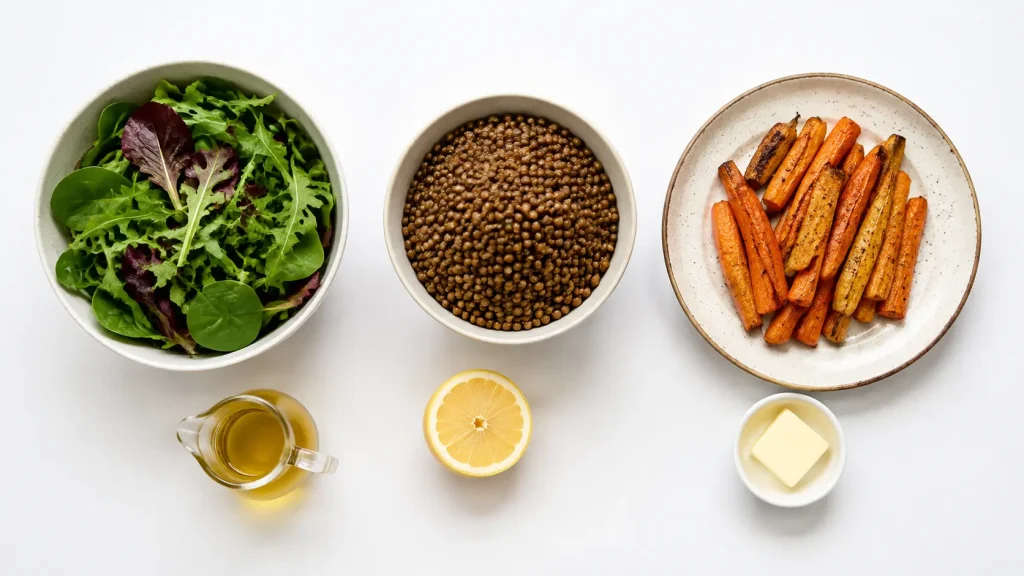
What Helps and What Blocks Absorption
Eating the vitamin is only half the job. Absorption decides how much you actually use.
| Pairing | Effect |
|---|---|
| Vitamin C with plant iron | Boosts iron absorption substantially |
| Fat with vitamins A, D, E, K | Required for absorption |
| Calcium with iron | Calcium blocks iron uptake |
| Zinc with copper | High zinc lowers copper over time |
| Coffee or tea with meals | Tannins reduce iron absorption |
| Alcohol with B vitamins | Blocks thiamine and folate absorption |
| Vitamin D with calcium | Vitamin D is required to absorb calcium |
| Vitamin K with fat | Improves uptake from greens |
Two practical takeaways come out of this.
Put olive oil on your salad. Dry greens hand you far less vitamin K and A than dressed ones.
Squeeze lemon over beans and spinach. Vitamin C converts plant iron into a form your body absorbs much better. That matters most for vegetarians.
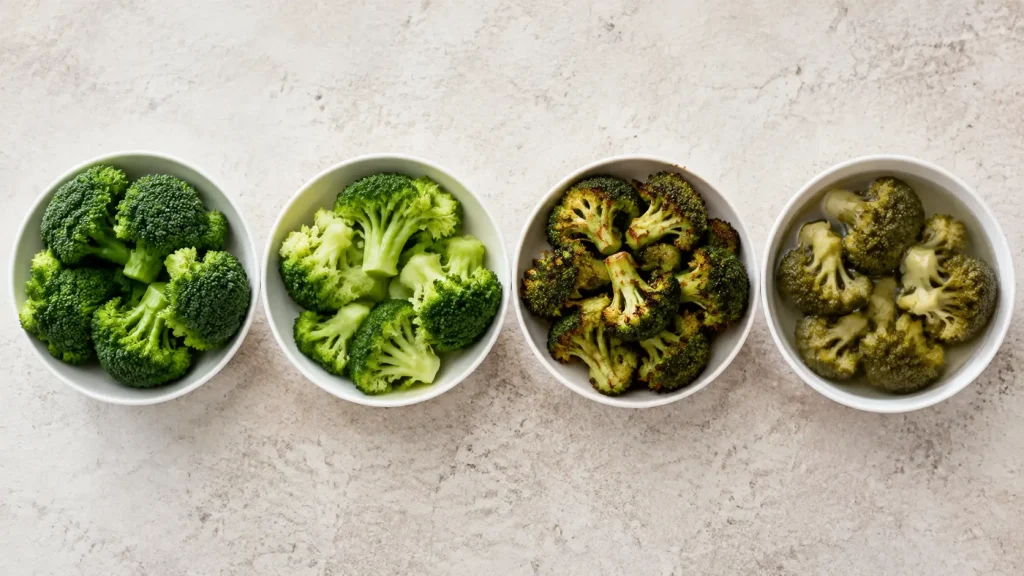
How Much Cooking Destroys
Preparation method changes what actually reaches you.
| Method | Vitamin C Loss | Notes |
|---|---|---|
| Boiling | 50 to 70 percent | Most leaches into the water |
| Steaming | 10 to 25 percent | Far gentler |
| Microwaving | 10 to 20 percent | Short time, little water |
| Roasting | 15 to 30 percent | Dry heat, no leaching |
| Raw | 0 percent | Full retention |
Vitamin C and folate suffer most because heat and water both destroy them. The B vitamins fall in between. Vitamins A, D, E and K hold up well under heat.
Keep the cooking water when you can. Soup broth catches what boiling pulls out of the vegetables.
Some nutrients go the other way. Cooked tomatoes release more lycopene than raw ones, and cooked carrots give up more beta carotene. Variety in preparation beats picking one method.
Vitamins You Can Actually Overdo
Supplements carry risks that food does not. These have real upper limits.
| Vitamin | Upper Limit (adults) | What Too Much Causes |
|---|---|---|
| A (preformed) | 3,000 mcg | Liver damage, birth defects, bone loss |
| D | 100 mcg (4,000 IU) | High blood calcium, kidney problems |
| E | 1,000 mg supplemental | Bleeding risk |
| B3 (niacin) | 35 mg supplemental | Flushing, liver damage |
| B6 | 100 mg | Nerve damage in hands and feet |
| B9 (folic acid) | 1,000 mcg supplemental | Masks B12 deficiency |
| C | 2,000 mg | Digestive upset, kidney stones |
Food almost never causes these problems. Beta carotene from vegetables turns your skin slightly orange at very high intakes and does nothing worse.
Vitamins B1, B2, B5, B7, B12 and K have no established upper limit for healthy adults.
How to Cover Everything From Food
A few simple patterns handle nearly all of it.
Eat a range of colors. Different pigments signal different nutrients. Orange for beta carotene, dark green for K and folate, red for vitamin C.
Include some fat with vegetables. Vitamins A, D, E and K need it to absorb. Olive oil on a salad does more than it looks like.
Keep animal foods or fortified alternatives in the mix. B12 comes from nowhere else.
Eat some raw produce. Vitamin C and folate both degrade with heat.
Do not boil vegetables to death. Water soluble vitamins leach into the water. Steam, roast or eat them raw.
Choose whole grains. They carry more B vitamins than refined versions, even after fortification.
Our list of the most hydrating foods ranked by water content overlaps heavily with the vitamin C sources on this chart.
When a Supplement Makes Sense
Food first works for most people. Some situations genuinely call for more.
- Pregnancy or trying to conceive, for folic acid
- A vegan or mostly plant based diet, for B12
- Limited sun exposure or darker skin, for vitamin D
- Adults over 50, for B12
- After bariatric surgery or with a condition affecting absorption
- Taking metformin or long term acid reducers, for B12
- A confirmed deficiency from a blood test
A blood test beats guessing. Taking a supplement for a deficiency you do not have wastes money and occasionally causes harm.
Talk with your doctor before starting any supplement, especially the fat soluble ones.
Frequently Asked Questions
How many vitamins are there?
Thirteen. Four fat soluble ones are A, D, E and K. Nine water soluble ones are the eight B vitamins plus vitamin C.
Which food has the most vitamins?
Beef liver covers more vitamins in one food than almost anything else. Among plant foods, spinach and other dark leafy greens deliver the widest range.
Do I need a multivitamin?
Most people eating a varied diet do not. Multivitamins make sense for specific gaps rather than as general insurance.
Which vitamin is hardest to get from food?
Vitamin D. Very few foods contain meaningful amounts and sun exposure varies with season, latitude and skin tone.
Can vegans get all their vitamins from food?
All except B12, which appears only in animal foods and fortified products. Fortified plant milks, nutritional yeast or a supplement handle it.
Does cooking destroy vitamins?
Water soluble ones suffer most. Vitamin C and folate both drop with heat and leach into cooking water. Fat soluble vitamins hold up much better.
Can you take too many vitamins?
Yes, mainly from supplements. Vitamins A, D, E, B3, B6, folic acid and C all have upper limits. Food rarely causes problems.
What are the signs of a vitamin deficiency?
Fatigue, brittle nails, hair loss, mouth sores, easy bruising and numbness in hands or feet all show up commonly. A blood test identifies which vitamin rather than guessing.
Do vitamin gummies work?
They deliver vitamins but often carry added sugar and lower doses than tablets. Gummy formulations also degrade faster.
Should I take vitamins with food?
Fat soluble ones absolutely, alongside a meal containing fat. Water soluble ones absorb fine either way, though food reduces stomach upset.
Does coffee block vitamin absorption?
Coffee and tea both reduce iron absorption from plant foods because of their tannins. Drink them between meals rather than with them if your iron runs low.
Is it better to eat vegetables raw or cooked?
Both. Raw preserves vitamin C and folate. Cooking releases more lycopene from tomatoes and more beta carotene from carrots. Eat a mix.
Which vitamin deficiency causes fatigue?
Several. B12, folate and vitamin D all cause it, and so does iron deficiency, which is a mineral rather than a vitamin. Fatigue alone cannot identify which one, so a blood test is the sensible next step.
Do frozen vegetables have fewer vitamins?
No. Producers freeze them shortly after harvest, which often preserves more than fresh produce that spent a week in transit and on shelves.
Related reading: our 8 common signs of nutrient deficiencies covers what a shortfall looks like, 12 iron rich vegetables goes deeper on iron, and 15 foods that support immune function covers the vitamins most people are actually short of.
Final Thoughts on This Vitamin Food Sources Chart
Thirteen vitamins sound like a lot to track. A varied diet covers nearly all of them without any counting at all. This vitamin food sources chart works better as a reference for filling specific gaps than as a daily checklist.
Watch four in particular. Vitamin D is hard to get from food. B12 needs animal foods or fortification. Folate matters most before a pregnancy is confirmed. Older adults absorb B12 less well.
Everything else follows from eating a range of colors, including some fat with your vegetables and not boiling produce into submission. Ask your doctor for a blood test rather than guessing if you suspect a gap.
References
- National Institutes of Health, Office of Dietary Supplements. Vitamin and Mineral Supplement Fact Sheets. ods.od.nih.gov
- US Department of Agriculture. FoodData Central. fdc.nal.usda.gov
This article shares general nutrition information. It does not replace advice from your doctor or a registered dietitian. Talk with a healthcare provider before starting supplements, especially during pregnancy, with a diagnosed condition or while taking medication. Read our full medical disclaimer and fact checking policy.
About the Author and Reviewer
Mezbaul Islam, MSc Nutrition owns and writes Simple Health Naturally. He researches each article from public health guidance, clinical guidelines and peer reviewed studies, and traces every figure back to a named source.
Dr. Obeydur Rahman, MBBS, MD in Medicine edits the articles, checks the sources cited and is responsible for the site’s editorial standards. MD in Medicine is the specialty for adult conditions such as liver disease, type 2 diabetes and high blood pressure.
Read more about our authors and reviewers or see our editorial policy.
Edited by Dr. Obeydur Rahman, MBBS, MD in Medicine.