A high protein breakfast is worth building deliberately, but probably not for the reason you have been told. The satiety benefit is real yet inconsistent in trials. The stronger argument is that breakfast is the meal where almost everyone falls short, and protein spread evenly across the day does measurably more for muscle than the same total loaded into dinner. The ten ideas below deliver 21 to 32 g each, with the grams shown so you can see exactly where you land.
Short answer: Aim for 25 to 30 g at breakfast, which is the per meal amount that maximally stimulates muscle protein synthesis. Toast and coffee gives you 2 to 5 g. The easiest hits here are salmon and egg toast at 32 g and a yogurt smoothie at 30 g.
How Much Protein Does Breakfast Actually Need?
Research consistently points to a per meal threshold of 25 to 30 g of quality protein for maximally stimulating muscle protein synthesis. Younger adults may reach it nearer 20 g. Older adults need the upper end, because anabolic resistance means the same dose does less work with age.
Here is the part that makes breakfast specifically worth fixing. Distribution research found that 30 g at each of three meals produced roughly 25 percent more muscle protein synthesis over 24 hours than the identical 90 g skewed toward dinner. Same protein, different result, purely from timing.
And the typical pattern is exactly the skewed one. Toast and coffee supplies 2 to 5 g. A pastry supplies little more. Most people then eat a light lunch and load 40 or 50 g into dinner, which exceeds what one meal can use for muscle. Breakfast is the cheapest place to recover that.
The satiety claim, handled honestly
Protein rich breakfasts do reliably improve how full people report feeling through the morning. What they do not reliably do is reduce total intake across the day.
A 2024 randomised crossover trial found a dairy based protein rich breakfast improved morning satiety but did not significantly cut total daily energy intake. A 2025 study comparing 30 g plant and animal breakfasts against a 10 g breakfast found stronger appetite hormone responses from both higher protein meals, yet participants did not eat significantly less at the next meal.
So eat a high protein breakfast because it keeps your morning comfortable and because it fixes your protein distribution. Do not eat one expecting it to automatically produce a calorie deficit.
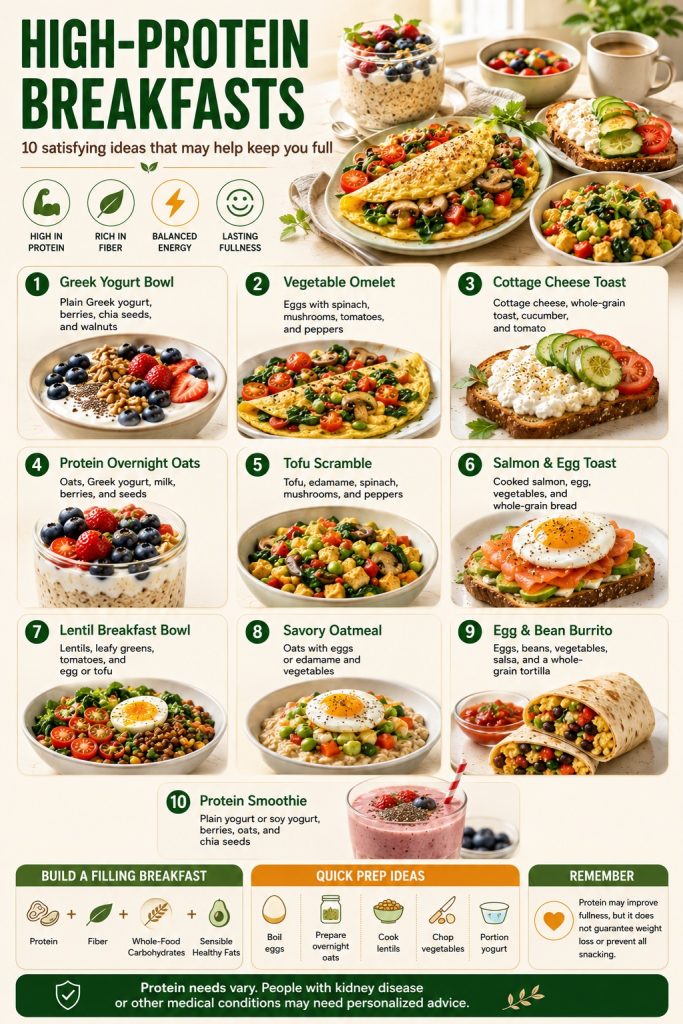
10 High Protein Breakfast Ideas
Figures are approximate for the portions described and vary with brand and size.
Hits 30 g or close
- 1. Salmon and egg on whole grain toast. 3 oz cooked or canned salmon, one egg, one slice toast, rocket, lemon, black pepper. About 32 g protein, 400 calories. The highest protein option here and a good use of leftover fish. Canned salmon works and is cheaper. Smoked salmon is fine occasionally but high in sodium.
- 2. Yogurt and oat breakfast smoothie. ¾ cup plain Greek yogurt, ½ cup milk or unsweetened soy milk, ¼ cup oats, 1 tbsp chia, 1 tbsp peanut butter, frozen berries. About 30 g protein, 380 calories. Useful when your morning appetite is low. No juice, no honey, no sweetened protein powder.
Around 25 g
- 3. Cottage cheese with fruit and toast. ¾ cup cottage cheese, berries or sliced peach, one slice whole grain toast, cinnamon. About 26 g protein, 330 calories. Works savoury too with tomato, cucumber and black pepper. Check sodium if you have been advised to.
- 4. Tofu scramble with edamame. 5 oz firm tofu, ½ cup shelled edamame, spinach, mushrooms, tomatoes, turmeric and paprika. About 26 g protein, 290 calories. The strongest plant based option, and edamame is what pushes it over the line.
- 5. Egg and bean breakfast burrito. Whole grain tortilla, two scrambled eggs, ½ cup black beans, peppers, salsa, a spoon of plain Greek yogurt. About 25 g protein, 400 calories. Make a batch and freeze them individually.
Around 21 g, easily pushed higher
- 6. Greek yogurt, berry and seed bowl. ¾ cup plain Greek yogurt, berries, 1 tbsp chia or ground flax, chopped walnuts, cinnamon. About 21 g protein, 280 calories. No cooking at all. Use plain yogurt; flavoured versions carry two to three times the sugar.
- 7. Vegetable omelette with beans. Two eggs, spinach, mushrooms, tomatoes, peppers, ½ cup white or black beans. About 21 g protein, 300 calories. The beans are doing real work here, adding both protein and fibre that two eggs alone lack.
- 8. Protein overnight oats. ⅓ cup rolled oats, ½ cup plain Greek yogurt, ½ cup milk or soy milk, 1 tbsp chia, berries. About 21 g protein, 340 calories. Oats made with water alone are not a protein breakfast. The yogurt is the point.
- 9. Savoury oatmeal with eggs. ½ cup oats cooked in milk or broth, two eggs, spinach, mushrooms, tomatoes, black pepper. About 21 g protein, 340 calories. Far better balanced than flavoured instant oatmeal, which is mostly sugar.
- 10. Lentil and vegetable breakfast bowl. ¾ cup cooked lentils, spinach or kale, tomatoes, mushrooms, roasted peppers, topped with an egg, lemon and herbs. About 21 g protein, 290 calories. Cheapest on the list. Cook lentils in advance and reheat with vegetables.
How to Add 10 g of Protein to Any Breakfast
If a breakfast lands at 20 g and you want 30, these are the cheapest ways to close the gap.
- One boiled egg: 6 g
- An extra ¼ cup plain Greek yogurt: 6 g
- ½ cup edamame: 9 g
- ½ cup black beans: 7 g
- ¼ cup cottage cheese: 7 g
- 1 cup milk or fortified soy milk instead of water: 8 g
- 2 tbsp hemp seeds: 6 g
Note what is missing from that list. Almond, oat, rice and coconut drinks carry roughly 1 g of protein per cup, so swapping to them undoes the point. Fortified soy is the plant milk that matches dairy.
You do not need protein powder for any of this. It is convenient rather than necessary, and many products carry substantial added sugar.
Mistakes Worth Avoiding
- Leaning on processed meat. Bacon, sausage and breakfast patties supply protein along with a lot of sodium and saturated fat. Eggs, beans, fish, tofu and yogurt are better default choices.
- Forgetting fibre entirely. A plate of eggs, cheese and meat is protein rich and nutritionally thin. Add vegetables, fruit, beans, oats or whole grain bread.
- Buying sweetened protein products. Flavoured yogurt, protein cereal, breakfast bars, bottled shakes and protein granola frequently carry more added sugar than expected. Read the label rather than the front of the pack.
- Stacking calorie dense toppings. Nuts, seeds, avocado, cheese, oil and nut butter are all fine. Three of them in one bowl is a different meal.
- Assuming more is always better. Beyond roughly 30 g in a single meal, the extra does little for muscle protein synthesis. Spreading protein across the day beats maximising one sitting.
For portable options that keep protein up between meals, see our roundup of 25 high protein snacks.
If You Have Diabetes or Kidney Disease
Diabetes. Protein at breakfast is genuinely useful, since morning insulin resistance makes it the meal where carbohydrate is handled worst. Beans, yogurt, milk, fruit and oats all still contain carbohydrate, so count them. Our guide to diabetes friendly breakfast ideas covers the carbohydrate side in detail.
Chronic kidney disease. This one matters. Do not substantially increase protein without individual guidance, because requirements differ considerably depending on kidney function and whether you are on dialysis. Restriction also carries its own risk of malnutrition, so it needs supervising rather than guessing. NIDDK covers the specifics.
Individual advice is also sensible with liver disease, pregnancy or breastfeeding, food allergies, digestive disorders, a history of disordered eating, or prescribed limits on sodium, potassium or phosphorus.
Frequently Asked Questions
How much protein should breakfast have?
Aim for 25 to 30 g. That is the per meal amount research identifies as maximally stimulating muscle protein synthesis, with younger adults reaching it nearer 20 g and older adults needing the upper end because of anabolic resistance. For context, toast and coffee supplies 2 to 5 g, which is why breakfast is the meal most people fall short at. Your total daily intake still matters more than any single meal.
Does a high protein breakfast help you lose weight?
It helps indirectly at best. Trials consistently show protein rich breakfasts improve how full people feel through the morning, but they do not reliably reduce total daily calorie intake. A 2024 randomised crossover trial found improved morning satiety with no significant reduction in daily energy intake. Eat one because it makes your morning comfortable and fixes your protein distribution, not because it creates a deficit on its own.
Why does protein timing matter if the daily total is the same?
Because distribution changes the result. Research found that 30 g of protein at each of three meals produced roughly 25 percent more muscle protein synthesis over 24 hours than the identical 90 g skewed toward dinner. A single meal can only use so much for muscle, so a 50 g dinner wastes some of what a 5 g breakfast missed. Evening out the distribution costs nothing.
Are two eggs a high protein breakfast?
Two eggs give you about 12 g, which is useful but roughly half the 25 to 30 g target. Add half a cup of beans for 7 g more, a slice of whole grain toast for 4 g, or serve them alongside yogurt. Eggs are an excellent base and rarely a complete high protein breakfast on their own.
How do I add protein to oatmeal?
Oats made with water give you around 5 g, so oatmeal is a carbohydrate food rather than a protein one by default. Cook it in milk or fortified soy milk instead of water for about 8 g more, stir in half a cup of plain Greek yogurt for 11 g, or top savoury oats with two eggs for 12 g. Any of these takes a 5 g breakfast past 15 g.
What is a good vegan high protein breakfast?
A tofu scramble with edamame is the strongest option at roughly 26 g, since the edamame adds 9 g on its own. Other good choices are a lentil breakfast bowl, beans in a whole grain tortilla, and oats made with fortified soy milk and soy yogurt. A 2025 trial found plant and animal breakfasts with equal protein produced similar appetite hormone responses, so plant sources are not at a disadvantage here.
Do I need protein powder?
No. Every breakfast in this article reaches 21 to 32 g using ordinary food. Greek yogurt, cottage cheese, eggs, tofu, edamame, beans, fish and fortified soy milk all do the job. Protein powder is convenient rather than necessary, and many products carry substantial added sugar, so check the label if you use one.
Can you eat too much protein at one meal?
You cannot use it all for muscle. Beyond roughly 30 g in a single sitting the additional protein does little extra for muscle protein synthesis, which is why spreading intake across meals outperforms maximising one. The surplus is not wasted in a broader sense, since it is still used for energy and other functions, but a 60 g dinner does not do twice the muscle work of a 30 g one.
Which plant milk has the most protein?
Fortified soy milk, at roughly 7 to 8 g per cup, which is comparable to dairy milk. Almond, oat, rice and coconut drinks typically carry around 1 g per cup, so using them in oats or a smoothie undoes much of the protein you were trying to add. Check the label, since protein content varies between brands and sweetened versions add sugar.
Do I have to eat breakfast at all?
No. Not everyone is hungry in the morning, and skipping breakfast is not inherently harmful for most healthy adults. The tradeoff is that it makes reaching a sensible daily protein total harder and concentrates intake into fewer meals. If you do skip it, pay closer attention to protein at your remaining meals. Anyone using insulin or medicines that can cause low blood glucose should discuss meal timing with their care team.
Find your own number. Protein needs scale with body weight, so use our protein intake calculator to work out your daily target and how much of it these breakfasts cover.
Final Thoughts on Building a High Protein Breakfast
The case for a high protein breakfast is not that it melts fat or switches off your appetite. It is that 25 to 30 g at breakfast fixes the most skewed meal in most people’s day, and evening out protein distribution does measurably more for muscle than the same total eaten mostly at dinner.
Practically: start from a real protein base rather than treating protein as a topping, add something with fibre, and check the grams once so you know roughly where your usual breakfast sits. Most people are surprised how low it is.
Then pick two or three you will actually repeat. A breakfast delivering 26 g that you eat four mornings a week beats a perfect 35 g one you make twice and abandon. Guidance from the Dietary Guidelines for Americans points the same way: variety of protein foods, mostly minimally processed, in portions that fit your needs.
Related reading: 15 diabetes friendly breakfast ideas | 25 keto protein snacks | 10 healthy smoothies for weight loss | 10 weight loss mistakes you might be making
Medical Disclaimer
This article is for general education and is not a personalised nutrition, diabetes, kidney or weight management plan. Protein needs vary with age, body size, activity, pregnancy, medicines and health conditions. Consult a qualified healthcare professional or registered dietitian before significantly increasing protein intake, particularly with chronic kidney disease, diabetes, liver disease, pregnancy or a history of disordered eating. See our medical disclaimer, editorial policy and fact checking policy.
Cross checked against the Dietary Guidelines for Americans, NIDDK, USDA FoodData Central and peer reviewed research on protein distribution and muscle protein synthesis. Protein and calorie figures are estimates that vary with brand and portion. Last updated July 2026.
About the Author and Reviewer
Mezbaul Islam, MSc Nutrition owns and writes Simple Health Naturally. He researches each article from public health guidance, clinical guidelines and peer reviewed studies, and traces every figure back to a named source.
Dr. Obeydur Rahman, MBBS, MD in Medicine edits the articles, checks the sources cited and is responsible for the site’s editorial standards. MD in Medicine is the specialty for adult conditions such as liver disease, type 2 diabetes and high blood pressure.
Read more about our authors and reviewers or see our editorial policy.
Edited by Dr. Obeydur Rahman, MBBS, MD in Medicine.