No food burns fat. The foods that support weight loss do something less dramatic and more useful: they deliver protein, fibre, water and volume for relatively few calories, which makes an energy deficit easier to hold without feeling deprived. That distinction matters, because the one habit that separates a food which helps from a food which does not is whether it replaces something or simply gets added on top.
Short answer: Legumes have the strongest trial evidence of any single food group, at roughly 1 kg of weight and 2 kg of fat mass over the trial periods studied. Boiled potatoes are the most filling food ever formally tested. Protein at 1.2 to 1.6 g per kg of body weight protects muscle while you lose fat. Everything else on this list works by substitution.
What Actually Makes a Food Support Weight Loss
Four properties do the real work. Every food below has at least two of them.
- Protein. During a deficit, intakes of 1.2 to 1.6 g per kg of body weight preserve noticeably more lean mass than the 0.8 g per kg baseline. One analysis found up to 1.21 kg more fat free mass retained on the higher intake. That matters because weight lost as muscle lowers your resting metabolic rate and makes regain easier.
- Fibre. Recommendations sit at roughly 25 g a day for women and 38 g for men. Average intake is about 16 g. Closing that gap is one of the few dietary changes that improves satiety, digestion and diet quality at the same time.
- Water and volume. A food that fills the plate for fewer calories lets you eat the same visual amount for less. This is why a large salad and a small handful of crisps can carry the same calories and produce completely different fullness.
- Practicality. A theoretically ideal food you never cook is worth nothing. Frozen vegetables, tinned beans, eggs, oats, plain yogurt and tinned fish keep a good pattern running on a bad week.
The pace matters too. The CDC notes that people losing around 1 to 2 pounds a week are more likely to keep it off, and that a 5 percent reduction, meaning 10 pounds for someone weighing 200, is enough to improve blood pressure, cholesterol and blood glucose.
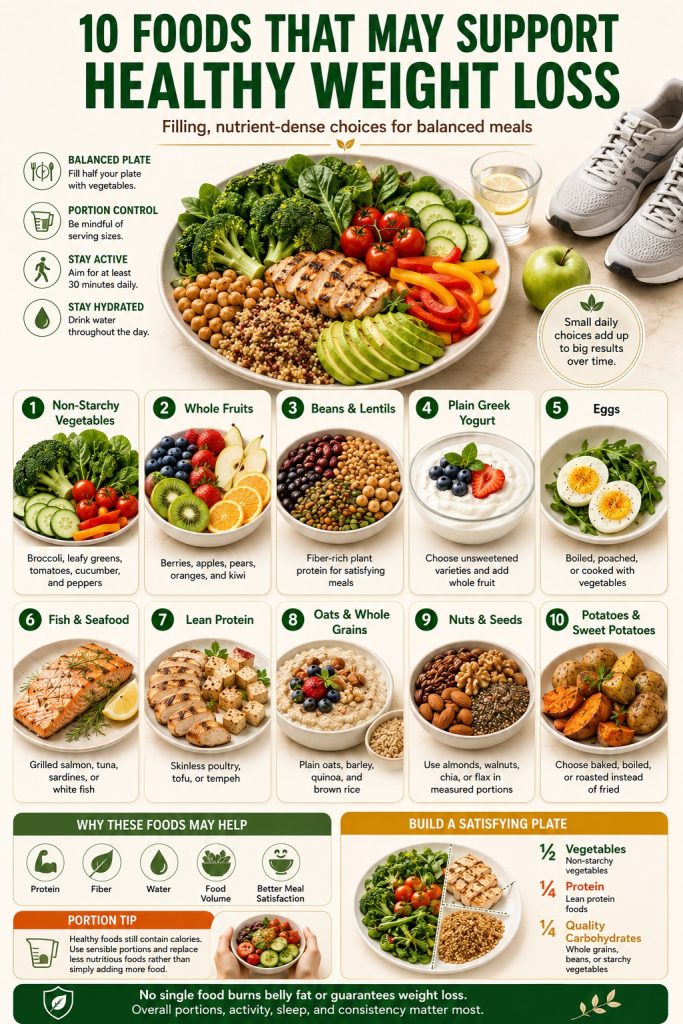
10 Foods That Support Weight Loss
1. Non starchy vegetables
Broccoli, cauliflower, leafy greens, cabbage, courgette, peppers, mushrooms, green beans, tomatoes, cucumber, asparagus and aubergine. A cup of cooked broccoli is about 55 calories with 5 g of fibre. A cup of raw spinach is 7 calories.
These are the highest leverage food on the list, but only through substitution. Half a plate of vegetables in place of half a plate of rice cuts real calories. Half a plate of vegetables alongside the same rice adds them. Steam, roast, grill or sauté with measured oil. Breading, deep frying, butter and cream sauces can double or triple the number.
2. Whole fruit
Berries, apples, pears, oranges, kiwi, peaches, plums, cherries, melon and bananas. A medium apple is roughly 95 calories with 4.4 g of fibre. A cup of blueberries is about 85 calories.
Whole fruit beats juice because the fibre is intact and it takes longer to eat. Fruit works best replacing dessert, biscuits or a sweetened drink, not stacked on top of them. Dried fruit is nutritious but concentrated: a quarter cup of raisins carries roughly the calories of a cup of grapes, so measure it rather than eating from the bag.
3. Beans, lentils and chickpeas
This is the strongest evidence on the page. A 2026 meta analysis of 36 randomised controlled trials found that eating non soy legumes reduced body weight by about 0.98 kg, waist circumference by 1.61 cm and fat mass by 2.00 kg. Modest, but this is one of very few single food groups with a measured effect in controlled trials rather than only in observational data.
The reason is the combination. A cup of cooked lentils gives you about 18 g of protein and 15.6 g of fibre for 230 calories. A cup of black beans gives 15 g of each for about 227. Nothing else on this list delivers both at once in that quantity.
Use them in soup, chilli, salads, tacos, hummus, or mixed half and half with a smaller rice portion. Tinned is fine. Rinse to cut sodium by roughly 40 percent.
4. Plain Greek yogurt and cottage cheese
Three quarters of a cup of plain Greek yogurt provides roughly 17 g of protein for about 100 calories. The same amount of cottage cheese provides around 19 g for 120 to 140.
The word doing the work is plain. Flavoured versions frequently carry two to three times the sugar for the same protein. Build a bowl from yogurt, whole fruit, cinnamon, a tablespoon of chia and a measured amount of nuts, then stop. Granola, honey, syrup and nut butter piled together turn a 200 calorie breakfast into a 600 calorie dessert.
Dairy free? Unsweetened soy yogurt is the only plant option that reliably matches the protein. Coconut, almond and oat versions usually carry 1 to 3 g per serving.
5. Eggs
A large egg is 72 calories with 6.3 g of protein, which makes eggs cheap, fast and genuinely useful when they replace pastries, sweetened cereal or a refined carbohydrate breakfast.
Be honest about the size of the effect though. A 2023 meta analysis of 32 controlled trials found whole egg consumption had no significant effect on body weight, BMI, waist circumference or fat free mass on its own. Eggs improve the meal you build around them. They do not independently cause weight loss, and two eggs alone at 12 g of protein is only about half a sensible breakfast target. Add beans, vegetables or yogurt. Our guide to high protein breakfasts covers this in detail.
6. Fish and seafood
Some of the best protein to calorie ratios available. Three ounces of cod is about 90 calories for 20 g of protein. The same weight of prawns is roughly 85 calories for 20 g. Salmon runs higher at about 175 calories for 19 g, and buys you omega 3 fats in exchange.
Tinned salmon, sardines and tuna are the cheap versions and work fine. Bake, grill, steam, poach or air fry. Battered fish, creamy seafood pasta and restaurant portions land in a different category entirely.
7. Skinless poultry, tofu and tempeh
Three ounces of cooked skinless chicken breast delivers about 26 g of protein for 140 calories. For plant eaters, 100 g of firm tofu gives roughly 15 to 17 g for 145 calories, and tempeh around 19 g for 195.
A palm sized portion suits most meals, though needs vary with body size and activity. Grill, bake, roast or stir fry with measured oil. Breaded and fried versions, nuggets, creamy sauces and sweet marinades add calories and sodium fast. Protein helps with fullness, but unlimited portions of it still will not produce a deficit.
8. Oats and whole grains
Half a cup of dry oats is about 150 calories with 4 g of fibre. Barley, quinoa, brown rice, bulgur and whole grain bread all belong here.
Worth being straight about the evidence: pooled results from randomised trials show swapping refined grains for whole grains produces essentially no weight change on its own, roughly 0.05 kg, which is nothing. Whole grains earn their place through fibre, diet quality and staying power rather than through weight loss. Portion still governs the outcome. Whole grain bread, pasta, rice and especially granola are all calorie dense, and the label does not make them unlimited.
Plain oats with berries, cinnamon, yogurt or milk and a tablespoon of seeds is the version that works. Brown sugar, syrup, chocolate chips and nut butter make it a dessert.
9. Nuts and seeds
An ounce of almonds is 164 calories with 6 g of protein and 3.5 g of fibre. An ounce of walnuts is 185. Calorie dense by any measure, which is why they surprise people.
A 2024 meta analysis found that including 28 to 84 g of nuts a day inside an energy restricted diet did not differently affect body weight, BMI, waist circumference or body composition. Nuts are not the trap they are assumed to be. Part of the reason is that some fat passes through undigested, and part is that they displace other snacks.
That finding depends on portions though. One small handful, one to two tablespoons of seeds, or one measured tablespoon of nut butter. Eating repeatedly from a large bag is how a 160 calorie snack becomes 600. Choose unsalted or lightly salted, without sugar or chocolate coatings.
10. Potatoes and sweet potatoes
The most unfairly maligned food on the list. In the University of Sydney Satiety Index, which tested 240 calorie portions of 38 common foods against white bread scored at 100, boiled potatoes scored 323. Highest of everything tested, and roughly seven times the croissant at 47. Nothing else came close.
A medium baked potato with skin is about 161 calories with 4.3 g of protein, 3.8 g of fibre and more potassium than a banana. A medium sweet potato is about 103 calories and adds carotenoids.
What ruins them is preparation. A medium fast food serving of fries runs roughly 320 to 400 calories and a large can pass 500. Loaded potatoes with butter, cheese, bacon and sour cream go further still. Bake or boil, top with plain yogurt, herbs or vegetables, and treat it as the carbohydrate quarter of the plate.
The Substitution Rule
This is the single idea that decides whether any of the above helps you.
Adding a smoothie, a handful of nuts, avocado toast and a protein bar to a diet you have not otherwise changed increases your intake. Every one of those foods is nutritious. None of them is subtractive. The people who add healthy foods and lose nothing are not doing anything wrong nutritionally, they have simply skipped the replacement step.
Swaps that reliably work:
- Half the rice or pasta portion replaced with vegetables or beans
- Whole fruit in place of dessert or a biscuit
- Water or an unsweetened drink in place of soda, juice or sweetened coffee
- Plain Greek yogurt in place of sour cream or mayonnaise
- Baked or boiled potato in place of fries
- A measured handful of nuts in place of crisps
Liquid calories deserve their own mention. Sweetened drinks contribute calories without much fullness, and switching them out is usually the simplest first move anyone can make. Our roundup of healthy drinks that support weight loss covers the alternatives.
Building the Plate
- Half the plate: non starchy vegetables
- A quarter: fish, poultry, eggs, tofu, beans, lentils or Greek yogurt
- A quarter: oats, brown rice, quinoa, whole grain bread, potato or sweet potato
- Measured, not poured: oil, dressing, nuts, seeds, avocado, cheese
- To drink: water or something unsweetened
Portions scale with body size, age and activity. A tall, active person needs more food than this implies, and a smaller or less active one needs less. For worked examples, see our healthy dinner ideas for weight loss.
What Derails Progress
- Adding without replacing. Covered above, and by some distance the most common.
- Drinking calories. Juice, soda, alcohol, sweetened coffee and shop bought smoothies add up quickly and satisfy little.
- Eating from the packet. Portion nuts, crisps, cereal, granola and dried fruit into a bowl first.
- Cutting too hard. Aggressive restriction tends to produce fatigue, muscle loss, nutrient gaps and rebound eating. Gradual wins.
- Treating food as the whole answer. Sleep, activity, stress, medicines and medical conditions all affect weight, and no grocery list overrides them.
We cover these in more depth in 10 weight loss mistakes you might be making.
One more thing worth saying plainly: fat burners, detox teas and appetite suppressing supplements are not part of this. Some interact with prescribed medicines. If you want pharmacological help, NIDDK sets out the treatments that are actually evidence based, and that conversation belongs with a clinician.
Frequently Asked Questions
What are the best foods for weight loss?
There is no single best food, but legumes have the strongest controlled trial evidence. A 2026 meta analysis of 36 randomised trials found non soy legumes reduced body weight by about 0.98 kg, waist circumference by 1.61 cm and fat mass by 2.00 kg. Beyond that, non starchy vegetables, whole fruit, plain Greek yogurt, eggs, fish, poultry, tofu, oats, nuts and potatoes all help by delivering protein, fibre and volume for relatively few calories. They work through the overall pattern, not individually.
Can any food burn belly fat?
No. No food, drink, spice or supplement selectively removes fat from the abdomen. Fat loss happens across the whole body in proportions determined largely by genetics, sex and hormones, and you cannot direct where it comes from. Products marketed as belly fat burners are selling a mechanism that does not exist.
Why am I eating healthy foods and not losing weight?
Most often because the healthy foods were added rather than substituted. Smoothies, nuts, avocado, olive oil, granola, cheese and protein bars are all nutritious and all calorie dense, so piling them onto an otherwise unchanged diet raises intake. The fix is replacement: half the rice portion swapped for vegetables, fruit instead of dessert, water instead of juice. Sleep, activity, stress, medicines and medical conditions also affect the result.
Are potatoes bad for weight loss?
No, and the evidence points the other way. In the University of Sydney Satiety Index, which tested 240 calorie portions of 38 foods against white bread scored at 100, boiled potatoes scored 323, the highest of anything tested and about seven times the croissant at 47. A medium baked potato with skin is roughly 161 calories with 3.8 g of fibre. Preparation is what changes the picture: a medium fast food serving of fries runs 320 to 400 calories.
How much protein do I need while losing weight?
Roughly 1.2 to 1.6 g per kg of body weight per day, compared with the 0.8 g per kg baseline. Analyses show the higher intake preserves up to about 1.21 kg more fat free mass during a deficit. That matters because weight lost as muscle lowers resting metabolic rate and makes regain more likely. Anyone with kidney disease should get individual guidance before increasing protein.
Do whole grains help you lose weight?
Not on their own. Pooled randomised trial data shows that swapping refined grains for whole grains produces essentially no weight change, around 0.05 kg, despite observational studies suggesting a link. Whole grains still earn a place for fibre, diet quality and staying power, but portion size governs the calories and the whole grain label does not make bread, pasta, rice or granola unlimited.
Are nuts too high in calories for weight loss?
They are calorie dense, at about 164 calories per ounce of almonds, yet a 2024 meta analysis found that including 28 to 84 g of nuts a day within an energy restricted diet did not differently affect body weight, BMI, waist circumference or body composition. Part of the reason is that some of the fat passes through undigested and part is that nuts displace other snacks. Portion still matters: one small handful, not the bag.
Should I avoid carbohydrates to lose weight?
No. Beans, lentils, fruit, oats, potatoes and vegetables all contain carbohydrate alongside fibre, protein and micronutrients, and several of them have the best evidence on this list. What tends to help is reducing refined carbohydrate and sweetened drinks while keeping the whole food sources in sensible portions. Cutting carbohydrate entirely is one approach among several and is not required.
How fast should I expect to lose weight?
The CDC points to about 1 to 2 pounds a week as the pace most associated with keeping weight off. Even modest loss counts: a 5 percent reduction, meaning 10 pounds for someone weighing 200, is enough to improve blood pressure, cholesterol and blood glucose. Rates vary between people and slow down over time, which is normal rather than a sign of failure.
Do I need weight loss supplements or fat burners?
No. Fat burners, detox products and appetite suppressing supplements are largely unproven, some are contaminated or mislabelled, and several interact with prescribed medicines. If diet and activity are not achieving what you need, the evidence based options are prescribed medicines and, in some cases, surgery, both of which belong in a conversation with a qualified clinician rather than a supplement aisle.
Related reading: our guide to weight gain vs weight loss foods explains why the two column food chart is misleading, and our 3 day diet review covers what happens when you try to shortcut it.
Final Thoughts on Foods That Support Weight Loss
The honest summary is that foods that support weight loss do so by making a nutritious deficit easier to sustain, not by burning anything. Legumes have the best controlled trial evidence. Potatoes are the most filling food formally tested. Protein at 1.2 to 1.6 g per kg protects the muscle you want to keep. Whole grains and eggs earn their place on nutrition rather than on weight effects, and it is worth saying so.
If you take one thing away, take substitution. Half the rice portion for vegetables or beans. Water for the sweetened drink. Fruit for the dessert. Baked potato for the fries. Those trades change the arithmetic. Adding good food to an unchanged diet does not.
Then give it time. One to two pounds a week is unglamorous and it is also the pace that tends to stay gone.
Related reading: high protein breakfasts | healthy dinner ideas for weight loss | healthy smoothies for weight loss | snacks that do not spike blood sugar
Medical Disclaimer
This article is for general education and is not a personalised weight loss or medical treatment plan. Calorie, protein and weight targets vary with age, body size, activity, pregnancy, medicines and health conditions. Consult a qualified healthcare professional or registered dietitian before starting a restrictive diet, particularly with diabetes, kidney disease, liver disease, cardiovascular disease, pregnancy or a history of disordered eating. See our medical disclaimer, editorial policy and fact checking policy.
Cross checked against CDC healthy weight guidance, NIDDK, USDA FoodData Central, the 2026 non soy legume meta analysis of 36 randomised trials, the 2024 nut and energy restriction meta analysis, the 2023 whole egg meta analysis of 32 trials, pooled whole grain trial data, and the University of Sydney Satiety Index. Nutrition figures are approximate and vary with brand, variety and portion. Last updated July 2026.
About the Author and Reviewer
Mezbaul Islam, MSc Nutrition owns and writes Simple Health Naturally. He researches each article from public health guidance, clinical guidelines and peer reviewed studies, and traces every figure back to a named source.
Dr. Obeydur Rahman, MBBS, MD in Medicine edits the articles, checks the sources cited and is responsible for the site’s editorial standards. MD in Medicine is the specialty for adult conditions such as liver disease, type 2 diabetes and high blood pressure.
Read more about our authors and reviewers or see our editorial policy.
Edited by Dr. Obeydur Rahman, MBBS, MD in Medicine.