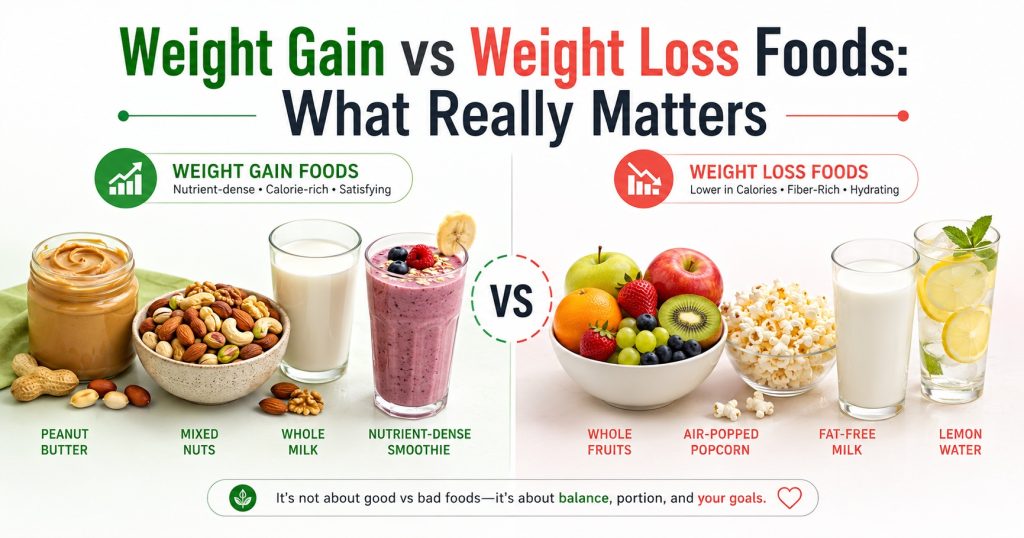
Most weight loss mistakes are not failures of willpower. They are measurement problems, unrealistic timelines, or medical factors nobody flagged. Body weight is shaped by food, activity, sleep, stress, medicines, genetics, age, hormones and the food environment around you, and NIDDK treats obesity as a chronic disease rather than a character flaw. Below are ten common mistakes, why each one stalls progress, and what to do instead.
Short answer: The most common reason progress stalls is that intake is higher and activity lower than they feel. Research using precise measurement found people underestimated what they ate by around 47 percent and overestimated how much they moved by around 51 percent. Fix measurement first, then look at sleep, medicines and medical causes.
Start Here: The Gap Between What You Think and What Is Happening
Before working through the list, one finding explains most apparent plateaus.
A landmark study in the New England Journal of Medicine recruited people who reported eating under 1,200 calories a day and still could not lose weight, and measured them properly using doubly labelled water and indirect calorimetry over 14 days. Their metabolisms were normal. What was not normal was the reporting gap: they underestimated their food intake by an average of 47 percent and overestimated their physical activity by around 51 percent.
This was not deliberate. Modern reviews comparing food diaries against doubly labelled water still find underreporting in the range of 11 to 41 percent, and it is more common in people who are actively trying to lose weight. Nobody is lying. Portions are hard to eyeball, cooking oil is invisible in the finished dish, and the bites taken while cooking never get written down.
The useful takeaway is not to feel caught out. It is that if you feel stuck, the first thing to check is measurement, not metabolism.
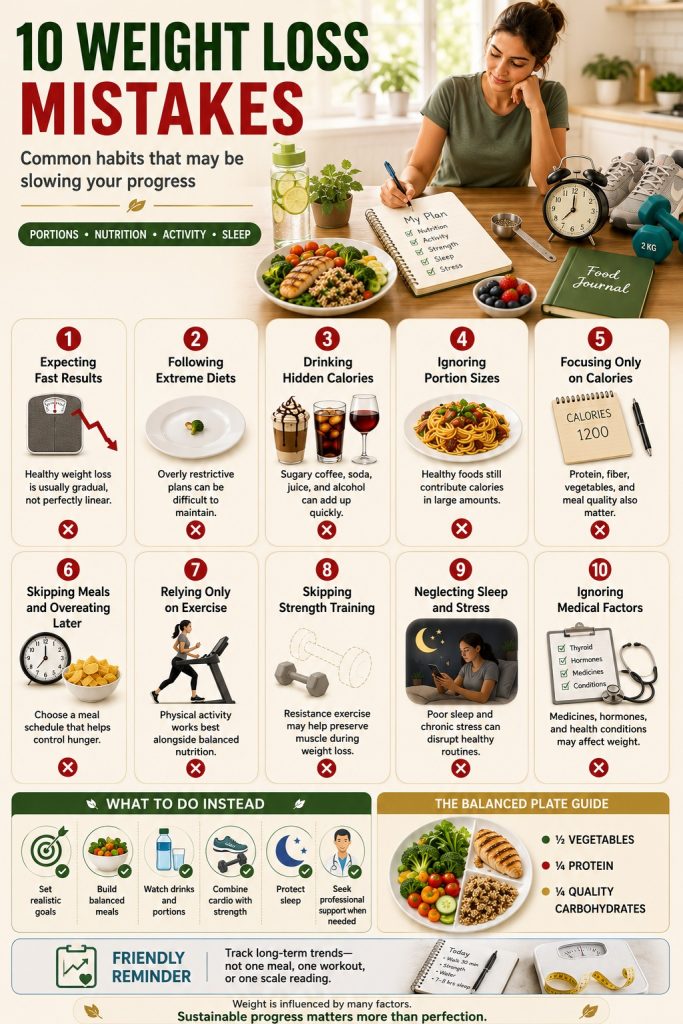
10 Weight Loss Mistakes and How to Fix Them
1. Expecting it to happen too fast
Aggressive deadlines tied to a wedding or holiday almost always end in an unsustainable plan. The CDC describes roughly one to two pounds per week as the pace most likely to stick, and weight loss is never linear anyway.
Fix: set behaviour goals alongside weight goals, such as walking most days, cooking lunch four times a week, or two strength sessions. Even 5 to 10 percent of starting weight meaningfully improves blood pressure, blood glucose and liver fat.
2. Cutting too hard
Very low intake produces a fast early drop and then backfires. It increases hunger, reduces spontaneous movement, costs you muscle alongside fat, and is difficult to sustain socially or practically.
Warning signs your plan is too restrictive: persistent dizziness or weakness, constant preoccupation with food, binge episodes, poor concentration, avoiding social meals, cutting out whole food groups without a medical reason, or repeated cycles of loss and regain.
Fix: a moderate deficit built from specific changes rather than blanket restriction. Keep protein adequate and keep some enjoyable foods in sensible portions. The best plan is not the strictest one, it is the one you are still following in three months.
3. Drinking more calories than you notice
Liquid calories barely register as food and produce very little fullness. A 12 ounce regular soda is around 150 calories, so two a day is roughly 2,100 calories a week. Sweetened coffee, energy drinks, juice, bubble tea, alcohol and oversized smoothies all belong in this category.
Fix: make water, unsweetened tea or plain coffee the default. The benefit comes from replacing sugary drinks, not adding water alongside them. If you like smoothies, treat one as a meal rather than a drink and portion it accordingly. Our high protein smoothies guide covers how to build one that actually fills you up.
4. Ignoring portions because a food is healthy
Olive oil, nuts, seeds, avocado, cheese, granola, dried fruit and nut butter are all nutritious and all calorie dense. A handful of almonds is around 170 calories; four handfuls is a meal. Oil poured straight from the bottle is the single most underestimated item in most kitchens.
Fix: for one or two weeks only, measure the things that are easy to underestimate: cooking oil, dressing, nut butter, nuts, cheese, rice, pasta, granola and sauces. You are not weighing broccoli forever. You are calibrating your eye.
5. Building meals with no staying power
Calories determine weight change, but a meal made mostly of refined carbohydrate leaves you hungry again in two hours, which makes the deficit much harder to hold.
Fix: put protein, fibre and volume in each meal. Compare a breakfast of sweetened coffee and a pastry against eggs with vegetables and whole grain toast at similar calories. The second one carries you to lunch. Our roundup of snacks that will not spike blood sugar applies the same principle between meals.
6. Skipping meals without planning for later
Skipping breakfast is not inherently a mistake, and some people do well with a shorter eating window. It becomes a mistake when a long gap produces intense hunger, fast eating and a very large evening intake that more than cancels what was saved.
When calories are matched, restricting the eating window does not reliably beat other structured approaches. The schedule only helps if it helps you eat less without misery.
Fix: pick whichever pattern controls your appetite best, and add a planned protein containing snack if meals are far apart. Anyone with diabetes, pregnancy, a history of disordered eating, or medicines that can cause low blood glucose should get guidance before fasting.
7. Expecting exercise to cancel out intake
Exercise is excellent for health and unreliable as a calorie eraser. Workouts burn less than most people assume, watches and machines give estimates rather than measurements, and a single large café drink can undo an hour of effort.
Fix: treat activity as something that supports health and protects weight maintenance, not something that earns dessert. Work toward 150 minutes of moderate activity weekly plus two strengthening days, building up gradually if you are currently inactive.
8. Doing only cardio
During a deficit you lose some muscle alongside fat. Resistance training does not necessarily increase total weight lost, but reviews consistently show it protects fat free mass, shifts more of the loss toward fat, and improves strength.
Fix: train the major muscle groups roughly twice weekly. Chair squats, wall push ups, resistance band rows, step ups and glute bridges all count. This matters more with age, and it is why the scale is a poor sole measure. Track waist, strength and how clothes fit too.
9. Treating sleep and stress as unrelated
Short sleep raises appetite and calorie intake measurably. In a randomised trial, adults with overweight who extended their sleep spontaneously ate less in everyday life without being told to. Insufficient sleep during a deficit also appears to shift more of the loss away from fat.
Fix: aim for at least seven hours with a consistent schedule, cut late caffeine, and get loud snoring or witnessed breathing pauses assessed, since untreated sleep apnoea makes everything harder. For stress, the goal is not a calm life but fewer predictable ambushes: prepare food before difficult days.
10. Assuming it is all about effort
Sometimes the barrier is medical. NIDDK lists PCOS, hypothyroidism, Cushing syndrome, depression, chronic stress, binge eating disorder and a range of medicines among contributors to weight gain, including some treatments for diabetes, allergies, seizures, blood pressure and mental health.
Fix: never stop a prescribed medicine yourself, but do ask whether an alternative exists. Get assessed if weight changed suddenly, if you have irregular cycles, severe fatigue, cold intolerance, sleep apnoea symptoms, if you regularly lose control while eating, or if a structured plan produces nothing over months.
What Has Changed in Weight Management
Two things are worth knowing if your last attempt was a few years ago.
Medication is now a mainstream option. In 2025 the World Health Organization issued guidance conditionally recommending GLP-1 receptor agonists as a long term obesity treatment, defined as continuous use of at least six months, alongside diet and activity rather than instead of them. In trials, mean weight loss versus placebo has been around 17.8 percent for tirzepatide, 13.1 percent for injectable semaglutide and 11.4 percent for oral semaglutide, with real world 12 month figures nearer 14 percent.
Two honest caveats. These are treatments rather than courses, and stopping generally leads to regain. And they do not remove the need for adequate protein, resistance training and the habits above, which is precisely how you protect muscle while losing weight quickly.
Obesity is classified as a chronic disease. That reframing matters practically: it means needing ongoing treatment is expected rather than evidence of failure, and it means structured programmes, dietitian support, medication and bariatric surgery are legitimate options depending on your situation. Asking for help is not cheating.
A Two Week Reset Instead of Another Diet
Week one, observe only. Change nothing. Record meals, snacks, drinks, cooking oils and sauces, rough hunger before meals, sleep hours, movement, restaurant meals and weekend eating. Perfection is not the goal; patterns are. Most people find their answer here, usually in drinks, oil, weekends or portion creep.
Week two, change three things. Only three. For example: replace sweetened drinks with water, fill half the dinner plate with vegetables, and walk 20 minutes five days a week. Other good candidates are adding protein to breakfast, measuring cooking oil, strength training twice weekly, setting a consistent bedtime, or portioning snacks into a bowl instead of eating from the packet.
Then hold those for several weeks before changing anything else. Most plans fail from doing twelve things badly rather than three things consistently.
When to Get Support
Speak to a doctor or registered dietitian if a realistic plan produces no change over a sustained period, if you have symptoms suggesting a thyroid problem, PCOS or sleep apnoea, if weight gain followed a new medicine, or if your weight is affecting diabetes, blood pressure, mobility or liver health.
Separately, and importantly: if eating feels out of control, if you regularly eat past comfortable fullness and feel distressed afterwards, if you are compensating with restriction, over exercise or purging, or if thoughts about food and weight are crowding out the rest of your life, that deserves proper support rather than a better diet. In the US, the National Alliance for Eating Disorders runs a helpline staffed by clinicians. Your GP is also a reasonable first step. None of this is a question of discipline.
Frequently Asked Questions
Why am I not losing weight even though I eat healthy?
The most common explanation is that intake is higher than it feels. Research using precise measurement found people underestimated their food intake by around 47 percent and overestimated their activity by around 51 percent, and modern food diary studies still show 11 to 41 percent underreporting. Cooking oil, drinks, weekend eating and portion creep are the usual culprits. Sleep, stress, medicines and conditions such as PCOS or hypothyroidism can also contribute.
Can eating too little stop weight loss?
Not in the sense of the body creating fat from nothing, which is not how it works. But severe restriction does cause real problems: it increases hunger, reduces spontaneous daily movement, impairs training, costs you muscle alongside fat, and is very hard to sustain, which is why aggressive cuts so often end in regain. A moderate, nutritionally adequate deficit outperforms an extreme one over any meaningful timeframe.
How fast should I expect to lose weight?
CDC describes roughly one to two pounds per week as the pace most likely to be maintained, though this varies with starting weight, deficit size, activity and medical treatment. Progress is not linear, so a flat week is not evidence the plan has stopped working. Judge by several weeks of trend rather than daily readings, and remember that 5 to 10 percent of starting weight already improves blood pressure, blood glucose and liver fat.
Do I need to cut carbohydrates to lose weight?
No. Vegetables, fruit, beans, oats, whole grains, potatoes and dairy all contain carbohydrate and fit into a weight loss plan. What matters is the total calorie deficit and whether meals keep you full. Cutting an entire macronutrient tends to make plans harder to sustain without improving results, unless there is a specific medical reason.
Why did my weight go up after starting exercise?
A single reading tells you very little. Short term increases usually reflect fluid, glycogen and food in transit rather than fat gain, and new training can add water retention in muscle. Look at trends across several weeks, and track waist measurement, strength and how clothes fit alongside the scale, since resistance training changes body composition in ways weight alone cannot show.
Does sleep really affect weight loss?
Yes, measurably. In a randomised trial, adults with overweight who extended their sleep spontaneously reduced their calorie intake in everyday life without being asked to. Studies during calorie restriction also suggest that insufficient sleep shifts more of the weight lost away from fat. Aim for at least seven hours, and get loud snoring or witnessed breathing pauses assessed, since untreated sleep apnoea makes weight management considerably harder.
Is strength training necessary or is cardio enough?
Cardio is good for health and energy expenditure, but resistance training does something cardio does not. Reviews show it protects fat free mass during a deficit, shifts more of the loss toward fat and improves strength, even when total weight lost is similar. Two sessions a week covering the major muscle groups is enough, and bodyweight or resistance band work counts.
Are weight loss medications cheating?
No. Obesity is classified as a chronic disease, and in 2025 the World Health Organization conditionally recommended GLP-1 medicines as a long term treatment used alongside diet and activity. Trial weight loss versus placebo has averaged around 17.8 percent for tirzepatide and 13.1 percent for injectable semaglutide. They are treatments rather than courses, so stopping usually leads to regain, and they work best combined with adequate protein and resistance training.
Should I weigh myself every day?
It depends on you. Frequent weighing helps some people spot trends and stay aware, and is associated with better outcomes in many studies. For others it fuels anxiety and unhelpful reactions to normal daily fluctuation. If weighing causes distress, or you have any history of disordered eating, weekly weighing or non scale measures such as waist and strength are entirely reasonable alternatives.
How long before I decide a plan is not working?
Give it several weeks of genuinely consistent behaviour rather than a few days. Before changing the plan, audit the basics: portions of calorie dense foods, drinks, weekend eating, actual activity levels and sleep. If a realistic plan produces no change over a sustained period, or you have symptoms suggesting a thyroid problem, PCOS or sleep apnoea, that is the point to seek professional assessment rather than to cut harder.
Start from your actual numbers. The measurement gap is the first mistake on this list, so work out your maintenance calories with our daily calorie calculator, which gives TDEE, BMR, macros and BMI together.
Final Thoughts on These Weight Loss Mistakes
Progress rarely stalls because of one dramatic error. It stalls because several small things stack up: an unrealistic timeline, a deficit that only exists on paper, calories in drinks and cooking oil, meals that leave you hungry, patchy sleep, no resistance training, and occasionally a medical barrier nobody has looked for. Fix the paper deficit first with our calorie deficit calculator, then judge progress with our weight loss percentage calculator rather than the raw number on the scale. Our body fat calculator catches the progress a stalled scale hides.
If you take one thing from this list of weight loss mistakes, make it the first section. Before assuming your metabolism is broken, spend a week observing honestly. Most people find the answer sitting in plain sight, and it is usually fixable without cutting harder.
Then pick a plan you can still be doing at Christmas, not one you can survive until Friday. And do not treat your body weight as a verdict on your character. It is not one.
Related reading: 8 high protein smoothies to support weight loss | 15 snacks that will not spike blood sugar | 25 keto protein snacks | Lifestyle habits that support liver health
Medical Disclaimer
This article is for general education and is not a personalised weight loss or treatment plan. Calorie needs vary with age, body size, activity, pregnancy, medicines, medical conditions and eating disorder history. Consult a qualified healthcare professional or registered dietitian before starting a restrictive diet, a fasting programme, an intensive exercise plan, a supplement or weight management medication. If eating feels out of control or thoughts about food and weight are causing distress, please seek support from a clinician. See our medical disclaimer, editorial policy and fact checking policy.
Cross checked against NIDDK, CDC, the World Health Organization and peer reviewed research in the New England Journal of Medicine and other journals. Last updated July 2026.
About the Author and Reviewer
Mezbaul Islam, MSc Nutrition owns and writes Simple Health Naturally. He researches each article from public health guidance, clinical guidelines and peer reviewed studies, and traces every figure back to a named source.
Dr. Obeydur Rahman, MBBS, MD in Medicine edits the articles, checks the sources cited and is responsible for the site’s editorial standards. MD in Medicine is the specialty for adult conditions such as liver disease, type 2 diabetes and high blood pressure.
Read more about our authors and reviewers or see our editorial policy.
Edited by Dr. Obeydur Rahman, MBBS, MD in Medicine.