Spinach carries more iron per cup than a serving of beef. Your body absorbs far less of it though, and that gap explains almost everything about eating plants for iron. These iron-rich vegetables all deliver real amounts, and a few simple pairings decide how much actually reaches your blood.
You get all 12 ranked by iron content, the reason plant iron behaves differently and the practical steps that raise absorption several times over.
The 12 Iron-Rich Vegetables Ranked
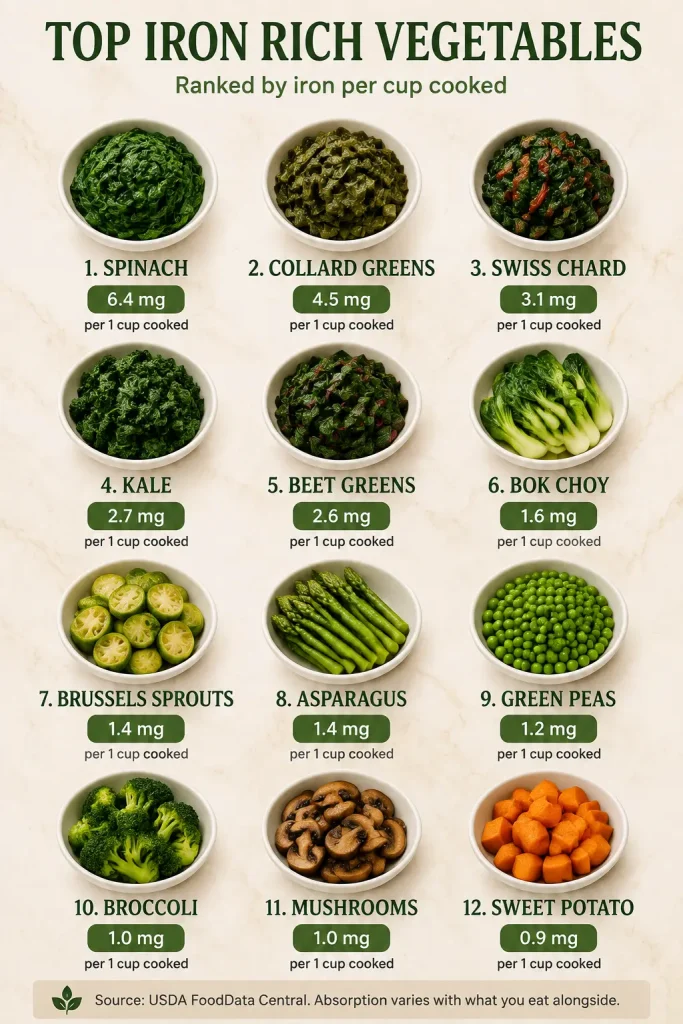
Values come from USDA data for one cup cooked unless noted. You can check any of them through USDA FoodData Central.
| Rank | Vegetable | Iron per Cup Cooked |
|---|---|---|
| 1 | Spinach | 6.4 mg |
| 2 | Collard greens | 4.5 mg |
| 3 | Swiss chard | 3.1 mg |
| 4 | Kale | 2.7 mg |
| 5 | Beet greens | 2.6 mg |
| 6 | Bok choy | 1.6 mg |
| 7 | Brussels sprouts | 1.4 mg |
| 8 | Asparagus | 1.4 mg |
| 9 | Green peas | 1.2 mg |
| 10 | Broccoli | 1.0 mg |
| 11 | Mushrooms | 1.0 mg |
| 12 | Sweet potato | 0.9 mg per medium |
Adults need 8 mg per day for men and 18 mg for women of childbearing age. Women over 50 drop back to 8 mg. Pregnancy raises it to 27 mg.
Read that table with one caveat in mind. Rank one does not mean rank one for what your body actually uses. The next section explains why.
Why Plant Iron Works Differently
Two forms of dietary iron exist and they behave nothing alike.
Heme iron comes from meat, poultry and fish. Your body absorbs roughly 15 to 35 percent of it.
Non-heme iron comes from plants. Absorption runs closer to 2 to 20 percent depending on what else sits on your plate.
That range matters more than the range itself suggests. A meal that blocks absorption might deliver 2 percent. The same meal built well might deliver 15 percent. Same vegetables, seven times the usable iron.
Non-heme iron also responds to what you eat alongside it. Heme iron mostly does not. Vegetarians and vegans therefore need to think about pairing in a way meat eaters never do.
The Institute of Medicine estimates vegetarians need roughly 1.8 times the iron intake of meat eaters to compensate. An 18 mg target becomes closer to 32 mg.
The Spinach Trap
Spinach tops every iron chart and deserves an asterisk.
Spinach contains oxalates, compounds that bind minerals and carry them out of your body undigested. Those oxalates block a large share of spinach iron before you absorb any of it.
Beet greens and Swiss chard share the problem. All three are high oxalate greens.
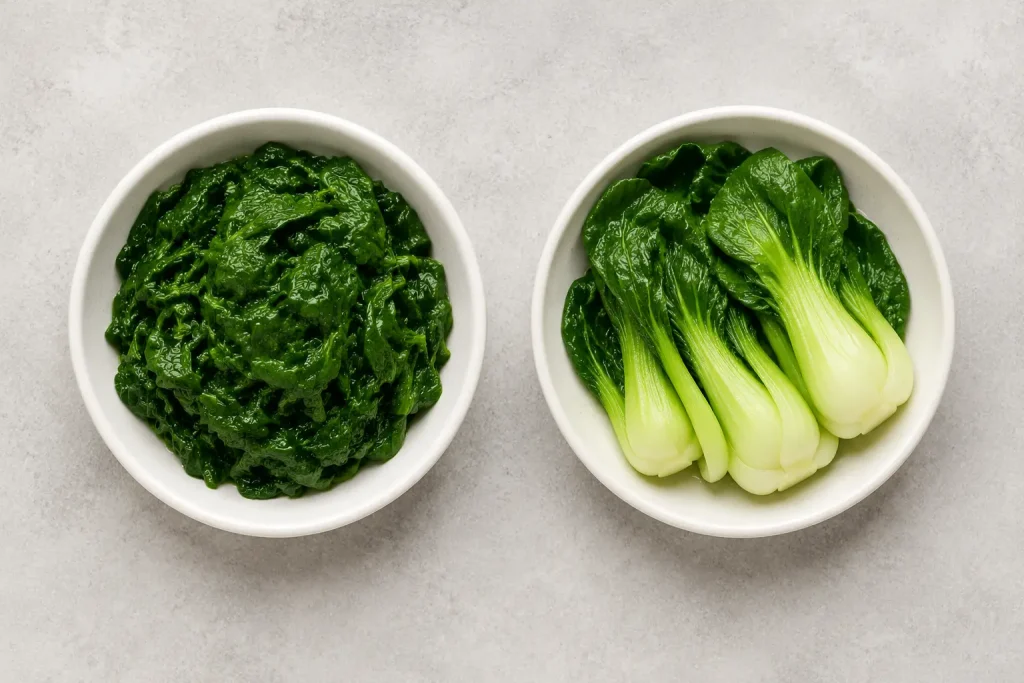
Low oxalate greens behave much better. Bok choy, broccoli, kale and collard greens all carry less oxalate, so a smaller number on the label can deliver more usable iron than spinach does.
Cooking helps. Boiling spinach and discarding the water removes a meaningful share of oxalates. Steaming and sauteing help less.
None of this makes spinach a bad food. It just means the 6.4 mg headline overstates what you get.
What Multiplies Iron Absorption
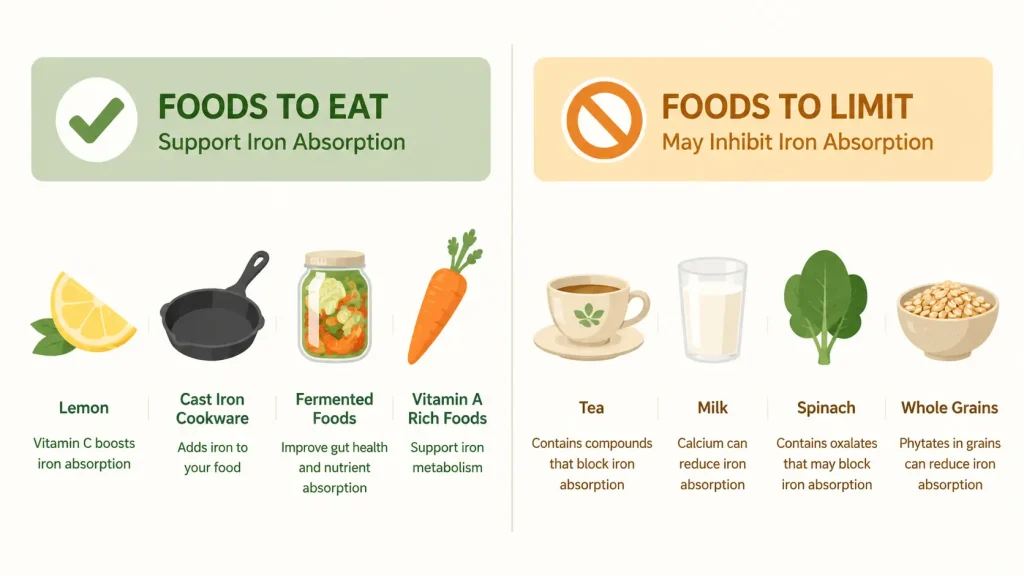
Three things raise it and three things block it. Getting these right does more than picking a different vegetable.
| Helps Absorption | Blocks Absorption |
|---|---|
| Vitamin C in the same meal | Tea and coffee with meals |
| Cooking in cast iron | Calcium and dairy |
| Fermented foods | Oxalates in spinach and chard |
| Vitamin A rich foods | Phytates in whole grains and legumes |
| A small amount of meat or fish | Some supplements taken together |
Vitamin C is the big one. It converts plant iron into a form your gut absorbs far more readily. Adding 75 to 100 mg of vitamin C to a meal can multiply absorption several times over. One orange, half a bell pepper or a squeeze of lemon does it.
Tea and coffee cut absorption sharply. Tannins bind iron. Drink them between meals rather than with them.
Calcium competes with iron. Milk, cheese and calcium supplements all reduce uptake. Separate them by an hour or two.
Cast iron cookware adds real iron, especially with acidic foods like tomato sauce.
Two practical pairings cover most of it. Squeeze lemon over your greens. Put bell peppers, tomatoes or citrus in the same meal as your beans and leafy vegetables.
The Best Iron Vegetables Once Absorption Counts
Rank the same 12 by usable iron rather than total iron and the order shifts.
Collard greens move up. High iron with moderate oxalate.
Bok choy punches above its number. Very low oxalate and it carries vitamin C too.
Broccoli does the same. Only 1.0 mg, but it holds enough vitamin C to boost its own absorption.
Brussels sprouts follow the same pattern. Modest iron, useful vitamin C.
Spinach and chard drop. High numbers, high oxalate.
Broccoli and bok choy both illustrate something useful. A vegetable carrying its own vitamin C partly solves the absorption problem before you do anything.
Other Strong Plant Iron Sources
Vegetables are not the whole picture. These often beat them.
| Food | Iron per Serving |
|---|---|
| Lentils, 1 cup cooked | 6.6 mg |
| White beans, 1 cup cooked | 6.6 mg |
| Tofu, half cup | 3.4 mg |
| Chickpeas, 1 cup cooked | 4.7 mg |
| Pumpkin seeds, 1 oz | 2.5 mg |
| Fortified cereal, 1 serving | 4 to 18 mg |
| Blackstrap molasses, 1 tbsp | 3.5 mg |
| Dark chocolate, 1 oz | 3.4 mg |
Legumes carry phytates that reduce absorption, though soaking, sprouting and fermenting all cut phytate levels.
Fortified cereals deserve attention. Many carry more iron per bowl than any vegetable on this list.
How Plants Compare to Meat
Numbers alone make plants look competitive. Absorption changes the picture.
| Food | Iron per Serving | Estimated Absorbed |
|---|---|---|
| Spinach, 1 cup cooked | 6.4 mg | About 0.3 mg |
| Lentils, 1 cup cooked | 6.6 mg | About 0.4 mg |
| Beef, 3 oz | 2.1 mg | About 0.5 mg |
| Chicken liver, 3 oz | 9.9 mg | About 2.5 mg |
| Oysters, 3 oz | 5.7 mg | About 1.4 mg |
| Sardines, 3 oz | 2.4 mg | About 0.6 mg |
Absorbed amounts are estimates and shift substantially with what else you eat and how depleted your stores are. Someone low in iron absorbs more than someone with full stores.
Two things stand out. Beef delivers fewer milligrams than spinach and more usable iron. And adding vitamin C to that spinach narrows the gap considerably.
Plants can cover your needs. They ask for larger portions and better pairing to get there.
Signs of Low Iron
Iron deficiency develops slowly and the early stage often causes nothing noticeable.
- Unusual tiredness that rest does not fix
- Pale skin, especially inside the lower eyelids
- Shortness of breath during ordinary activity
- Cold hands and feet
- Brittle or spoon shaped nails
- Headaches and dizziness
- Restless legs at night
- Craving ice, dirt or starch
Those symptoms overlap with many other conditions. Thyroid problems, B12 deficiency, sleep disorders and depression all produce fatigue.
A blood test settles it. Ask for ferritin alongside a full blood count, since ferritin shows your iron stores and can fall well before hemoglobin does.
When Food Is Not Enough
Some situations need more than a grocery list.
Diagnosed iron deficiency anemia usually requires supplements. Food alone rarely restores depleted stores at a useful pace.
Heavy menstrual bleeding can outpace anything you eat.
Pregnancy raises requirements to 27 mg daily, which is difficult from food alone.
After bariatric surgery or with celiac disease, Crohn’s or other absorption conditions.
One point deserves emphasis. Unexplained iron deficiency in men, or in women past menopause, needs investigation rather than just supplements. It can signal slow bleeding somewhere in the digestive tract, and finding the cause matters more than correcting the number.
Never start iron supplements without a blood test. Excess iron accumulates and damages the liver and heart. Some people carry hemochromatosis, a genetic condition where the body absorbs too much iron, and supplements make it worse.
How to Build an Iron Friendly Meal
A few patterns cover most of it.
Pair greens with citrus. Lemon on kale, orange segments in a spinach salad.
Cook in cast iron. Tomato based dishes pick up the most.
Move coffee and tea away from meals. An hour on either side is enough.
Separate calcium from iron meals. Have dairy at a different time.
Soak and rinse legumes. Overnight soaking cuts phytates.
Combine plant and animal iron when you eat both. A small amount of meat improves absorption of the plant iron in the same meal.
Use fortified cereals if you struggle. They deliver more per serving than most whole foods.
Iron Needs by Group
Standard targets assume an average adult. Several groups sit well outside that.
| Group | Daily Iron | Why It Differs |
|---|---|---|
| Men, 19 and over | 8 mg | No monthly blood loss |
| Women, 19 to 50 | 18 mg | Menstrual losses |
| Women, 51 and over | 8 mg | Losses stop after menopause |
| Pregnancy | 27 mg | Blood volume expands sharply |
| Breastfeeding | 9 mg | Lower than pregnancy |
| Vegetarians and vegans | 1.8 times the above | Plant iron absorbs less |
| Teen girls, 14 to 18 | 15 mg | Growth plus menstruation |
| Teen boys, 14 to 18 | 11 mg | Growth spurt demands |
A few situations deserve extra attention.
Pregnancy. 27 mg from food alone is difficult. Most prenatal vitamins include iron for this reason. Follow your provider rather than adjusting on your own.
Heavy menstrual bleeding. Losses can outpace anything you eat. Bring it up with a doctor rather than trying to eat your way through it.
Endurance athletes. Distance runners lose iron through sweat, foot strike breaking red blood cells, and gut losses. Female endurance athletes show deficiency at notably higher rates.
Vegans. The 1.8 multiplier turns 18 mg into roughly 32 mg. Legumes, fortified foods and seeds do more of that work than vegetables alone.
Infants and toddlers. Cow milk before age one raises deficiency risk. Follow pediatric guidance here rather than general advice.
Simple Meals That Pair Iron and Vitamin C
Pairing advice only helps when it turns into actual food. These do.
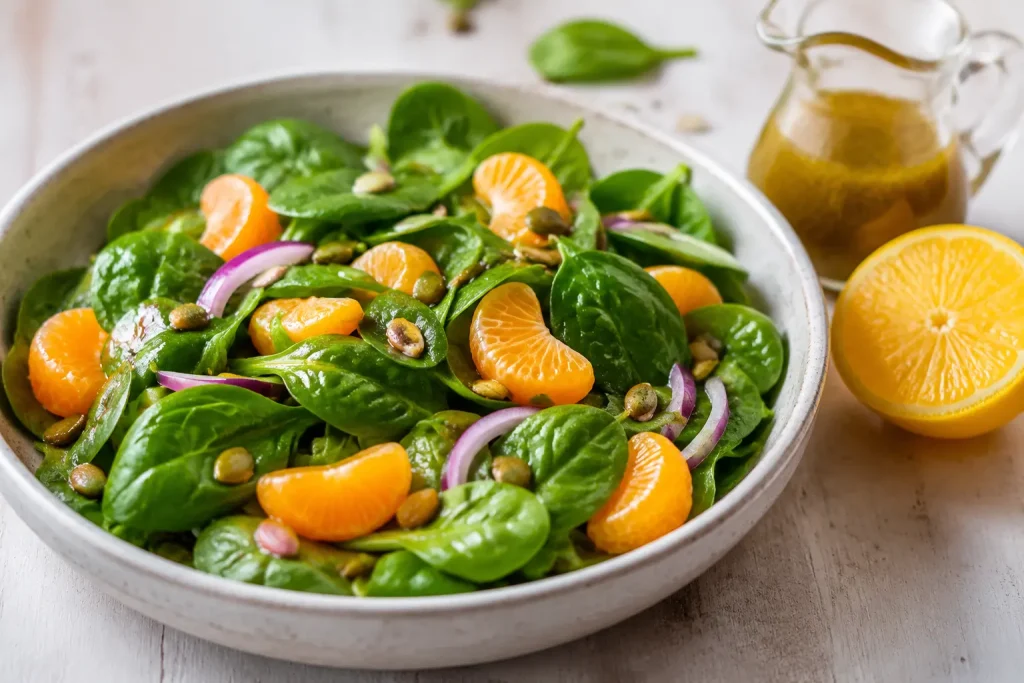
Spinach salad with orange segments. Baby spinach, mandarin pieces, pumpkin seeds and a lemon vinaigrette.
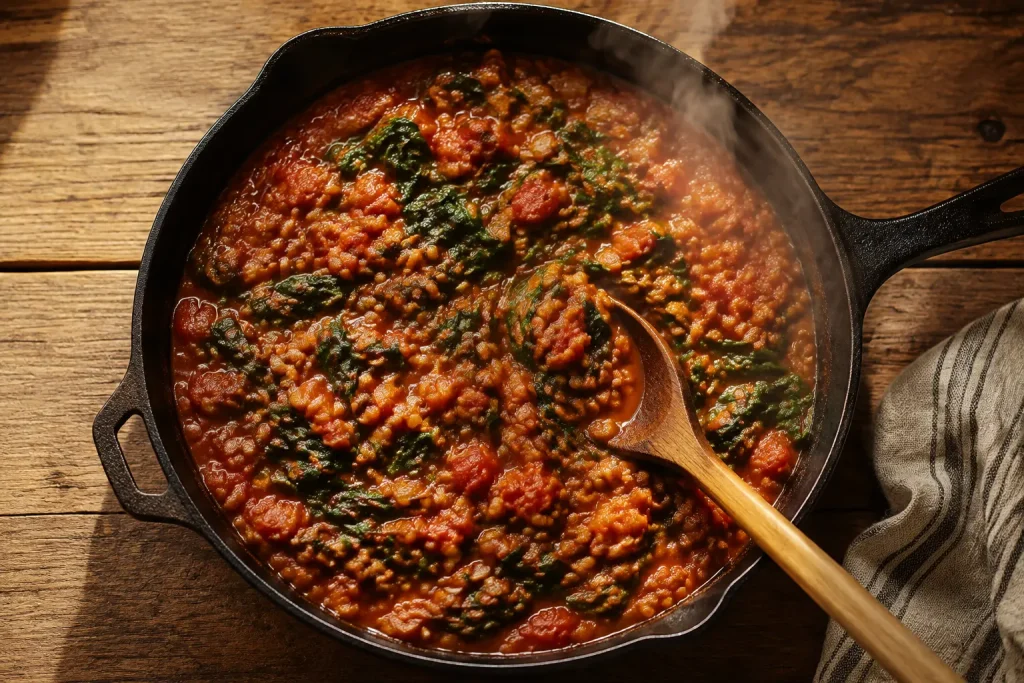
Lentil soup with tomatoes. Tomatoes bring vitamin C and acidity. Cook it in a cast iron pot for extra benefit.
Chickpea and bell pepper bowl. Red peppers carry more vitamin C than oranges by weight.
Sauteed kale with lemon. Squeeze it over at the end so the heat does not destroy the vitamin C.
Black bean and salsa tacos. Salsa handles the vitamin C. Corn tortillas work fine.
Tofu stir fry with broccoli. Broccoli supplies its own vitamin C alongside the tofu iron.
Fortified cereal with strawberries. Skip the milk in the same sitting since calcium blocks absorption.
Notice the pattern across all seven. Iron source plus something acidic or citrus, with dairy and tea kept away from the meal.
Does Cooking Change the Iron?
Preparation affects both the amount and what you absorb.
Cast iron cookware adds iron. Acidic foods pick up the most. A tomato sauce simmered in cast iron can gain several milligrams.
Boiling leaches some iron into the water. Keep the liquid for soup or use it in the dish.
Boiling high oxalate greens helps. Discarding spinach water removes a meaningful share of the oxalates blocking absorption.
Soaking and sprouting legumes cuts phytates. Overnight soaking with a rinse makes a real difference.
Fermenting helps too. Sourdough bread delivers more usable iron than standard bread for this reason.
Heat destroys vitamin C. Add your citrus or peppers at the end rather than cooking them down.
Our guide to vitamin food sources for all 13 vitamins covers the vitamin C sources that pair well with everything on this list.
Frequently Asked Questions
Which vegetable has the most iron?
Spinach at about 6.4 mg per cup cooked. Oxalates block much of it though, so collard greens and bok choy may deliver more usable iron despite lower numbers.
Can you get enough iron from vegetables alone?
Yes with planning. Vegetarians need roughly 1.8 times the standard target because plant iron absorbs less efficiently. Combining vegetables with legumes, seeds and fortified foods makes it workable.
Does spinach really have a lot of iron?
Yes by measurement. The famous claim about spinach being exceptionally high came partly from an old decimal error, and the oxalate issue reduces what you actually absorb. It remains a good food.
What blocks iron absorption?
Tea, coffee, calcium, oxalates and phytates. Timing solves most of it. Move drinks and dairy away from your iron meals.
How much iron do I need daily?
8 mg for adult men, 18 mg for women under 50, 8 mg for women over 50 and 27 mg during pregnancy.
Does cooking increase iron?
Cooking in cast iron adds iron to the food, especially with acidic dishes. Cooking also concentrates vegetables by volume, which is why a cup cooked shows more than a cup raw.
Should I take an iron supplement?
Only after a blood test confirms you need one. Excess iron accumulates and causes real harm, and unexplained deficiency needs a cause found rather than just topped up.
What is the best vitamin C food to pair with iron?
Red bell pepper, orange, kiwi, strawberries or broccoli. Roughly 75 to 100 mg in the same meal makes a clear difference.
Are canned vegetables as good for iron?
Close. Some loss happens during processing though the difference is small. Rinsing reduces sodium without much iron loss.
Why do I crave ice?
Craving ice is called pagophagia and it associates strongly with iron deficiency. Mention it to your doctor because it often shows up before other symptoms.
Do vegetarians really need more iron?
Yes. The recommendation runs about 1.8 times the standard amount because plant iron absorbs less efficiently. An 18 mg target becomes roughly 32 mg.
Does cooking in cast iron actually add iron?
Yes, particularly with acidic foods. Tomato sauce simmered in cast iron picks up a measurable amount. Well seasoned pans transfer less than newer ones.
Can too much iron be harmful?
Yes. Excess iron accumulates in the liver, heart and pancreas. People with hemochromatosis absorb too much and supplements make it dangerous. Never supplement without a blood test.
Is iron from supplements different from food iron?
Most supplements use ferrous salts, which absorb reasonably well but commonly cause constipation and stomach upset. Taking them with vitamin C and away from calcium helps.
How long does it take to fix low iron?
Hemoglobin usually improves within a few weeks of treatment. Rebuilding depleted stores takes three to six months, which is why doctors continue supplements after the numbers normalize.
Related reading: pair these with vitamin C to multiply absorption, as explained in our smoothies built on iron and vitamin C. See also 8 common signs of nutrient deficiencies and our guide to the best foods for common health concerns.
Final Thought on Iron-Rich Vegetables
Numbers on a chart tell you half the story. These iron-rich vegetables all carry real iron, and how you eat them decides how much reaches your blood. Spinach leads on paper at 6.4 mg per cup while oxalates hold much of it back. Bok choy and broccoli show lower numbers and deliver more usable iron.
Two habits matter more than any single vegetable. Add vitamin C to the same meal and keep tea, coffee and dairy away from it. Those two changes can multiply absorption several times over.
Book a blood test rather than guessing if you suspect low iron. Ferritin tells you where your stores sit, and a real answer beats a grocery list.
References
- US Department of Agriculture. FoodData Central. fdc.nal.usda.gov
- National Institutes of Health, Office of Dietary Supplements. Iron Fact Sheet for Consumers. ods.od.nih.gov
This article shares general nutrition information. It does not replace advice from your doctor. Talk with a healthcare provider before starting iron supplements, and see a doctor about persistent fatigue or suspected iron deficiency rather than self treating. Read our full medical disclaimer and fact checking policy.
About the Author and Reviewer
Mezbaul Islam, MSc Nutrition owns and writes Simple Health Naturally. He researches each article from public health guidance, clinical guidelines and peer reviewed studies, and traces every figure back to a named source.
Dr. Obeydur Rahman, MBBS, MD in Medicine edits the articles, checks the sources cited and is responsible for the site’s editorial standards. MD in Medicine is the specialty for adult conditions such as liver disease, type 2 diabetes and high blood pressure.
Read more about our authors and reviewers or see our editorial policy.
Edited by Dr. Obeydur Rahman, MBBS, MD in Medicine.