The real question behind any search for fruits that support a healthy liver is usually the opposite one: does the sugar in fruit make fatty liver worse? Fructose does drive liver fat, that part is true, so the worry is reasonable. But the trials that demonstrated it used doses you could not reach from a fruit bowl if you tried. Here is the arithmetic, then the ten fruits worth eating and the one that can genuinely interfere with your medicines.
Short answer: Controlled feeding trials only raised liver fat when fructose was added on top of normal calories at 104 to 220 g a day. A medium apple contains about 11 g. You would need roughly ten to twenty apples daily to reach the lower end of those doses. Whole fruit is not the problem. Juice and sweetened drinks are a different matter entirely.
Does Fruit Sugar Harm Your Liver?
Fructose is metabolised mainly in the liver, unlike glucose which most cells can use. Push enough of it through and the liver converts the surplus to fat. That mechanism is real and it is why sweetened drinks are the worst thing on any fatty liver list.
The critical detail is dose and context. A systematic review of controlled feeding trials separated the studies by design and found something people rarely quote:
- Isocaloric trials, where fructose simply replaced other carbohydrate without adding calories, produced no change in liver fat or liver enzymes in healthy participants.
- Hypercaloric trials did raise liver fat and ALT. Those trials added 104 to 220 g of fructose a day on top of the normal diet, an extra 21 to 35 percent of daily energy.
- The reviewers noted the effect may be attributable to the excess energy as much as to the fructose itself.
Now put fruit next to that. A medium apple has about 11 g of fructose. A cup of strawberries has under 4 g. Reaching even the bottom of that harmful range means roughly ten apples a day, and the top means twenty, in addition to everything else you eat. Nobody does this.
Fruit also arrives with fibre and water, which slows absorption, and it takes time to chew. A litre of cola delivers its fructose in minutes with none of that. Same molecule, completely different delivery.
Observational research points the same way. Higher fruit and vegetable intake is consistently associated with lower odds of fatty liver disease, not higher. NIDDK classes most whole fruits as lower glycaemic foods to eat more of, while advising against drinks and foods high in simple sugars, juices included.
So eat the fruit. Skip the juice. That is the entire rule.
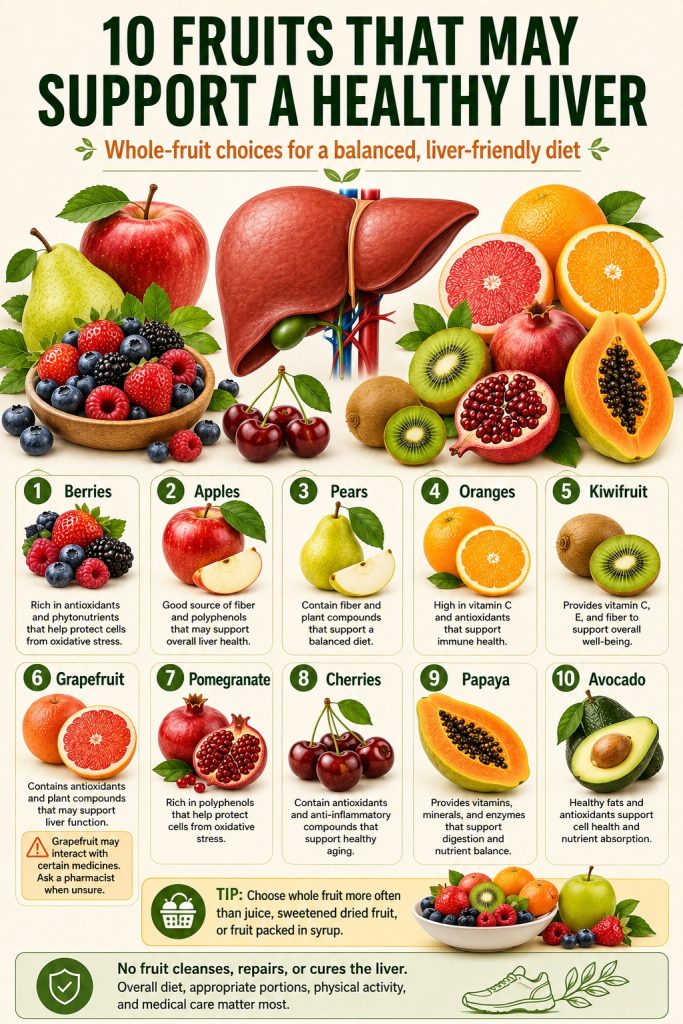
10 Fruits That Support a Healthy Liver
None of these cleanses anything. The liver is itself the detoxification organ. What these do is displace worse food while adding fibre and nutrients, which is how diet actually influences liver fat.
Best fibre to sugar ratio
- 1. Raspberries and blackberries. A cup of raspberries is 64 calories with 8 g of fibre and only 5.4 g of sugar, the best ratio of any fruit here. Blackberries are close at 62 calories and 7.6 g of fibre. If you are trying to hit a fibre target without much sugar, start here.
- 2. Strawberries. A cup is 49 calories, 3 g of fibre, 7.4 g of sugar and a full day of vitamin C. The lowest calorie fruit on the list and the easiest to eat a large portion of.
- 3. Blueberries. A cup is 84 calories with 3.6 g of fibre. Higher in sugar than the other berries at 15 g, still modest. Frozen works and is cheaper, just check there is no added sugar.
The everyday staples
- 4. Apples. A medium apple is 95 calories with 4.4 g of fibre. Keep the skin, since peeling removes a meaningful share of that fibre. Cheap, portable, and the fruit most often paired with a spoon of peanut butter to make an actual snack rather than a sugar hit.
- 5. Pears. A medium pear is 101 calories with 5.5 g of fibre, more than an apple. Skin on again. Tinned pears are fine if packed in water or juice rather than syrup.
- 6. Oranges. A medium orange is 62 calories, 3.1 g of fibre and around 70 mg of vitamin C. The gap between an orange and a glass of orange juice is the clearest illustration on this page: the juice carries the sugar of several oranges, none of the fibre, and takes twenty seconds.
- 7. Kiwifruit. One kiwi is 42 calories with 2.1 g of fibre and more vitamin C than an orange by weight. Worth noting that kiwi triggers allergic reactions in some people, particularly those with latex or other fruit allergies.
Worth adding for variety
- 8. Pomegranate. Half a cup of arils is 72 calories with 3.5 g of fibre. Marketed harder than any fruit here as a liver repair food, on evidence that does not support it. Eat the seeds because they are good in a salad, not because a bottle told you they heal anything. Pomegranate juice and syrups are the concentrated version and lose the point.
- 9. Cherries and papaya. A cup of cherries is 97 calories with 3.2 g of fibre, the highest sugar entry at around 20 g, so portion matters more here. A cup of papaya is 62 calories with 2.5 g of fibre and plenty of vitamin C. Both replace dessert well. Avoid candied cherries and dried papaya, which are largely added sugar.
- 10. Avocado. The outlier. Half an avocado is 160 calories with 6.7 g of fibre and under 1 g of sugar, mostly monounsaturated fat. That matters because randomised overfeeding work shows saturated fat raises liver fat while unsaturated fat does not, so using avocado in place of butter or cheese is a swap with real mechanism behind it. It is calorie dense, so measure it.
For the vegetable side of the same plate, see our guide to the best vegetables for liver health.
The Grapefruit Warning Worth Reading Twice
Grapefruit is nutritious. Half a grapefruit is 52 calories with 2 g of fibre and useful vitamin C and potassium. It is also the one fruit on this page that can cause a genuine medical problem, and the reason is directly liver relevant.
Grapefruit blocks CYP3A4, an enzyme in the small intestine that breaks down many medicines. Blocked enzyme means more of the drug reaches your bloodstream and stays there. The FDA lists examples including:
- Some statins, such as simvastatin and atorvastatin
- Some blood pressure medicines, such as nifedipine
- Some transplant rejection medicines, such as ciclosporin
- Some anti anxiety medicines, such as buspirone
- Some corticosteroids, such as budesonide
- Some heart rhythm medicines, such as amiodarone
- Some antihistamines, such as fexofenadine, where the effect runs the other way and the drug works less well
The statin interaction is the one to note here. FDA states plainly that too much statin remaining in the body increases the risk of liver and muscle damage that can progress to kidney failure. Many people with fatty liver are on a statin. Reading a liver health article and then eating grapefruit every morning would be an unfortunate outcome.
Seville oranges, pomelos and tangelos can do the same thing. Ask a pharmacist rather than guessing, and check juice labels, since grapefruit turns up in blends. If your medicines are unaffected, enjoy it.
Fruit Forms, Best to Worst
- Whole fresh fruit. Fibre intact, takes time to eat, portion is obvious. The default.
- Plain frozen fruit. Equal to fresh and often better, since it is frozen soon after picking. Cheaper, no waste. Check for added sugar.
- Tinned in water or juice. Perfectly fine. Skip anything in syrup.
- Unsweetened dried fruit. Nutritious but concentrated. A quarter cup of raisins carries roughly the sugar of a cup of grapes, so measure rather than eating from the bag.
- Blended smoothies. Better than juice because the fibre is still there, but easy to overload. One fruit portion, a vegetable, a protein source, water. No juice, no honey, no second banana.
- Fruit juice. Even with nothing added. Several fruits worth of sugar, no chewing, no fullness, gone in seconds. This is the form the fructose research is actually about.
Fruit flavoured drinks, juice cocktails, candied fruit and syrup packed tins sit below all of that. They belong with the items in our guide to foods to avoid if you have fatty liver.
How much fruit
Two to three servings a day suits most people, where a serving is one small whole fruit or about a cup of cut fruit. Pair it with protein or fat rather than eating it alone, which blunts the glucose response and makes it more filling.
With diabetes, spread servings across the day rather than stacking them, and count them as carbohydrate. Anyone on potassium, fluid or carbohydrate restrictions needs individual figures rather than these.
Frequently Asked Questions
Is fruit bad for fatty liver because of fructose?
No. A systematic review of controlled feeding trials found that fructose only raised liver fat and ALT in hypercaloric studies that added 104 to 220 g of fructose a day on top of normal eating. When fructose simply replaced other carbohydrate without adding calories, liver fat did not change. A medium apple contains about 11 g of fructose, so reaching those doses would take roughly ten to twenty apples daily. Whole fruit is not the concern. Sweetened drinks and juice are.
What is the best fruit for liver health?
There is no single best one, but raspberries have the most favourable ratio: a cup gives 8 g of fibre for only 5.4 g of sugar and 64 calories. Avocado is the useful outlier at 6.7 g of fibre and under 1 g of sugar per half, mostly monounsaturated fat, which makes it a good replacement for butter or cheese. Variety matters more than picking a winner, since no fruit removes liver fat on its own.
Can fruit reverse fatty liver or detox the liver?
No. The liver is itself the detoxification organ and does not need flushing by any food. What actually reduces liver fat is losing 3 to 5 percent of body weight, with 7 to 10 percent needed to improve inflammation and fibrosis, alongside regular activity. Fruit helps by displacing desserts, sweets and processed snacks, which is a genuine contribution but an indirect one.
Why is fruit juice worse than whole fruit?
Because the delivery changes everything. A glass of juice contains the sugar of several pieces of fruit, has lost most of the fibre, and is finished in seconds with none of the fullness that made the fruit useful. Whole fruit slows absorption through fibre and water and takes time to chew. This holds for juice with nothing added, not just sweetened juice drinks. NIDDK specifically advises limiting juices for people with fatty liver.
Who should avoid grapefruit?
Anyone taking a medicine it interacts with. Grapefruit blocks the CYP3A4 enzyme, so more of certain drugs enters the bloodstream. FDA lists some statins such as simvastatin and atorvastatin, some blood pressure medicines such as nifedipine, ciclosporin, buspirone, budesonide, amiodarone, and fexofenadine, where the drug works less well instead. The statin interaction matters most here, since FDA notes excess statin raises the risk of liver and muscle damage. Seville oranges, pomelos and tangelos behave similarly. Ask a pharmacist.
How much fruit should I eat with fatty liver?
Two to three servings a day suits most people, where a serving is one small whole fruit or roughly a cup of cut fruit. Pairing fruit with protein or fat, such as an apple with peanut butter or berries with plain yogurt, blunts the glucose response and makes it more filling. People with diabetes should spread servings across the day and count them as carbohydrate rather than treating fruit as free food.
Are bananas and grapes bad for fatty liver?
No, though both are higher in sugar than berries so portion is worth watching. A banana is a reasonable snack and a cup of grapes is fine. The mistake is treating them as unlimited or blending three bananas into a smoothie with juice and honey. Neither fruit comes close to the fructose doses that raised liver fat in controlled trials.
Is dried fruit a good option?
It is nutritious but concentrated, which catches people out. A quarter cup of raisins carries roughly the sugar of a whole cup of grapes because the water is gone. Choose unsweetened versions, measure the portion into a bowl rather than eating from the bag, and treat sweetened dried cranberries, candied fruit and dried mango as sweets rather than fruit.
Are frozen and tinned fruit as good as fresh?
Frozen is equal to fresh and sometimes better, since fruit is usually frozen shortly after picking while fresh produce may spend a week in transit. It is also cheaper and reduces waste. Tinned fruit in water or its own juice is fine too. What to skip is anything packed in syrup, and frozen fruit with added sugar, so check the label rather than the front of the pack.
Does avocado help the liver?
Indirectly, and it is the most interesting fruit here mechanistically. Half an avocado provides 6.7 g of fibre and under 1 g of sugar, with fat that is mostly monounsaturated. Randomised overfeeding research found saturated fat raised liver fat by about 50 percent while polyunsaturated fat did not, at identical calories and weight gain. So replacing butter, cheese or creamy toppings with avocado is a swap with real evidence behind it. It is calorie dense, so measure it.
Final Thoughts on Fruits That Support a Healthy Liver
The useful conclusion about fruits that support a healthy liver is a permission rather than a prescription. The fructose fear does not survive the numbers: liver fat rose only when trials added 104 to 220 g of fructose a day on top of normal eating, and an apple has 11 g. Stop worrying about the apple.
Practically: raspberries and blackberries if you want fibre without sugar, apples and pears for everyday eating, avocado in place of butter or cheese, and grapefruit only after you have checked it against your medicines. Whole and frozen over juice, always.
And keep the scale of it honest. Fruit will not detox anything or dissolve liver fat. It earns its place by replacing the biscuit, which over months is a real contribution and nothing like a cure. The levers that move liver fat are gradual weight loss, activity and what you drink. Our guide to lifestyle habits that support liver health covers those.
Related reading: fatty liver diet: foods to eat and limit | 7 day fatty liver meal plan | best vegetables for liver health | coffee and liver health
Medical Disclaimer
This article is for general education and does not diagnose, treat, cleanse or cure liver disease. Nutrition figures are estimates that vary with variety, ripeness and portion. Consult a qualified healthcare professional or pharmacist for personalised advice, particularly with fatty liver disease, hepatitis, cirrhosis, diabetes, kidney disease, food allergies, or if you take regular medicines. Check grapefruit against your prescriptions specifically. See our medical disclaimer, editorial policy and fact checking policy.
Cross checked against a systematic review and meta analysis of controlled fructose feeding trials, FDA guidance on grapefruit and drug interactions, NIDDK guidance on MASLD nutrition, randomised overfeeding data on saturated versus polyunsaturated fat, and USDA FoodData Central. Last updated July 2026.
About the Author and Reviewer
Mezbaul Islam, MSc Nutrition owns and writes Simple Health Naturally. He researches each article from public health guidance, clinical guidelines and peer reviewed studies, and traces every figure back to a named source.
Dr. Obeydur Rahman, MBBS, MD in Medicine edits the articles, checks the sources cited and is responsible for the site’s editorial standards. MD in Medicine is the specialty for adult conditions such as liver disease, type 2 diabetes and high blood pressure.
Read more about our authors and reviewers or see our editorial policy.
Edited by Dr. Obeydur Rahman, MBBS, MD in Medicine.