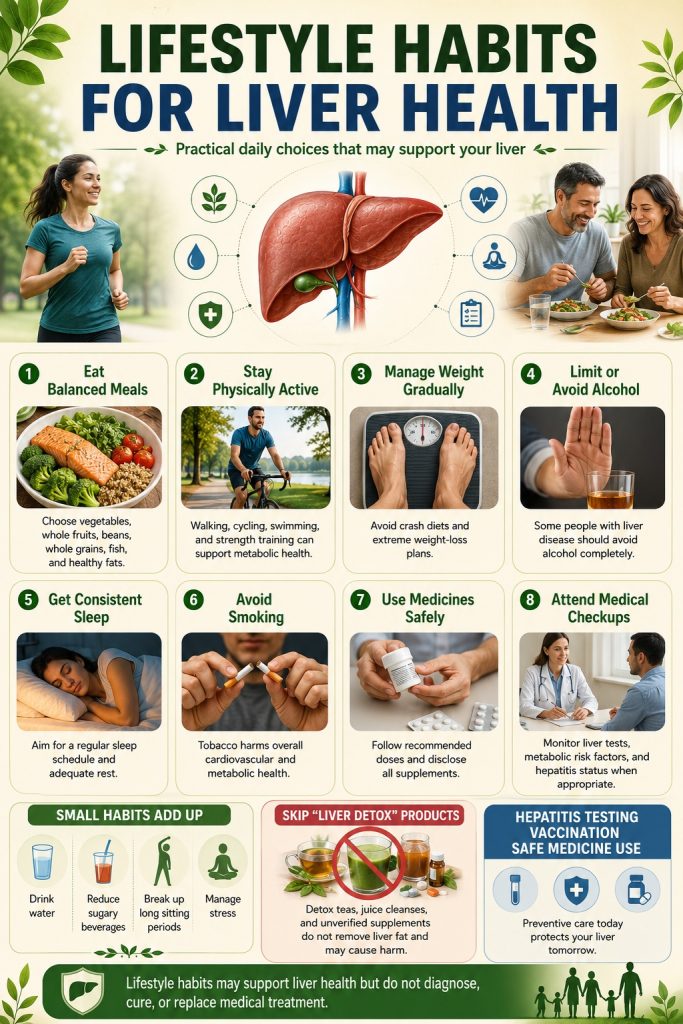
Supporting liver health does not require a detox drink, a juice cleanse, or a three day fast. The habits that actually help are the ordinary ones that also protect your heart and metabolism: mostly minimally processed food, regular movement, gradual weight management when it is appropriate, limited alcohol, enough sleep, no tobacco, and the medical care you are already due. This guide covers what the evidence supports, what changed in clinical guidance since 2023, and which popular practices do nothing.
One caveat before the list. Liver disease has many causes, including viral hepatitis, alcohol, medicines, supplements, autoimmune conditions, and inherited disorders. Lifestyle change supports treatment. It does not substitute for a diagnosis (MedlinePlus).
What Changed in Liver Health Guidance Since 2023
If you last read about fatty liver a few years ago, three things have changed and they affect how you talk to your clinician.
The names changed. In June 2023, a multi society Delphi consensus led by AASLD, EASL, and ALEH retired the terms NAFLD and NASH. Steatotic liver disease (SLD) is now the umbrella term. Nonalcoholic fatty liver disease became metabolic dysfunction associated steatotic liver disease (MASLD), and NASH became MASH (AASLD). The change was made because “nonalcoholic” defined the condition by what it was not, and because patients and clinicians found “fatty” stigmatising.
A new category was created. MetALD describes people who meet MASLD criteria and also drink a moderate amount: 140 to 350 g of alcohol per week for women and 210 to 420 g for men. Above that range the diagnosis becomes primarily alcohol related liver disease. This matters because metabolic and alcohol related liver injury frequently coexist, and the old categories forced an either or choice.
Two medicines now exist. For decades there was no approved drug for MASH. The FDA approved resmetirom (Rezdiffra) in March 2024 and semaglutide 2.4 mg (Wegovy) in August 2025, both for adults with noncirrhotic MASH and moderate to advanced fibrosis (stages F2 to F3). Neither replaces lifestyle change, and both are prescribed alongside it, but it is no longer accurate to say nothing is available.
Do you meet the metabolic criteria?
A MASLD diagnosis requires liver fat plus at least one of five cardiometabolic criteria. Knowing them helps you understand your own risk:
- BMI of 25 or above (23 or above for people of Asian ancestry), or waist above 94 cm in men and 80 cm in women
- Fasting glucose of 100 mg/dL or above, HbA1c of 5.7 percent or above, or type 2 diabetes
- Blood pressure of 130/85 or above, or treatment for high blood pressure
- Triglycerides of 150 mg/dL or above, or lipid lowering treatment
- HDL cholesterol at or below 40 mg/dL in men and 50 mg/dL in women, or lipid lowering treatment
Roughly 30 percent of adults worldwide have MASLD, and most do not know it, because early liver disease is usually silent.
The Habits With the Strongest Evidence
Eat a Mediterranean style pattern
No single food protects the liver. What works is a pattern built on vegetables, whole fruit, legumes, whole grains, nuts, seeds, olive oil, and fish, with less added sugar, refined starch, ultra processed food, and saturated fat (NIDDK). A Mediterranean style diet is the one most consistently recommended in MASLD care.
A simple plate for most lunches and dinners: half non starchy vegetables, one quarter protein such as fish, beans, tofu, eggs or poultry, one quarter whole grains or legumes, with water or an unsweetened drink. Our guide to the fatty liver diet covers specific foods to include and limit.
Cut sugary drinks first
Sweetened beverages deliver sugar and calories without producing fullness, which makes them the easiest single change with the biggest return. NIDDK specifically advises limiting drinks high in simple sugars, including soda, sweetened tea and coffee, energy drinks, fruit drinks, and large servings of juice.
Swap to water, unsweetened tea, plain sparkling water, or coffee. Replacing soda with lemon water reduces your sugar intake, which is genuinely useful. The lemon itself does nothing to the liver.
Aim for gradual weight loss, if it applies to you
Not everyone with liver disease needs to lose weight. For people with MASLD who carry excess weight, the targets are specific and worth knowing (NIDDK):
- 3 to 5 percent of body weight may reduce liver fat
- 7 to 10 percent may be needed to improve inflammation and fibrosis
Gradual matters. Rapid weight loss and malnutrition can make liver disease worse, and people with cirrhosis or low muscle mass are particularly vulnerable. Do not follow a restrictive plan without supervision if that describes you.
Move 150 minutes a week, plus strength work
Physical activity benefits the liver even when the scale barely moves, partly by improving how the body handles blood glucose and by reducing stored liver fat. The target for adults is at least 150 minutes of moderate intensity activity per week plus muscle strengthening on two days.
If you are starting from nothing, start smaller than feels impressive. A 10 minute walk after one meal, repeated daily, beats an ambitious routine you abandon in a fortnight. Add a second walk once the first feels easy. People with advanced cirrhosis, heart disease, joint problems, or a falls risk should ask for an individualised plan.
Drink less alcohol, or none
Alcohol damages the liver independently of metabolic risk, and the two often stack. The guidance landscape shifted recently: the 2025 to 2030 Dietary Guidelines for Americans advise drinking less but dropped the previous numeric daily limits and the explicit cancer warning, a change AASLD publicly criticised. Separately, a January 2025 Surgeon General advisory identified alcohol as a leading preventable cause of cancer and called for warning labels covering at least seven cancers, liver among them.
Practically: less is better, and for some people the right amount is none. Complete avoidance is usually advised with cirrhosis, significant fibrosis, alcohol associated liver disease, hepatitis, liver tests under investigation, a history of alcohol use disorder, interacting medicines, or pregnancy. NIDDK is unambiguous that people with cirrhosis should stop entirely.
Red wine, craft spirits and herbal liqueurs carry no special protection. The relevant molecule is ethanol.
Coffee is the one drink with real liver data
Coffee is the rare case where the popular claim has decent support. Pooled observational data associate coffee drinking with roughly 40 percent lower odds of cirrhosis and about 27 to 35 percent lower odds of advanced fibrosis compared with none, with effects seen in alcohol related and hepatitis C related disease. These are observational findings, not proof of cause, and they apply to ordinary coffee rather than sweetened blended drinks. Our full review of coffee and liver health goes into the detail.
Habits That Help Indirectly
These do not act on liver tissue directly. They make the habits above achievable, and they manage the metabolic conditions that drive MASLD.
- Sleep at least seven hours. Short sleep is linked with obesity, diabetes, and hypertension, which are the same risk factors behind MASLD. Get loud snoring, witnessed breathing pauses, or persistent daytime sleepiness assessed, since sleep apnoea is common in this group and often dismissed as ordinary snoring.
- Stop smoking and vaping. Smoking harms nearly every organ and raises cardiovascular risk, which matters because most people with MASLD are more likely to die of heart disease than of liver disease. Counselling, nicotine replacement, and prescription cessation medicines all work better than willpower alone.
- Treat diabetes, blood pressure and cholesterol properly. Track A1C, blood pressure, triglycerides, LDL and HDL, and waist measurement. Never stop a prescribed statin, diabetes drug or blood pressure medicine because of something you read online. Statins are generally safe and often beneficial in MASLD.
- Manage stress without alcohol or food. Stress is not a direct cause of liver fat, but chronic stress erodes sleep, activity, eating patterns and medication adherence. Walking, breathing exercises, time outdoors, counselling and social contact are all reasonable substitutes for a nightly drink.
Medical Care That Protects Liver Health
Know your hepatitis status
Chronic hepatitis B and C are often symptomless and both can lead to cirrhosis or liver cancer. Hepatitis A and B are vaccine preventable, and hepatitis C is usually curable with antiviral treatment (CDC). Current CDC recommendations:
- At least one hepatitis B screening test for every adult aged 18 and over
- At least one hepatitis C screening test for every adult aged 18 and over, repeated for ongoing risk
- Hepatitis A vaccination for people with chronic liver disease
Avoid blood exposure too: never share needles or injection equipment, use licensed tattoo and piercing studios, and do not share razors or toothbrushes.
Ask about your fibrosis risk score
You can have significant liver scarring while feeling completely well, and normal liver enzymes do not rule it out. Current AASLD guidance uses FIB-4, a score calculated from age, ALT, AST and platelet count, as the first line risk check for anyone with type 2 diabetes, obesity, or metabolic syndrome. It costs nothing extra because it uses blood tests you have probably already had.
A FIB-4 above 1.3 (above 2.0 if you are 65 or older) usually prompts a second test such as FibroScan, and a high result there prompts referral to a liver specialist. FIB-4 performs poorly under age 35, so it is not a universal answer. It is a conversation starter worth raising at your next appointment.
Use medicines carefully
Follow prescribed doses, avoid doubling up on products containing the same active ingredient, do not combine medicines with alcohol without checking, and tell every clinician about all prescriptions, over the counter products, vitamins and supplements you take. Seek care promptly after an accidental overdose. A “natural” label is not a safety guarantee.
Food safety, especially with cirrhosis
Advanced liver disease raises the risk of severe foodborne infection. NIDDK advises people with cirrhosis to avoid raw or undercooked shellfish, fish and meat, and unpasteurised dairy. Standard practice otherwise: wash hands, separate raw meat from ready to eat food, cook to safe internal temperatures, and refrigerate leftovers promptly.
What Does Not Work
The liver is a detoxification organ. It does not need to be detoxed. None of the following has established evidence for clearing liver fat, reversing fibrosis, or flushing toxins: lemon water, apple cider vinegar, juice cleanses, multi day fasts, celery or beet juice in bulk, herbal detox teas, high dose antioxidants, castor oil packs, or any supplement promising rapid liver fat removal.
Some are harmless foods sold with a false story attached. Others carry real risk. Concentrated botanical extracts are a recognised cause of drug induced liver injury, and the ones most often implicated are green tea extract, turmeric and curcumin, ashwagandha, garcinia cambogia, red yeast rice, and black cohosh, along with weight loss and bodybuilding products.
Worth keeping in proportion. A 2024 analysis of national survey data estimated that roughly 15 million US adults use at least one of those six botanicals, while documented liver injury case reports number in the dozens to low hundreds. The risk per person is low. It is not zero, it is unpredictable, and it is entirely avoidable if the product was never going to help. Culinary amounts of turmeric in food are not the same as a concentrated capsule, and our guide to green tea and liver health explains why brewed tea and extract capsules behave very differently.
Stop and seek medical care if you develop jaundice, dark urine, pale stools, persistent nausea, appetite loss, unusual fatigue, itching, or pain in the upper right abdomen after starting any supplement.
A Realistic Daily Routine
- Morning: a balanced breakfast such as oats with berries and yogurt, or eggs with vegetables. Take medicines as directed. Water, unsweetened tea or plain coffee. A 10 minute walk if you can.
- Midday: build lunch around vegetables plus a protein. Choose whole fruit over juice. Break up long sitting with brief movement.
- Evening: use the balanced plate at dinner. Go easy on alcohol and sweetened desserts. Set out tomorrow’s food or kit. Reduce late caffeine and keep a consistent bedtime.
The routine does not need to be perfect. Repeating something manageable beats completing a strict liver reset once and abandoning it.
Frequently Asked Questions
What is the single best habit for liver health?
There is no single best habit, but if you have MASLD along with excess weight, gradual weight loss has the strongest evidence. Losing 3 to 5 percent of body weight may reduce liver fat and 7 to 10 percent may improve inflammation and fibrosis. Physical activity helps even when weight barely changes, so the two work best together rather than in competition.
What is the difference between NAFLD and MASLD?
They describe the same condition. In June 2023 a consensus led by AASLD, EASL and ALEH replaced nonalcoholic fatty liver disease (NAFLD) with metabolic dysfunction associated steatotic liver disease (MASLD), and NASH with MASH. The new name is affirmative rather than defined by exclusion, and removes wording that patients found stigmatising. Diagnosis now requires liver fat plus at least one of five cardiometabolic criteria.
How do I know if my liver is healthy?
Symptoms will not tell you, because early liver disease is usually silent, and normal liver enzymes do not rule out scarring. Ask your clinician about a FIB-4 score, which is calculated from age, ALT, AST and platelet count and is the recommended first line check for people with type 2 diabetes, obesity or metabolic syndrome. A raised result leads to a FibroScan or specialist referral.
Is there a medicine for fatty liver disease now?
Yes, for a specific group. The FDA approved resmetirom (Rezdiffra) in March 2024 and semaglutide 2.4 mg (Wegovy) in August 2025, both for adults with noncirrhotic MASH and moderate to advanced fibrosis, stages F2 to F3. Neither is a substitute for diet and activity changes, and neither is approved for simple liver fat without significant fibrosis. Eligibility is a decision for a specialist.
Should people with fatty liver avoid alcohol completely?
Less is always better and for many people the answer is none. Complete avoidance is generally advised with cirrhosis, significant fibrosis, alcohol associated liver disease, hepatitis, abnormal liver tests under investigation, a history of alcohol use disorder, or interacting medicines. A newer category called MetALD covers people who have metabolic liver disease and drink moderately, 140 to 350 g per week for women and 210 to 420 g for men, and it is worth discussing where you fall.
Does drinking more water cleanse the liver?
No. Hydration supports normal body function, but drinking extra water does not flush liver fat, reverse scarring, clear viruses, or remove alcohol damage. The liver is itself the detoxification organ and does not need help from a flush, a cleanse, or a tea.
Is coffee good for the liver?
The observational evidence is unusually consistent for a popular drink. Pooled analyses link coffee drinking with roughly 40 percent lower odds of cirrhosis and around 27 to 35 percent lower odds of advanced fibrosis compared with drinking none, including in alcohol related and hepatitis C related disease. These studies show association rather than proof of cause, and the benefit relates to ordinary coffee rather than sweetened blended drinks.
Are liver supplements worth taking?
For most people, no. Supplements do not replace nutrition or medical care, and several concentrated botanicals are recognised causes of drug induced liver injury, including green tea extract, turmeric and curcumin, ashwagandha, garcinia cambogia, red yeast rice and black cohosh. The individual risk is low but unpredictable. Discuss any supplement with a clinician or pharmacist, and stop immediately if you develop jaundice, dark urine or unexplained fatigue.
Can walking alone improve fatty liver?
Walking counts toward the 150 minutes of moderate activity per week recommended for adults, and activity benefits liver and metabolic health partly independently of weight loss. Adding muscle strengthening on two days a week improves the effect. Walking on its own will help, but pairing it with dietary change produces considerably more reduction in liver fat.
Final Thoughts on Supporting Liver Health
Lifestyle habits support liver health as a pattern, not as isolated tricks. Eat mostly minimally processed food, cut sugary drinks, move most days, lose weight gradually if that applies to you, drink less alcohol or none, sleep seven hours, skip tobacco, and treat diabetes, blood pressure and cholesterol properly. Then add the medical half: know your hepatitis status, ask about your FIB-4 score, use medicines carefully, and leave detox supplements alone.
None of this cures every liver condition. Viral hepatitis, advanced fibrosis, cirrhosis, autoimmune disease, medicine related injury and inherited disorders all need individualised diagnosis and treatment. The encouraging part is that early MASLD often responds well to changes you can start this week, and there are now approved medicines for people who need more than lifestyle change alone.
Two numbers are worth measuring before you change anything else. Our waist to height ratio calculator flags central fat from one tape reading, and our weight loss percentage calculator marks the 5 and 10 percent milestones that change liver outcomes. Related reading:
Medical Disclaimer
This article is for general education and does not diagnose, prevent or treat liver disease. Needs differ for people with hepatitis, fibrosis, cirrhosis, diabetes, kidney disease, pregnancy, malnutrition, medication interactions or prescribed dietary restrictions. Consult a qualified healthcare professional before making significant changes to your diet, exercise, alcohol intake, medicines or supplements. See our medical disclaimer, editorial policy and fact checking policy.
Reviewed against guidance from AASLD, NIDDK, CDC, FDA and MedlinePlus. Last updated July 2026.
About the Author and Reviewer
Mezbaul Islam, MSc Nutrition owns and writes Simple Health Naturally. He researches each article from public health guidance, clinical guidelines and peer reviewed studies, and traces every figure back to a named source.
Dr. Obeydur Rahman, MBBS, MD in Medicine edits the articles, checks the sources cited and is responsible for the site’s editorial standards. MD in Medicine is the specialty for adult conditions such as liver disease, type 2 diabetes and high blood pressure.
Read more about our authors and reviewers or see our editorial policy.
Edited by Dr. Obeydur Rahman, MBBS, MD in Medicine.