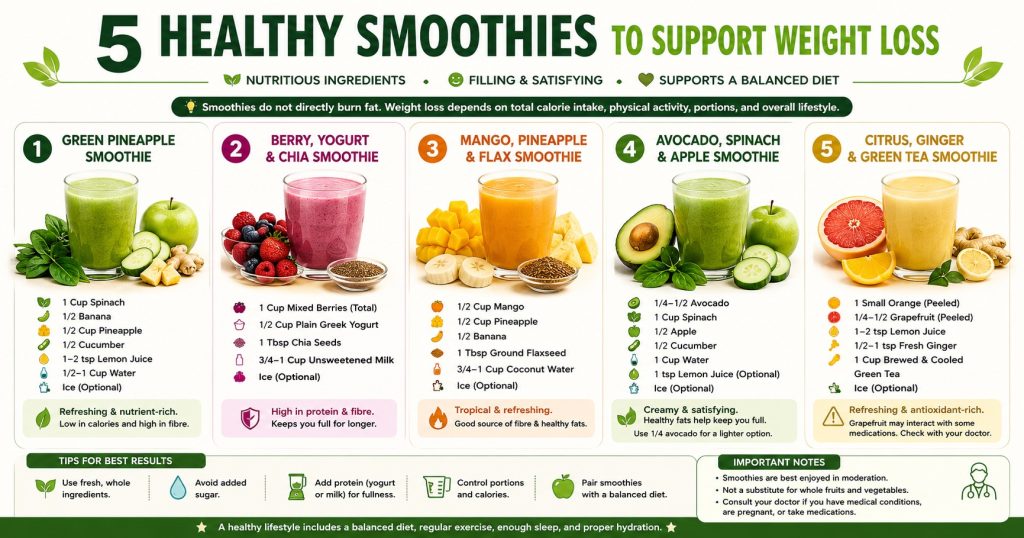
Healthy smoothies for weight loss only work if they replace something, and if they actually keep you full. Most published recipes fail the second test because they skip protein or bury it under three servings of fruit. The ten below each land between 150 and 265 calories with 11 to 18 g of protein, which is the range where a smoothie functions as a real meal or snack rather than a liquid dessert.
Short answer: Build every smoothie from a protein source, one fruit portion, a fibre source and an unsweetened liquid. Aim for at least 15 g of protein and keep it under about 300 calories. Drink it instead of a meal or snack, never alongside one.
Do Smoothies Actually Help With Weight Loss?
They can, through one mechanism: replacement. A 220 calorie smoothie standing in for a 450 calorie pastry and latte is a genuine reduction. The same smoothie drunk alongside your normal breakfast is 220 calories added.
There is a real catch worth knowing. Calories consumed as liquid tend to be less satisfying than the same calories eaten as solid food, so a smoothie that leaves you hungry an hour later has cost you calories without buying much fullness. That is exactly why protein and fibre matter more here than in a normal meal, and why a fruit and water smoothie is a poor breakfast.
The fibre myth, settled
You will read that blending destroys fibre. It does not. Blending breaks fibre into smaller pieces, which is mechanical digestion you would otherwise do by chewing, but the fibre is all still there in the same quantity and studies find cell wall structures are largely preserved through blending and digestion.
This is the genuine difference between a smoothie and juice. Juicing removes the solids and the fibre with them. Blending keeps everything. So a smoothie is nutritionally far closer to whole fruit than to juice, and CDC advice to choose whole fruit over juice applies to the smoothie base too: blend fruit, do not pour juice.
The remaining advantage of whole fruit is speed. An apple takes several minutes to eat. A smoothie containing three fruits takes ninety seconds.
10 Healthy Smoothies for Weight Loss
Each makes one serving. Figures are approximate and vary with brands and fruit size. Add water or ice to reach the consistency you want.
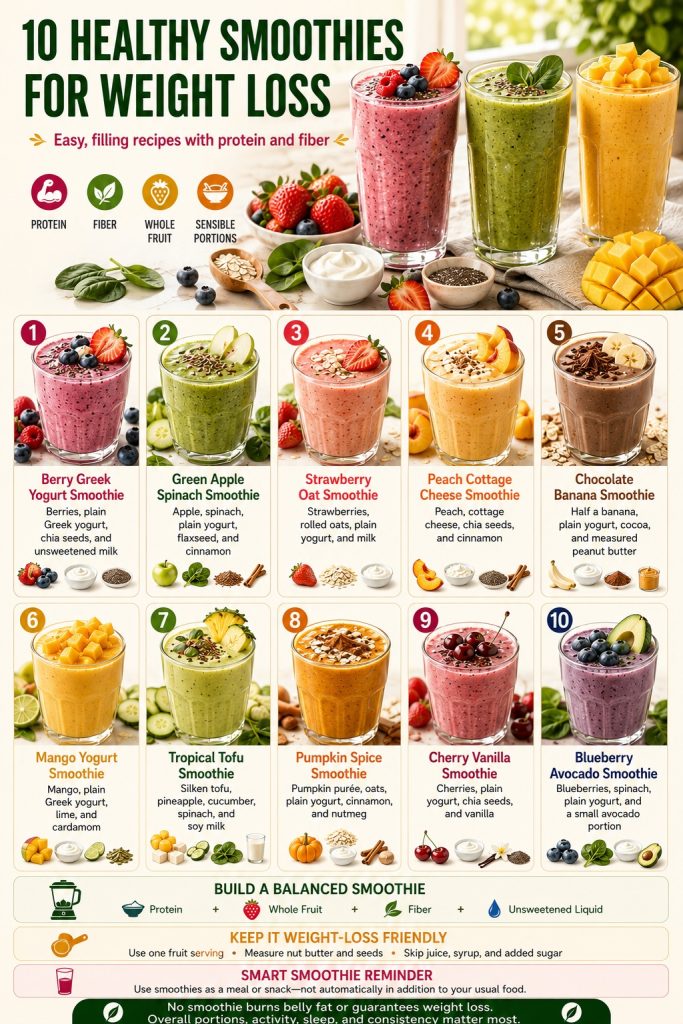
1. Berry Greek yogurt
¾ cup plain Greek yogurt, 1 cup mixed berries, ½ cup unsweetened milk or water, 1 tbsp chia seeds, cinnamon. About 230 calories, 17 g protein, 11 g fibre.
The most fibre on this list and the best all round starting point. Frozen berries give you thickness without ice cream.
2. Green apple and spinach
Half a small apple with skin, 1 cup spinach, ¾ cup plain Greek yogurt, ½ cup water, 1 tbsp ground flaxseed, cinnamon. About 200 calories, 15 g protein, 6 g fibre.
Blend the spinach with the liquid first, then add everything else. A squeeze of lemon lifts it without sugar.
3. Strawberry overnight oat
1 cup frozen strawberries, ½ cup plain Greek yogurt, ¼ cup rolled oats, ½ cup milk or unsweetened soy milk, vanilla. About 215 calories, 16 g protein, 5 g fibre.
Soak the oats in the milk for 15 minutes or overnight for a smoother texture. The oats make this one work as a breakfast.
4. Peach cottage cheese
½ cup cottage cheese, 1 medium peach or 1 cup frozen slices, ½ cup unsweetened milk, 1 tbsp chia seeds, cinnamon. About 220 calories, 17 g protein, 7 g fibre.
Cottage cheese blends completely smooth and costs less than Greek yogurt. Check sodium if you have been advised to watch it.
5. Chocolate banana peanut
Half a banana, ¾ cup plain Greek yogurt, ½ cup unsweetened milk, 1 tbsp natural peanut butter, 1 tsp unsweetened cocoa. About 265 calories, 18 g protein, 4 g fibre.
The highest protein and highest calorie option, which is the tradeoff for tasting like a milkshake. Half a banana and a measured tablespoon of peanut butter, or this becomes a 450 calorie drink very quickly.
6. Mango lassi style
¾ cup frozen mango, ¾ cup plain Greek yogurt, ½ cup cold water, a pinch of cardamom, a squeeze of lime. About 170 calories, 14 g protein, 2 g fibre.
Lowest fibre here, so better as a snack than a breakfast. No mango juice, no condensed milk, no sugar.
7. Tropical tofu
½ cup silken tofu, ½ cup frozen pineapple, ½ cup cucumber, ½ cup unsweetened soy milk, a handful of spinach, lime. About 150 calories, 11 g protein, 3 g fibre.
The lowest calorie option and fully plant based. Silken tofu is neutral tasting and gives a silky texture.
8. Pumpkin spice
½ cup plain pumpkin purée, ¾ cup plain Greek yogurt, ¼ cup rolled oats, ½ cup unsweetened milk, cinnamon and nutmeg. About 215 calories, 17 g protein, 6 g fibre.
Pumpkin adds thickness and fibre for very few calories, which is why this one satisfies without much fruit. Use plain purée, not pie filling.
9. Cherry vanilla
1 cup frozen unsweetened cherries, ¾ cup plain Greek yogurt, ½ cup unsweetened milk, 1 tbsp chia seeds, vanilla. About 245 calories, 16 g protein, 8 g fibre.
Check frozen cherries for stray pits before blending.
10. Blueberry avocado green
1 cup frozen blueberries, a quarter of a small avocado, ¾ cup plain Greek yogurt, 1 cup spinach, ½ cup water. About 250 calories, 15 g protein, 8 g fibre.
A quarter avocado, measured. Adding avocado and nut butter and seeds to the same glass is how a 250 calorie smoothie becomes 550.
If protein is your main priority, our companion guide to 8 high protein smoothies goes further in that direction with different recipes.
The Formula: Build Your Own
- A protein source. Plain Greek yogurt, cottage cheese, unsweetened soy yogurt, silken tofu, dairy or soy milk, unsweetened kefir. Note that almond, oat, rice and coconut drinks carry very little protein, so they do not count here.
- One fruit portion. One, not four. Berries, apple, peach, cherries, half a banana, mango, kiwi or pineapple. Frozen fruit gives thickness without ice cream.
- A fibre source. Chia, ground flaxseed, rolled oats, spinach, pumpkin. This is what separates a meal from a drink.
- An unsweetened liquid. Water, ice, milk, unsweetened soy milk. Never juice.
Then decide what it is. A meal smoothie needs all four components and enough volume to satisfy you, roughly 200 to 300 calories with 15 g or more of protein. A snack smoothie should be smaller: yogurt and berries, skipping the oats, avocado and nut butter.
Mistakes That Turn a Smoothie Into a Dessert
- Juice as the base. Adds sugar and calories with none of the fibre you were blending fruit to keep.
- Three or four fruits at once. Banana, mango, pineapple, berries and dates in one glass is a lot of sugar even though every ingredient is nutritious.
- Honey because it is natural. Honey, maple syrup and agave are added sugars. Ripe frozen fruit is sweet enough.
- No protein. Fruit, spinach and water is a drink, not a meal, and you will be hungry within the hour.
- Stacking the calorie dense extras. Nut butter, avocado, coconut milk, granola, nuts, dates and seeds are all fine individually. Three of them together doubles the calories.
- Drinking it from the blender jug while cooking. Pour it into a glass, sit down, drink it slowly. Liquid calories already satisfy less; drinking them standing up in ninety seconds makes it worse.
- Adding it to breakfast instead of replacing breakfast. The most common one, and it undoes everything else.
And ignore anything sold as a fat burning, detox, flat belly or metabolism boosting smoothie. No drink flushes toxins or targets abdominal fat, and spot reduction of fat from one body area is not physiologically possible.
Shop Bought and Café Smoothies
This is where the numbers change sharply. The recipes above sit at 150 to 265 calories. A large café smoothie made with sorbet, frozen yogurt, juice concentrate and syrup can run past 500, and the bottle in the chiller cabinet is often two servings rather than one.
Check serving size, calories per serving, added sugars, protein and fibre. The FDA rule of thumb is useful here: 5 percent of the Daily Value or less is low, 20 percent or more is high.
Ordering out, ask for it without syrup, juice, sweetened yogurt or sorbet, and order the smallest size. Most places will make it with milk or water and whole fruit if you ask.
If You Have Diabetes or Other Conditions
Fruit, milk, yogurt and oats all contain carbohydrate, so a smoothie raises blood glucose even with no added sugar. If you manage diabetes, use one controlled fruit portion, skip juice entirely, always include protein, add chia or flax for fibre, and count the smoothie as part of the meal rather than as a free drink. Test your own response, since these vary a lot between people.
Get individual advice before using smoothies as regular meal replacements if you have diabetes treated with insulin, chronic kidney disease, liver disease, food allergies, a digestive condition, difficulty swallowing, a prescribed fluid restriction, are pregnant or breastfeeding, or have a history of disordered eating. Kidney disease in particular may require individual limits on protein, potassium and phosphorus, so do not increase protein without guidance.
Frequently Asked Questions
What is the best smoothie for weight loss?
There is no single best recipe, but the best structure is consistent: a protein source, one fruit portion, a fibre source and an unsweetened liquid, landing around 200 to 300 calories with at least 15 g of protein. The berry Greek yogurt smoothie is the strongest all rounder here at roughly 230 calories, 17 g protein and 11 g fibre. What matters more than the recipe is that it replaces a meal rather than joining one.
Does blending destroy the fibre in fruit?
No. This is a persistent myth. Blending breaks fibre into smaller pieces, which is mechanical work you would otherwise do by chewing, but the fibre remains present in the same amount and research finds cell wall structures largely survive blending and digestion. Juicing is different, because it removes the solids and the fibre with them. That is why you blend whole fruit rather than pouring juice into the blender.
Are smoothies as filling as solid food?
Generally less filling, which is the main drawback. Calories consumed as liquid tend to satisfy less than the same calories eaten as solid food, so a smoothie without enough protein and fibre can leave you hungry within the hour. That is why the protein target matters more here than in a normal meal. If a smoothie consistently leaves you hungry, eat the same ingredients as a yogurt bowl instead.
Can a smoothie replace breakfast?
Yes, if it is built to. A breakfast smoothie needs a proper protein source, a fibre source such as oats, chia or flax, and enough volume to satisfy you, which usually means 200 to 300 calories and at least 15 g of protein. Fruit blended with water is a drink rather than a meal and will not hold you until lunch.
How many calories should a weight loss smoothie have?
Roughly 200 to 300 calories if it is replacing a meal, and less if it is a snack. For comparison, the recipes here range from 150 to 265 calories, while a large cafe smoothie made with sorbet, juice concentrate and syrup can exceed 500. The calorie number only helps if the smoothie is replacing something rather than being added to your usual intake.
Do I need protein powder in a smoothie?
No. Plain Greek yogurt, cottage cheese, silken tofu, unsweetened soy yogurt, dairy milk and soy milk all supply plenty of protein using ordinary food. Three quarters of a cup of plain Greek yogurt provides around 13 g. Protein powder is convenient rather than necessary, and if you use one, choose an unsweetened version and check it for added sugar.
Is banana okay in a weight loss smoothie?
Yes, in a sensible portion. Half a medium banana is about 53 calories and adds sweetness and creaminess. A whole large banana combined with oats, nut butter and milk can push a smoothie past 450 calories, which is where the trouble starts. If you want lower carbohydrate sweetness, berries are the better swap at roughly 70 calories per cup.
Are green smoothies automatically better?
No. Spinach, kale and cucumber add nutrients for almost no calories, which is genuinely useful, but the colour tells you nothing about the rest of the glass. A green smoothie containing juice, three fruits, dates, honey and nut butter is still a high calorie drink. Judge it by the protein, fibre and added sugar, not the shade.
Can smoothies burn belly fat?
No. Spot reduction of fat from a specific body area is not physiologically possible by any method, food or otherwise. Fat loss follows an overall calorie deficit and comes off the whole body in a pattern largely set by genetics. Ignore recipes marketed as fat burning, detox, flat belly or metabolism boosting; the promise is the product.
Can I have a smoothie every day?
Yes, provided it is not displacing too much of the variety in your diet and it fits your overall intake. Some people also simply find solid meals more satisfying and do better having yogurt, fruit and oats as a bowl. There is no requirement to drink one daily, and rotating ingredients gives you a broader range of nutrients.
Final Thoughts on Healthy Smoothies for Weight Loss
The useful healthy smoothies for weight loss all follow the same shape: protein, one fruit, fibre, unsweetened liquid, roughly 200 to 300 calories. Get that right and you have a fast, portable meal. Get it wrong and you have a dessert that leaves you hungry.
Two rules do most of the work. Hit at least 15 g of protein, because liquid calories satisfy less than solid ones and protein is how you compensate. And drink it instead of something, never in addition to it, which is the mistake that quietly cancels out every good ingredient choice.
Beyond that, no smoothie burns fat or detoxes anything. What actually determines results is your overall eating pattern, activity, sleep and consistency, which our guide to common weight loss mistakes covers properly. CDC puts a sustainable pace at roughly one to two pounds a week.
Related reading: 8 high protein smoothies to support weight loss | 10 weight loss mistakes you might be making | Healthy drinks that may support weight loss | 15 snacks that will not spike blood sugar
Medical Disclaimer
This article is for general education and is not a personalised nutrition or weight loss plan. Calorie, protein, carbohydrate and fluid needs vary with age, body size, activity, pregnancy, medicines and medical conditions. Consult a qualified healthcare professional or registered dietitian before using smoothies as regular meal replacements, particularly with diabetes, kidney disease, liver disease, pregnancy, food allergies, prescribed dietary restrictions or a history of disordered eating. See our medical disclaimer, editorial policy and fact checking policy.
Cross checked against CDC, FDA and USDA FoodData Central. Calorie, protein and fibre figures are estimates that vary with brand, fruit size and preparation. Last updated July 2026.
Edited by Dr. Obeydur Rahman, MBBS, MD in Medicine.