These five low calorie smoothies range from 77 to 234 calories, calculated ingredient by ingredient. That number is the whole point of this page, and it tells you something most smoothie articles hide: four of these five contain under 6 g of protein, which makes them snacks rather than meals.
That is not a criticism, it is a job description. A 117 calorie green smoothie is an excellent way to get vegetables in and replace a biscuit. It will not keep you full until lunch, and expecting it to is how people end up hungrier and eating more later. Below you get the full numbers for each, plus exactly what to add if you want one to work as a meal.
Medical Disclaimer: This is educational and is not a personalised nutrition plan. Recipe 5 contains grapefruit, which interacts with a number of common medicines. Speak to a doctor or dietitian before major dietary changes, particularly with diabetes, kidney disease or any history of disordered eating. Read our medical disclaimer, editorial policy and fact checking policy.
What These Low Calorie Smoothies Are, and Are Not
Weight loss comes from a sustained energy deficit. A smoothie helps only when it takes the place of something with more calories, and it works against you when it is drunk on top of everything else. That is the entire mechanism.
Where these five fit:
- As a snack replacement: excellent. Swapping a 250 calorie snack for a 117 calorie smoothie is a real saving that also adds vegetables
- As a meal replacement: only recipe 2 comes close, at 16.4 g protein. The rest need something added, and the section below gives the exact amounts
- As an extra drink alongside meals: this is the common mistake, and it simply adds calories
One further honest point. Blended calories tend to satisfy less than the same calories chewed, because liquids need no chewing and leave the stomach faster. Drinking these slowly and keeping some texture helps, but a smoothie is rarely as filling as a plate of food at the same calorie count.
The Method, Once
All five use the same technique, so here it is once rather than five times.
- Wash all produce. Liquid goes into the blender first, then leaves, then everything else
- Blend 45 to 60 seconds until completely smooth
- If it contains chia or flaxseed, rest it 5 minutes so it hydrates and thickens
- Add water to loosen. Never add sugar, honey or syrup
The 5 Recipes, With Full Numbers
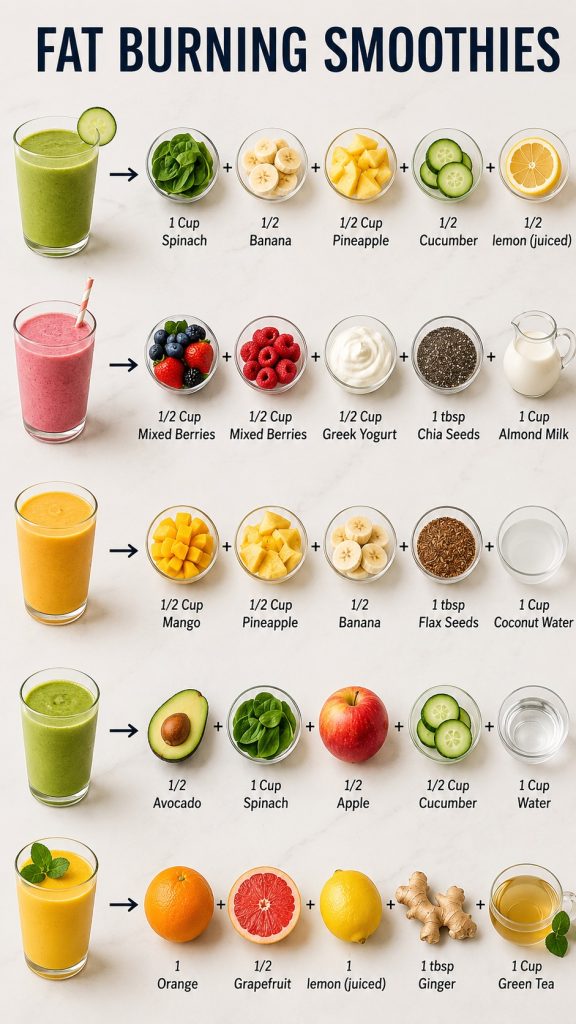
1. Green Pineapple
117 kcal, 3 g protein, 4 g fibre, 17 g sugar.
- 1 cup fresh spinach
- Half a small banana
- Half a cup pineapple chunks
- Half a medium cucumber
- 2 teaspoons lemon juice, cold water, ice
Best for: getting vegetables into people who do not like vegetables. The cucumber and spinach add volume for almost no calories, and the pineapple hides the taste entirely.
2. Berry, Yogurt and Chia
233 kcal, 16.4 g protein, 10 g fibre, 14 g sugar.
- 1 cup mixed berries
- Half a cup plain Greek yogurt
- 1 tablespoon chia seeds
- 1 cup unsweetened almond, dairy or soy milk
Best for: the only one here that genuinely fills you up, and by a wide margin. At 16.4 g protein and 10 g fibre it is the closest to a light breakfast. If you make one of these five regularly, make this one.
Note: almond milk carries under 1 g of protein per cup. Choosing dairy or soy milk instead adds roughly 7 to 8 g for a similar calorie count.
3. Mango, Pineapple and Flax
234 kcal, 5 g protein, 9 g fibre, 32 g sugar.
- Half a cup mango chunks
- Half a cup pineapple chunks
- Half a small banana
- 1 tablespoon ground flaxseed
- 1 cup unsweetened coconut water or cold water
Read this one carefully. At 32 g of sugar it carries more than double the others, because mango, pineapple, banana and coconut water are all sweet. That is naturally occurring sugar rather than added sugar, and it comes with 9 g of fibre, so it is not the same as a fizzy drink. But for context, the American Heart Association puts the daily added sugar ceiling at 25 g for women and 36 g for men, so this is a lot of sweetness in one glass.
To improve it: drop the banana and use water instead of coconut water. That removes roughly 15 g of sugar and 55 calories while leaving the tropical flavour intact.
4. Avocado, Spinach and Apple
124 kcal, 3 g protein, 6 g fibre, 11 g sugar.
- A quarter of a small avocado
- 1 cup spinach
- Half a small apple
- Half a medium cucumber
- 1 cup cold water, lemon juice, ice
Best for: the lowest sugar of the five at 11 g, and the creamiest texture without dairy. The quarter avocado matters: using a whole one would add about 160 calories and turn a 124 calorie snack into something closer to a meal.
5. Citrus, Ginger and Green Tea
77 kcal, 2 g protein, 3 g fibre, 14 g sugar.
- 1 small orange, peeled
- A quarter of a grapefruit, peeled
- 2 teaspoons lemon juice
- Half to 1 teaspoon freshly grated ginger
- 1 cup brewed and cooled unsweetened green tea, ice
At 77 calories and 2 g protein this is the lightest here, and closer to a blended citrus drink than a smoothie. It will not fill you up, so treat it as a refreshing drink rather than something that replaces food.
Grapefruit warning, and this one is important. Grapefruit interferes with an enzyme in your gut and can raise or lower blood levels of a long list of medicines, including some statins, blood pressure medicines, immunosuppressants and anti anxiety drugs. The FDA guidance on grapefruit and medicines explains which. Check your medicine label or ask a pharmacist. If in doubt, simply leave the grapefruit out and use a second orange.
The citrus also makes this acidic, so it is worth avoiding if you have reflux or sensitive teeth, and worth rinsing your mouth with plain water afterwards.
Nutrition at a Glance
| Smoothie | kcal | Protein | Fibre | Sugar | Role |
|---|---|---|---|---|---|
| 1. Green pineapple | 117 | 3 g | 4 g | 17 g | Veg booster |
| 2. Berry yogurt chia | 233 | 16 g | 10 g | 14 g | Light meal |
| 3. Mango pineapple flax | 234 | 5 g | 9 g | 32 g | Highest sugar |
| 4. Avocado spinach apple | 124 | 3 g | 6 g | 11 g | Lowest sugar |
| 5. Citrus ginger green tea | 77 | 2 g | 3 g | 14 g | Lightest drink |
Turning These Low Calorie Smoothies Into an Actual Meal
If you want one of these to replace breakfast or lunch, it needs protein. Aim for at least 20 g, since that is roughly the point at which a meal keeps most people going. Here is what each addition costs and delivers:
- 170 g plain Greek yogurt: adds 100 kcal and 17.5 g protein. The best value swap
- Half a scoop of protein powder, 15 g: adds about 60 kcal and 12 g protein
- Swapping almond milk for soy or dairy milk: adds 7 to 8 g protein for a similar calorie count
- 100 g cottage cheese: adds about 98 kcal and 11 g protein
Add Greek yogurt to recipe 1 and you go from a 117 calorie snack to a 217 calorie mini meal with 20 g of protein. If you want recipes already built that way, our 8 high protein smoothies deliver 25 to 44 g of protein each, and our 10 healthy smoothies for weight loss cover more variety.
The Mistakes That Undo It
- Drinking it as well as a meal rather than instead of something. The most common error by far
- Using fruit juice as the liquid. A cup adds roughly 110 calories and 21 g of sugar with no fibre. Water or unsweetened milk instead
- Flavoured yogurt. Swapping plain for flavoured can add 15 g of sugar to recipe 2 and cancel the point of it
- Stacking calorie dense extras. Nut butter, a whole avocado, oats and seeds together can push a 120 calorie smoothie past 500
- Adding honey or syrup. Every recipe here is already sweet enough from fruit. Taste before you reach for anything
- Treating them as free calories. They still count, which is exactly why the numbers are printed above
Broader traps are covered in our guide to weight loss mistakes you might be making, and for solid options between meals see snacks that will not spike blood sugar.
Who Should Take Care
- Anyone on medication: skip the grapefruit in recipe 5 unless a pharmacist confirms it is fine
- Diabetes: recipe 3 carries 46 g of carbohydrate, which is a full meal’s worth for many people
- Kidney disease: spinach, avocado and coconut water are all high in potassium
- Reflux or sensitive teeth: recipe 5 is markedly acidic
- Any history of disordered eating: counting and replacing meals can make things harder, so speak to someone first
- Chia seeds: always blend or soak them, never swallow dry, since they swell and have caused throat obstruction
For the overall approach, the CDC guidance on losing weight sets out why gradual change beats rapid restriction.
Frequently Asked Questions
How many calories are in these low calorie smoothies?
They range from 77 to 234 calories. The citrus ginger green tea is the lightest at 77, the green pineapple is 117, the avocado spinach apple is 124, and the berry yogurt chia and mango pineapple flax are both around 233 to 234. All figures are calculated from the listed ingredient weights.
Can a smoothie replace a meal for weight loss?
Only if it contains enough protein, and four of these five do not. Aim for at least 20 g of protein for a meal. Recipe 2 comes closest at 16.4 g. Adding 170 g of plain Greek yogurt to any of the others adds 100 calories and 17.5 g of protein, which turns a snack into a genuine mini meal.
Which of these smoothies is the most filling?
The berry, yogurt and chia at 16.4 g protein and 10 g fibre for 233 calories. Protein and fibre together drive fullness, and no other recipe here comes close. The citrus green tea at 77 calories and 2 g protein is the least filling.
Which has the most sugar?
The mango, pineapple and flax at 32 g, roughly double the others, because mango, pineapple, banana and coconut water are all sweet. It is naturally occurring sugar with 9 g of fibre alongside, not added sugar, but for scale the American Heart Association caps added sugar at 25 g daily for women and 36 g for men. Dropping the banana and using water removes about 15 g.
Do smoothies burn belly fat?
No. No food or drink burns fat from a specific area, and spot reduction is not possible. Weight loss comes from a sustained energy deficit across your whole diet. A smoothie helps only when it replaces something with more calories.
Is grapefruit in the citrus smoothie safe?
Not for everyone. Grapefruit interferes with a gut enzyme and can change blood levels of many medicines, including some statins, blood pressure medicines, immunosuppressants and anti anxiety drugs. Check your medicine label or ask a pharmacist. If unsure, leave it out and use a second orange instead.
Are smoothies as filling as eating the same food whole?
Usually less so. Blended calories need no chewing and leave the stomach faster, which produces weaker fullness signals, and people often do not compensate by eating less later. Drinking slowly, blending thicker and keeping some texture narrows the gap but does not close it.
Should I use almond milk or dairy milk?
Depends on your goal. Unsweetened almond milk has under 1 g of protein per cup and very few calories. Dairy or soy milk adds 7 to 8 g of protein for a similar calorie count, which makes a real difference to how filling the smoothie is. For weight loss, the protein is usually worth more than the calorie saving.
Can I make these the night before?
The berry yogurt chia works best made ahead, since the chia thickens overnight. Store covered in the fridge for up to 24 hours and stir before drinking. The green and avocado ones separate and brown, so blend those fresh or at least stir them well.
How many smoothies a day is sensible?
One is plenty for most people. Whole food is more satisfying per calorie, so replacing several meals with liquid tends to leave you hungrier overall. Use a smoothie where convenience matters and eat the rest of your meals from a plate.
Final Thoughts
These low calorie smoothies earn their place as snacks at 77 to 234 calories, not as meals. Recipe 2 is the one to make if you want something filling, recipe 4 has the least sugar, and recipe 3 is worth adjusting before you drink it regularly. Recipe 5 needs a check on your medicines if you take any.
The rule that decides whether any of them help is simple: a smoothie has to replace something, not accompany it. Use them to displace a biscuit or a sweetened drink, add Greek yogurt when you need one to hold you until the next meal, and let the rest of your eating do the heavier work.
Edited by Dr. Obeydur Rahman, MBBS, MD in Medicine.