
Most meal plans for diabetes list what to eat and never tell you the one number that matters. This diabetes meal plan gives you the carbohydrate count for every single meal, calculated ingredient by ingredient, because carbohydrate is what moves blood glucose and a plan without those numbers cannot be matched to your medication, your meter or your targets.
Across the seven days each meal lands between 33 and 66 g of carbohydrate, with daily totals of 143 to 163 g, 26 to 41 g of fibre and roughly 1,450 to 1,530 calories. There is no single correct carbohydrate target for everyone, which is exactly why you need the figures in front of you rather than hidden.
Medical Disclaimer: This is a general educational example, not a prescription. Do not change insulin or any diabetes medicine based on this article. If you use insulin or a medicine that can cause low blood glucose, a change in carbohydrate intake may require a dose adjustment from your care team first. Read our medical disclaimer, editorial policy and fact checking policy.
What the Numbers in This Diabetes Meal Plan Mean
Two sets of figures are worth knowing before you start. The first is what you are aiming for in your blood glucose, and the second is how much carbohydrate a meal should contain.
For most non pregnant adults, the American Diabetes Association Standards of Care set these targets:
- A1C: below 7.0 percent
- Before meals: 80 to 130 mg/dL, which is 4.4 to 7.2 mmol/L
- Peak after meals: below 180 mg/dL, or 10.0 mmol/L, measured 1 to 2 hours after you start eating
Targets are individualised, and older adults or people with a history of severe hypoglycaemia are often given looser ones. On carbohydrate, the guidance is deliberately not prescriptive: there is no ideal percentage for everyone, though the current Standards do suggest that reducing carbohydrate intake can improve glucose levels for some adults, and that cutting processed foods is an effective way to do it.
If you would rather not count at all, the Diabetes Plate Method gets you most of the way there. On a 9 inch plate, fill half with non starchy vegetables, one quarter with protein, one quarter with carbohydrate foods, and drink water or something unsweetened.
How to read this plan
- Grains, rice, quinoa, couscous, beans and lentils are given as cooked weights
- Meat and fish are cooked edible portions
- All dairy is unsweetened, and Greek yogurt is plain and nonfat
- Non starchy vegetables and salad can be increased freely, since they change the carbohydrate total very little
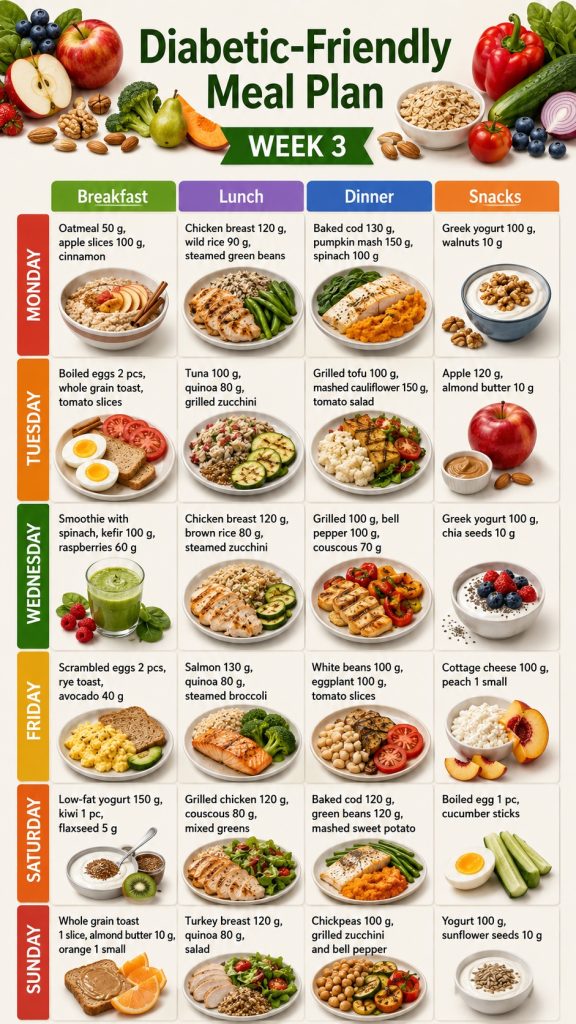
Monday
Breakfast, 53 g carbs, 8 g fibre, 414 kcal. Apple cinnamon oats: 45 g rolled oats cooked in water, 110 g sliced apple, cinnamon, 150 g plain Greek yogurt, 15 g walnuts. No added sugar or syrup.
Lunch, 45 g carbs, 8 g fibre, 520 kcal. 130 g grilled chicken breast, 160 g cooked wild or brown rice, 160 g steamed green beans, 2 teaspoons olive oil, lemon and herbs.
Dinner, 39 g carbs, 9 g fibre, 398 kcal. 150 g baked cod, 160 g baked sweet potato, 150 g sautéed spinach, olive oil, garlic and paprika.
Snack, 6 g carbs, 149 kcal. 120 g plain Greek yogurt with 12 g walnuts.
Day total: 143 g carbs, 26 g fibre, 130 g protein, 1,482 kcal.
Tuesday
Breakfast, 36 g carbs, 8 g fibre, 388 kcal. 2 boiled eggs, 2 slices wholegrain toast, sliced tomato, 40 g avocado.
Lunch, 45 g carbs, 8 g fibre, 450 kcal. Tuna and quinoa bowl: 110 g tuna in water drained, 180 g cooked quinoa, 150 g grilled courgette, salad leaves, lemon and 2 teaspoons olive oil. Skip the mayonnaise.
Dinner, 43 g carbs, 10 g fibre, 460 kcal. 150 g grilled tofu, 180 g cauliflower mash, 140 g baked sweet potato, tomato and leaf salad, olive oil.
Snack, 21 g carbs, 166 kcal. 1 apple with 16 g almond or peanut butter.
Day total: 144 g carbs, 30 g fibre, 97 g protein, 1,464 kcal.
Wednesday
Breakfast, 46 g carbs, 16 g fibre, 314 kcal. Berry kefir bowl: 200 g unsweetened kefir, 110 g raspberries, a handful of spinach, 15 g chia seeds, 25 g rolled oats. Blend and let it stand 5 minutes. Keep the pulp, and no juice or honey.
Lunch, 46 g carbs, 5 g fibre, 512 kcal. 130 g grilled chicken breast, 180 g cooked brown rice, 150 g grilled courgette, olive oil.
Dinner, 48 g carbs, 8 g fibre, 497 kcal. 120 g grilled chicken, 150 g grilled peppers, 160 g cooked wholewheat couscous, side salad, olive oil.
Snack, 6 g carbs, 149 kcal. 120 g plain Greek yogurt with 12 g walnuts.
Day total: 146 g carbs, 29 g fibre, 121 g protein, 1,472 kcal.
Thursday
Breakfast, 33 g carbs, 6 g fibre, 404 kcal. Vegetable omelette: 2 eggs with spinach and mushrooms, 2 slices wholegrain toast, cooked in olive oil.
Lunch, 66 g carbs, 19 g fibre, 456 kcal. Lentil and quinoa salad: 180 g cooked lentils, 110 g cooked quinoa, cucumber, tomato and herbs, lemon and 2 teaspoons olive oil. This is the highest carbohydrate meal of the week, but 19 g of fibre comes with it, which slows the rise considerably.
Dinner, 46 g carbs, 10 g fibre, 438 kcal. 130 g turkey breast, 180 g baked sweet potato, 160 g roasted cauliflower, green salad.
Snack, 19 g carbs, 6 g fibre, 144 kcal. 60 g hummus with cucumber and carrot sticks.
Day total: 163 g carbs, 41 g fibre, 98 g protein, 1,442 kcal.
Friday
Breakfast, 36 g carbs, 9 g fibre, 413 kcal. 2 scrambled eggs, 2 slices rye or wholegrain toast, 60 g avocado, tomato.
Lunch, 47 g carbs, 10 g fibre, 528 kcal. 130 g baked salmon, 170 g cooked quinoa, 160 g steamed broccoli.
Dinner, 60 g carbs, 17 g fibre, 414 kcal. 180 g cooked white beans, 150 g roasted aubergine, tomato and leaves, 2 teaspoons olive oil. Aubergine soaks up oil, so brush it rather than pour.
Snack, 17 g carbs, 172 kcal. 120 g cottage cheese with 1 peach.
Day total: 161 g carbs, 38 g fibre, 97 g protein, 1,527 kcal.
Saturday
Breakfast, 49 g carbs, 10 g fibre, 357 kcal. 180 g plain Greek yogurt, 2 kiwi, 12 g ground flaxseed, 25 g rolled oats. Ground flaxseed mixes in far better than whole.
Lunch, 45 g carbs, 6 g fibre, 506 kcal. 130 g grilled chicken, 170 g cooked wholewheat couscous, salad leaves, cucumber, tomato, olive oil.
Dinner, 50 g carbs, 11 g fibre, 432 kcal. 140 g baked cod, 150 g green beans, 190 g mashed sweet potato, olive oil.
Snack, 5 g carbs, 220 kcal. 2 boiled eggs, cucumber sticks, 10 g walnuts.
Day total: 149 g carbs, 29 g fibre, 128 g protein, 1,515 kcal.
Sunday
Breakfast, 47 g carbs, 9 g fibre, 347 kcal. 2 slices wholegrain toast with 20 g almond butter, and 1 orange. Eat the orange rather than drinking juice, which costs you the fibre.
Lunch, 43 g carbs, 7 g fibre, 474 kcal. 130 g turkey breast, 170 g cooked quinoa, mixed salad vegetables, lemon and herb dressing with olive oil.
Dinner, 66 g carbs, 20 g fibre, 463 kcal. 180 g cooked chickpeas, 150 g grilled courgette, 120 g peppers, tomato, leaves, 2 teaspoons olive oil. Like Thursday lunch, this is high carbohydrate but also the highest fibre meal of the week.
Snack, 7 g carbs, 158 kcal. 120 g plain yogurt with 15 g sunflower seeds.
Day total: 162 g carbs, 37 g fibre, 96 g protein, 1,442 kcal.
The Week at a Glance
| Day | Carbs | Fibre | Protein | Calories |
|---|---|---|---|---|
| Monday | 143 g | 26 g | 130 g | 1,482 |
| Tuesday | 144 g | 30 g | 97 g | 1,464 |
| Wednesday | 146 g | 29 g | 121 g | 1,472 |
| Thursday | 163 g | 41 g | 98 g | 1,442 |
| Friday | 161 g | 38 g | 97 g | 1,527 |
| Saturday | 149 g | 29 g | 128 g | 1,515 |
| Sunday | 162 g | 37 g | 96 g | 1,442 |
Every day clears 25 g of fibre, and the highest carbohydrate days are the ones built on lentils, beans and chickpeas. That is the useful pattern here: legumes raise the carbohydrate number and the fibre number together, which is a very different thing from the same carbohydrate arriving as white bread.
How to Adjust This Diabetes Meal Plan for You
If you need fewer carbohydrates
Halve the grain portion and double the non starchy vegetable. Cutting rice, quinoa or couscous from 170 g to 85 g removes roughly 20 g of carbohydrate from that meal without touching anything else. The lowest carbohydrate day here is Monday at 143 g and the highest is Thursday at 163 g, so swapping days is another lever.
If you need more calories
This plan sits around 1,450 to 1,530 calories, which suits many adults aiming to lose weight but is too low for some, particularly active or larger people. Add olive oil, nuts, seeds, avocado or a larger protein portion rather than more carbohydrate, since those raise energy with little effect on glucose.
If weight loss is the goal, the target is smaller than most people assume. NIDDK guidance notes that losing 5 to 7 percent of your current weight can improve blood glucose, cholesterol and blood pressure. For someone at 90 kg that is 4.5 to 6.3 kg, not a transformation.
If you use mealtime insulin
The carbohydrate figure for each meal is the number you would use with your ratio, but check your own portions rather than assuming these match what you served. Do not change a dose based on this article.
Test, do not guess
Two people can eat the identical meal and get different readings. Check 1 to 2 hours after the start of a meal you are unsure about, and note anything that repeatedly pushes you above target. That is worth more than any generic plan, including this one.
On labels, use total carbohydrate rather than net carbs, which is a marketing term with no regulated definition. For more on individual foods, see our guides to foods that support healthy blood sugar and food pairings that blunt the glucose rise.
Do You Actually Need the Snacks?
Not necessarily. The snacks here add 5 to 21 g of carbohydrate a day and are genuinely optional for many people. They earn their place when there is a long gap between meals, when your medication timing creates a risk of going low, around exercise, or when arriving at dinner very hungry makes portions hard to control.
If you drop them, the days fall to roughly 130 to 145 g of carbohydrate. More options are in our list of snacks that will not spike blood sugar, and for morning variety see diabetes friendly breakfast ideas.
Who Should Not Use This Without Adjustment
Take this to a registered dietitian or diabetes specialist first if you:
- Have type 1 diabetes, or use insulin or a sulfonylurea that can cause hypoglycaemia
- Are pregnant or breastfeeding, since carbohydrate and calorie needs are different
- Have chronic kidney disease, which may require adjusted protein, potassium and phosphate
- Have gastroparesis, coeliac disease or another digestive condition
- Are underweight, frail, or an older adult at risk of losing muscle
- Are a child or teenager
- Have food allergies, or follow vegetarian, vegan or halal eating
The kidney disease point deserves emphasis, because this plan is relatively high in protein at 96 to 130 g a day. That suits many people but not everyone.
Frequently Asked Questions
How many carbs should I eat per meal with diabetes?
There is no single correct amount, and the American Diabetes Association deliberately does not set one. A common starting point is 45 to 60 g per main meal, which is roughly where this plan sits at 33 to 66 g. Your right number depends on your medication, activity, weight goals and what your meter shows 1 to 2 hours after eating.
How many carbs are in this 7 day diabetes meal plan?
Between 143 and 163 g of carbohydrate per day, with 26 to 41 g of fibre and roughly 1,450 to 1,530 calories. Individual meals range from 33 to 66 g of carbohydrate. The highest carbohydrate meals are the lentil, bean and chickpea ones, which also carry the most fibre.
What are the blood glucose targets I am aiming for?
For most non pregnant adults the American Diabetes Association targets A1C below 7.0 percent, 80 to 130 mg/dL before meals, and a peak below 180 mg/dL when measured 1 to 2 hours after starting a meal. Targets are individualised and are often relaxed for older adults or anyone with a history of severe hypoglycaemia.
Can I eat fruit and rice with diabetes?
Yes, in measured portions counted as part of your carbohydrate for that meal. This plan includes apple, orange, kiwi, berries, peach, brown rice, quinoa, couscous and sweet potato. What matters is the amount and what it is eaten alongside, not whether the food is banned.
Is the Diabetes Plate Method easier than counting carbs?
For many people, yes. On a 9 inch plate, fill half with non starchy vegetables, a quarter with protein and a quarter with carbohydrate foods, then drink water or something unsweetened. It gets you to sensible portions without arithmetic, though anyone using mealtime insulin will still need actual carbohydrate counts.
Should I count net carbs or total carbs?
Total carbohydrate. Net carbs has no regulated definition and the calculation varies between manufacturers, so it is a marketing term rather than a reliable number. Read total carbohydrate on the label and note the fibre separately.
How do I lower the carbs in this plan?
Halve the grain portion and double the non starchy vegetables. Reducing rice, quinoa or couscous from 170 g to 85 g removes about 20 g of carbohydrate from that meal. Add olive oil, nuts or extra protein if you need to keep the calories up.
Are the snacks necessary?
No, they are optional and add 5 to 21 g of carbohydrate a day. They are most useful with long gaps between meals, when medication timing risks a low, around exercise, or when hunger makes portions hard to manage at the next meal. Without them the days fall to roughly 130 to 145 g of carbohydrate.
Is this plan suitable if I use insulin?
The per meal carbohydrate counts are exactly what you would use with your insulin to carbohydrate ratio, but weigh your own portions rather than assuming they match. Never change an insulin dose based on an article. Any planned change in carbohydrate intake should be discussed with your care team first.
Can this meal plan reverse type 2 diabetes?
A meal plan alone is not a treatment for remission, though sustained weight loss can lead to remission for some people with type 2 diabetes, particularly early after diagnosis. That is a conversation to have with your doctor, since it needs a structured programme and medication review rather than a sample menu.
Final Thoughts
The point of writing out a diabetes meal plan with the carbohydrate on every line is that it becomes adjustable. You can see that Thursday lunch carries 66 g and Monday dinner carries 39 g, and you can move things around accordingly instead of guessing. A plan you cannot measure is a plan you cannot personalise.
Use this as a starting framework, not a prescription. Weigh your own portions for the first few days so the numbers mean something, check your glucose after any meal you are unsure about, and take the plan to your dietitian or diabetes team to adapt. Your meter has the final word on what works for you.
Edited by Dr. Obeydur Rahman, MBBS, MD in Medicine.