Most smoothie recipes labelled high protein never tell you how much protein is actually in the glass. These eight do. Every one of these high protein smoothies delivers between 25 and 44 g of protein for 263 to 366 calories, calculated ingredient by ingredient from standard nutrition data rather than estimated. That range matters, because a smoothie only helps with weight loss if it genuinely replaces a meal, and 12 g of protein will not do that.
No smoothie burns fat. What protein does is help you hold on to muscle while you eat less, and help a meal feel like a meal. There is also one drawback of blended food that most articles skip, and it is covered honestly below.
Medical Disclaimer: This article is educational and is not a personalised nutrition plan. Speak to a doctor or registered dietitian before regularly replacing meals, especially with kidney disease, diabetes, pregnancy, food allergies or any history of disordered eating. Read our medical disclaimer, editorial policy and fact checking policy.
Do High Protein Smoothies Actually Help With Weight Loss?
Indirectly, yes, and the mechanism is worth understanding because it changes how you use them.
Weight loss comes from eating less energy than you use. Protein does not override that, but it changes what you lose. Pooled trial data summarised in a review in the American Journal of Clinical Nutrition found that higher protein diets during energy restriction produced greater fat loss and better preservation of lean mass than lower protein diets. They also preserved resting energy expenditure better, by an average of about 142 kcal a day, largely because muscle was retained.
So the honest claim is not that a smoothie melts fat. It is that if you are going to eat less, getting enough protein means more of what you lose is fat rather than muscle.
The Catch: Blended Calories Are Less Filling
This is the part most smoothie articles leave out. Calories in liquid form tend to satisfy less than the same calories eaten as solid food. Liquids need no chewing, leave the stomach faster, and produce weaker and shorter fullness signals. Worse, people often fail to compensate afterwards, meaning they do not eat correspondingly less at the next meal.
There is a useful nuance. It is not simply liquid versus solid, since hot blended soup is more satisfying than the same vegetables eaten whole. Thickness, temperature and how slowly you drink all matter. That points to some practical fixes.
- Make it thick and eat it with a spoon. Use less liquid, more ice, and frozen rather than fresh fruit
- Take at least 10 minutes over it rather than drinking it in the car
- Replace a meal with it, do not add it to one. A 330 kcal smoothie alongside your usual breakfast is 330 extra calories
- Keep some texture. Chia, oats and seeds add chew and fibre
- Do not blitz every meal. One smoothie a day is plenty, since whole food is more satisfying per calorie
How Much Protein You Actually Need
For weight loss with muscle preservation, the evidence supports roughly 1.2 to 1.6 g of protein per kilogram of body weight per day. Below about 1.0 g per kg, muscle loss risk rises.
- 60 kg: roughly 72 to 96 g a day
- 75 kg: roughly 90 to 120 g a day
- 90 kg: roughly 108 to 144 g a day
Spread across three meals, that is roughly 25 to 40 g each, which is exactly the range these recipes hit. More is not automatically better, and anyone with kidney disease should follow the protein target their clinician sets rather than a general one.
The Method, Once
All eight use the same technique, so here it is once instead of eight times.
- Put the liquid in the blender first, then leafy greens or oats, then everything else. This stops the blades cavitating
- Blend 45 to 60 seconds until completely smooth
- If it contains chia, flaxseed or oats, rest it 5 minutes so they hydrate and thicken
- Taste before adding any sweetener. Usually you will not need one
Figures below assume plain nonfat Greek yogurt, unsweetened milk, and a whey powder providing 24 g protein per 30 g scoop. Your powder will differ, so check the label.
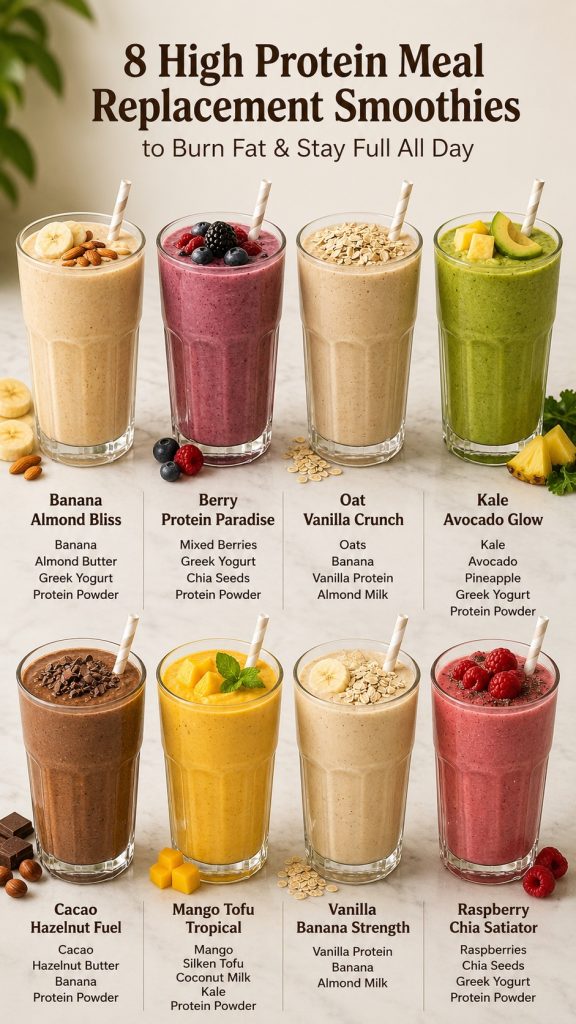
The 8 High Protein Smoothies, With Full Macros
1. Banana Almond Butter
311 kcal, 33 g protein, 24 g carbs, 10 g fat, 3 g fibre
- Half a medium banana
- 170 g plain Greek yogurt
- 1 tablespoon (16 g) almond butter
- Half a scoop protein powder
- Water, ice, cinnamon
Tip: level the almond butter on a spoon rather than scooping from the jar. A heaped tablespoon can be double, which is another 100 kcal.
2. Mixed Berry Greek Yogurt
318 kcal, 34 g protein, 30 g carbs, 8 g fat, 10 g fibre
- 144 g frozen mixed berries
- 170 g plain Greek yogurt
- 1 tablespoon (12 g) chia seeds
- Half a scoop protein powder
- 180 ml unsweetened almond milk
Tip: at 10 g fibre this is one of the two most filling on the list. Swapping plain yogurt for flavoured can add 15 g of sugar and undo the point of it.
3. Oat Vanilla Breakfast
366 kcal, 44 g protein, 35 g carbs, 6 g fat, 4 g fibre
- 20 g rolled oats
- Half a small banana
- 180 ml unsweetened soy milk
- 1 scoop vanilla protein powder
- 113 g plain Greek yogurt, cinnamon
Tip: the highest protein and highest calorie of the eight, so this is the one to use as a full breakfast rather than a snack.
4. Kale, Pineapple and Avocado
263 kcal, 31 g protein, 22 g carbs, 7 g fat, 4 g fibre
- 1 cup chopped kale, stems removed
- 82 g pineapple chunks
- A quarter of a small avocado, about 34 g
- 170 g plain Greek yogurt
- Half a scoop protein powder, water, ice
Tip: the lowest calorie option here. A whole avocado instead of a quarter would add about 160 kcal and turn it into the highest.
5. Cacao Hazelnut
340 kcal, 33 g protein, 24 g carbs, 15 g fat, 6 g fibre
- 1 tablespoon unsweetened cacao powder
- 1 tablespoon (16 g) hazelnut or almond butter
- Half a small banana
- 180 ml unsweetened soy milk
- 1 scoop chocolate or vanilla protein powder
Tip: the highest fat of the eight, almost all of it from the nut butter. It works as a dessert substitute rather than an addition to one.
6. Mango and Silken Tofu
280 kcal, 25 g protein, 23 g carbs, 11 g fat, 6 g fibre
- 82 g mango chunks
- 125 g silken tofu
- Half a cup spinach
- 1 tablespoon (12 g) chia seeds
- Half a scoop soy protein powder, 180 ml unsweetened coconut drink, lime
Tip: the fully plant based option, and soy is a complete protein. Use the carton coconut drink, not tinned coconut milk, which carries roughly 10 times the calories.
7. Vanilla Banana Oat
326 kcal, 34 g protein, 34 g carbs, 6 g fat, 5 g fibre
- Half a small banana
- 20 g rolled oats
- 170 g plain Greek yogurt
- Half a scoop vanilla protein powder
- 1 teaspoon ground flaxseed, 180 ml unsweetened almond milk
Tip: the best one to prepare the night before. Oats and flaxseed soften overnight and it thickens considerably, which helps with fullness.
8. Raspberry Chia
283 kcal, 33 g protein, 27 g carbs, 6 g fat, 12 g fibre
- 123 g raspberries, fresh or frozen
- 170 g plain Greek yogurt
- 1 tablespoon (12 g) chia seeds
- Half a scoop protein powder, water, ice
Tip: 12 g of fibre makes this the most filling of the eight, close to half a day’s target in one glass. Never swallow chia seeds dry, since they swell in liquid and have caused throat blockages. Always blend or soak them first.
Nutrition at a Glance
| Smoothie | kcal | Protein | Fibre | Best for |
|---|---|---|---|---|
| 1. Banana almond butter | 311 | 33 g | 3 g | Post workout |
| 2. Mixed berry | 318 | 34 g | 10 g | Staying full |
| 3. Oat vanilla | 366 | 44 g | 4 g | Full breakfast |
| 4. Kale pineapple avocado | 263 | 31 g | 4 g | Lowest calorie |
| 5. Cacao hazelnut | 340 | 33 g | 6 g | Sweet cravings |
| 6. Mango silken tofu | 280 | 25 g | 6 g | Dairy free |
| 7. Vanilla banana oat | 326 | 34 g | 5 g | Make ahead |
| 8. Raspberry chia | 283 | 33 g | 12 g | Most filling |
Choosing a Protein Powder
Powder is optional. Greek yogurt, cottage cheese, silken tofu, soy milk and dairy milk all raise protein without it, and recipes 2, 4 and 8 clear 30 g even before the powder is counted.
If you do use one, contamination is worth knowing about. A 2025 Clean Label Project report tested 160 products from 70 brands and found 47 percent exceeded California Proposition 65 limits for lead. Some patterns ran against expectation: plant based powders averaged about five times the cadmium of whey, certified organic products averaged three times the lead of non organic, and chocolate flavours carried far more cadmium than vanilla. An industry body, the Council for Responsible Nutrition, has disputed the methodology, so treat it as a reason to choose carefully rather than to panic.
- Look for third party testing marks such as NSF Certified for Sport or Informed Choice
- Prefer unflavoured or vanilla whey or soy isolate over chocolate plant blends if contamination concerns you
- Check protein per scoop, added sugar and allergens on the label
- Avoid multi ingredient fat burner blends and anything promising rapid weight loss
Remember that supplements are regulated differently from medicines. As the FDA explains, they are not approved for safety and effectiveness before going on sale.
Five Mistakes That Undo the Whole Thing
- Drinking it as well as a meal. The most common error, and it simply adds 300 or so calories to your day
- Using fruit juice as the liquid. A cup of orange juice adds roughly 110 kcal and 21 g of sugar with almost no fibre. Water or unsweetened milk instead
- Stacking the calorie dense extras. Nut butter, avocado, oats, seeds and tinned coconut milk together can push a smoothie past 700 kcal. Pick one or two
- Ignoring serving size. A full blender jug is often two servings. Pour one glass and refrigerate the rest
- Adding sweetener by habit. Banana, mango and berries usually make it sweet enough. Taste first
For the wider picture, see our guide to weight loss mistakes you might be making, or foods that may support healthy weight loss.
If You Prefer to Chew Your Breakfast
Given that solid food is generally more satisfying per calorie, a smoothie should be a convenience option rather than your default. If mornings allow for a plate, our high protein breakfasts that keep you full cover the same protein range in solid form. For lighter blended options with less protein, see our 10 healthy smoothies for weight loss, and for portable protein between meals, our keto protein snacks.
Who Should Get Personalised Advice First
Speak to a doctor or registered dietitian before regularly replacing meals if you:
- Have kidney disease or follow a prescribed protein, potassium or fluid limit
- Have diabetes, particularly if you use insulin
- Are pregnant or breastfeeding
- Have food allergies, or swallowing or digestive difficulties
- Have any history of disordered eating, since structured meal replacement can make things harder
- Need to gain weight, or take medicines affecting appetite or blood glucose
Frequently Asked Questions
How much protein should a weight loss smoothie contain?
Aim for 25 to 40 g if it is replacing a meal, which fits a daily target of about 1.2 to 1.6 g of protein per kilogram of body weight. All eight smoothies here provide 25 to 44 g. A smoothie with 10 to 12 g of protein is a snack rather than a meal and will not keep most people full.
Do high protein smoothies burn fat?
No. Weight loss comes from an energy deficit, not from any single drink. What protein does is change the composition of the loss. Trial data shows higher protein intake during energy restriction preserves more lean mass and more of your resting metabolic rate, so a greater share of what you lose is fat.
Are smoothies as filling as solid food?
Usually less so. Liquid calories require no chewing, empty from the stomach faster and produce weaker fullness signals, and people often do not eat less afterwards to compensate. You can narrow the gap by blending it thick, eating it with a spoon, adding chia or oats for texture, and taking at least 10 minutes over it.
Can I replace a meal with a protein smoothie?
One meal a day is reasonable for most healthy adults if the smoothie contains adequate protein, a fruit or vegetable, a fibre source and enough calories. Replace the meal rather than drinking it alongside. Anyone with diabetes, kidney disease, pregnancy or a history of disordered eating should get individual advice first.
Which smoothie here is the most filling?
The raspberry chia at 12 g of fibre and 33 g of protein for 283 calories, followed by the mixed berry at 10 g of fibre. Fibre and protein together are what drive fullness, so those two do the most work per calorie.
Do I need protein powder to make these?
No. Greek yogurt, silken tofu, cottage cheese, soy milk and dairy milk all raise protein substantially. Recipes 2, 4 and 8 exceed 30 g of protein even before the powder is added. Powder is convenience, not a requirement.
Is protein powder safe? What about heavy metals?
A 2025 Clean Label Project report tested 160 products and found 47 percent exceeded California Proposition 65 lead limits, with plant based powders averaging about five times the cadmium of whey and organic products about three times the lead of non organic. An industry body disputed the methodology. Choosing a product with third party testing such as NSF Certified for Sport is a sensible precaution.
Is whey or plant protein better for weight loss?
For weight loss the total daily protein matters far more than the source. Whey digests quickly and is a complete protein, and soy is also complete, which is why the plant based recipe here uses tofu and soy. Choose whichever suits your diet, budget and digestion.
When is the best time to drink a protein smoothie?
Whenever it replaces a meal you would otherwise eat. Timing has a much smaller effect than total daily intake. Breakfast suits most people because it is the meal most often skipped or eaten in a hurry.
Can I prepare these the night before?
Yes. The vanilla banana oat version is best for this, since the oats and flaxseed soften and thicken overnight. Store it covered in the fridge for up to 24 hours and stir or reblend briefly before drinking. Smoothies containing banana or avocado may brown slightly, which is harmless.
Related reading: for ten more options that each clear 20 g, including versions with no protein powder at all, see our high protein smoothie recipes.
Final Thoughts
These high protein smoothies earn their name: 25 to 44 g of protein each, for 263 to 366 calories. That is enough to work as a genuine meal rather than a snack that leaves you hungry an hour later. Use them where convenience matters, keep the portions as written, and treat the numbers above as the point rather than a footnote.
Two things decide whether they help. Replace a meal rather than adding one, and remember that blended calories satisfy less than chewed ones, so thicker and slower is better. Beyond that, weight change comes from the whole pattern of how you eat, move and sleep, not from anything you can put in a blender.
Edited by Dr. Obeydur Rahman, MBBS, MD in Medicine.