Most lists of foods that support healthy aging are just lists of healthy food with the word aging attached. But ageing creates specific nutritional problems that do not apply at 30, and generic advice misses all of them. Protein requirements go up after 65, not down. Vitamin B12 stops being absorbed properly from meat. Vitamin D needs rise at 70. These twelve foods are chosen to solve those four problems, with the numbers.
Short answer: Adults lose 3 to 8 percent of muscle per decade after 30, and older adults need 1.0 to 1.2 g of protein per kg rather than the standard 0.8. Separately, 10 to 30 percent of people over 50 have low stomach acid and cannot absorb B12 from food, which is why fortified foods work better than more meat. Those two facts should shape your shopping.
Four Problems That Are Specific to Ageing
These are what separate eating well at 70 from eating well at 30.
1. Muscle loss accelerates. Adults lose roughly 3 to 8 percent of muscle mass per decade after 30, and the rate picks up after 60. This is sarcopenia, and it drives falls, frailty and loss of independence more than almost anything else.
2. Protein needs rise while appetite falls. The general RDA of 0.8 g per kg is not enough for older adults, because ageing muscle responds less to the same dose, a phenomenon called anabolic resistance. Expert guidance puts the target at 1.0 to 1.2 g per kg for healthy older adults, rising to 1.5 g with chronic illness. For a 70 kg person that is 70 to 84 g a day rather than 56 g. Protein also works best spread across meals, at 25 to 30 g each, rather than loaded into dinner.
3. B12 absorption fails, and eating more meat does not fix it. This is the most useful thing on this page. An estimated 10 to 30 percent of adults over 50 have atrophic gastritis, which reduces stomach acid. Food bound B12 needs that acid to be released, so it stops being absorbed. Research found B12 deficiency in 38 percent of people with atrophic gastritis, against 21 percent of proton pump inhibitor users and 15 percent of controls.
The fix is counterintuitive. The crystalline B12 added to fortified foods does not require stomach acid, so it is absorbed normally even when the B12 in a steak is not. That is why adults over 50 are advised to get B12 from fortified foods or supplements rather than simply eating more meat.
4. Vitamin D requirements go up as skin synthesis goes down. The RDA rises from 15 mcg, or 600 IU, to 20 mcg, 800 IU, after 70, at exactly the age when the skin makes less of it and people spend less time outdoors.
Notice that none of these is solved by pomegranate or green tea. They are solved by protein, fortified foods and vitamin D.
12 Foods That Support Healthy Aging
Grouped by which problem each one addresses. Figures are approximate, and all of these sit inside the nutrient dense pattern the National Institute on Aging recommends for older adults.
For muscle: hitting 1.0 to 1.2 g per kg
- 1. Greek yogurt and cottage cheese. Three quarters of a cup gives 17 to 19 g of protein for 100 to 130 calories, plus around 200 mg of calcium. Soft, needs no cooking, and requires no chewing, which matters more than nutrition writing usually admits.
- 2. Eggs. 72 calories and 6.3 g of protein each, plus a little vitamin D. Cheap, quick, soft, and easy to eat when appetite is poor.
- 3. Oily fish. Three ounces of salmon is 19 g of protein and covers most of your vitamin D at once. Tinned counts and costs a fraction of fresh.
- 4. Beans and lentils. A cup of lentils carries 18 g of protein and 15.6 g of fibre for 230 calories. Cheap, soft when well cooked, and doubles as the fibre entry.
Worked example for a 70 kg adult: oats with Greek yogurt and berries at breakfast gives 23 g, lentils with spinach and an egg at lunch gives 30 g, salmon with potato and greens at dinner gives 29 g. That is 82 g before any snack, comfortably inside the 70 to 84 g target.
For B12: fortified beats fresh
- 5. Fortified breakfast cereal. The most commonly eaten fortified food and the easiest fix. Many varieties supply a full day of B12 in one bowl, in the crystalline form that absorbs without stomach acid. Choose a low sugar one, since this category is full of confectionery.
- 6. Fortified milk or soy milk. A cup of fortified soy milk provides roughly 7 g of protein, 300 mg of calcium and around 3 mcg of B12, hitting three age related targets in one glass. Dairy milk fortified with vitamin D does much the same.
For bone: vitamin D and calcium together
- 7. Tinned sardines with the bones. The single most underrated food for older adults. One tin gives 23 g of protein, roughly 350 mg of calcium from the soft edible bones, and useful vitamin D, for under two pounds. Nothing else on this list does all three.
- 8. UV exposed mushrooms. Half a cup provides 9.2 mcg of vitamin D, 46 percent of the daily value. Untreated mushrooms give 0.1 mcg, so the packet label decides everything. Check for the words UV exposed or vitamin D.
For fibre, digestion and appetite
- 9. Oats. Half a cup dry gives 4 g of fibre. Soft, warm, cheap, and a good vehicle for the yogurt and berries that turn it into a real meal. Constipation becomes more common with age and medicines, and fibre plus fluid is the first line.
- 10. Berries. A cup of raspberries carries 8 g of fibre for 64 calories, the best fibre to calorie ratio of any fruit. Frozen works and lasts.
Everyday plants worth keeping
- 11. Leafy greens. A cup of cooked spinach adds 5.3 g of protein and 4.3 g of fibre for 41 calories. If you take warfarin, keep your intake steady rather than swinging, since these are high in vitamin K.
- 12. Nuts and seeds. An ounce of almonds is 164 calories with 6 g of protein and 3.5 g of fibre. Energy dense is an advantage rather than a problem when appetite is falling. Chopped or as nut butter if chewing is difficult.
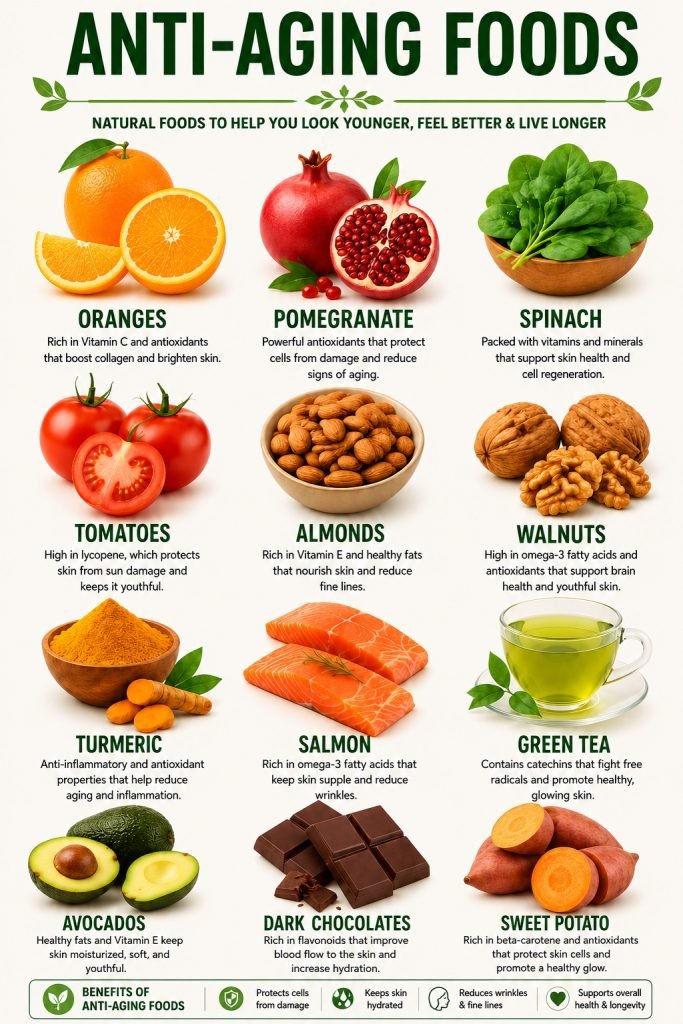
Oranges, tomatoes, avocado, sweet potato, pomegranate, dark chocolate, green tea and turmeric are all fine foods and several appear in our broader guide to foods for heart, liver, brain and gut health. They simply do not address the four problems above, which is why they are not in this twelve.
What Does Not Slow Ageing
The anti ageing category is almost entirely marketing, and some of it is actively risky.
- Turmeric and curcumin. Evidence is insufficient for the health claims made, and some enhanced absorption formulations have been linked to liver injury. Use it as a spice.
- Green tea extract. The brewed drink is fine for most adults. Concentrated extract is a recognised cause of drug induced liver injury and can raise blood pressure.
- Collagen for skin. Collagen is digested into amino acids like any other protein. Adequate total protein matters, the source label does not.
- Antioxidant megadoses. Excess vitamin A and vitamin E cause harm rather than benefit, and vitamin A accumulates rather than being excreted.
Supplements do have a legitimate place here, more than in most topics. B12 and vitamin D are the two genuine cases, precisely because ageing physiology makes food alone unreliable. That is a conversation with your doctor, based on a blood test, not a purchase based on packaging.
And the thing food cannot substitute for: resistance exercise. Protein builds muscle only when there is a stimulus telling the body to build it. Twice weekly strength work, even with body weight or light bands, is what makes the protein useful. Diet alone will not hold muscle.
Frequently Asked Questions
How much protein do older adults need?
More than the standard recommendation, not less. The general RDA is 0.8 g per kg of body weight, but expert guidance puts the target for healthy older adults at 1.0 to 1.2 g per kg, rising to around 1.5 g with chronic illness. For a 70 kg person that is 70 to 84 g a day rather than 56 g. The reason is anabolic resistance: ageing muscle responds less to the same dose. Spreading protein across meals at 25 to 30 g each works better than loading it into dinner.
Why can older adults not absorb vitamin B12 from food?
Because stomach acid declines. An estimated 10 to 30 percent of adults over 50 have atrophic gastritis, which reduces acid production, and food bound B12 needs that acid to be released before it can be absorbed. Research found B12 deficiency in 38 percent of people with atrophic gastritis compared with 15 percent of controls. Proton pump inhibitor users sat in between at 21 percent.
Does eating more meat fix low B12 after 50?
Usually not, and this is the counterintuitive part. If low stomach acid is the problem, more food bound B12 does not help because the same barrier applies. The crystalline B12 added to fortified foods does not require stomach acid, so it is absorbed normally even when B12 from meat is not. That is why adults over 50 are advised to meet their B12 needs through fortified foods such as breakfast cereals, or through supplements.
How fast do you lose muscle with age?
Roughly 3 to 8 percent of muscle mass per decade after 30, and the rate accelerates after 60. This is sarcopenia, and it matters more than most age related changes because it drives falls, frailty and loss of independence. Adequate protein combined with resistance exercise is the most effective countermeasure, and it can slow and partly reverse the process rather than merely delaying it.
How much vitamin D do older adults need?
The RDA rises from 15 mcg, or 600 IU, to 20 mcg, 800 IU, after age 70. The awkward part is that this increase happens exactly when the skin becomes less efficient at making vitamin D and people typically spend less time outdoors. Three ounces of salmon covers 71 percent of the daily value and half a cup of UV exposed mushrooms covers 46 percent, but many older adults need a supplement, which is worth discussing after a blood test.
What is the single best food on this list?
Tinned sardines with the bones, if you can eat them. One tin provides about 23 g of protein, roughly 350 mg of calcium from the soft edible bones, and useful vitamin D, for very little money. Nothing else here addresses muscle, bone and vitamin D simultaneously. Greek yogurt runs a close second at 17 to 19 g of protein per three quarter cup, with the advantage of needing no preparation.
Do collagen supplements help ageing skin?
There is no good reason to expect them to work as marketed. Collagen is a protein, and like any protein it is broken down into amino acids during digestion rather than being delivered intact to your skin. What matters is getting enough total protein, which the foods on this list do more cheaply. If your protein intake is adequate, a collagen supplement is unlikely to add anything.
Can turmeric or green tea slow ageing?
No. Evidence is insufficient to support the health claims commonly made for oral turmeric and curcumin, and definite conclusions cannot be drawn for most purposes green tea is promoted for. Both are fine as food. The concentrated extracts are a different matter: high dose green tea extract and some enhanced absorption curcumin formulations are recognised causes of drug induced liver injury.
What if my appetite has decreased?
Prioritise protein and nutrient density over volume, since you have fewer opportunities to get what you need. Greek yogurt, eggs, cottage cheese, tinned fish and nut butter all deliver a lot in a small portion and require little chewing or preparation. Energy dense foods like nuts become an advantage rather than a problem in this situation. Persistent appetite loss or unintentional weight loss should be assessed by a doctor rather than managed with diet alone.
Is diet enough to prevent muscle loss?
No, and this is the limitation worth being clear about. Protein supplies the raw material, but muscle is only built when something signals the body to build it. Resistance exercise provides that signal, and twice weekly strength work using body weight, light bands or weights is what makes the protein useful. Diet without the stimulus will slow muscle loss far less than the two together.
Final Thoughts on Foods That Support Healthy Aging
The best foods that support healthy aging are chosen against specific problems rather than general virtue. Muscle loss of 3 to 8 percent per decade, protein needs rising to 1.0 to 1.2 g per kg, B12 absorption failing in up to 30 percent of over fifties, and vitamin D requirements climbing at 70. Those four should decide your shopping list.
Practically that means protein at every meal rather than just dinner, a fortified food for B12 because more meat will not solve it, oily fish or UV mushrooms for vitamin D, and tinned sardines if you will eat them, since nothing else covers muscle, bone and vitamin D at once.
Then add the part no food replaces. Twice weekly resistance exercise is what turns the protein into muscle, and without it the diet does far less. Skip the collagen powders and the turmeric capsules, and put the money into sardines and a set of resistance bands.
Related reading: high protein breakfasts | foods that support immune function | foods for heart, liver, brain and gut health | best vegetables to eat regularly
Medical Disclaimer
This article is for general education and does not diagnose, treat, cure or prevent disease. Nutrient figures are estimates that vary with brand, variety and portion. Protein targets differ for people with chronic kidney disease, who should not increase protein without individual guidance, and dietary needs also differ with liver disease, diabetes, swallowing difficulties, food allergies and prescribed restrictions. Persistent appetite loss, unintentional weight loss, falls or new weakness should be assessed by a doctor. Discuss B12 and vitamin D supplementation with a healthcare professional based on blood testing rather than starting them on assumption. See our medical disclaimer, editorial policy and fact checking policy.
Cross checked against published sarcopenia and protein requirement guidance for older adults, research on atrophic gastritis and vitamin B12 status in the American Journal of Clinical Nutrition, National Institute on Aging healthy eating guidance, NIH Office of Dietary Supplements reference intakes, and USDA FoodData Central. Last updated July 2026.
About the Author and Reviewer
Mezbaul Islam, MSc Nutrition owns and writes Simple Health Naturally. He researches each article from public health guidance, clinical guidelines and peer reviewed studies, and traces every figure back to a named source.
Dr. Obeydur Rahman, MBBS, MD in Medicine edits the articles, checks the sources cited and is responsible for the site’s editorial standards. MD in Medicine is the specialty for adult conditions such as liver disease, type 2 diabetes and high blood pressure.
Read more about our authors and reviewers or see our editorial policy.
Edited by Dr. Obeydur Rahman, MBBS, MD in Medicine.