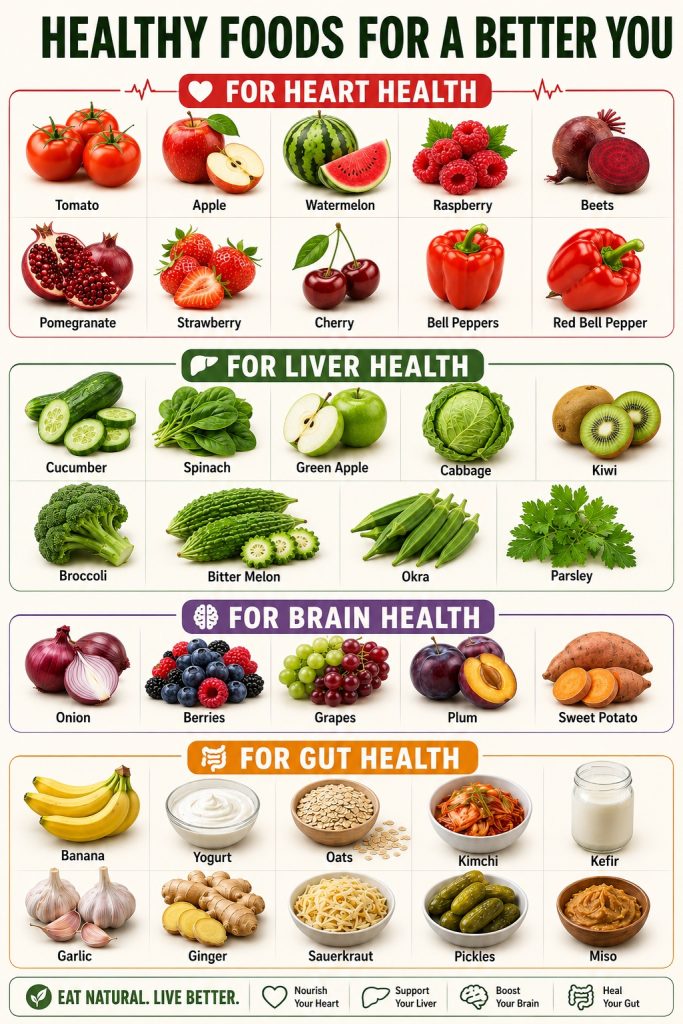
Search for foods for heart, liver, brain and gut health and you get four different lists with most of the same foods on them. That is not lazy writing. It is the actual finding. One dietary pattern shows up in the evidence for all four organs, because the mechanisms overlap: fibre drives gut and metabolic health, vascular health largely determines brain health, and metabolic health determines liver health. So these 30 foods are grouped by what they do, not by which organ they were arbitrarily assigned to.
Short answer: The strongest single number here is fibre. Eating 25 to 29 g a day is associated with 15 to 30 percent lower all cause and cardiovascular mortality across 185 studies. Most people manage about 16 g. Fix that one thing and you have addressed heart, gut and metabolic health simultaneously.
Why the Same Foods Appear on Every List
Organ specific food lists are mostly a publishing convention. Three overlaps explain almost all of it.
Fibre does the heaviest lifting, for several organs at once. A Lancet series pooling 185 prospective studies, nearly 135 million person years, plus 58 clinical trials, found that the highest fibre consumers had 15 to 30 percent lower all cause and cardiovascular mortality than the lowest, along with lower rates of coronary heart disease, stroke, type 2 diabetes and colorectal cancer. Risk reduction was greatest at 25 to 29 g a day. Average intake is around 16 g. That single gap is the biggest opportunity on this page.
Brain health runs largely through blood vessels. What protects arteries tends to protect cognition, which is why oily fish, olive oil, leafy greens and berries appear on both lists. It is one mechanism described twice.
Liver health is metabolic health. Fatty liver is driven by the same things that drive insulin resistance and cardiovascular risk, and the intervention is the same: gradual weight loss where appropriate, more fibre, unsaturated rather than saturated fat, fewer sweetened drinks. Losing 3 to 5 percent of body weight reduces liver fat, and 7 to 10 percent may improve inflammation and scarring.
So stop trying to eat for one organ at a time. The list below is organised by mechanism instead.
30 Foods for Heart, Liver, Brain and Gut Health
The fibre backbone (heart, gut, liver, metabolic)
Where the 25 to 29 g target actually comes from. Strongest evidence of any group here.
- 1. Oats. Half a cup dry gives 4 g of fibre, including the beta glucan associated with lower LDL cholesterol.
- 2. Beans and lentils. The single most efficient entry. A cup of lentils carries 15.6 g of fibre and 18 g of protein. Legumes also have the best controlled trial evidence of any food group for weight and waist.
- 3. Barley and quinoa. Half a cup cooked adds 2.6 to 3 g. Cheap, batch cooks, freezes.
- 4. Berries. Raspberries lead at 8 g per cup for only 5.4 g of sugar, the best fibre to sugar ratio of any fruit.
- 5. Apples and pears. A pear is 5.5 g, an apple 4.4 g, skin on. The most portable fibre available.
- 6. Okra and other high fibre vegetables. Useful in soups and stews where fibre disappears into the dish.
Oily fish and unsaturated fat (heart, brain, liver)
The fat type matters independently of the amount. Randomised overfeeding found saturated fat raised liver fat by about 50 percent while polyunsaturated fat produced no increase, at identical calories and identical weight gain.
- 7. Salmon. Three ounces gives 19 g of protein plus long chain omega 3 fats, and 71 percent of the daily value for vitamin D, which is the nutrient most people are short of.
- 8. Sardines and mackerel. Tinned, cheap, and higher in omega 3 per pound than almost anything fresh.
- 9. Walnuts. An ounce is 185 calories and the main plant source of alpha linolenic acid.
- 10. Olive oil. The fat you replace butter with. Measured, since it is calorie dense.
- 11. Avocado. Half provides 6.7 g of fibre with under 1 g of sugar, mostly monounsaturated fat.
- 12. Chia and ground flaxseed. A tablespoon of chia adds 4.1 g of fibre plus plant omega 3.
Leafy greens and nitrate vegetables (heart, liver, brain)
Dietary nitrate converts to nitric oxide, which affects blood vessel function. In a case control study, people in the highest third of nitrate rich vegetable intake had an adjusted odds ratio of 0.20 for fatty liver against the lowest third.
- 13. Spinach. Second highest nitrate content of common vegetables and the easiest to eat daily.
- 14. Kale and collard greens. Sturdier, hold up in stews and roasting.
- 15. Rocket. The highest nitrate vegetable there is, by a distance.
- 16. Beetroot. High nitrate, 3.4 g of fibre a cooked cup. Oversold as a detox food, genuinely good as a vegetable.
- 17. Cabbage. 34 calories a cooked cup, keeps for weeks, ferments into number 28.
- 18. Broccoli. 5.1 g of fibre and a full day of vitamin C per cooked cup.
Colour and polyphenols (heart, brain)
Weaker evidence than the groups above, and worth being honest about that. Eat them because they are good food and add variety, not because any one of them protects your memory.
- 19. Tomatoes. Lycopene absorbs better cooked with a little oil, so tinned and passata count.
- 20. Red peppers. Half a cup raw carries 95 mg of vitamin C, more than an orange.
- 21. Blueberries. The most studied brain food and still without trial evidence that they prevent decline.
- 22. Grapes. Whole rather than juiced. Easy to overeat, so portion them.
- 23. Pomegranate. Marketed harder than almost anything here. Good in a salad, not a treatment.
- 24. Cherries. Highest sugar entry in this group at around 20 g a cup, so portion matters.
Fermented foods (gut, immune)
This group produced the most surprising result in recent nutrition research. In a Stanford randomised trial, 36 adults ate either a fermented food diet or a high fibre diet for ten weeks. The fermented group increased overall microbial diversity, with larger servings producing stronger effects, and 19 inflammatory proteins in blood decreased. The high fibre group showed limited microbiome change over that timeframe.
That does not make fibre less important, since its mortality evidence is far stronger. It does mean fermented foods do something distinct and are worth adding rather than debating.
- 25. Plain yogurt with live cultures. Protein and calcium too. Plain, since flavoured carries two to three times the sugar.
- 26. Kefir. More diverse cultures than yogurt, and drinkable.
- 27. Kimchi. High in sodium, so a portion rather than a serving.
- 28. Sauerkraut. Refrigerated and unpasteurised retains live cultures. Shelf stable jars usually do not.
- 29. Miso. Big flavour in a teaspoon. Do not boil it, which kills the cultures.
- 30. Fermented pickles. Look for fermented or live cultures on the label. Most supermarket pickles are just vinegar preserved, which is a different product.
Cucumber, watermelon, kiwi, onions, plums, sweet potato and bananas did not make the thirty but are all worth eating. Nothing here is a ranking of moral worth.
What the Evidence Does Not Support
An honest list has to include the disappointments, and one of them is significant.
The MIND diet did not beat the control in a trial. Observational data had been striking: people in the top third of MIND diet scores declined at a rate equivalent to being 7.5 years younger. Then the NEJM randomised trial followed 604 adults aged 65 and over for three years and found no significant difference in cognition or brain imaging against a control diet with mild calorie restriction. This is what happens when observational findings meet randomisation, and it is why claims about brain foods should be modest.
Nothing detoxifies the liver. The liver is the detoxification organ. No cucumber, beetroot, juice or herbal tea cleanses it, and several concentrated botanical extracts are recognised causes of drug induced liver injury.
Fermented does not mean probiotic. A food can be fermented and contain no live organisms by the time you eat it, and live organisms are not automatically strains with demonstrated benefit. Heat treatment, storage and processing all matter.
Supplements are not a shortcut. Correcting a deficiency helps. Exceeding sufficiency generally does not, and sometimes harms. Excess zinc reduces immune function, excess selenium and vitamin A cause hair loss, and high dose biotin distorts thyroid blood tests.
Where to Go Deeper
This page is the overview. Each area has its own detail:
- Liver: the fatty liver diet, foods to avoid, and the best vegetables for liver health.
- Blood sugar: food pairings and meal order, which is the highest value habit in the whole of nutrition and costs nothing.
- Weight: foods that support weight loss, ranked by trial evidence.
- Immunity: foods that support immune function, and which nutrients people are actually short of.
- Fruit: fruits worth eating, including why fruit sugar is not the problem people think.
And the part food cannot do: activity, sleep, not smoking, limiting alcohol, and treating blood pressure, cholesterol and diabetes. Seek medical assessment for chest pain, breathlessness, jaundice, unexplained abdominal swelling, significant memory change, blood in the stool or prolonged diarrhoea. Those are not dietary problems.
Frequently Asked Questions
Why do the same foods appear on heart, liver, brain and gut lists?
Because the mechanisms overlap rather than because writers are being lazy. Fibre affects gut, cardiovascular and metabolic health simultaneously. Brain health runs largely through blood vessels, so what protects arteries tends to protect cognition. And liver health is essentially metabolic health, driven by the same factors as insulin resistance. One dietary pattern genuinely serves all four, which is why organ specific lists keep converging.
What is the single most important change to make?
Fibre. A Lancet series pooling 185 prospective studies covering nearly 135 million person years found the highest fibre consumers had 15 to 30 percent lower all cause and cardiovascular mortality than the lowest, with the greatest risk reduction at 25 to 29 g a day. Average intake is around 16 g. Closing that gap addresses heart, gut and metabolic health at once, and beans, lentils, oats and berries are the efficient way to do it.
Does the MIND diet prevent cognitive decline?
The honest answer is that the trial did not confirm it. Observational research had been striking, with people in the top third of MIND diet scores declining at a rate equivalent to being 7.5 years younger. But a randomised trial published in the New England Journal of Medicine followed 604 adults aged 65 and over for three years and found no significant difference in cognition or brain imaging against a control diet with mild calorie restriction. Eat the pattern for cardiovascular reasons, which are better established.
Are fermented foods better than fibre for gut health?
For microbiome diversity in the short term, one trial suggests yes. In a Stanford randomised trial, 36 adults ate either a fermented food or high fibre diet for ten weeks. The fermented group increased microbial diversity, with larger servings producing stronger effects, and 19 inflammatory proteins in blood decreased. The high fibre group showed limited microbiome change over that period. Fibre still has far stronger mortality evidence though, so this is a reason to add fermented foods rather than to drop fibre.
Is every fermented food a probiotic?
No, and this trips people up at the supermarket. A food can be fermented yet contain no live organisms by the time you eat it, because heat treatment, processing and storage all kill cultures. Shelf stable sauerkraut usually has none, while the refrigerated unpasteurised version does. Most supermarket pickles are vinegar preserved rather than fermented. Look for the words fermented or live cultures, and note that live organisms are not automatically strains with proven benefit.
Can any food detox or cleanse the liver?
No. The liver is itself the detoxification organ and does not need help from a food or drink. What actually reduces liver fat is losing 3 to 5 percent of body weight, with 7 to 10 percent needed to improve inflammation and scarring, alongside more fibre and unsaturated rather than saturated fat. Detox teas and cleanse products do nothing, and several concentrated botanical extracts are recognised causes of drug induced liver injury.
Do I need to eat all 30 of these foods?
No, and nobody does. The thirty are grouped into five mechanisms, so the practical approach is to pick two or three from each group that you will genuinely eat and rotate them. Consistency beats coverage. A person eating beans, oats, salmon, spinach and plain yogurt regularly is doing better than someone who buys all thirty once and lets most of them spoil.
Does saturated fat matter as much as total fat?
The type matters more than the amount, and there is randomised evidence for it. In an overfeeding trial, participants gained the same weight on muffins made with palm oil or sunflower oil, but the saturated fat group’s liver fat rose about 50 percent while the polyunsaturated group showed no increase at all. Same calories, same weight gain, different result. That is why the practical instruction is to swap the fat type rather than simply eat less fat.
Should I take supplements instead of changing my diet?
Generally no. Correcting a genuine deficiency helps, but exceeding sufficiency usually does not and sometimes causes harm. Zinc at 50 mg daily for weeks reduces immune function, excess selenium and vitamin A cause hair loss, and high dose biotin interferes with thyroid blood tests. Supplements also interact with prescribed medicines. Test before supplementing rather than guessing.
When should I see a doctor rather than change my diet?
Straight away for chest pain, breathlessness, jaundice, unexplained abdominal swelling, significant memory change, blood in the stool or prolonged diarrhoea. Those are symptoms with specific causes and specific treatments, and food is not among them. Diet supports long term risk factors like blood pressure, cholesterol, blood glucose and weight. It does not diagnose or treat acute problems.
Final Thoughts on Foods for Heart, Liver, Brain and Gut Health
The useful conclusion about foods for heart, liver, brain and gut health is that you are not managing four projects. The overlap between those four lists is the finding, not a coincidence, and it means one pattern covers all of them.
If you do one thing, close the fibre gap. Going from the typical 16 g to 25 or 29 g a day sits on the strongest evidence on this page, and beans, lentils, oats and berries get you there cheaply. Add oily fish twice a week, swap butter for olive oil, and put something fermented on the plate most days.
Then hold the claims loosely. The MIND diet trial is a useful reminder that observational promise does not always survive randomisation, and no food on this page cleanses an organ. Pick two or three from each group, eat them consistently for a year, and let the pattern do the work.
Related reading: best vegetables to eat regularly | foods that support weight loss | food pairings for blood sugar | foods that support immune function
Medical Disclaimer
This article is for general education and is not a substitute for medical diagnosis or treatment. Nutrition figures are estimates that vary with variety, brand and portion. Dietary needs differ considerably for people with heart, liver, kidney or digestive disease, diabetes, food allergies, pregnancy, or prescribed sodium, potassium, protein or fluid restrictions. Anyone taking warfarin should keep vitamin K intake steady rather than suddenly increasing leafy greens. Consult a qualified healthcare professional or registered dietitian before making major dietary changes. See our medical disclaimer, editorial policy and fact checking policy.
Cross checked against the Lancet series on carbohydrate quality and health, the New England Journal of Medicine randomised trial of the MIND diet, the Stanford randomised trial of fermented versus high fibre diets published in Cell, NIDDK guidance on MASLD, randomised overfeeding data on saturated versus polyunsaturated fat, and USDA FoodData Central. Last updated July 2026.
About the Author and Reviewer
Mezbaul Islam, MSc Nutrition owns and writes Simple Health Naturally. He researches each article from public health guidance, clinical guidelines and peer reviewed studies, and traces every figure back to a named source.
Dr. Obeydur Rahman, MBBS, MD in Medicine edits the articles, checks the sources cited and is responsible for the site’s editorial standards. MD in Medicine is the specialty for adult conditions such as liver disease, type 2 diabetes and high blood pressure.
Read more about our authors and reviewers or see our editorial policy.
Edited by Dr. Obeydur Rahman, MBBS, MD in Medicine.