
A list of foods for blood sugar management is only useful if it tells you the carbohydrate grams, because that is the number that actually moves glucose. So every food below carries its carb count per realistic serving. The spread inside each category is bigger than the gap between categories: half a cup of edamame is 7 g while the same amount of navy beans is 24 g, and a kiwi is 10 g while a pear is 27 g. Grouping by food type hides that. Grams do not.
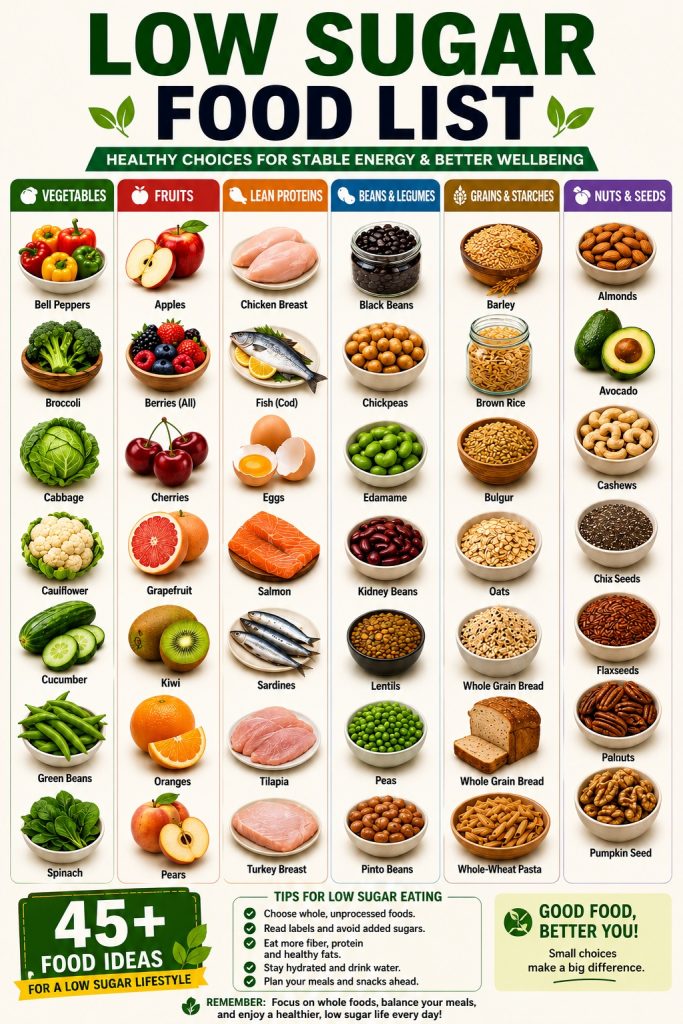
Short answer: One carbohydrate serving is 15 g. Read total carbohydrate, not the sugar line. There is no ideal macronutrient split for diabetes, so ignore anyone prescribing fixed percentages. And the free change that beats every food on this page is eating your vegetables and protein before the carbohydrate.
The Only Number That Matters
Three things to get straight before the list.
Read total carbohydrate, not sugar. Total carbohydrate includes starch, sugar and fibre, and it is what drives the glucose response. A food can show 1 g of sugar and 30 g of carbohydrate. Checking the sugar line alone will mislead you, which is why bread and rice catch people out while fruit gets unfairly blamed.
One carbohydrate serving is 15 g. That single conversion makes this whole page usable. A slice of whole grain bread is roughly one serving. A pear is nearly two. Half a cup of brown rice is one and a half.
There is no correct macronutrient split. The American Diabetes Association Standards of Care state plainly that there is no ideal percentage of calories from carbohydrate, protein or fat for people with diabetes, and that the split should be individualised. Anyone selling you a fixed ratio is going beyond the evidence.
On labels, added sugar at 5 percent of the daily value or less per serving is considered low and 20 percent or more is high. Serving size is where most people go wrong, since the panel describes a portion that is often smaller than the one you eat.
46 Foods for Blood Sugar Management, With Carb Counts
Ordered by carbohydrate within each group, lowest first. Figures are approximate and vary with brand, variety and preparation.
Protein foods: essentially zero carbohydrate
These barely register on a glucose meter and they slow the carbohydrate you eat alongside them.
- 1 to 7. Chicken breast, turkey breast, cod, tilapia, salmon, sardines and eggs. All effectively 0 g of carbohydrate per serving. Choose unbreaded and unglazed, since batter and sweet sauces are where the carbohydrate arrives. Salmon and sardines add omega 3 fats and vitamin D.
- 8. Tofu. 2 g per half cup of firm tofu, with 1 g of that fibre. Check flavoured and pre marinated versions for added sugar.
Non starchy vegetables: 3 to 6 g per serving
Half a plate of these is the single easiest structural change, and at these numbers you are not meaningfully counting them.
- 9. Spinach. 3 g per half cup cooked, 2 g of it fibre. Steady intake if you take warfarin.
- 10. Cauliflower. 3 g per half cup cooked.
- 11. Bell peppers. 3 g per half cup raw, plus more vitamin C than an orange.
- 12. Cabbage. 4 g per half cup cooked. Cheapest vegetable here.
- 13. Cucumber. 4 g per cup sliced.
- 14. Green beans. 5 g per half cup cooked.
- 15. Broccoli. 6 g per half cup cooked, 2.6 g of it fibre.
Nuts, seeds and fats: 3 to 9 g, most of it fibre
- 16. Ground flaxseed. 3 g a tablespoon with 2.8 g fibre, so roughly zero net carbohydrate.
- 17. Pecans. 4 g an ounce, 2.7 g fibre.
- 18. Walnuts. 4 g an ounce.
- 19. Pumpkin seeds. 4 g an ounce, plus 2.2 mg of zinc.
- 20. Chia seeds. 5 g a tablespoon with 4.1 g fibre. Soak before eating.
- 21. Almonds. 6 g an ounce, 3.5 g fibre.
- 22. Avocado. 6 g per half with 4.6 g fibre, the best ratio in this group.
- 23. Cashews. 9 g an ounce with only 1 g fibre, noticeably higher than the other nuts. Worth knowing if cashews are your default.
Fruit: 10 to 27 g, a wider spread than people expect
Fruit is not off limits. But treating all fruit as equivalent is the mistake, since a pear carries nearly three times the carbohydrate of a kiwi.
- 24. Kiwi. 10 g each, the lowest fruit here and comfortably under one carbohydrate serving.
- 25. Strawberries. 11 g per cup, so a full cup still sits below one serving.
- 26. Raspberries. 15 g per cup with 8 g of fibre, the best fibre to carbohydrate ratio of any fruit on this page.
- 27. Orange. 15 g for a medium one, which is exactly one carbohydrate serving. A useful reference point.
- 28. Blueberries. 21 g per cup. Half a cup keeps it near one serving.
- 29. Cherries. 25 g per cup, and easy to eat well past a cup without noticing.
- 30. Pear. 27 g for a medium one, nearly two carbohydrate servings and close to three times a kiwi. Not a reason to avoid pears, only a reason to count them.
Beans and legumes: 7 to 24 g, but the fibre changes things
Beans look high in carbohydrate until you subtract the fibre, which is why they behave better than the raw number suggests. Legumes also carry the strongest controlled trial evidence of any food group for weight and waist.
- 31. Edamame. 7 g per half cup, the standout. A third of the carbohydrate of most beans with 4 g of fibre and useful protein.
- 32. Peas. 11 g per half cup. Count them as a carbohydrate, not a free vegetable.
- 33 to 35. Black beans, kidney beans and lentils. 20 g per half cup each, with 6.5 to 8 g of fibre. Lentils lead on fibre.
- 36 and 37. Chickpeas and pinto beans. 22 g per half cup.
- 38. Navy beans. 24 g per half cup, the highest here, but also the highest fibre at 9.5 g.
Grains and starches: 13 to 27 g, count these carefully
Whole grains are a better choice than refined ones, but whole does not mean low carbohydrate. This is the group where portions decide everything.
- 39. Sweet potato. 13 g per half a medium one.
- 40. Whole grain bread. 14 g a slice, so one slice is roughly one serving. Look for a whole grain as the first ingredient, since multigrain means nothing on its own.
- 41. Bulgur. 17 g per half cup cooked with 4 g fibre, the best ratio of the grains.
- 42. Whole wheat pasta. 19 g per half cup cooked. A restaurant bowl is often four servings or more.
- 43. Quinoa. 20 g per half cup cooked. It contains protein but it is still a grain portion.
- 44. Barley. 22 g per half cup cooked.
- 45. Brown rice. 23 g per half cup cooked, and only 1.8 g of fibre. Cooking then cooling it forms resistant starch, which digests more slowly even after reheating.
- 46. Oats. 27 g per half cup dry, the highest single entry. Add yogurt or milk rather than eating them with water alone.
The Free Change That Beats Any Food List
You can eat everything above and still get a poor result if you eat it in the wrong order.
In trials, eating vegetables and protein before carbohydrate lowered post meal glucose by roughly 29 percent at 30 minutes and 37 percent at 60 minutes in type 2 diabetes. In prediabetes, glucose peaks fell by more than 40 percent. Same meal, same portions, same food. Only the sequence changed. A 2025 study using continuous glucose monitoring found the carbohydrates last approach improved time in range as well.
Two more that cost nothing. Two teaspoons of vinegar with the meal, in a dressing rather than drunk. And a ten minute walk immediately after eating, which in a 2025 crossover trial lowered the glucose peak to 164.3 mg/dL against 181.9 mg/dL, at a gentle 3.8 km/h pace.
We cover the detail in our guide to food pairings and meal order. If you read one other page, make it that one.
Where to Go Deeper
- Shopping: our diabetes grocery list turns this into a trolley.
- Breakfast: 15 diabetes friendly breakfasts, with carb counts, and why morning insulin resistance makes breakfast the hardest meal.
- Snacks: 15 snacks that do not spike blood sugar.
- The core foods: 10 best foods for people with diabetes.
What to limit
Sweetened drinks, energy drinks, sweetened tea and coffee, fruit juice, sweets and desserts, sweetened breakfast cereal, flavoured yogurt, syrup packed fruit, oversized portions of refined bread, rice and pasta, and most ultra processed snacks. Sweetened drinks are the first thing to go, since they deliver carbohydrate fastest with the least fullness. CDC guidance points the same way: more non starchy vegetables, fewer added sugars and refined grains.
Individual responses vary considerably. Portion, medicines, insulin timing, activity, sleep, stress and illness all shift the result, which is why two people can eat the same meal and see different numbers. Follow the monitoring plan your care team set, and never adjust insulin or medication based on an article.
Frequently Asked Questions
Should I count sugar or total carbohydrate?
Total carbohydrate. It includes starch, sugar and fibre, and it is what drives the glucose response. The sugar line alone is misleading, because a food can show 1 g of sugar and 30 g of carbohydrate. This is exactly why bread, rice and pasta catch people out while fruit gets blamed unfairly. On labels, added sugar at 5 percent of the daily value or less per serving counts as low and 20 percent or more counts as high.
How many carbs is one serving?
Fifteen grams. That single conversion makes any food list usable. A slice of whole grain bread is about one serving at 14 g, an orange is exactly one at 15 g, half a cup of brown rice is one and a half at 23 g, and a medium pear is nearly two at 27 g. How many servings you need per meal is individual and depends on your medicines, activity and targets.
What is the ideal carb percentage for diabetes?
There isn’t one. The American Diabetes Association Standards of Care state plainly that there is no ideal percentage of calories from carbohydrate, protein or fat for people with diabetes, and that the distribution should be individualised based on current eating patterns, preferences and metabolic goals. Anyone prescribing a fixed ratio is going beyond the evidence. The plate method, carbohydrate counting and carbohydrate choice are all valid approaches.
Which fruit is lowest in carbohydrate?
Kiwi at about 10 g each, followed by a cup of strawberries at 11 g. The spread within fruit is wider than most people expect: a medium pear is 27 g and a cup of cherries 25 g, which is nearly three times a kiwi. Raspberries deserve a mention at 15 g carbohydrate but 8 g fibre, the best fibre to carbohydrate ratio of any fruit here.
Are beans too high in carbohydrate for diabetes?
No, and the raw number understates them because of the fibre. Half a cup of black beans, kidney beans or lentils is around 20 g of carbohydrate but carries 6.5 to 8 g of fibre. Edamame is the standout at just 7 g per half cup, roughly a third of most beans. Legumes also have the strongest controlled trial evidence of any food group for weight and waist, so they earn their place.
Does brown rice raise blood sugar?
Yes. Brown rice is a better choice than white for fibre and nutrients, but whole does not mean low carbohydrate. Half a cup cooked carries 23 g with only 1.8 g of fibre. One useful trick is that cooking rice or potatoes and then cooling them forms resistant starch, which is digested more slowly even after reheating. Portion and what you eat alongside it matter more than the colour of the grain.
Does the order I eat food in really matter?
Substantially, and it is free. Eating vegetables and protein before carbohydrate lowered post meal glucose by roughly 29 percent at 30 minutes and 37 percent at 60 minutes in type 2 diabetes, and cut glucose peaks by more than 40 percent in prediabetes. Same meal, same portions, only the sequence changed. A 2025 continuous glucose monitoring study found the carbohydrates last approach also improved time in range.
Which nuts are lowest in carbohydrate?
Ground flaxseed is effectively zero net carbohydrate at 3 g with 2.8 g of fibre per tablespoon. Pecans, walnuts and pumpkin seeds all sit at 4 g an ounce. The one worth noting is cashews at 9 g an ounce with only 1 g of fibre, which is more than double most other nuts. If cashews are your default snack, that is worth knowing.
What should I cut first?
Sweetened drinks. Soft drinks, energy drinks, sweetened tea and coffee and fruit juice deliver carbohydrate faster than anything else while providing almost no fullness, so they produce the sharpest rises for the least benefit. After that, oversized portions of refined bread, rice and pasta, and sweetened breakfast cereals and flavoured yogurt, which carry far more added sugar than their packaging suggests.
Why do two people react differently to the same meal?
Because postprandial glucose depends on far more than the food. Portion size, medicine and insulin timing, physical activity, sleep, stress, illness, gut microbiome and individual insulin sensitivity all shift the response. That is why any food list is a starting point rather than a prescription, and why your own monitoring, if your care team has you doing it, tells you more than any article can.
Related reading: to see these foods assembled into actual meals, follow our 7 day diabetes friendly meal plan, which gives the carb count for every meal.
Two numbers worth calculating. Fibre blunts the glucose rise, so check your target with our fibre intake calculator, and see how much added sugar you are really eating with the added sugar calculator.
Final Thoughts on Foods for Blood Sugar Management
The point of a list of foods for blood sugar management is not the list. It is the grams. Once you know that one carbohydrate serving is 15 g, that a kiwi is 10 g and a pear is 27 g, and that edamame is a third of the carbohydrate of navy beans, you can build any meal without needing anyone’s approved food list.
Read total carbohydrate rather than sugar. Ignore prescribed macronutrient ratios, since the ADA is explicit that no ideal split exists. And remember that nothing here is banned, including fruit, beans, rice and bread. They are counted, not forbidden.
Then get the free wins. Vegetables and protein before carbohydrate for a 29 to 37 percent reduction, two teaspoons of vinegar in your dressing, and a ten minute walk after the meal. None of those requires buying anything.
Related reading: food pairings and meal order | diabetes grocery list | diabetes friendly breakfasts | snacks that do not spike blood sugar
Medical Disclaimer
This article is for general education and is not a personalised diabetes treatment plan. Carbohydrate and fibre figures are estimates that vary with brand, variety, ripeness and preparation, and should not be used in place of the values on your own food labels. Do not change insulin, diabetes medication or prescribed carbohydrate targets based on this list. Seek individual guidance from a doctor, registered dietitian or diabetes care and education specialist, particularly if you use insulin or medicines that can cause low blood glucose, have type 1 diabetes, are pregnant, have kidney or liver disease, experience frequent hypoglycaemia, or have a history of disordered eating. See our medical disclaimer, editorial policy and fact checking policy.
Cross checked against the American Diabetes Association Standards of Care in Diabetes 2025, FDA nutrition labelling guidance on added sugars, CDC guidance on fibre and diabetes eating patterns, randomised trials of food order in type 2 diabetes and prediabetes, a 2025 randomised crossover trial of post meal walking, and USDA FoodData Central. Last updated July 2026.
About the Author and Reviewer
Mezbaul Islam, MSc Nutrition owns and writes Simple Health Naturally. He researches each article from public health guidance, clinical guidelines and peer reviewed studies, and traces every figure back to a named source.
Dr. Obeydur Rahman, MBBS, MD in Medicine edits the articles, checks the sources cited and is responsible for the site’s editorial standards. MD in Medicine is the specialty for adult conditions such as liver disease, type 2 diabetes and high blood pressure.
Read more about our authors and reviewers or see our editorial policy.
Edited by Dr. Obeydur Rahman, MBBS, MD in Medicine.