Ten pounds in a week sounds like a solid deal. That promise has kept the 3-day diet circulating for over forty years, first on photocopied sheets, then email chains, now social media. The plan asks you to eat a fixed short menu for three days, eat lightly for four more, then repeat.
This 3-day diet review covers what the plan involves, what the research shows, what you actually lose on the scale and why so many people try it more than once. The answer holds a few surprises even for people who already suspect it does not work.
What the 3-Day Diet Is
The plan runs on a seven day cycle.
Three days follow a strict fixed menu. Total intake lands somewhere around 1,100 to 1,400 calories per day depending on which version you find online. The original rules allow no substitutions.
The remaining four days ask for lighter than usual eating, often described as roughly 1,500 calories with no set menu.
People then repeat the cycle for weeks or months until they hit a target weight.
The food list is short and unusual for a weight loss plan. Tuna, hard boiled eggs, saltine crackers, toast, cottage cheese, hot dogs, a small serving of vanilla ice cream, grapefruit, apples, bananas, green beans, broccoli and black coffee or tea.
Notice what that list contains. Processed meat, refined crackers and dessert sit alongside the fruit and vegetables. That combination is part of why the plan feels easier than it should.
Nobody knows who wrote it. The plan has no author, no publisher and no research paper behind it.
Where the Names Come From
The 3-day diet travels under several names and every one of them misleads.
| Name Used | Reality |
|---|---|
| Military diet | No armed forces branch created, endorses or uses it |
| Cleveland Clinic diet | Cleveland Clinic has publicly denied any connection |
| Birmingham Hospital diet | No hospital by that name developed it |
| Mayo Clinic diet | Mayo Clinic publishes a real and completely different diet |
| Navy diet | Same borrowed authority, same lack of connection |
Those names do real work on your brain. A plan that sounds like it came from a hospital or the armed forces feels tested, supervised and safe. This one arrived from nowhere.
Treat the naming as your first data point about everything else in the plan.
Does the 3-Day Diet Actually Work?
Yes and no, and the gap between those two answers is the whole story.
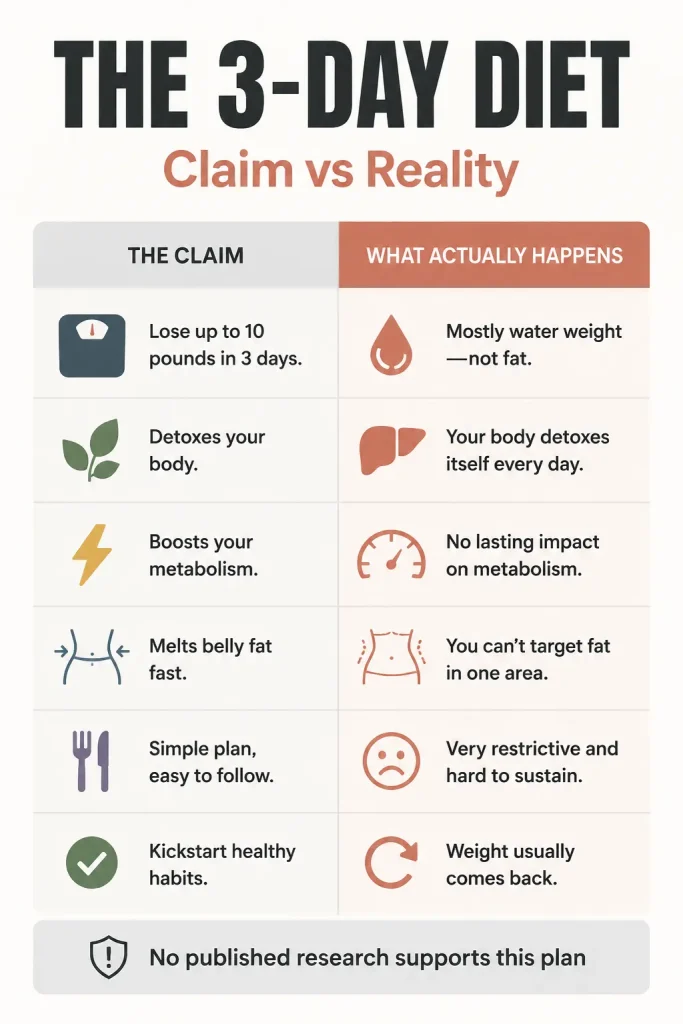
| The Claim | What Actually Happens |
|---|---|
| Lose 10 pounds in a week | The scale can drop that much for some people |
| That loss is fat | Most of it is water and gut contents |
| Results are lasting | Weight typically returns within days of normal eating |
| The plan is medically designed | No author, no research, no institution behind it |
| Foods are chosen for fat burning | No food or combination burns fat |
| Safe to repeat all month | Repeated restriction carries real risks |
You will lose weight on the scale. Cutting to 1,100 calories creates a large deficit for most adults. The number moves and it moves fast.

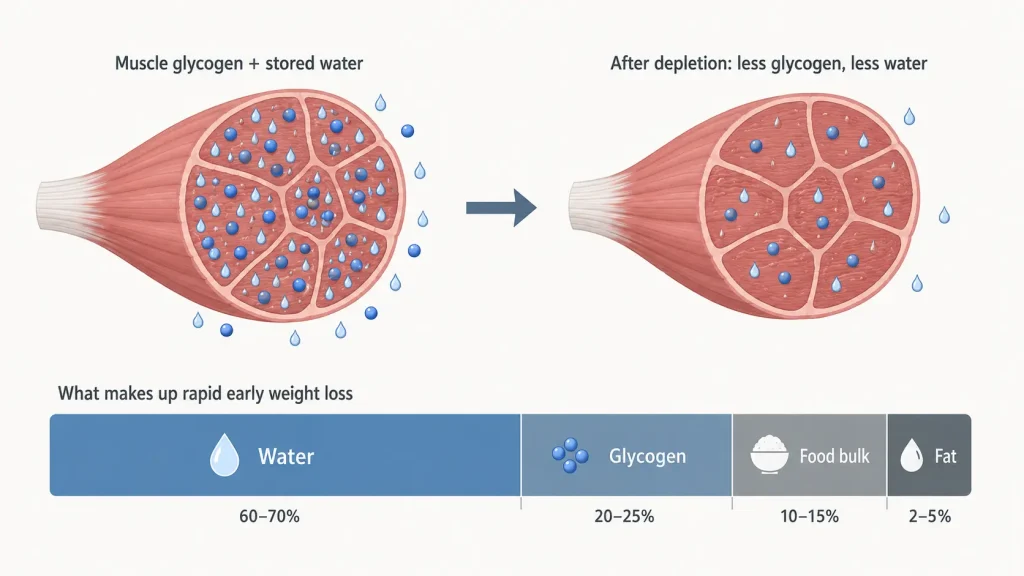
Most of that loss is not fat. Your body stores carbohydrate as glycogen, and each gram of glycogen holds roughly three grams of water alongside it. Cut carbohydrate sharply and you burn through glycogen quickly, releasing all that water. Low food volume also empties your digestive tract. Sodium swings from a processed menu move fluid around further.
The arithmetic kills the claim. A pound of body fat holds roughly 3,500 calories. Ten pounds of fat means a deficit near 35,000 calories. Three days of eating 1,100 calories creates a deficit somewhere around 3,000 to 4,500 calories total for most adults. That is one pound of fat, maybe a bit more. The other nine pounds have to come from somewhere else, and water is the only place available.
The weight comes back. Eat normal amounts of carbohydrate again and your body refills glycogen. The water returns with it. Most people watch the scale bounce back within three to five days.
No published study has ever tested this specific plan. The 10 pound figure rests entirely on testimonials.
What Three Days Actually Feels Like
Reviews rarely describe this part and it matters for deciding.
Day one usually feels fine. Novelty carries you. The ice cream at the end of day one feels like a reward and that single detail is why many people finish the first day happily.
Day two is where most people struggle. Glycogen is dropping. Headaches, irritability and low energy show up commonly at this intake. Concentration slips. The portions look small in a way they did not the day before.
Day three goes one of two ways. Some people report a second wind. Others hit real fatigue and quit. Anyone exercising normally will notice their workouts feel much harder.
The four days off are the part nobody talks about. Coming off restriction with no menu and no structure leads plenty of people straight into overeating. The plan gives no guidance here beyond a loose calorie number.
That last point matters more than the three restricted days. What you do on days four through seven decides whether the week nets anything at all.
Why This Diet Keeps Coming Back
The 3-day diet has outlived hundreds of other fad plans. Several things explain that staying power.
It is short. Three days feels doable in a way that three months does not. Your brain will agree to almost anything with a visible end point.
It works on the scale. That is the trap. The plan delivers exactly what it promises on the measurement people check, just not on the thing they actually want to change.
It includes ice cream. A restrictive diet that permits dessert feels generous. That single inclusion drives a lot of the plan’s appeal and probably a lot of its spread.
It is completely specific. No decisions to make. Decision fatigue kills most diets and this one removes it entirely for three days.
It costs nothing. No book, no app, no subscription, no supplements. Free plans spread faster than paid ones.
The failure feels personal. Regain the weight and most people blame themselves rather than the plan. That reaction keeps the diet’s reputation intact and sends people back for another cycle.
None of that makes it effective. All of it explains why it will still be circulating in ten years.
What Happens If You Repeat the Cycle
Running the plan once does little harm to a healthy adult. Running it for a month is a different conversation.
Diminishing returns. The dramatic first week comes from water loss. Your glycogen stores only empty once. Week two produces a much smaller number and week three smaller still. That drop off feels like failure and often triggers harder restriction.
Muscle loss. Very low intake with modest protein and reduced activity pulls amino acids from muscle tissue. Muscle burns calories at rest, so losing it makes every future attempt harder.
Nutrient gaps. Three days on a narrow menu will not cause deficiency. Four weeks of cycling starts to matter, particularly for fiber, calcium, vitamin D and several B vitamins.
Metabolic adaptation. Extended restriction lowers your resting energy expenditure somewhat. The effect is real though smaller than diet marketing claims in either direction.
The restrict and rebound loop. Restrict hard, feel deprived, overeat, feel guilty, restrict harder. That cycle damages your relationship with food and frequently ends with more weight than you started with.
Nothing carries forward. Finish a month of cycling and you have built no habit, learned no skill and changed nothing about how you normally eat.
The Real Problems With the Plan
Beyond whether it works, several issues stand out.
Nutrition quality is poor. Processed meat, refined crackers and ice cream anchor the menu. Vegetables appear in small quantities. Fiber runs low across all three days.
Sodium runs high. Hot dogs, canned tuna and saltines all carry substantial salt. That works directly against anyone managing blood pressure.
Protein is low for a weight loss plan. Higher protein preserves muscle during a deficit. This menu does not deliver enough for that job.
Exercise gets discouraged. Some versions of the plan suggest cutting back on activity if you feel weak. Activity is what protects muscle during weight loss, so that advice works against the goal.
No adjustment for body size. A 250 pound man and a 120 pound woman get the identical menu. Their calorie needs differ enormously.
It teaches nothing. The plan hands you a menu, not a skill.
Who Should Not Try This
Skip it entirely in these situations.
- Any history of an eating disorder or disordered eating patterns
- Diabetes, especially with insulin or medications that lower blood sugar
- Pregnancy or breastfeeding
- Kidney disease or liver disease
- Heart conditions
- Low blood pressure
- Anyone under 18
- Adults over 65 without medical supervision
- Currently underweight
- Taking medications that require food or steady intake
- Recovering from surgery or illness
- A job requiring sustained concentration or heavy physical work
The NIH notes that genuine very low calorie diets require close medical supervision, and that weight regain afterward is common even under supervision. This plan delivers the restriction with none of the oversight.
Talk to your doctor before any significant change in how you eat.
What Actually Works Instead
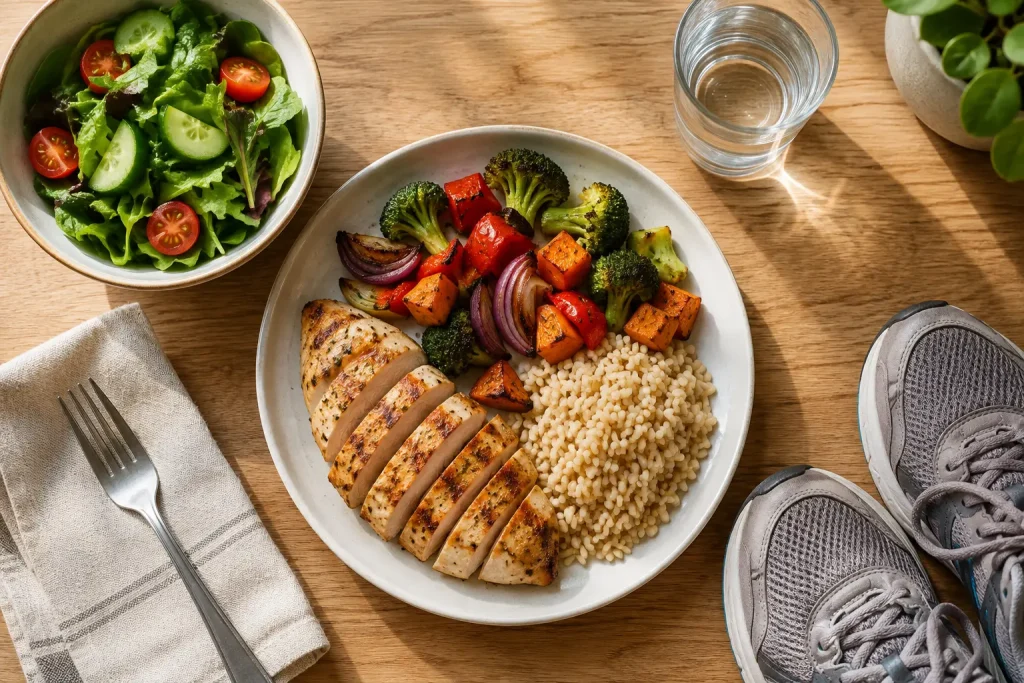
Boring answers keep winning in the research.
| Approach | Expected Result |
|---|---|
| 300 to 500 calorie daily deficit | About 1 pound of fat per week |
| 20 to 30 g protein per meal | Preserves muscle during loss |
| 25 to 38 g fiber daily | Better fullness and digestion |
| 150 to 300 min activity weekly | Protects muscle and heart health |
| Strength training twice weekly | Maintains resting metabolism |
| 7 to 9 hours sleep | Steadier appetite hormones |
A simple four week starting plan looks like this.
Week 1. Change one meal. Add protein and fiber to breakfast and leave everything else alone.
Week 2. Add a 20 minute walk five days a week. Keep the breakfast change running.
Week 3. Add two short strength sessions. Bodyweight squats, push ups and rows are enough.
Week 4. Look at one habit that undermines you. Evening snacking, liquid calories or skipping lunch and overeating at night are the usual suspects.
That approach moves the scale about four pounds in a month rather than ten in a week. Those four pounds are fat and they stay gone.
Our guide to breakfast recipes that keep you full longer covers the protein and fiber piece in practical detail.
Frequently Asked Questions
Does the 3-day diet really make you lose 10 pounds?
Some people see that number on the scale. Most of it is water and gut contents. Ten pounds of fat requires roughly a 35,000 calorie deficit, and three days of eating cannot produce that.
Is the 3-day diet safe for a healthy adult?
Three days at this intake will not harm most healthy adults. Repeating the cycle for weeks raises real concerns about muscle loss, nutrition and your relationship with food.
Why is it called the military diet?
Marketing. No military branch created or uses it. The name borrows credibility the plan never earned.
Can I swap foods on the plan?
Later versions list substitutions. Swapping does not fix the core issue, which is that the plan teaches you nothing you can keep doing.
Will I gain the weight back?
Almost certainly, and fast. Water returns as soon as you eat normal amounts of carbohydrate again.
How much fat can I actually lose in a week?
One to two pounds for most people. That pace preserves muscle and holds up far better over time.
What can I drink on the 3-day diet?
The plan allows water, black coffee and plain tea. No calories from drinks.
Can I exercise on the 3-day diet?
Light activity is fine. Hard training at this intake usually feels terrible and offers little benefit. Some versions of the plan discourage exercise entirely, which is one of its weaker pieces of advice.
Does the ice cream actually help?
It provides some carbohydrate and makes the plan easier to finish. It does not burn fat and no food combination does.
How long until the weight comes back?
Typically three to five days after you return to normal eating, once glycogen and water refill.
Is any short diet worth doing?
Short plans can work as a reset for some people. The useful ones leave you with a habit. This one does not.
What is a better three day reset?
Three days of regular meals built around protein, vegetables and whole grains, with no alcohol and adequate water. Less dramatic on the scale and it actually points somewhere.
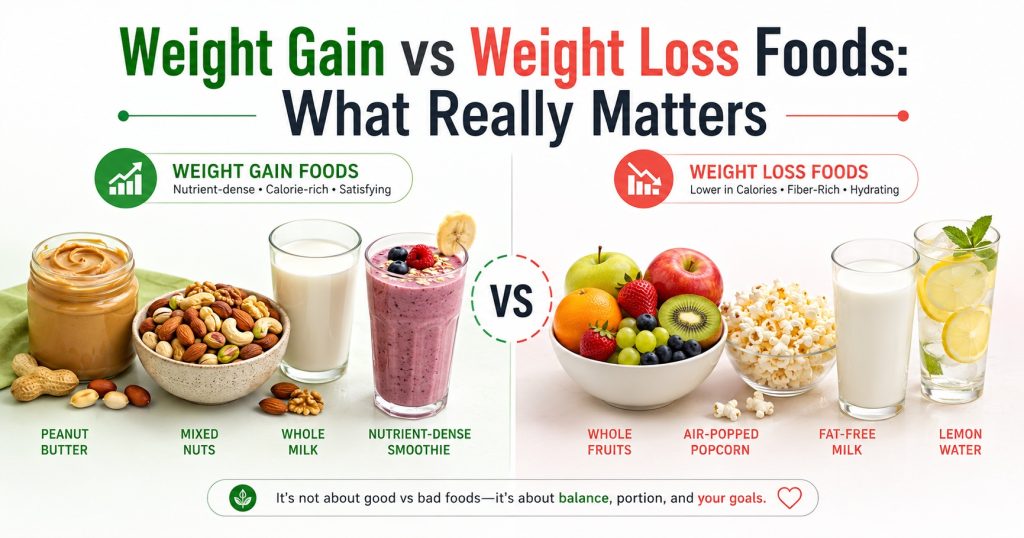
Related reading: our 10 weight loss mistakes covers why crash diets rebound, 10 foods that support weight loss gives the trial evidence, and weight gain vs weight loss foods explains what actually decides the outcome.
Final Thoughts on the 3-Day Diet
The 3-day diet works the way every crash diet works. The scale drops fast, most of what leaves is water, and it returns the moment you eat normally. No study supports the 10 pound claim and no military branch or hospital ever endorsed the plan despite all the names attached to it.
Three days of restriction will not hurt a healthy adult. Three days will also not change anything. The real cost shows up when people repeat the cycle, lose muscle, learn nothing and end the month heavier than they started.
A modest daily deficit, enough protein, real fiber and regular movement does more in one month than this plan does in three. Pick the boring version. It is the one still working next year.
A note on restrictive dieting. Fast weight loss plans can trigger or worsen disordered eating. Reach out to the National Alliance for Eating Disorders helpline at 1-866-662-1235 for free support from licensed therapists if food or body image feels overwhelming.
References
- National Institute of Diabetes and Digestive and Kidney Diseases. Weight Management. niddk.nih.gov
- National Task Force on the Prevention and Treatment of Obesity, National Institutes of Health. Very low-calorie diets. JAMA. 1993;270(8):967-974. PubMed
- US Department of Health and Human Services. Physical Activity Guidelines for Americans, 2nd edition. 2018. odphp.health.gov
- Centers for Disease Control and Prevention. Physical Activity Guidelines and Recommendations. cdc.gov
This article shares general health information. It does not replace advice from your doctor or a registered dietitian. Talk with a healthcare provider before starting any weight loss plan, especially with a diagnosed condition, during pregnancy or while taking medication. Read our full medical disclaimer and fact checking policy.
About the Author and Reviewer
Mezbaul Islam, MSc Nutrition owns and writes Simple Health Naturally. He researches each article from public health guidance, clinical guidelines and peer reviewed studies, and traces every figure back to a named source.
Dr. Obeydur Rahman, MBBS, MD in Medicine edits the articles, checks the sources cited and is responsible for the site’s editorial standards. MD in Medicine is the specialty for adult conditions such as liver disease, type 2 diabetes and high blood pressure.
Read more about our authors and reviewers or see our editorial policy.
Edited by Dr. Obeydur Rahman, MBBS, MD in Medicine.