The best healthy dinner ideas for weight loss are not small dinners. They are meals engineered so that a normal looking plate carries fewer calories, which you do by increasing volume with vegetables and anchoring the meal with protein. The twelve below run from about 300 to 510 calories with 15 to 40 g of protein, so you can pick one that fits your evening rather than guessing.
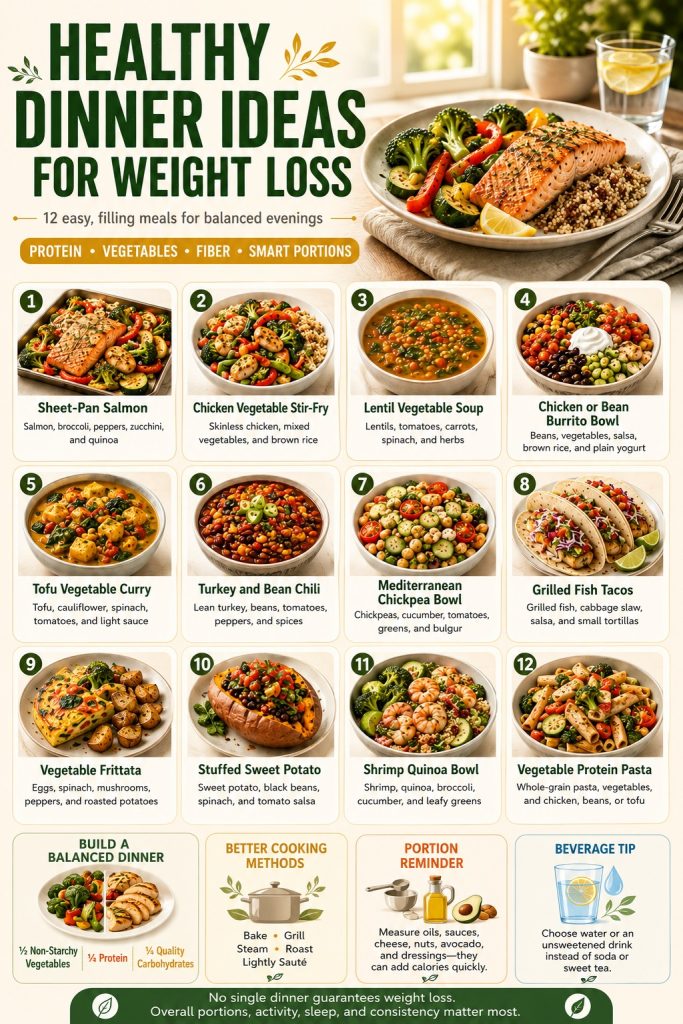
Short answer: Fill half the plate with non starchy vegetables, a quarter with protein, a quarter with a carbohydrate you have measured, and measure the cooking oil. That structure lands most dinners between 350 and 500 calories without leaving you hungry at 9pm.
What Makes a Dinner Filling Rather Than Just Small
The mechanism worth understanding is energy density, meaning calories per gram of food. People tend to eat a fairly consistent weight of food rather than a consistent number of calories. So if you lower the energy density of a meal, you eat the same volume and feel equally full on fewer calories.
Vegetables do this because they are mostly water and fibre. Two cups of roasted broccoli and peppers add bulk, chew time and about 80 calories. Two tablespoons of olive oil add almost no bulk and about 240. That is the whole game, and it is why “eat less” and “eat a smaller plate” are such poor instructions.
Four components, then:
- Protein, a quarter of the plate. Roughly 25 to 35 g at dinner. It is the most satiating macronutrient and it protects muscle while you are in a deficit. Fish, poultry, eggs, tofu, beans, lentils.
- Non starchy vegetables, half the plate. The volume that makes a deficit survivable. Roast, steam, stir fry or serve raw.
- A measured carbohydrate, a quarter. Brown rice, quinoa, potato, whole grain pasta, bread. Not eliminated, measured.
- Fat, measured with a spoon. Oil, cheese, avocado, nuts, dressing. This is where dinners quietly gain 200 calories.
For context on portions, the NIDDK portion guide is a useful reference, and CDC covers the same plate logic.
12 Healthy Dinner Ideas for Weight Loss
Figures are approximate for one plated serving and vary with portion size, cut of meat and how much oil you use.
Lightest, under 400 calories
- 1. Grilled fish tacos with cabbage slaw. White fish, two small corn tortillas, shredded cabbage with a yogurt lime dressing, salsa. About 300 calories, 27 g protein. The lightest dinner here, and the slaw does the volume work that would otherwise need cheese and sour cream.
- 2. Stuffed sweet potato with beans. One medium sweet potato, ¾ cup black beans, salsa, plain Greek yogurt, chopped peppers and coriander. About 330 calories, 15 g protein. Cheap, almost no technique required.
- 3. Turkey and bean chili. Lean ground turkey, kidney and black beans, tomatoes, peppers, onion, cumin and paprika. About 350 calories, 34 g protein. Excellent protein per calorie and it freezes well. Top with yogurt rather than cheese and sour cream.
- 4. Lentil and vegetable soup. Lentils, tomatoes, carrots, celery, spinach, low sodium broth, cumin. About 350 calories, 20 g protein. Broth based, not cream based. Watch the bread and butter served alongside, which is where soup dinners usually go wrong.
- 5. Shrimp and quinoa vegetable bowl. Shrimp, ½ cup quinoa, courgette, peppers, spinach, lemon, 2 tsp olive oil. About 380 calories, 29 g protein. Ready in 15 minutes with frozen shrimp.
Middle, 400 to 470 calories
- 6. Tofu and vegetable curry. Firm tofu, cauliflower, green beans, spinach, tomatoes, ginger and curry spices, a splash of light coconut milk, ½ cup brown rice. About 400 calories, 18 g protein. Use coconut milk as flavouring rather than the base, since full fat is calorie dense and high in saturated fat. A tomato or yogurt based curry is lighter.
- 7. Mediterranean chickpea bowl. Chickpeas, cucumber, tomatoes, leafy greens, red onion, ½ cup quinoa or bulgur, lemon, herbs, 2 tsp olive oil. About 450 calories, 16 g protein. No cooking needed if the chickpeas are canned. Rinse them to cut sodium by roughly 41 percent.
- 8. Sheet pan salmon with roasted vegetables. Salmon fillet, broccoli, peppers, courgette, red onion, lemon, 1 tsp olive oil, ½ cup brown rice. About 460 calories, 29 g protein. One tray, minimal washing up. Canned salmon, sardines, tilapia or cod work if fresh salmon is expensive.
- 9. Vegetable frittata with potatoes and salad. Three eggs, spinach, mushrooms, peppers, one small potato, side salad with a measured dressing. About 465 calories, 23 g protein. Breakfast food at dinner is underrated and very cheap.
- 10. Chicken and vegetable stir fry. Skinless chicken, broccoli, mushrooms, peppers, cabbage, green beans, garlic and ginger, reduced sodium soy sauce, ½ cup brown rice. About 465 calories, 40 g protein. The highest protein dinner on this list. Make your own sauce from soy, vinegar, garlic and ginger, since bottled stir fry sauces carry a lot of sugar and sodium.
Larger, 480 to 510 calories
- 11. Chicken or bean burrito bowl. Grilled chicken or black beans, lettuce, tomatoes, peppers, corn, salsa, ½ cup brown rice, plain Greek yogurt, a quarter avocado. About 485 calories, 30 g protein. Build it vegetables first. A restaurant version with double rice, cheese, sour cream and chips can be triple this.
- 12. Whole grain pasta with vegetables and protein. 2 oz dry whole grain pasta, chicken or beans, courgette, peppers, spinach, tomato sauce, 1 tsp olive oil. About 510 calories, 36 g protein. The trick is inverting the usual ratio: make vegetables the bulk and pasta the accent rather than the reverse.
Five Dinners in Under 15 Minutes
Arriving home starving is when plans collapse. These need almost no cooking.
- Chickpea salad. Canned chickpeas, cucumber, tomato, red onion, lemon, olive oil, herbs.
- Rotisserie chicken plate. Shop bought chicken, bagged salad, a microwaved sweet potato.
- Egg and vegetable scramble. Three eggs, frozen peppers and spinach, whole grain toast.
- Tuna and bean salad. Canned tuna, cannellini beans, red onion, parsley, lemon, leaves.
- Frozen vegetable stir fry. A bag of frozen stir fry vegetables, pre cooked chicken or tofu, soy and ginger.
Keeping these possible is mostly a shopping problem. Canned beans, canned fish, frozen vegetables, eggs and pre cooked protein are the five things worth always having.
Cutting Dinner Calories Without Shrinking the Plate
- Measure the oil. A tablespoon is 120 calories and a free pour is often three. This single change is usually worth 150 to 250 calories a meal.
- Swap the sauce base. Tomato, broth or yogurt based instead of cream, cheese or coconut milk. Same flavour role, a fraction of the calories.
- Double the vegetables, halve the grain. The plate looks the same and drops 150 calories.
- Make the protein visible. A distinct piece of fish or chicken satisfies more than the same protein stirred into a sauce.
- Serve from the stove, not the table. Plating in the kitchen and leaving the pan there removes the automatic second helping.
- Watch the extras. Bread and butter, cheese on top, a glass of wine and dressing can add 400 calories to a well built meal without anyone noticing.
What to drink: water, sparkling water or unsweetened tea. Alcohol adds calories and reduces restraint around food, which is a double cost at dinner specifically. Our guide to drinks that support weight loss covers the swaps.
Does Dinner Timing Actually Matter?
There is better evidence here than the usual “do not eat after 8pm” advice suggests, and it is more nuanced.
A tightly controlled randomised crossover trial published in Cell Metabolism fed adults with overweight identical meals, identical calories, differing only by eating roughly four hours later. Late eating increased hunger and raised the ghrelin to leptin ratio, decreased waking energy expenditure, and shifted fat tissue gene expression in a direction favouring storage over breakdown.
So timing is not nothing. But read it carefully: this compared very late eating against a normal schedule in a lab, and the effect sizes are modest next to total intake. A 7pm dinner is not late. Eating at 11pm most nights, or skipping dinner and grazing until midnight, is the pattern worth changing.
The practical version: eat dinner at a reasonably consistent time that leaves a couple of hours before bed, and do not let a late dinner become a second dinner. If shift work makes that impossible, focus on what and how much rather than when.
Should you skip dinner?
Generally no. Skipping dinner tends to produce late night grazing that exceeds what the meal would have contained, and it makes hitting a protein target for the day much harder. It is also a poor idea for anyone using insulin or a medicine that can cause hypoglycaemia.
Meal Prep That Actually Saves Time
- Batch one protein. Roast a tray of chicken thighs, cook a pot of lentils, or hard boil eggs. This covers three or four dinners.
- Cook grains once. A pot of brown rice or quinoa keeps four days refrigerated and portions straight into bowls.
- Prep vegetables when you unpack the shopping. Washed and chopped vegetables get used. Whole ones in a drawer rot.
- Make one flexible sauce. A yogurt herb dressing or a tomato base turns the same components into three different meals.
- Portion the calorie dense things in advance. Oil, cheese, nuts and dressing into small containers rather than free poured at the end of a long day.
You do not need a full Sunday. Cooking one protein and one grain is roughly 40 minutes and removes most weeknight decisions.
Frequently Asked Questions
What is the healthiest dinner for weight loss?
There is no single best meal, but the structure is consistent: half the plate non starchy vegetables, a quarter protein, a quarter a measured carbohydrate, with the cooking fat measured. Among the options here, turkey and bean chili gives excellent protein per calorie at roughly 350 calories and 34 g protein, and grilled fish tacos with cabbage slaw is the lightest at about 300 calories. The best one is whichever you will actually cook on a Tuesday.
How many calories should dinner have for weight loss?
Commonly around 400 to 600 calories, though your target depends on total daily needs, body size, activity and whether dinner is your largest meal. The dinners here range from about 300 to 510. Rather than aiming at a number in isolation, work out your daily intake and divide it in a way that suits your appetite, since some people do better with a bigger dinner and a lighter lunch.
Does eating dinner late cause weight gain?
Timing has a measurable effect, though it is smaller than total intake. A controlled crossover trial in Cell Metabolism fed people identical calories four hours apart and found late eating increased hunger, raised the ghrelin to leptin ratio, lowered waking energy expenditure and shifted fat tissue gene expression toward storage. That compared very late eating with a normal schedule, so a 7pm dinner is not the problem. Eating at 11pm most nights is worth changing.
Should I skip dinner to lose weight?
Usually not. Skipping dinner tends to backfire into late night grazing that exceeds what the meal would have contained, and it makes reaching a sensible daily protein intake much harder, which matters for protecting muscle during a deficit. It is also unsafe for anyone using insulin or medicines that can cause low blood glucose. A smaller balanced dinner beats no dinner.
Can I eat rice, pasta or potatoes at dinner?
Yes, in a measured portion of roughly a quarter of the plate. These are carbohydrate foods, not forbidden ones, and cutting them out tends to make dinners harder to sustain rather than more effective. Choosing brown rice, whole grain pasta or a whole potato adds fibre, and pairing them with protein and plenty of vegetables slows digestion and increases fullness.
Why does a salad dinner leave me hungry?
Usually not enough protein or fat, or too little food by weight. Leaves alone are almost all water with very few calories, which sounds ideal but provides little staying power. Add 25 to 35 g of protein such as chicken, tuna, eggs, chickpeas or tofu, plus a measured dressing, and it becomes a meal. The opposite failure is drowning it in dressing, which can add 300 calories invisibly.
Is soup good for weight loss?
Broth based soup is one of the better formats, because it is high in volume and low in energy density, meaning you eat a satisfying weight of food for relatively few calories. Lentil, bean and vegetable soups also add protein and fibre. Cream based soups are a different proposition, and soup dinners often go wrong on the side of bread and butter rather than the soup itself.
What should vegetarians have for dinner?
Lentils, beans, chickpeas, tofu, tempeh, edamame and eggs all work, and several dinners here are already meat free or easily adapted. Tofu curry, Mediterranean chickpea bowl, lentil soup, stuffed sweet potato with beans and a vegetable frittata all deliver 15 to 23 g of protein. Combining a legume with a grain across the day covers amino acid needs without any special planning.
How do I stop overeating at dinner?
Three things help most. Do not arrive home starving, so keep a protein snack available for the late afternoon. Plate the food in the kitchen and leave the pans there rather than serving from the table, which removes the automatic second helping. And measure the oil and dressing, since these add the most calories with the least noticeable volume.
Do I need to eat low carb at dinner?
No. There is no consistent evidence that cutting carbohydrate specifically at dinner outperforms a balanced plate with the same calories. What matters is total intake, protein adequacy and whether the meal keeps you satisfied. Some people find a lower carbohydrate dinner suits their appetite or their glucose readings, which is a personal reason rather than a general rule.
Final Thoughts on Healthy Dinner Ideas for Weight Loss
Good healthy dinner ideas for weight loss share one design principle: lower the energy density so a full plate carries fewer calories. Vegetables provide the volume, protein provides the staying power, and the carbohydrate and fat get measured rather than eliminated.
If you change one thing tonight, measure the cooking oil. It is the largest hidden cost in most home dinners and the easiest to fix. After that, double the vegetables and halve the grain, and the plate will look identical while dropping 150 calories.
Then make it repeatable. Batch one protein and one grain at the weekend, keep canned beans, canned fish and frozen vegetables in the house, and accept that the dinner you actually cook beats the impressive one you do not. The rest of the picture is in our guide to common weight loss mistakes.
Related reading: 10 weight loss mistakes you might be making | Healthy drinks that may support weight loss | 15 snacks that will not spike blood sugar | 10 healthy smoothies for weight loss
Medical Disclaimer
This article is for general education and is not a personalised nutrition or weight loss plan. Calorie and nutrient needs vary with age, body size, activity, pregnancy, medicines and medical conditions. Consult a qualified healthcare professional or registered dietitian before making significant dietary changes, particularly with diabetes, kidney disease, food allergies, prescribed dietary restrictions or a history of disordered eating. See our medical disclaimer, editorial policy and fact checking policy.
Cross checked against CDC, NIDDK, USDA FoodData Central and peer reviewed research in Cell Metabolism. Calorie and protein figures are estimates that vary with portion size and preparation. Last updated July 2026.
Edited by Dr. Obeydur Rahman, MBBS, MD in Medicine.