Beetroot juice has better evidence behind it than almost anything sold as a wellness drink. Trials show it lowers blood pressure by a few points and improves how efficiently your body uses oxygen during exercise. Both effects trace back to one compound, and both depend on details most recipe articles skip entirely.
You get four recipes, the dose used in actual research, when to drink it and one common bathroom habit that cancels the benefit completely.
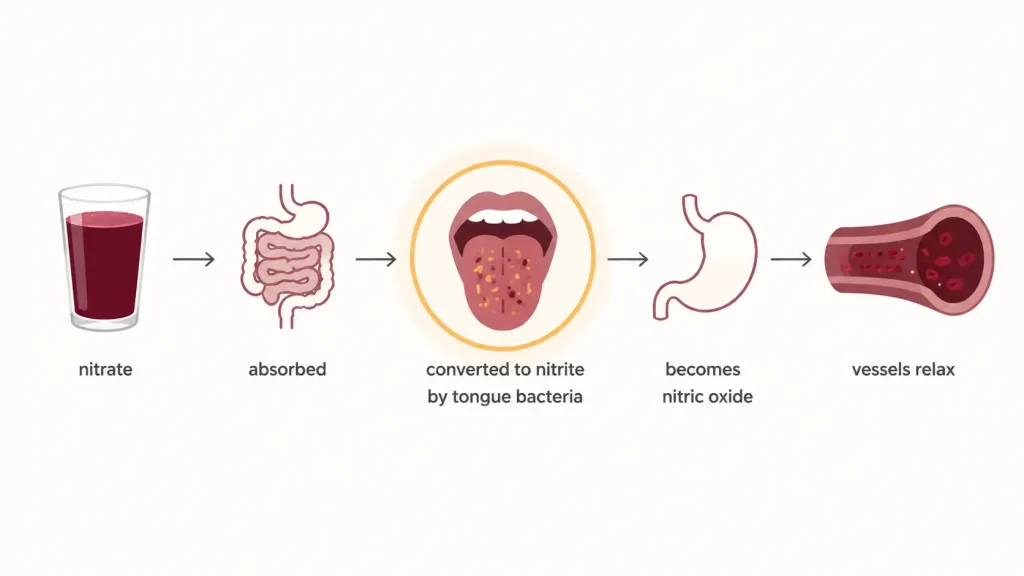
How Beetroot Juice Actually Works
The mechanism is worth understanding because it explains everything else in this article.
Beets are unusually high in dietary nitrate. That nitrate does nothing on its own.
Step one. You drink the juice and your small intestine absorbs the nitrate almost completely.
Step two. Roughly a quarter of that nitrate travels to your salivary glands and gets secreted back into your mouth.
Step three. Bacteria living on your tongue convert the nitrate into nitrite. This step is essential and it happens nowhere else in your body.
Step four. You swallow the nitrite. Stomach acid converts it to nitric oxide.
Step five. Nitric oxide relaxes the smooth muscle in your blood vessel walls. Vessels widen, blood flows more easily, blood pressure drops slightly.
Notice step three. Bacteria on your tongue perform a conversion your own cells cannot. That single fact has a practical consequence covered further down.
What the Research Actually Shows
| Claim | Evidence | Effect Size |
|---|---|---|
| Lowers blood pressure | Strong | 4 to 5 mmHg systolic on average |
| Improves exercise efficiency | Strong | Consistent across many trials |
| Works better in older adults | Growing | Around 7 mmHg in one 2025 trial |
| Improves blood vessel function | Moderate | Measurable in several trials |
| Supports the liver | Weak | Lab studies only |
| Boosts immunity | Weak | No direct evidence |
| Treats anemia | None | Beets are low in iron |
Meta-analyses pooling many trials find an average systolic reduction of roughly 4 to 5 mmHg. That sounds small and it is not nothing. A drop of that size across a population meaningfully reduces stroke and heart disease risk.
Exercise research is even more consistent. Trials repeatedly show improved time to exhaustion and better cycling time trial performance. Endurance athletes have used beet juice for over a decade for this reason.
One newer finding stands out. A 2025 trial comparing younger and older adults found the blood pressure effect was much stronger in the older group, around 7 mmHg, while younger participants showed little change. The difference tracked with differences in the bacteria on their tongues.
The 4 Beetroot Juice Recipes
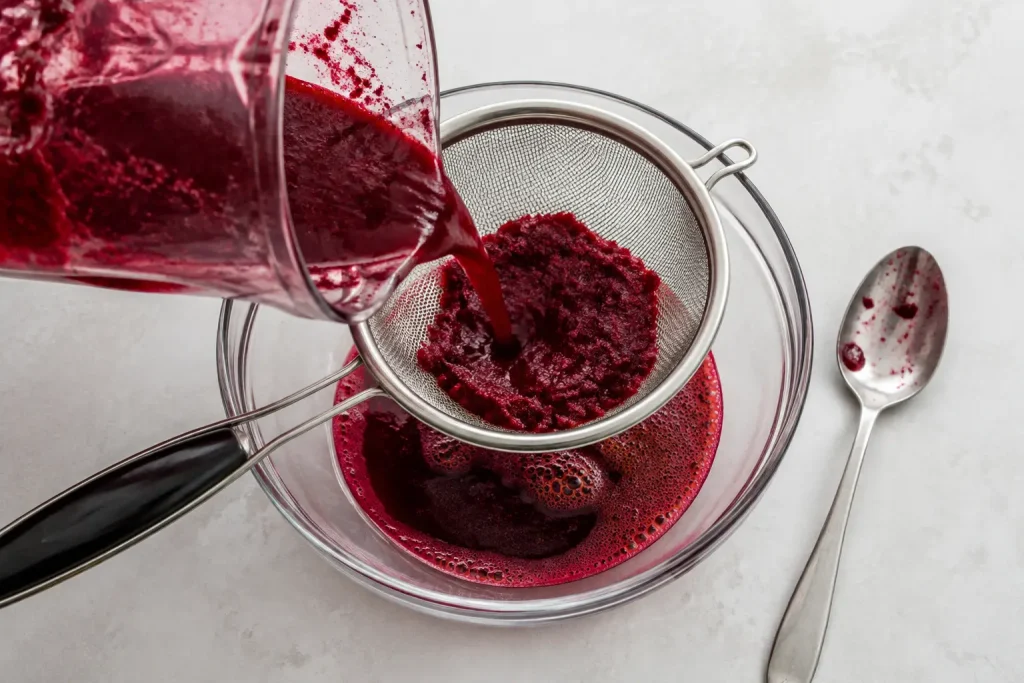
Each makes about one large glass. Use a juicer, or blend and strain through a fine mesh sieve.
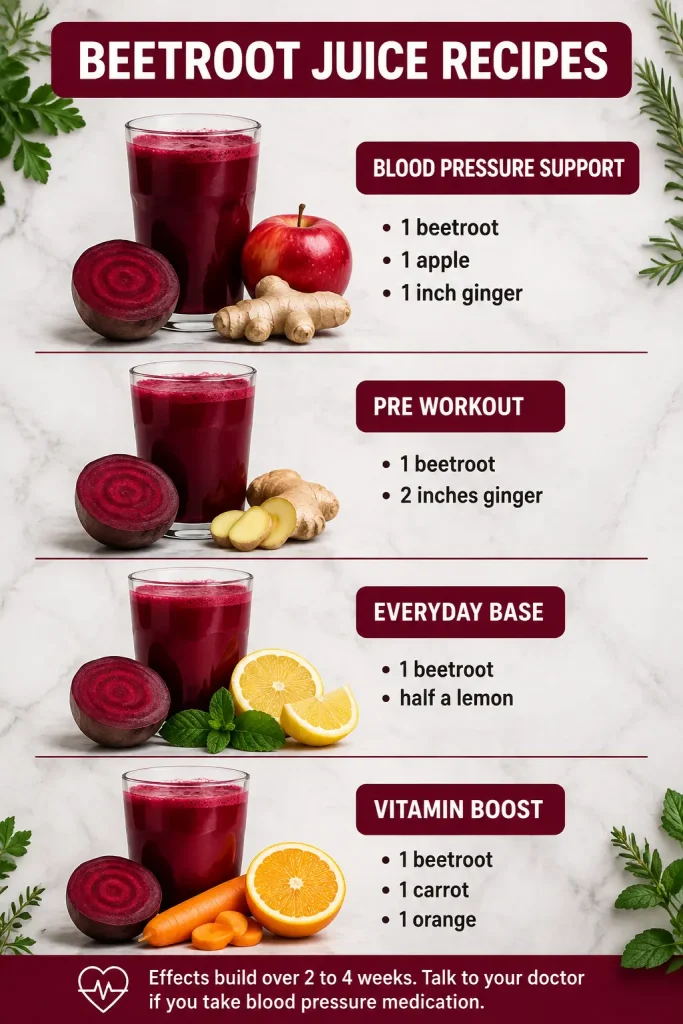
1. Beet, Apple and Ginger
- 1 medium beetroot, peeled and chopped
- 1 apple, cored
- 1 inch fresh ginger
Best for blood pressure support. Apple softens the earthy flavor considerably, which matters because plenty of people quit beet juice over the taste alone. Ginger adds warmth.
This combination appeared in an actual clinical trial. Researchers gave participants 500 g of beetroot and apple juice and measured blood pressure hourly for 24 hours afterward.
2. Beet and Ginger
- 1 medium beetroot, peeled and chopped
- 1 to 2 inches fresh ginger
Best before exercise. Fewer ingredients means a higher nitrate concentration per glass. Ginger cuts the earthiness without adding much volume.
Drink it about two to three hours before training. That timing matches the research protocol.
3. Beet and Lemon
- 1 medium beetroot, peeled and chopped
- Half a lemon, juiced
- Splash of water
Best as an everyday base. Simple, sharp and quick. Lemon brightens the flavor and the vitamin C helps you absorb the iron from other foods in the same meal.
This one does not cleanse your liver. Your liver handles that continuously on its own and no juice assists it.
4. Beet, Carrot and Orange
- 1 medium beetroot, peeled and chopped
- 1 large carrot
- 1 orange, peeled
Best for nutrition rather than nitrate. Carrot brings beta carotene and orange brings vitamin C. Both are nutrients you genuinely need.
The nitrate dose per glass runs lower here because two of three ingredients are not beets. Read this as a good juice rather than a functional one.
How to Make It Without a Juicer
Most people do not own a juicer and do not need one.
The blender method.
- Peel and roughly chop one medium beetroot. Small pieces blend more evenly.
- Add half a cup of water to get the blades moving.
- Blend on high for 60 to 90 seconds until completely smooth.
- Pour through a fine mesh sieve or a nut milk bag set over a bowl.
- Press the pulp with the back of a spoon to extract the last of the liquid.
That yields roughly the same juice a juicer produces, with an extra two minutes of straining.
Skip the straining entirely if you prefer. Blended beet drink keeps the fiber, which slows the sugar and fills you up more. The texture is thicker and the nitrate content stays the same. Plenty of people find this version easier on the stomach.
Grate and squeeze for very small amounts. Grate the beet on the fine side of a box grater and squeeze the pulp in a clean cloth. Messy and effective.
Wear an apron. Beet juice stains everything. Rinse cutting boards immediately and use a glass or metal bowl rather than plastic.
Making It Taste Better
Earthiness is the main reason people quit beet juice. That flavor comes from a compound called geosmin, the same one that makes soil smell like soil.
Several things help.
Add acid. Lemon or lime cuts through geosmin more effectively than anything else. Half a lemon per glass makes a real difference.
Add sweetness from fruit. Apple, orange or pear all soften the earthy edge. Apple works best.
Add ginger. It gives your tongue something else to focus on.
Serve it cold. Warm beet juice tastes considerably more earthy. Chill the beets before juicing or add ice.
Start with a smaller ratio. One part beet to two parts apple, then shift the balance over a few weeks as you adjust.
Try golden beets. They carry less geosmin and taste noticeably milder, though nitrate content runs slightly lower.
Drink it fast rather than sipping. The flavor builds the longer it sits on your tongue.
One thing that does not help is masking it with more sugar. Honey and syrup add calories without removing the earthiness.
Do Not Throw Away the Greens
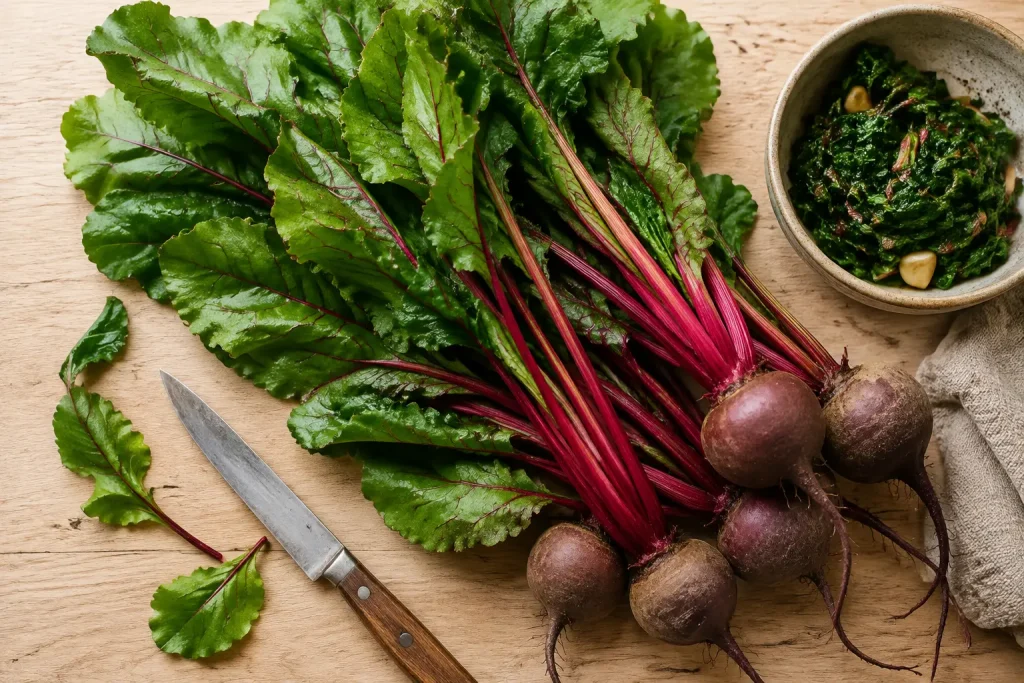
Beet tops get binned constantly and they should not be.
Beet greens carry nitrate too, along with iron, vitamin K, vitamin A and folate. Nutritionally they compete with chard, which makes sense since chard and beets are the same species.
Add a handful to your juice. They blend in without changing the flavor much.
Saute them like spinach. Olive oil, garlic, a squeeze of lemon. Three minutes.
Use the stems too. Chop and cook them a couple of minutes before the leaves, since they take longer to soften.
Buy beets with tops attached where you can. You get two vegetables for one price.
One caution. Beet greens are high in oxalate, higher than the root. Anyone with a history of calcium oxalate kidney stones should go easy on them.
Storage and How Long It Keeps
Nitrate content matters here in a way it does not for other juices.
Drink it fresh where possible. Nitrate and other compounds degrade with exposure to air and light.
Refrigerated, 24 to 48 hours. Store in a sealed glass container filled close to the top so less air sits above the juice.
Freeze in portions. Ice cube trays work well. Frozen juice keeps about three months and thaws quickly.
Whole beets keep for weeks. Trim the greens off, since leaving them attached pulls moisture from the root. Store the root in the fridge crisper and the greens separately in a bag.
Cold pressed bottled juice retains more nitrate than heat pasteurized versions. Check the label.
Making a batch every two days beats making a week’s worth at once.
Powder, Juice or Whole Beets
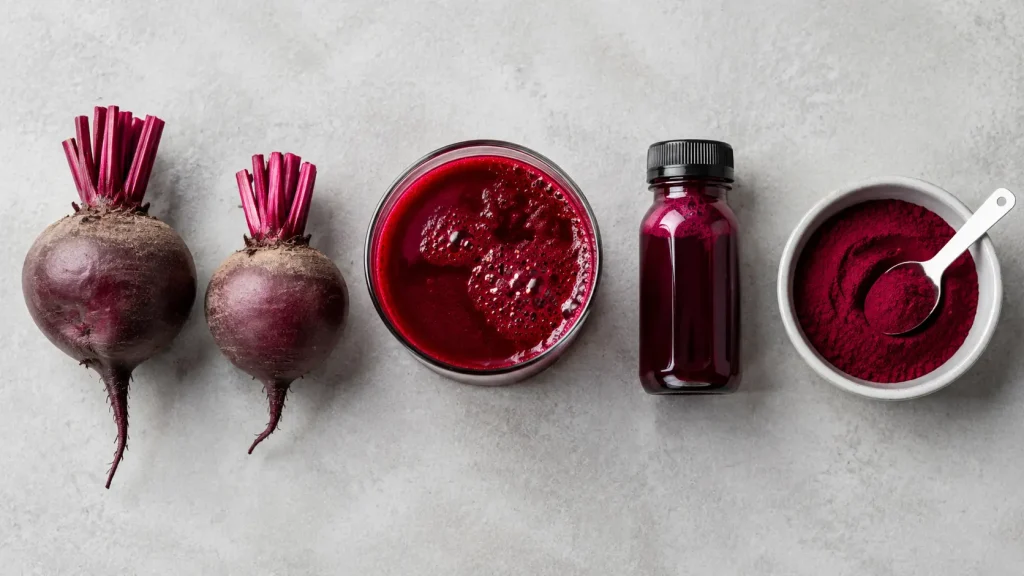
| Form | Nitrate Dose | Cost | Best For |
|---|---|---|---|
| Fresh juice | High and reliable | Moderate | Matching research protocols |
| Whole beets | Good with 2 medium daily | Lowest | Everyday intake plus fiber |
| Cold pressed bottled | High | Highest | Convenience |
| Concentrated shots | About 400 mg per 70 ml | High | Pre workout dosing |
| Powder | Varies enormously | Low to moderate | Only if nitrate is on the label |
Powder deserves a caution. Many products list beetroot extract weight without stating nitrate content, which makes dosing pure guesswork. Choose brands that print the nitrate figure.
Whole beets are the underrated option. Two medium beets daily gets you most of the way, costs less than anything else and delivers fiber the juice removes.
How Much and When to Drink It
This section is where most beetroot juice articles stop short. The numbers matter.
Research doses. Trials typically use 250 to 500 ml of beetroot juice per day, delivering roughly 300 to 800 mg of nitrate. Concentrated shots deliver about 400 mg in 70 ml.
In whole beets. One large beetroot around 300 to 400 g, or two medium ones, yields roughly one cup of juice.
For blood pressure. Daily intake matters more than any single glass. Acute effects peak within a few hours and fade. Consistent reductions show up after two to four weeks of daily intake.
For exercise. Drink about 500 ml roughly two to three hours before your session. Plasma nitrite peaks in that window.
Raw beats cooked. Heat reduces nitrate content. Cold pressed and unpasteurized juice retains the most.
Split the dose if it upsets your stomach. Half in the morning and half later works as well as one large glass.
Expect a modest effect rather than a dramatic one. Beetroot juice is a small helpful lever, not a replacement for medication.
The Mouthwash Problem
This one surprises almost everybody and it matters more than the recipe you pick.
Antiseptic mouthwash kills the bacteria on your tongue. Those are exactly the bacteria that convert nitrate to nitrite in step three above.
Research shows that antiseptic mouthwash abolishes the blood pressure lowering effect of dietary nitrate. Not reduces it. Abolishes it.
Chlorhexidine mouthwashes cause the strongest effect. Regular antibacterial rinses do it too.
What to do. Skip antiseptic mouthwash unless your dentist prescribed it for a specific reason. Regular brushing and flossing does not cause this problem.
Chew thoroughly if eating whole beets. More time in the mouth means more conversion.
Nobody mentions this in a beetroot article and it is the single most important practical detail in the whole subject.
What Beetroot Juice Does Not Do
Honest limits matter.
It does not cleanse your liver. Your liver and kidneys work continuously. No juice assists them. Recipes labeled liver cleanser are beet juice with marketing attached.
It does not treat anemia. Beets contain very little iron. The deep red color comes from betalain pigments, not from iron or blood.
It does not boost immunity. No direct evidence supports that claim.
It does not replace blood pressure medication. Never stop or reduce a prescription based on a juice.
It does not work equally for everyone. Younger adults with already healthy blood pressure show smaller effects than older adults with higher readings.
The real benefits are genuine and modest. That combination is rarer in this category than it should be.
Safety Notes
Five things worth knowing.
Blood pressure medication. Beet juice lowers blood pressure and so does your medication. The effects add together. Talk to your doctor before making it a daily habit.
Kidney stones. Beets are high in oxalate. Anyone with a history of calcium oxalate stones should check with their doctor first.
Beeturia. Pink or red urine after beets affects roughly 10 to 15 percent of people. It is harmless. Red stool from beets is also harmless, though red stool with no beets in your diet needs a doctor.
Blood sugar. Juice concentrates natural sugar without the fiber. Anyone managing diabetes should account for it or eat whole beets instead.
Nitrate and infants. Do not give beet juice to babies under six months. Nitrate can interfere with oxygen transport in very young infants.
Whole beets deliver the nitrate plus fiber and cost far less. Juice suits research doses better because the volume of whole beets required is difficult to eat.
Frequently Asked Questions
Does beetroot juice really lower blood pressure?
Yes, modestly. Meta-analyses find an average reduction of about 4 to 5 mmHg systolic. Effects build over two to four weeks of daily intake and appear stronger in older adults.
How much beetroot juice should I drink daily?
Research doses run 250 to 500 ml per day, delivering roughly 300 to 800 mg of nitrate. One large beet or two medium ones yields about a cup.
Why is my pee pink after beetroot?
Beeturia. Roughly 10 to 15 percent of people cannot fully break down the red betalain pigment, so it passes through in urine. It is completely harmless.
When should I drink beet juice before a workout?
Two to three hours before. Plasma nitrite peaks in that window, which is why research protocols use that timing.
Does mouthwash really cancel the effect?
Yes. Antiseptic mouthwash kills the tongue bacteria that convert nitrate to nitrite. Studies show it abolishes the blood pressure effect entirely.
Is beet juice better than eating whole beets?
Juice delivers a research level nitrate dose in a manageable volume. Whole beets give you fiber and cost less. Eating two medium beets daily is realistic and gets you most of the way.
Can beet juice replace my blood pressure medication?
No. Never adjust a prescription based on a juice. Tell your doctor if you plan to drink it daily so they can account for it.
Does cooking destroy the nitrate?
Heat reduces it. Raw or cold pressed juice retains the most. Roasting loses more than steaming.
Does beetroot juice help with anemia?
No. Beets are low in iron. The red color comes from pigment rather than blood or iron.
How long before I notice a difference?
Blood pressure effects build over two to four weeks of consistent daily intake. Exercise benefits appear within hours of a single dose.
Can I use beetroot powder instead?
Yes, if the label states the nitrate content rather than just the extract weight. Many powders do not, which makes dosing guesswork.
Do I need a juicer to make beet juice?
No. Blend chopped beet with a little water for 90 seconds, then strain through a fine mesh sieve. You can also skip straining and drink it as a thicker blend with the fiber intact.
Why does beet juice taste like dirt?
A compound called geosmin, the same one responsible for the smell of soil. Lemon cuts it better than anything else. Apple and serving it cold both help too.
Can you eat the beet greens?
Yes, and you should. They carry nitrate, iron, vitamin K and folate. Saute them like spinach or add a handful to your juice. Go easy if you have a history of kidney stones, since they are high in oxalate.
How long does fresh beet juice last?
24 to 48 hours refrigerated in a sealed glass container. Nitrate degrades with air and light exposure, so fresher is better. Freeze portions if you make extra.
Do golden beets work the same?
Nearly. They taste much milder because they contain less geosmin. Nitrate content runs slightly lower and they will not turn your urine pink.
Related reading: beetroot nitrate is one of the best evidenced items in our 12 foods that support healthy circulation and our herbs for blood pressure guide. See also our 5 healthy juice recipes.
Final Thoughts on Beetroot Juice
Beetroot juice earns its reputation, just not for the reasons on most labels. The nitrate in beets converts to nitric oxide, blood vessels relax and blood pressure drops a few points. Exercise gets slightly more efficient. Both effects hold up across many trials.
Three practical points decide whether you get any of it. Drink it daily rather than occasionally, since the blood pressure effect builds over weeks. Time it two to three hours before exercise if performance is the goal. And skip the antiseptic mouthwash, because it kills the bacteria the whole process depends on.
Nothing here cleanses your liver or treats anemia. Tell your doctor if you take blood pressure medication, since the effects stack.
References
- Coles LT, Clifton PM. Effect of beetroot juice on lowering blood pressure in free-living, disease-free adults: a randomized, placebo-controlled trial. Nutrition Journal. PubMed Central
- Jajja A, et al. Effect of high nitrate vegetable juice supplementation on plasma nitrate and blood pressure in adults. Journal of Nutritional Science. PubMed Central
- A double-blind placebo-controlled crossover study of the effect of beetroot juice containing dietary nitrate on aortic and brachial blood pressure over 24 hours. PubMed Central
This article shares general nutrition information. It does not replace advice from your doctor. Talk with a healthcare provider before drinking beetroot juice regularly if you take blood pressure medication, have kidney disease or a history of kidney stones. Never adjust prescribed medication based on dietary changes. Read our full medical disclaimer and fact checking policy.
Edited by Dr. Obeydur Rahman, MBBS, MD in Medicine.