Most smoothies taste great and leave you hungry an hour later. Fruit and juice blend into pure sugar with almost no staying power. That gap is exactly what high protein smoothie recipes fix. Protein slows digestion and keeps you full for hours instead of minutes.
Every recipe below hits at least 20 grams of protein. Four of them need no protein powder at all. You will also see the actual protein math for each one so you can check the numbers yourself.
Why Protein Changes What a Smoothie Does for You
Protein takes longer to digest than sugar or starch. Your stomach empties slower and your blood sugar rises more gently.
That matters in three ways.
Fullness lasts longer. Protein triggers hormones that tell your brain you have eaten enough. A fruit only smoothie skips that signal almost entirely.
Energy stays level. A sugar spike leads to a crash. Protein and fat flatten that curve.
Muscle gets what it needs. Your body breaks down and rebuilds muscle tissue every day. That process needs a steady supply of amino acids.
Twenty grams sits at a useful threshold. Research on muscle protein synthesis suggests most adults get a good response somewhere around 20 to 30 grams per meal. Spread across the day it beats loading everything into dinner.
How Much Protein Do You Actually Need?
The number moved recently and the change caused real debate.
The long standing RDA sat at 0.8 grams per kilogram of body weight. That works out to about 55 grams a day for a 150 pound adult. The 2026 to 2030 Dietary Guidelines raised that range to 1.2 to 1.6 grams per kilogram, which lands closer to 80 to 110 grams for the same person.
Plenty of nutrition researchers pushed back on that jump. Stanford Medicine experts noted that average US adults already eat around 90 to 100 grams a day for men and 65 to 75 for women. Most people were already inside the new range before the guidelines changed.
Read that as good news rather than a reason to panic. Protein deficiency is rare in the US. These smoothies help you distribute protein better through the day rather than fix a shortage you probably do not have.
Some people do need to watch protein intake carefully. Kidney disease is the big one. Follow your doctor rather than a general guideline.
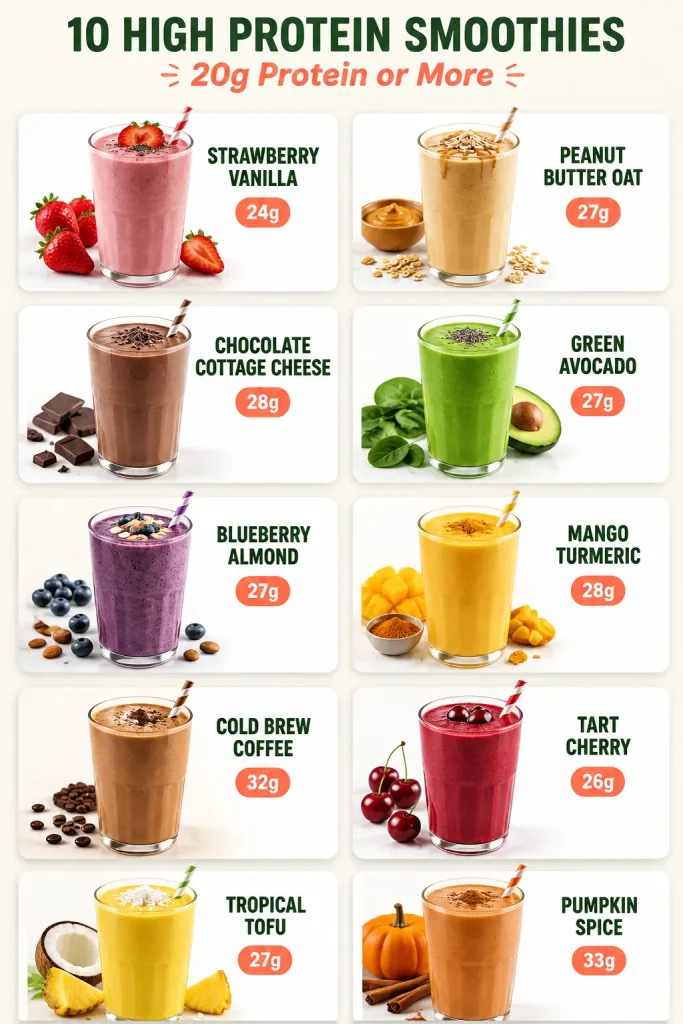
10 High Protein Smoothie Recipes
Protein numbers below come from standard USDA values. Actual amounts shift with brands and portion sizes so treat them as close estimates. You can check any ingredient through USDA FoodData Central.
Each recipe makes one large serving.
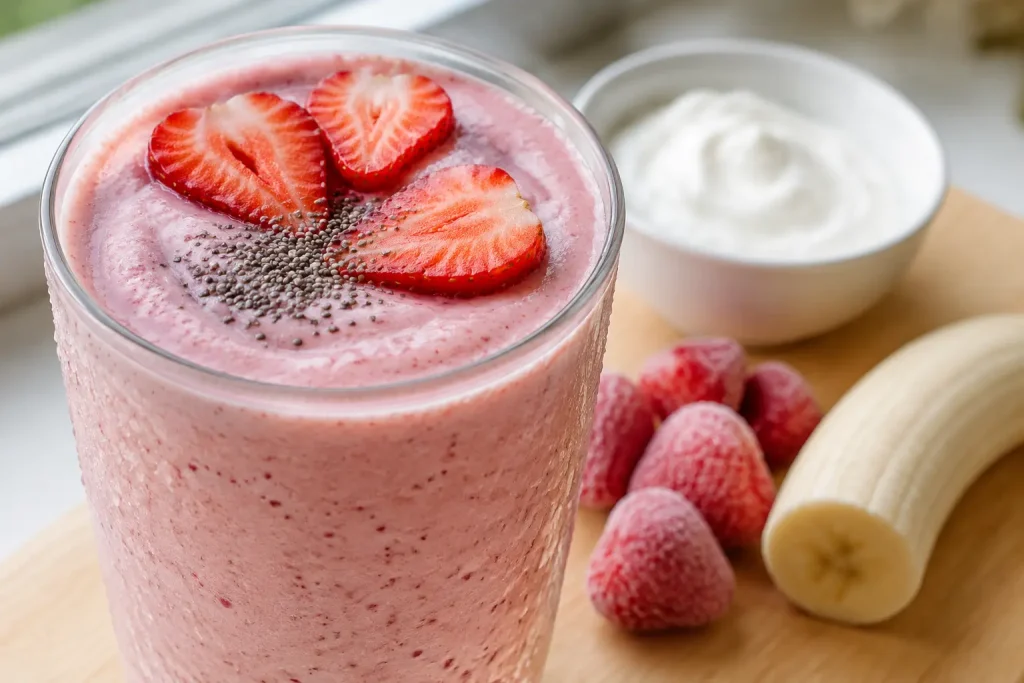
1. Strawberry Vanilla Cream
No protein powder needed.
- 1 cup frozen strawberries
- 3/4 cup plain nonfat Greek yogurt
- 1/2 cup low fat milk
- 1/2 banana
- 1 tablespoon chia seeds
- 1/2 teaspoon vanilla extract
Protein: about 24 grams. Greek yogurt carries 16 of them.
Calories: roughly 305.
Blend the chia seeds first if your blender struggles. They thicken the drink as it sits.
2. Peanut Butter Banana Oat
No protein powder needed.
- 1 frozen banana
- 1 cup low fat milk
- 1/2 cup plain Greek yogurt
- 1/3 cup rolled oats
- 1 tablespoon natural peanut butter
- Pinch of cinnamon
Protein: about 27 grams.
Calories: roughly 480.
This one works as a full breakfast rather than a snack. Oats add fiber that helps the fullness last.
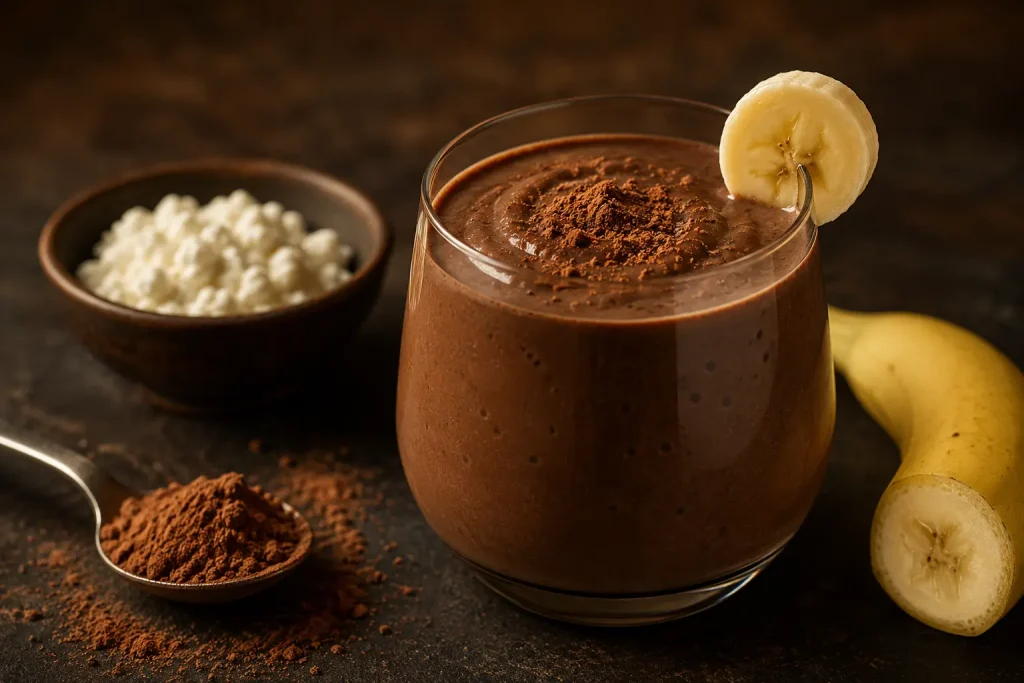
3. Chocolate Cottage Cheese
No protein powder needed.
- 3/4 cup low fat cottage cheese
- 1 cup low fat milk
- 2 tablespoons unsweetened cocoa powder
- 1/2 frozen banana
- 1 teaspoon maple syrup
- 1/2 cup ice
Protein: about 28 grams.
Calories: roughly 295.
Cottage cheese sounds strange in a smoothie. Blend it long enough and the texture turns completely smooth. It carries more protein per calorie than almost anything else in your fridge.
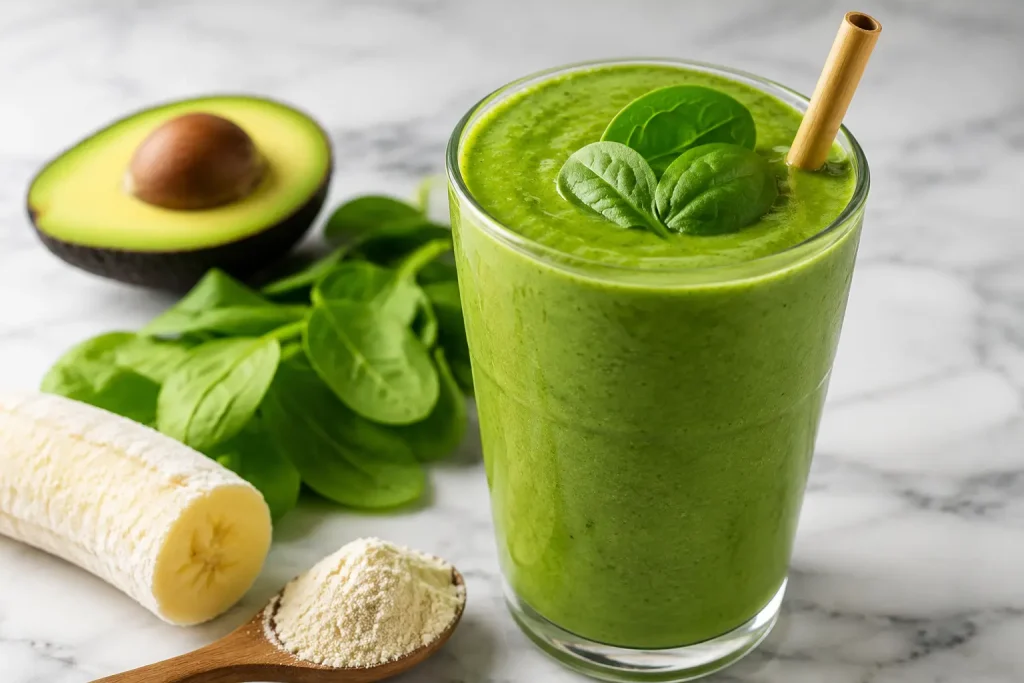
4. Green Avocado Vanilla
- 1 scoop vanilla protein powder
- 1 cup unsweetened almond milk
- 1 cup fresh spinach
- 1/2 frozen banana
- 1/4 avocado
- 1/2 cup ice
Protein: about 27 grams.
Calories: roughly 300.
Spinach disappears into the flavor completely. Avocado gives the drink a thick milkshake texture without dairy.
5. Blueberry Almond Butter
No protein powder needed.
- 3/4 cup plain Greek yogurt or skyr
- 1 cup frozen blueberries
- 3/4 cup low fat milk
- 1 tablespoon almond butter
- 1/2 teaspoon vanilla extract
Protein: about 27 grams.
Calories: roughly 350.
Skyr runs slightly higher in protein than regular Greek yogurt. Either one works.
6. Mango Turmeric Ginger
- 3/4 cup plain Greek yogurt
- 1 cup unsweetened soy milk
- 1 cup frozen mango
- 1 tablespoon hemp seeds
- 1/2 teaspoon ground turmeric
- 1/2 teaspoon fresh grated ginger
- Pinch of black pepper
Protein: about 28 grams.
Calories: roughly 335.
Black pepper helps your body absorb curcumin from the turmeric. Ginger also has solid research behind it for settling an unsettled stomach.
7. Cold Brew Coffee Protein
- 1 scoop chocolate protein powder
- 1 cup chilled cold brew coffee
- 1/2 cup low fat milk
- 1/2 frozen banana
- 1 tablespoon almond butter
- 1/2 cup ice
Protein: about 32 grams.
Calories: roughly 320.
Skip this one after early afternoon. Caffeine sticks around in your system for hours.
Coffee on an empty stomach bothers some people. Our guide to foods to avoid on an empty stomach covers who tends to notice it.
8. Tart Cherry Recovery
No protein powder needed.
- 3/4 cup plain Greek yogurt
- 1 cup frozen tart cherries
- 1 cup low fat milk
- 1/2 teaspoon vanilla extract
Protein: about 26 grams.
Calories: roughly 290.
Tart cherries show up in research on exercise recovery and sleep. The evidence stays modest but the drink tastes great either way.
9. Tropical Tofu (Vegan)
- 3/4 cup silken tofu
- 1 cup unsweetened soy milk
- 1/2 cup frozen pineapple
- 1/2 cup frozen mango
- 2 tablespoons hemp seeds
- Squeeze of lime juice
Protein: about 27 grams.
Calories: roughly 360.
Silken tofu blends into nothing and tastes like nothing. Soy milk beats almond milk here by about six grams of protein per cup.
10. Pumpkin Pie Spice
- 1 scoop vanilla protein powder
- 1/2 cup canned pumpkin puree
- 3/4 cup low fat milk
- 2 tablespoons rolled oats
- 1/2 teaspoon pumpkin pie spice
- 1/2 cup ice
Protein: about 33 grams.
Calories: roughly 305.
Use plain canned pumpkin rather than pie filling. Pie filling comes loaded with added sugar.
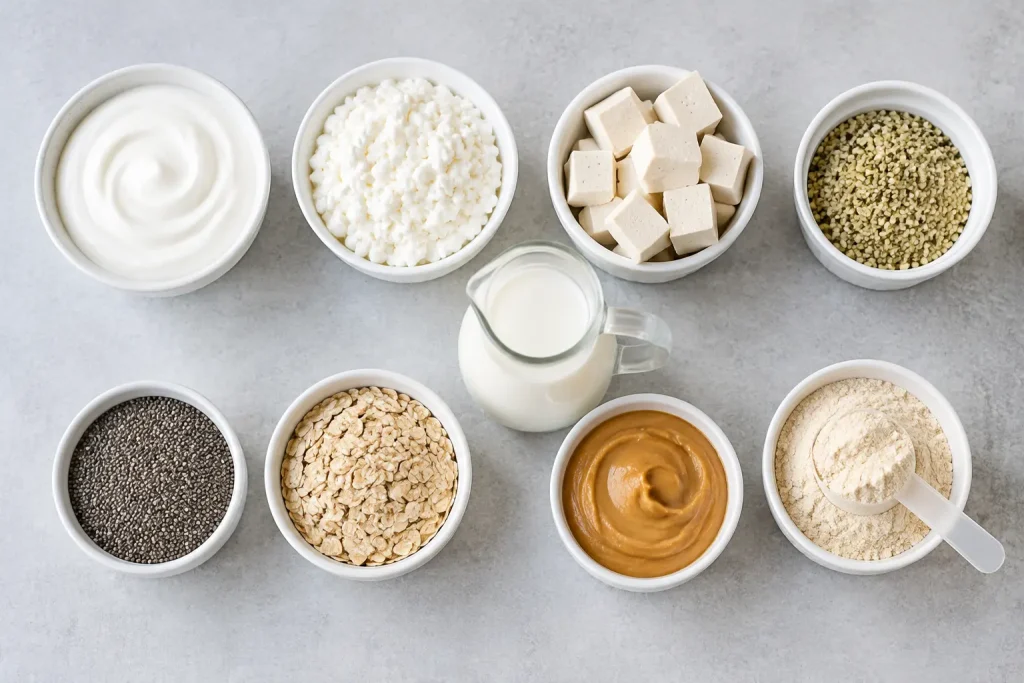
Where the Protein Actually Comes From
Keep this chart handy and you can build your own high protein smoothie recipes without a formula.
| Ingredient | Amount | Protein |
|---|---|---|
| Protein powder | 1 scoop | 20 to 25 g |
| Greek yogurt, plain | 3/4 cup | 16 g |
| Cottage cheese, low fat | 3/4 cup | 18 g |
| Silken tofu | 3/4 cup | 12 g |
| Dairy milk | 1 cup | 8 g |
| Soy milk | 1 cup | 7 g |
| Hemp seeds | 2 tablespoons | 7 g |
| Peanut butter | 1 tablespoon | 4 g |
| Rolled oats | 1/3 cup | 4 g |
| Chia seeds | 1 tablespoon | 2 g |
| Almond milk | 1 cup | 1 g |
| Banana | 1 medium | 1 g |
| Frozen berries | 1 cup | 1 g |
Two things jump out of that list.
Almond milk gives you almost nothing. Swap it for dairy or soy milk and you gain seven grams for free.
Fruit is not a protein source. Fruit brings flavor, fiber and vitamins. Your protein has to come from somewhere else.
Do You Need Protein Powder?
Not at all. Four recipes above skip it entirely.
Powder has real advantages. It packs 20 plus grams into one scoop with few calories. It stores forever and mixes easily.
Powder also has real downsides. It costs more than food. It is a supplement, which means the FDA does not review it before it hits shelves. Independent testing has found heavy metals in some plant based powders.
Whole food sources deliver protein alongside calcium, probiotics and other nutrients. Greek yogurt and cottage cheese both hold their own against any powder.
Pick powder for convenience. Pick food for everything else. Both work.
Simple Rules for Building Your Own
Follow this pattern and your smoothie lands right every time.
Start with one protein base. Greek yogurt, cottage cheese, silken tofu or a scoop of powder.
Add a protein liquid. Dairy milk or soy milk rather than almond or water.
Add one cup of fruit. Frozen works better than fresh because it thickens without watering things down.
Add a small fat. A tablespoon of nut butter, hemp seeds or a quarter avocado. Fat slows digestion further.
Add greens if you like. A cup of spinach vanishes into any flavor.
Skip the juice. Juice adds sugar and nothing else. Milk or water works better.
Frozen fruit does the job that ice cubes only pretend to do. Ice waters down flavor as it melts. Frozen fruit does not.
Common Smoothie Mistakes
Watch for these.
- Building the whole drink from fruit and juice with no protein at all
- Adding sweetened yogurt on top of already sweet fruit
- Using flavored protein powder plus honey plus banana plus dates
- Pouring a serving size that turns a snack into 700 calories
- Drinking it in 90 seconds because liquid calories register less than chewed food
That last one deserves attention. Your brain counts chewing as part of eating. Sip a smoothie slowly rather than downing it and you will feel more satisfied.
Frequently Asked Questions
Can I make a high protein smoothie without protein powder?
Yes. Greek yogurt, cottage cheese, silken tofu, dairy milk and soy milk all get you there. Four recipes on this list use no powder at all.
How much protein should a breakfast smoothie have?
Aim for 20 to 30 grams. That range covers most adults for a solid meal response and keeps you full into the afternoon.
Are smoothies good for weight loss?
They can help when they carry enough protein and you count them as a meal. A smoothie on top of your normal breakfast just adds calories.
Can I prep smoothies ahead?
Yes. Freeze the fruit and dry ingredients in bags. Add the liquid and protein base in the morning. A blended smoothie keeps about 24 hours in the fridge but separates, so shake it before drinking.
Is Greek yogurt better than regular yogurt for smoothies?
For protein, yes. Greek yogurt holds roughly twice the protein of regular yogurt because straining removes the liquid whey.
Which milk has the most protein?
Dairy milk and soy milk both land around 7 to 8 grams per cup. Almond, oat, rice and coconut milk all sit near 1 gram.
Related reading: see our 8 high protein smoothies built as meal replacements, 10 healthy smoothies for weight loss, and high protein breakfasts for the same protein target from solid food.
Final Thoughts on High Protein Smoothie Recipes
A smoothie can hold you for hours or leave you hungry by ten. The difference comes down to protein and nothing else. These high protein smoothie recipes each clear 20 grams, and the ingredient chart lets you build your own once you get the pattern.
Start with a protein base, use real milk, add frozen fruit and a small fat. Pick two or three recipes you actually like and rotate them. That beats a long list you try once and forget.
This article shares general nutrition information. It does not replace advice from your doctor or a registered dietitian. Talk with a healthcare provider before you change your protein intake, especially with kidney disease, diabetes or any diagnosed condition. Read our full medical disclaimer and fact checking policy.
About the Author and Reviewer
Mezbaul Islam, MSc Nutrition owns and writes Simple Health Naturally. He researches each article from public health guidance, clinical guidelines and peer reviewed studies, and traces every figure back to a named source.
Dr. Obeydur Rahman, MBBS, MD in Medicine edits the articles, checks the sources cited and is responsible for the site’s editorial standards. MD in Medicine is the specialty for adult conditions such as liver disease, type 2 diabetes and high blood pressure.
Read more about our authors and reviewers or see our editorial policy.
Edited by Dr. Obeydur Rahman, MBBS, MD in Medicine.