
Every list of water rich foods ranks them by percentage, and percentage is the wrong number. An apple is 85.6 percent water, the second lowest figure on this page, yet a medium one delivers 156 g of water. A cup of romaine lettuce is 94.6 percent water and delivers 44 g. The apple gives you three and a half times more despite being the less watery food, because what actually matters is how much of it you eat. So here are fifteen foods ranked by the water they genuinely provide.
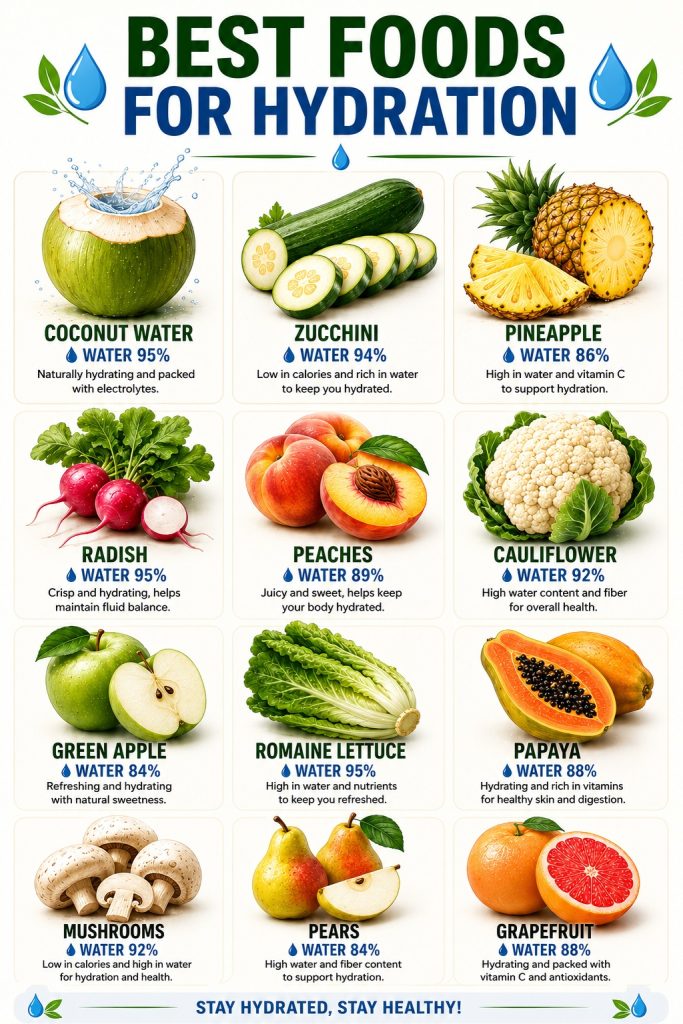
Short answer: An apple beats cucumber and watermelon for actual water delivered, at 156 g against 113 g and 139 g. A glass of water is 240 ml, so even the best food serving is roughly two thirds of a glass. Food supplies about 20 percent of daily fluid. Useful, not sufficient.
Why Percentage Water Is the Wrong Number
Percentage tells you the composition of a food. It tells you nothing about how much water reaches you, because that depends on serving weight, and serving weights differ enormously.
A medium apple weighs 182 g. A cup of shredded romaine weighs 47 g. Even though the lettuce is a far wetter food by composition, the apple wins on the only measure that counts. The same logic explains why cucumber, the traditional headline act of every hydration article, lands mid table.
Two more anchors before the list:
- A glass of water is 240 ml. The best performer below supplies 156 g, about two thirds of a glass. That is a real contribution and it is not a substitute.
- The National Academies set total water intake at roughly 3.7 litres a day for men and 2.7 litres for women, counting everything from all beverages and foods combined. Around 20 percent of that typically comes from food, with beverages supplying the other 80 percent.
To put the ceiling on this: if you ate one serving of all fifteen foods below in a single day, you would take in about 1.75 litres of water. That is 47 percent of the male target and 65 percent of the female one, and nobody eats all fifteen. Hence the 20 percent figure.
15 Water Rich Foods, Ranked by Water Delivered
Water content per realistic serving, using USDA composition data. Percentages in brackets show how misleading the usual ranking is.
Over 130 g per serving
- 1. Apple, 156 g (85.6 percent water, 1 medium). The surprise winner, purely on size. Portable, cheap, keeps for weeks, no preparation. Eat the skin.
- 2. Pear, 150 g (84.0 percent, 1 medium). The lowest percentage on the entire list and the second highest actual delivery, which makes the point better than any other entry.
- 3. Pineapple, 142 g (86.0 percent, 1 cup chunks). Fresh rather than tinned in syrup. Acidic, so it can bother reflux and sensitive teeth.
- 4. Watermelon, 139 g (91.5 percent, 1 cup diced). Deservedly popular and genuinely near the top. Also the food people most often eat two or three cups of, which is where it pulls ahead in practice.
- 5. Strawberries, 138 g (91.0 percent, 1 cup halves). Only 49 calories a cup, so the best water to calorie ratio here. Frozen without added sugar counts.
- 6. Peach, 133 g (88.9 percent, 1 medium). Tinned in juice or water is fine, in heavy syrup is not.
100 to 130 g per serving
- 7. Papaya, 128 g (88.1 percent, 1 cup cubed). Fresh only. Dried papaya has had the water removed and usually sugar added, which inverts the point entirely.
- 8. Tomato, 116 g (94.5 percent, 1 medium). The highest delivery of anything savoury here. Works in almost every meal.
- 9. Cucumber, 113 g (95.2 percent, 1 cup sliced). Famous for the percentage, mid table on delivery. Still excellent, just not the champion it is sold as.
- 10. Radishes, 111 g (95.3 percent, 1 cup sliced). Technically the wettest food on this list by composition. Almost nobody eats a cup of them.
- 11. Grapefruit, 108 g (88.1 percent, half medium). One caution that matters: grapefruit interacts with statins, some blood pressure medicines, ciclosporin, buspirone and others. Check with a pharmacist if you take anything regularly.
- 12. Courgette, 107 g (94.8 percent, 1 cup sliced raw). Also called zucchini. Cooking drives off water, so raw or lightly cooked delivers more than roasted.
- 13. Cauliflower, 99 g (92.1 percent, 1 cup chopped raw). Cheap, stores for weeks, versatile.
Under 100 g per serving
- 14. Mushrooms, 65 g (92.5 percent, 1 cup sliced raw). High percentage, light serving, and they shed most of that water into the pan when cooked. Eat them for flavour and vitamin D if UV exposed, not for hydration.
- 15. Romaine lettuce, 44 g (94.6 percent, 1 cup shredded). Last place, at under a fifth of a glass, despite being 94.6 percent water. Leaves weigh almost nothing. A salad hydrates you through the tomato and cucumber in it, not the lettuce.
None of these is a bad food. The ranking simply shows that hydration is a poor reason to choose between them. Choose on fibre, nutrients, cost and what you will actually eat, which our guides to fruit and vegetables cover.
What Actually Hydrates Best
Since beverages supply most of your fluid, it is worth knowing that they are not all equivalent. Researchers tested this directly by giving 72 men a litre of each of thirteen drinks and measuring how much fluid was still retained two hours later, producing a beverage hydration index.
- Retained better than water: oral rehydration solution, full fat milk and skimmed milk. The protein, fat and electrolytes slow gastric emptying and reduce urine output.
- Equivalent to water: tea, both hot and iced, coffee, orange juice, sparkling water, sports drinks, lager and both sugary and sugar free carbonated drinks.
Two things follow. Milk is a legitimately better rehydration choice than water in some situations, which surprises most people. And coffee and tea hydrate about as well as water, which puts a widely repeated myth to rest. Caffeine is mildly diuretic, but at normal intakes the fluid in the cup more than compensates. We cover coffee in more detail in coffee and liver health.
For everyday purposes plain water remains the sensible default, since it hydrates as well as almost everything else and carries no sugar or calories. Sweetened drinks are a separate problem, covered in our guide to healthier drinks.
How Much You Need, and When Food Is Not Enough
The 3.7 and 2.7 litre figures are population averages, not prescriptions. Real needs shift with body size, activity, heat and humidity, pregnancy and breastfeeding, fever, salt intake, medicines and kidney, heart or liver health.
Thirst and urine colour are rough guides rather than tests. Dark urine often means drink more, but B vitamins, some medicines, beetroot and certain conditions also change the colour. For reference on what people actually drink, CDC survey data shows average plain water intake sits well below these total water figures, which is part of why the food contribution is worth counting at all.
Water rich foods are not a treatment for dehydration. When fluid and electrolytes are being lost quickly, an oral rehydration solution is more appropriate than either plain water or fruit. Seek medical advice for:
- Persistent vomiting or diarrhoea, or inability to keep fluids down
- Confusion, fainting or severe weakness
- Very little urine output
- Rapid heartbeat, or signs of heat illness
- Any of the above in an infant, an older adult or someone medically vulnerable
Two groups need the opposite advice. People with chronic kidney disease or heart failure are often given a fluid restriction, because damaged kidneys cannot clear excess water. And drinking a very large volume quickly can dilute blood sodium, a genuine risk in endurance events. More is not automatically better.
Handling produce safely
High water produce is eaten raw more often than most food, so it carries more risk. Wash hands, rinse under clean running water before cutting, use a clean board, and refrigerate cut fruit promptly. Precut melon, pineapple and papaya in particular need to stay cold. Travelling somewhere with uncertain water quality, choose what you can peel yourself.
Frequently Asked Questions
What food has the most water?
It depends which question you are asking. By percentage, radishes and cucumber lead at around 95 percent water. By water actually delivered in a normal serving, a medium apple wins at 156 g, followed by a pear at 150 g and a cup of pineapple at 142 g. The apple is only 85.6 percent water but weighs 182 g, while a cup of shredded romaine is 94.6 percent water and weighs just 47 g, delivering 44 g. Serving weight matters more than composition.
Can water rich foods replace drinking water?
No. Food supplies roughly 20 percent of daily fluid intake, with beverages providing the other 80 percent. To see the scale, a glass of water is 240 ml while the best single food serving on this list gives 156 g, about two thirds of a glass. Eating one serving of all fifteen foods here would total about 1.75 litres, which is 47 percent of the 3.7 litre male target and 65 percent of the 2.7 litre female one, and nobody eats all fifteen in a day.
How much water should I drink a day?
The National Academies put total water intake at roughly 3.7 litres a day for men and 2.7 litres for women, counting all beverages and foods combined rather than plain water alone. Those are population averages, not personal prescriptions. Actual needs shift with body size, activity, heat, pregnancy, fever, salt intake, medicines and kidney, heart or liver health. Anyone with a prescribed fluid restriction should follow that instead.
Does coffee dehydrate you?
No, and this is one of the better established myths to retire. In a trial giving 72 men a litre of each of thirteen beverages and measuring fluid retained two hours later, coffee and tea, both hot and iced, hydrated about as well as plain water. Caffeine has a mild diuretic effect, but at normal intakes the fluid in the cup more than compensates for it.
Is anything better than water for hydration?
Yes, in specific circumstances. The same beverage hydration index trial found oral rehydration solution, full fat milk and skimmed milk were all retained better than water, because protein, fat and electrolytes slow stomach emptying and reduce urine output. Orange juice, sparkling water, sports drinks and carbonated drinks were roughly equivalent to water. For everyday use plain water remains sensible, since it performs as well as most alternatives with no sugar or calories.
Is watermelon the best hydrating food?
It is very good but not top of the list. A cup of diced watermelon delivers 139 g of water at 91.5 percent, which places it fourth behind apple, pear and pineapple on a per serving basis. Watermelon does have one practical advantage, which is that people readily eat two or three cups of it in a sitting where they would eat one apple. It still contains natural sugar, so portion matters if you are managing blood glucose.
Is lettuce good for hydration?
Less than its reputation suggests. Romaine is 94.6 percent water, but a cup of shredded leaves weighs only 47 g, so it delivers about 44 g of water, under a fifth of a glass and the lowest figure on this list. A salad does hydrate you, but mostly through the tomato, cucumber and other heavier ingredients rather than the leaves themselves.
Do water rich foods help with dehydration?
Not as treatment. They contribute to everyday fluid intake, but when fluid and electrolytes are being lost quickly through vomiting, diarrhoea or heat illness, an oral rehydration solution is more appropriate than plain water or fruit. Seek medical advice for persistent vomiting or diarrhoea, confusion, fainting, very little urine output, rapid heartbeat, or any of these in an infant, older adult or medically vulnerable person.
Can you drink too much water?
Yes. Drinking a very large volume in a short period can dilute blood sodium, a condition called hyponatraemia, which is a recognised risk in endurance events. Separately, people with chronic kidney disease or heart failure are often prescribed a fluid restriction because damaged kidneys cannot clear excess water. More is not automatically better, and anyone with a restriction should follow their care team rather than general advice.
Are water rich fruits suitable if I have diabetes?
Generally yes, in sensible portions, but they still contain carbohydrate and should be counted as such rather than treated as free food. Strawberries are the standout here at only 49 calories per cup while delivering 138 g of water, which gives the best water to carbohydrate ratio on the list. Watermelon, pineapple and papaya are higher in sugar per serving, so watch portions and check your own glucose response.
Looking for the percentage ranking instead? That is the more familiar way these lists are built, and it puts cucumber and watermelon at the top. Our most hydrating foods ranked by water content covers it, and reading both together shows why the two orderings disagree. To find your own daily target, use the water intake calculator.
Final Thoughts on Water Rich Foods
The standard ranking of water rich foods is built on the wrong metric. Percentage describes a food, grams per serving describes what you get, and the two produce almost opposite lists. An apple at 85.6 percent beats romaine at 94.6 percent by more than three to one, because 182 g of apple beats 47 g of leaves.
Keep the scale honest too. The best single serving here is two thirds of a glass of water, and food supplies about 20 percent of daily fluid. These foods are a useful contribution to hydration and an excellent contribution to fibre, vitamins and volume. They are not a hydration strategy on their own.
So drink when thirsty, drink more in heat and during exercise, and stop worrying about whether your cup of tea counts. It does, at roughly the same rate as water. Eat the fruit and vegetables for everything else they bring.
Related reading: fruits worth eating | best vegetables to eat regularly | healthier drink choices | foods that support immune function
Medical Disclaimer
This article is for general education and does not replace medical advice. Water content figures are estimates that vary with variety, ripeness, growing conditions and preparation. People with chronic kidney disease, heart failure, liver disease or a prescribed fluid restriction should follow personalised guidance from their healthcare team rather than general intake targets. Water rich foods are not a treatment for dehydration, and significant fluid or electrolyte loss needs medical attention. See our medical disclaimer, editorial policy and fact checking policy.
Cross checked against USDA FoodData Central for water content and serving weights, National Academies dietary reference intakes for water, CDC data on daily water intake, and published beverage hydration index research. Water delivered per serving was calculated from USDA percentage water and standard serving weights. Last updated July 2026.
About the Author and Reviewer
Mezbaul Islam, MSc Nutrition owns and writes Simple Health Naturally. He researches each article from public health guidance, clinical guidelines and peer reviewed studies, and traces every figure back to a named source.
Dr. Obeydur Rahman, MBBS, MD in Medicine edits the articles, checks the sources cited and is responsible for the site’s editorial standards. MD in Medicine is the specialty for adult conditions such as liver disease, type 2 diabetes and high blood pressure.
Read more about our authors and reviewers or see our editorial policy.
Edited by Dr. Obeydur Rahman, MBBS, MD in Medicine.


Pingback: 15 Most Hydrating Foods Ranked by Water Content