Useful food pairings for blood sugar work by adding protein, fat or fibre to a carbohydrate so it digests more slowly. That is real, and the twelve below do it. But there is something simpler that outperforms any of them, costs nothing and requires no change to what you eat: the order you eat it in. Vegetables and protein before carbohydrate cut post meal glucose by roughly 29 to 37 percent in trial conditions. Start there, then use the pairings.
Short answer: Eat vegetables and protein first and carbohydrate last. In trials this lowered glucose by about 29 percent at 30 minutes and 37 percent at 60 minutes, with the area under the curve down 38 to 73 percent depending on the group. Two teaspoons of vinegar with the meal and a ten minute walk afterwards both add measurable effects. Cinnamon and turmeric do not.
The Rule That Beats Any Pairing
Same meal, same portions, same calories. Change only the sequence in which you eat the components and the glucose curve changes substantially.
- In adults with type 2 diabetes, eating vegetables and protein before carbohydrate lowered glucose by about 29 percent at 30 minutes, 37 percent at 60 minutes and 17 percent at 120 minutes.
- In women with gestational diabetes, the same approach produced almost identical reductions and cut the two hour area under the curve by 73 percent.
- In prediabetes, glucose peaks were attenuated by more than 40 percent and the area under the curve fell 38.8 percent.
- In metformin treated type 2 diabetes, peaks and area under the curve both dropped by over 50 percent.
A 2025 study in Diabetes Care using continuous glucose monitoring found the carbohydrates last approach improved time in range and reduced glycaemic variability, which is the outcome that matters over months rather than minutes.
The mechanism is straightforward. Protein and fibre arriving first slow gastric emptying and stimulate gut hormones, so the carbohydrate that follows is released into the bloodstream more gradually.
In practice: salad or vegetables first, then the fish, chicken, eggs or beans, then the rice, bread or potato. Roughly ten minutes between the vegetables and the carbohydrate is enough. You are not eating anything different, only rearranging the plate.
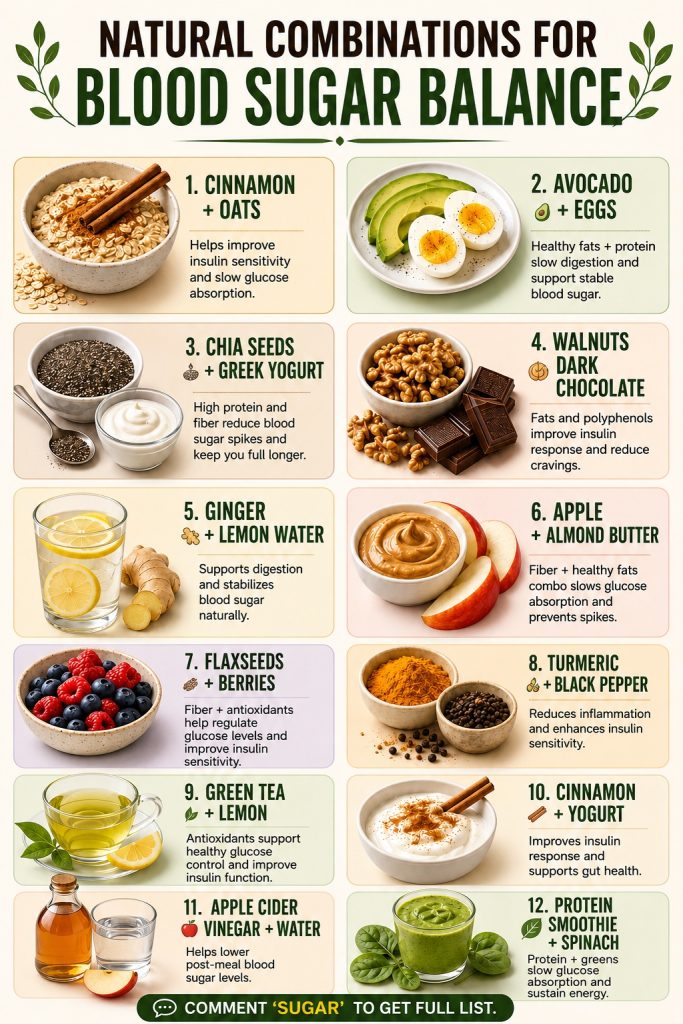
12 Food Pairings for Blood Sugar
Each pairing puts protein, fat or fibre alongside the carbohydrate. Figures are approximate. For reference, one carbohydrate serving in diabetes meal planning is counted as 15 g.
Breakfast and snacks
- 1. Oats with Greek yogurt, berries and cinnamon. 290 cal, 43 g carb, 22 g protein, 6 g fibre. The highest carbohydrate entry here, which is precisely why it needs the yogurt. Oats with water alone give you 5 g of protein against 27 g of carbohydrate. Adding yogurt roughly quadruples the protein.
- 2. Greek yogurt with chia and berries. 198 cal, 21 g carb, 20 g protein, 6 g fibre. Nearly one to one protein to carbohydrate, the best ratio on the list. Plain yogurt only, since flavoured versions carry two to three times the sugar for identical protein.
- 3. Cottage cheese with berries and flaxseed. 225 cal, 18 g carb, 22 g protein, 5 g fibre. More protein than carbohydrate. Cheapest protein per calorie here.
- 4. Apple with almond butter. 178 cal, 24 g carb, 4 g protein, 5 g fibre. The classic. Modest protein, but the fat and the apple’s own fibre do the work. Choose a butter made of almonds and maybe salt, nothing else.
- 5. Banana with peanut butter. 200 cal, 30 g carb, 5 g protein, 4 g fibre. Bananas get an undeserved reputation. Alone, a medium banana is 27 g of carbohydrate with little to slow it. With a spoon of peanut butter it becomes a reasonable snack. A slightly green banana contains more resistant starch than a very ripe one.
- 6. Whole grain crackers with hummus. 160 cal, 19 g carb, 4 g protein, 4 g fibre. Portable and unglamorous. Crackers alone are a fast carbohydrate; hummus adds fat, fibre and a little protein.
Meals
- 7. Eggs, avocado and whole grain toast. 304 cal, 19 g carb, 18 g protein, 5 g fibre. One slice of toast is 14 g of carbohydrate. Two eggs and a quarter avocado turn it into a balanced meal rather than a fast one.
- 8. Rice with beans. 273 cal, 51 g carb, 13 g protein, 13 g fibre. Highest carbohydrate on the list and also highest fibre, which is the entire point. Half a cup of black beans adds 7.5 g of fibre and 7.5 g of protein to rice that would otherwise arrive alone. Traditional cuisines paired these long before anyone measured glucose.
- 9. Potato with chicken and salad. 351 cal, 45 g carb, 33 g protein, 8 g fibre. Potatoes are not forbidden, they just should not arrive unaccompanied. Worth knowing that cooking potatoes and then cooling them forms resistant starch, which is digested more slowly even after reheating.
- 10. Spinach and protein smoothie. 245 cal, 24 g carb, 24 g protein, 7 g fibre. Blending is not juicing, the fibre stays. But the word protein on a smoothie means nothing on its own: juice, honey, two bananas and sweetened yogurt make a dessert. Yogurt, spinach, half a cup of berries, chia, water.
Two with a mechanism of their own
- 11. Salad with vinaigrette, eaten before the meal. 110 cal, 9 g carb, 3 g protein, 4 g fibre. This one does two things at once. It applies the food order principle, and the vinegar in the dressing has its own modest effect, covered below. The single highest value habit on this page.
- 12. Dark chocolate with walnuts. 270 cal, 12 g carb, 5 g protein, 3 g fibre. Included honestly as portion control rather than mechanism. Two squares with an ounce of walnuts is a defined end to a meal. Check the label, since high cocoa does not automatically mean low sugar.
For more options built around carbohydrate counts, see our guides to snacks that do not spike blood sugar and diabetes friendly breakfasts.
Two Add Ons With Real Data, and Four Without
Vinegar, taken with the meal
The dose is smaller than people assume. Two teaspoons, about 10 g, is enough, with studied amounts running from 10 to 28 g, meaning two teaspoons to two tablespoons. A meta analysis found meaningful reductions in glucose area under the curve.
Three details matter. Timing: the effect is strongest taken at mealtime rather than hours before. Form: liquid vinegar works, and commercial vinegar tablets have been shown not to reproduce the same effect. Delivery: a vinaigrette on your salad is easier on your teeth than drinking it, since regular acid exposure erodes enamel.
Vinegar can interact with insulin and some blood pressure medicines, and anyone with reflux, gastroparesis, kidney problems or low potassium should ask first.
A ten minute walk afterwards
A 2025 randomised crossover trial found a ten minute walk immediately after glucose intake lowered the peak to 164.3 mg/dL against 181.9 mg/dL without it. Participants chose their own pace, averaging a gentle 3.8 km/h. Immediately after eating beat longer walks taken later.
Ten minutes at a stroll. This is the most accessible intervention in the whole topic and it requires no equipment.
What does not have the evidence
Cinnamon, turmeric with black pepper, ginger and lemon water, and green tea all appear on lists like this. Use them freely, because they make food taste good without sugar, which is a genuine contribution. But none of them reliably lowers blood glucose at culinary doses, and the supplement trials are inconsistent.
Be more careful with the concentrated versions. High dose green tea extract and some curcumin products are recognised causes of drug induced liver injury, as we cover in green tea and liver health. The tea is not the capsule.
Building the Plate
- Half the plate: non starchy vegetables, eaten first
- A quarter: fish, chicken, eggs, tofu, beans, lentils or yogurt, eaten second
- A quarter: oats, whole grains, beans, fruit or a starchy vegetable, eaten last
- To drink: water or something unsweetened
Remember that nutritious foods still contain carbohydrate. Oats, fruit, yogurt, beans, milk, whole grain bread, sweet potato and smoothies all count, and it is total carbohydrate rather than the sugar line on a label that drives the glucose response. Our diabetes grocery list covers the shopping side.
Individual responses vary a great deal. Two people eating the identical meal can produce different curves depending on portion, medicines, activity, sleep, stress, illness and insulin sensitivity. Follow the monitoring plan your care team set, and never adjust insulin or medication based on an article.
Frequently Asked Questions
Does the order you eat food really affect blood sugar?
Substantially, and this is the most useful finding in the topic. Eating vegetables and protein before carbohydrate lowered glucose by roughly 29 percent at 30 minutes, 37 percent at 60 minutes and 17 percent at 120 minutes in adults with type 2 diabetes. In prediabetes, glucose peaks fell by more than 40 percent and the area under the curve by 38.8 percent. In gestational diabetes the two hour area under the curve was 73 percent lower. Same meal, same portions, only the sequence changed.
What is the best food pairing for blood sugar?
Salad with vinaigrette eaten before the rest of the meal, because it does two things at once: it applies the food order principle and the vinegar contributes its own modest effect. For a snack, Greek yogurt with chia and berries has the best ratio at 20 g of protein against 21 g of carbohydrate. The general rule is simply never to eat a carbohydrate alone.
How much vinegar lowers blood sugar and when should I take it?
Two teaspoons, around 10 g, is enough, with studied doses ranging from 10 to 28 g. Timing matters: the effect is strongest when taken with the meal rather than hours beforehand. Liquid vinegar works and commercial vinegar tablets have been shown not to reproduce the same effect. A vinaigrette is kinder to tooth enamel than drinking it. Vinegar can interact with insulin and some blood pressure medicines, so check first.
Does walking after meals lower blood sugar?
Yes, and very little is needed. A 2025 randomised crossover trial found a ten minute walk immediately after glucose intake lowered the peak to 164.3 mg/dL compared with 181.9 mg/dL without it. Participants walked at their own comfortable pace, averaging a gentle 3.8 km/h. Walking immediately after eating was more effective than longer walks taken later, which makes this one of the most practical options available.
Does cinnamon lower blood sugar?
Not reliably. Supplement trials have produced inconsistent results and culinary amounts are not established as lowering blood glucose. That said, cinnamon is genuinely worth using, because it adds sweetness and warmth to oats or yogurt without any sugar. Treat it as a way to avoid adding honey rather than as a treatment, and be cautious with concentrated capsules.
Are bananas bad for blood sugar?
Not when paired. A medium banana is about 27 g of carbohydrate with little to slow it down, which is why eating one alone can produce a noticeable rise. With a tablespoon of peanut butter it becomes a reasonable 200 calorie snack with fat and protein alongside. A slightly green banana also contains more resistant starch than a very ripe one, which digests more slowly.
Can I eat rice and potatoes with diabetes?
Yes, with company. Half a cup of black beans adds 7.5 g of fibre and 7.5 g of protein to rice, and the rice and beans pairing is a traditional combination long predating any glucose research. Potato with chicken and salad works the same way. One useful trick is that cooking potatoes or rice and then cooling them forms resistant starch, which is digested more slowly even after reheating.
How many carbohydrates should be in a snack?
In diabetes meal planning one carbohydrate serving is counted as 15 g, and many people aim for roughly one to two servings in a snack, though individual targets differ considerably. More useful than the number alone is what accompanies it. Apple with almond butter at 24 g of carbohydrate behaves differently from 24 g of carbohydrate from crackers alone, because of the fat, protein and fibre alongside it.
Do food pairings replace diabetes medication?
No. Pairing and food order change how quickly glucose rises after a meal, which is worth having, but they do not treat the underlying condition. Never adjust insulin or diabetes medicines based on an article. If your readings change after altering how you eat, that is a conversation with your care team rather than a reason to self adjust doses.
Why do two people react differently to the same meal?
Because postprandial glucose depends on far more than the food. Portion size, medicine and insulin timing, physical activity, sleep, stress, illness, gut microbiome and individual insulin sensitivity all shift the response. This is why general food lists can only ever be a starting point, and why testing your own response, if your care team has you monitoring, tells you more than any article can.
Final Thoughts on Food Pairings for Blood Sugar
The twelve food pairings for blood sugar above all work on the same principle: never let a carbohydrate arrive alone. Protein, fat and fibre slow it down, and the numbers on each pairing let you see the balance rather than guess at it.
But the ranking is clear. Food order beats pairing, and it is free. Vegetables first, protein second, carbohydrate last, for reductions of 29 to 37 percent in the trials. Add two teaspoons of vinegar with the meal and ten minutes of walking after it, and you have three changes that cost nothing and require no different shopping.
Leave the cinnamon and turmeric where they belong, in the food for flavour. And keep the whole thing in proportion: these change how fast glucose rises, not whether you have diabetes. Your medicines, monitoring and care team remain the treatment.
Related reading: snacks that do not spike blood sugar | diabetes friendly breakfast ideas | best foods for people with diabetes | diabetes grocery list
Medical Disclaimer
This article is for general education and is not a personalised diabetes treatment plan. Carbohydrate, protein and fibre figures are estimates that vary with brand and portion. Food pairings and meal sequencing cannot replace medication, insulin, glucose monitoring or professional care, and you should never adjust doses based on an article. Seek individual advice if you use insulin or medicines that can cause low blood glucose, have type 1 diabetes, are pregnant or breastfeeding, have kidney, liver or heart disease, have gastroparesis, experience frequent hypoglycaemia, follow a prescribed restriction, or have a history of disordered eating. See our medical disclaimer, editorial policy and fact checking policy.
Cross checked against randomised trials of food order in type 2 diabetes, prediabetes and gestational diabetes, continuous glucose monitoring data published in Diabetes Care, a meta analysis of vinegar and postprandial glucose, a 2025 randomised crossover trial of post meal walking, American Diabetes Association plate and carbohydrate counting guidance, and USDA FoodData Central. Last updated July 2026.
Edited by Dr. Obeydur Rahman, MBBS, MD in Medicine.