
Every list of signs of nutrient deficiencies tells you to get tested and then stops. That is the unhelpful part, because the test you need is different for each symptom, and asking for the wrong one is how people get told they are fine when they are not. This guide names the specific blood test for each of the eight signs below.
It also tells you which of these signs genuinely point to a deficiency and which are mostly internet myth. Cracked heels and sugar cravings are on almost every chart and neither is a reliable indicator. Meanwhile the single most useful fact about iron deficiency is one most articles never mention: your haemoglobin can be perfectly normal while your iron stores are empty.
Medical Disclaimer: This article is educational and does not diagnose anything. Symptoms alone cannot confirm a nutrient deficiency, and self treating with supplements can cause harm. Speak to a qualified healthcare professional before taking iron, iodine, vitamin A, zinc or any other supplement. Read our medical disclaimer, editorial policy and fact checking policy.
Why Signs of Nutrient Deficiencies Are So Easy to Misread
Almost every symptom on this page is produced by dozens of different things. Fatigue is the clearest example: it can come from iron deficiency, low B12, an underactive thyroid, depression, sleep apnoea, diabetes, infection, medication, or simply not sleeping enough. Matching a symptom to a nutrient on a chart is guessing.
Blood tests exist precisely because symptoms overlap. The useful question is not what does this symptom mean, but which test rules the common causes in or out. That is what the sections below give you.
The 8 Signs of Nutrient Deficiencies, and the Test for Each
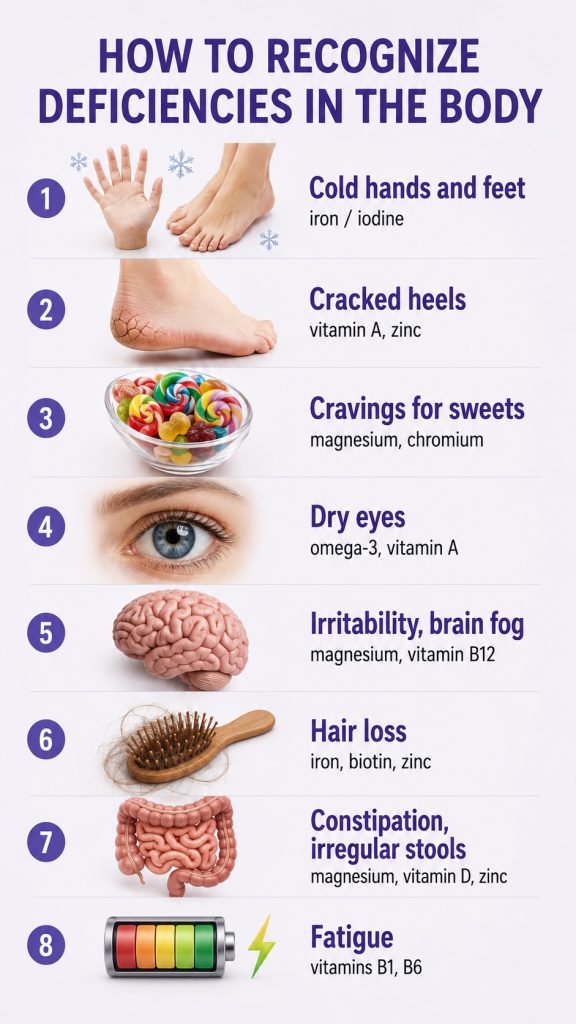
1. Cold Hands and Feet
Ask for: full blood count plus ferritin, and TSH.
Iron deficiency reduces haemoglobin, which carries oxygen, and can make temperature regulation harder alongside fatigue, weakness and pallor. An underactive thyroid does something similar through a different route, which is why TSH belongs on the same request.
Cold extremities on their own are far more often explained by cold weather, low body weight, anxiety or Raynaud phenomenon, where fingers turn white then blue in the cold. Iodine matters for thyroid hormone production, but cold hands are nowhere near enough reason to take iodine, and excess iodine can itself disturb thyroid function.
See a doctor promptly if fingers change colour, or you also have breathlessness, dizziness, numbness or unexplained weight change.
2. Dry or Cracked Heels
Ask for: usually nothing. Consider HbA1c and TSH if there are other clues.
This is the weakest entry on the list and it is worth saying plainly. Cracked heels are a mechanical and skin problem, not a vitamin problem. Pressure, friction, open backed shoes, standing all day, hot showers, dry air, eczema and simple ageing of the skin explain almost all of them. There is no good evidence that they reliably indicate a zinc or vitamin A shortfall.
- What actually works: a thick fragrance free emollient, ideally with urea, applied to damp skin
- Change: to closed back supportive shoes, and shorten hot showers
- Get seen if: cracks are deep, painful, bleeding or infected
Important: if you have diabetes, foot cracks are not a cosmetic issue. Reduced sensation and slower healing make infection a genuine risk, so have them looked at rather than treated at home.
3. Frequent Cravings for Sweets
Ask for: nothing nutrient related. HbA1c only if you also have thirst, frequent urination or weight loss.
The claim that sugar cravings mean low magnesium or chromium is one of the most repeated myths in this space, and it is not supported. The recognised symptoms of magnesium deficiency are fatigue, weakness, nausea, loss of appetite, muscle cramps, numbness and abnormal heart rhythm. Sugar craving is not among them. Chromium deficiency has essentially not been documented in healthy people, and no defined deficiency symptoms exist.
What actually drives cravings is more ordinary: long gaps between meals, restrictive dieting, poor sleep, stress, and meals low in protein and fibre. Our guide to foods that support steady blood sugar covers the pattern that reduces them.
Do not take chromium for this. It can interact with diabetes medicines and contribute to low blood glucose.
4. Dry Eyes or Trouble Seeing in Dim Light
Ask for: an eye examination first. Serum retinol only if you have a malabsorption condition or bariatric surgery history.
These two symptoms deserve separating, because they carry very different weight.
- Dry eyes alone: almost always screen use, reduced blinking, contact lenses, dry air, ageing, eyelid gland dysfunction or medication. Vitamin A is far down the list
- Genuine night blindness: difficulty adapting to darkness is the classic early sign of vitamin A deficiency and is worth taking seriously, particularly with malabsorption, coeliac disease, cystic fibrosis or after bariatric surgery
One testing caveat matters here. Serum retinol stays normal until liver stores are substantially depleted, so a normal result does not fully exclude a problem. That is a conversation for a doctor rather than a reason to self supplement.
Never take high dose vitamin A speculatively. Preformed vitamin A is toxic in excess and causes birth defects, so it is especially dangerous in pregnancy. Beta carotene from food does not carry this risk, because your body stops converting it once it has enough.
5. Brain Fog, Poor Memory or Irritability
Ask for: vitamin B12, folate, TSH, full blood count and ferritin. If B12 is borderline, ask about methylmalonic acid.
This is the sign where a deficiency is most worth ruling out, because B12 deficiency can damage nerves permanently if it is missed. Crucially, neurological symptoms can appear before any anaemia shows up, so a normal full blood count does not settle it.
The NIH Office of Dietary Supplements notes that deficiency is common with age. Estimates run from about 10 to 19 percent in adults over 60, and rise considerably higher when methylmalonic acid is used as the marker rather than serum B12 alone. That is because serum B12 sits in a wide grey zone, and methylmalonic acid rises when B12 is functionally low even if the standard result looks acceptable.
Highest risk: vegans not using fortified foods or a supplement, adults over 60, anyone on metformin or long term acid reducing medication, and people with coeliac disease, Crohn disease or previous stomach or bowel surgery.
6. Unexplained Hair Loss
Ask for: ferritin, TSH, full blood count. Zinc only if there is a specific reason.
Ferritin is the test that matters most here, and it is the one most often skipped. Diffuse shedding across the whole scalp, called telogen effluvium, is commonly linked to low iron stores, thyroid disease, recent illness, rapid weight loss, childbirth or a major stressor about three months earlier. That delay is why the cause often feels invisible.
- Diffuse thinning all over: usually telogen effluvium, and usually reversible once the cause is fixed
- Round bald patches: suggests alopecia areata, an autoimmune condition, not a nutrient issue
- Receding hairline or crown thinning: pattern hair loss, which is genetic and not corrected by supplements
Skip the biotin. Dermatology guidance is to take biotin, iron or zinc only when testing has confirmed a deficiency. Biotin has a further problem: high doses interfere with laboratory immunoassays and can produce falsely abnormal thyroid and troponin results, which has led to real misdiagnoses. Stop biotin several days before blood tests and tell the person taking the sample.
7. Constipation or Irregular Bowel Movements
Ask for: TSH, full blood count, calcium, and coeliac screening if it is long standing.
Constipation is not a sign of low vitamin D, magnesium or zinc, despite how often that is claimed. It is usually about fibre, fluid, movement and routine, and sometimes a side effect of medicines including opioids, iron tablets and some antidepressants.
Most adults need roughly 22 to 34 g of fibre a day and most get about 15 g. Increase it gradually over two or three weeks with fluid alongside, because a sudden jump usually causes bloating. The NIDDK guidance on constipation covers the practical steps.
Seek care promptly for: blood in the stool, constant abdominal pain, vomiting, inability to pass gas, unexplained weight loss, or a sudden lasting change in bowel habit. Those need assessment rather than more fibre.
8. Persistent Fatigue or Weakness
Ask for: full blood count, ferritin, B12, folate, TSH, HbA1c, and vitamin D.
Fatigue is the most common symptom on this list and the least specific, which is exactly why a broad first round of tests is more sensible than guessing at one nutrient. That panel covers anaemia, iron stores, the two vitamin deficiencies that cause it, thyroid function and blood glucose in a single blood draw.
- Iron deficiency: tiredness, reduced exercise capacity, poor concentration, sometimes restless legs
- B12 deficiency: fatigue plus numbness, tingling, balance problems or memory change
- Vitamin D: below 30 nmol/L is deficient and 30 to 50 nmol/L is inadequate for bone health
- Magnesium: real deficiency causes fatigue, cramps and appetite loss, but serum magnesium is a poor measure since most is inside cells
Do not reach for a B complex. It will not fix fatigue caused by thyroid disease, sleep apnoea, depression or anaemia, and it delays finding out which one you have.
The Test to Ask For, at a Glance
| Sign | Test worth requesting | Most likely cause |
|---|---|---|
| Cold hands and feet | Full blood count, ferritin, TSH | Cold, anxiety, Raynaud |
| Cracked heels | Usually none | Friction and dry skin |
| Sugar cravings | None nutrient related | Meal timing and sleep |
| Dry eyes | Eye examination | Screens and dry air |
| Night vision trouble | Serum retinol if at risk | Needs assessment |
| Brain fog | B12, folate, TSH, ferritin | Sleep, stress, thyroid |
| Hair loss | Ferritin, TSH, full blood count | Telogen effluvium |
| Constipation | TSH, calcium, coeliac screen | Fibre, fluid, medicines |
| Fatigue | The full panel above | Many, so test broadly |
The Iron Trap: Normal Haemoglobin Does Not Mean Normal Iron
This single point explains more missed diagnoses than anything else on this page.
Your body empties its iron stores long before your haemoglobin falls. That state, low ferritin with a normal full blood count, is called iron deficiency without anaemia, and it can cause fatigue, hair shedding and restless legs while every standard result looks fine. If a full blood count came back normal and nobody checked ferritin, iron deficiency has not been excluded.
The threshold matters too. The old cutoff of 15 micrograms per litre misses most cases. As clinical guidance on iron deficiency evaluation sets out, raising the cutoff to 30 lifts sensitivity from 25 percent to 92 percent while specificity stays at 98 percent. Many clinicians now treat ferritin under 30 as depleted stores when there is no inflammation.
One catch: ferritin rises during infection, inflammation and liver disease, so it can look reassuring when stores are actually low. If you have an inflammatory condition, ask whether CRP should be checked alongside it.
Two More Testing Traps
- Folic acid can mask B12 deficiency. Folate corrects the anaemia while nerve damage carries on silently underneath. This is why B12 and folate are tested together, and why taking a high dose folic acid supplement without checking B12 first is a genuinely bad idea
- Serum zinc is unreliable. It falls with infection, inflammation and even a recent meal, and it does not track body stores well. Zinc deficiency is usually judged on diet and risk factors rather than a single number
Who Is Genuinely at Higher Risk
- Heavy menstrual bleeding: the most common cause of iron deficiency in women of reproductive age
- Vegans and mostly plant based eaters: B12 needs a supplement or fortified foods, since it is not reliably present in plants
- Adults over 60: stomach acid falls with age, which reduces B12 absorption from food
- Coeliac disease, Crohn disease, or bariatric surgery: absorption is directly affected
- Long term metformin or acid reducing medicines: both lower B12 over time
- Pregnancy, and alcohol use disorder: higher requirements and poorer absorption respectively
- Limited or unpredictable food access
If none of these apply to you and your diet is varied, a deficiency is a less likely explanation than sleep, stress or an untreated medical condition. Our guides to everyday foods and what they actually provide and foods that support healthy aging cover the food side.
Before You Buy Any Supplement
Supplements taken on a hunch can cause real harm, and several of the ones marketed for these symptoms are the riskiest.
- Iron: toxic in excess, dangerous in overdose, and a leading cause of poisoning in young children. Never take it without a confirmed low ferritin
- Vitamin A: preformed vitamin A causes liver damage and birth defects at high doses
- Zinc: long term high doses block copper absorption and can cause a separate deficiency
- Iodine: too much disturbs thyroid function, the very thing people take it to help
- Biotin: distorts common blood test results, including thyroid and cardiac markers
Tell your doctor about everything you already take. Supplements are a common and frequently missed explanation for both odd symptoms and odd test results.
Frequently Asked Questions
What are the most reliable signs of nutrient deficiencies?
Fatigue with breathlessness or pallor, numbness or tingling in the hands and feet, diffuse hair shedding, and difficulty seeing in dim light are the signs most worth investigating. Cracked heels and sugar cravings appear on most charts but are not reliable indicators. No symptom confirms a deficiency on its own, which is why the blood test matters more than the symptom.
Which blood test should I ask for if I am always tired?
A reasonable first panel is full blood count, ferritin, vitamin B12, folate, TSH, HbA1c and vitamin D. That covers anaemia, iron stores, the two vitamin deficiencies that commonly cause fatigue, thyroid function and blood glucose in one blood draw, rather than guessing at a single nutrient.
Can I be iron deficient if my haemoglobin is normal?
Yes, and this is commonly missed. Iron stores empty before haemoglobin falls, a state called iron deficiency without anaemia. It can cause fatigue, hair shedding and restless legs while a full blood count looks completely normal. Ferritin is the test that detects it, so a normal blood count alone does not rule iron deficiency out.
What ferritin level counts as low?
Practice is moving toward treating ferritin below 30 micrograms per litre as depleted iron stores when inflammation is absent. Raising the cutoff from 15 to 30 increases sensitivity from about 25 percent to 92 percent while specificity remains around 98 percent. Ferritin rises with infection, inflammation and liver disease, so it can read falsely reassuring.
Do cracked heels mean a vitamin deficiency?
Almost never. Cracked heels are caused by pressure, friction, open backed footwear, standing for long periods, hot showers, dry air and ageing skin. A thick fragrance free emollient and supportive closed shoes address them. If you have diabetes, deep cracks need medical attention because of infection risk.
Do sugar cravings mean low magnesium?
No. The recognised symptoms of magnesium deficiency are fatigue, weakness, nausea, appetite loss, muscle cramps, numbness and abnormal heart rhythm. Sugar craving is not one of them, and chromium deficiency has not been documented in healthy people. Cravings usually reflect long gaps between meals, poor sleep, restrictive dieting or meals low in protein and fibre.
How is vitamin B12 deficiency confirmed?
Serum B12 is the starting test, but it has a wide grey zone. If the result is borderline, methylmalonic acid or homocysteine can show whether B12 is functionally low. This matters because nerve damage from B12 deficiency can occur before anaemia appears, so a normal full blood count does not exclude it.
Why should I not take folic acid before checking B12?
Folic acid can correct the anaemia caused by B12 deficiency while the neurological damage continues unnoticed. This masking effect is why B12 and folate are tested together, and why taking a high dose folic acid supplement without knowing your B12 status carries a real risk.
Should I take biotin for hair loss?
Not unless testing shows a deficiency, which is rare. Dermatology guidance is to supplement iron, zinc or biotin only when confirmed. Biotin also interferes with many laboratory immunoassays and can produce falsely abnormal thyroid and cardiac results, so stop it several days before blood tests and tell whoever takes the sample.
Who is most at risk of nutrient deficiencies?
People with heavy menstrual bleeding, vegans without fortified foods or a B12 supplement, adults over 60, people with coeliac or Crohn disease or previous bariatric surgery, those on long term metformin or acid reducing medicines, people during pregnancy, and anyone with limited food access. If none apply and your diet is varied, sleep, stress or an untreated condition is a more likely explanation.
Related reading: low iron is one of the most common gaps here, so see our 12 iron rich vegetables ranked by iron content and the smoothies that pair plant iron with vitamin C.
Final Thoughts
The honest summary of these signs of nutrient deficiencies is that they are prompts to investigate, not answers. Two of the eight, cracked heels and sugar cravings, are mostly myth. Three of them, brain fog, hair loss and fatigue, genuinely warrant a blood test. And the rest sit in between, worth mentioning to a doctor if they persist.
If you take one thing away, make it this: ask for ferritin, not just a full blood count. Iron stores empty long before haemoglobin does, and that gap is where a great many unexplained tiredness and hair shedding cases are hiding. Get the number, then decide. Guessing with supplements risks treating the wrong problem while the real one goes unfound.
Edited by Dr. Obeydur Rahman, MBBS, MD in Medicine.


Pingback: Body Pain: When to See a Doctor and When to Wait