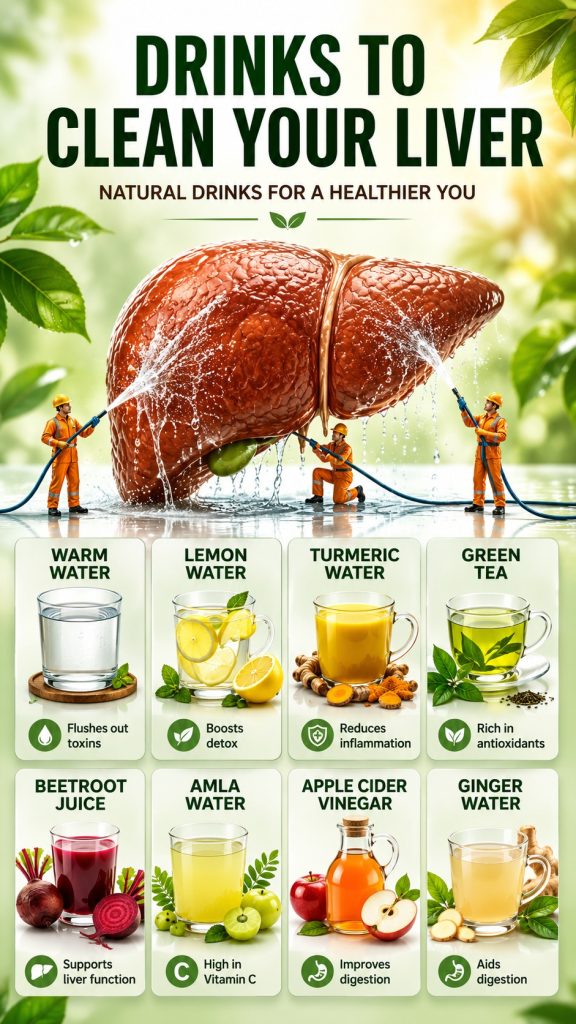
Search for drinks for liver health and you will be told that lemon water flushes toxins and that a turmeric latte repairs your liver. Neither is true. Your liver is the organ that does the detoxifying, and it does not need a beverage to help it. What follows grades all eight popular drinks by what the human evidence actually shows, and it will surprise you: the one with real trial data behind it is ginger, the one that carries a documented risk of liver injury is turmeric, and the drink with the best evidence of all is not on the list.
None of these will remove liver fat or reverse scarring on their own. Their honest value is hydration, flavour, and taking the place of something sweetened. That is worth having. It is just not a cleanse.
Medical Disclaimer: This article is educational and is not medical advice. No drink or supplement can diagnose, cleanse or treat liver disease. Speak to a qualified professional before using herbal products, especially with fatty liver disease, hepatitis, cirrhosis, diabetes or kidney disease. Read our medical disclaimer, editorial policy and fact checking policy.
What Drinks for Liver Health Can and Cannot Do
Two things are worth fixing in your head before you read the list.
First, almost every positive study on these ingredients used a concentrated capsule, not the drink. A ginger trial that lowered liver enzymes used 2,000 mg of ginger powder a day. Two slices of ginger in hot water deliver a small fraction of that. The same gap applies to turmeric, green tea and amla. When a headline says an ingredient helped the liver, check whether anyone tested it as a drink.
Second, the dose that changes liver fat is measured in body weight, not millilitres. The NIDDK guidance for fatty liver disease puts it at 3 to 5 percent of body weight to reduce liver fat and 7 to 10 percent to reduce inflammation. No drink moves that number.
1. Plain Water
Water has no direct effect on the liver, and drinking extra does not speed anything up. Its value is entirely in what it replaces. A 500 ml bottle of regular soft drink carries around 53 g of sugar and 210 kcal. Swapping two of those a day removes roughly 420 kcal and 106 g of sugar, and sugary drinks are the beverage most clearly linked to liver fat.
- Evidence for the drink: none specific to the liver
- Evidence for the swap: strong, and the single most useful change on this page
- Important caution: people with cirrhosis, heart failure, advanced kidney disease or a prescribed fluid restriction should not increase fluids without medical advice
2. Lemon Water
Lemon water does not flush toxins, dissolve liver fat or repair liver tissue. There is no human trial suggesting otherwise. The juice of half a lemon provides about 6 kcal and roughly 9 mg of vitamin C, around 10 percent of a day’s requirement, which is pleasant but not medicinal.
It earns a place only because flavoured water is easier to drink than plain water, and that helps the swap above actually happen.
- How to make it: one or two slices, or a teaspoon of juice, in a glass of water, with no added sugar or honey
- Protect your teeth: citrus is acidic, so drink it with a meal, rinse with plain water afterwards, and wait 30 minutes before brushing
- Skip it if: you have reflux, mouth ulcers or sensitive teeth
3. Turmeric Drink
This is the one to read carefully, because turmeric is usually sold as a liver protector and it is the ingredient on this list most clearly associated with liver harm.
The Drug Induced Liver Injury Network published ten cases of turmeric associated liver injury, and genetic testing found something striking: seven of the ten carried the immune gene variant HLA-B*35:01, an allele present in only about 6 to 7 percent of the general population. That points to a susceptible minority rather than a risk for everyone, but you have no way of knowing in advance which group you are in. The NIH LiverTox database entry for turmeric sets out the full picture.
Dose is what separates the drink from the danger. A quarter teaspoon of turmeric powder in warm milk delivers roughly 15 to 25 mg of curcumin. A supplement capsule delivers 500 to 2,000 mg. Worse, many are formulated with piperine from black pepper, which can raise curcumin absorption up to twentyfold, and nearly all the reported injuries involved these enhanced products.
- The drink: a quarter teaspoon in warm milk or an unsweetened plant drink, stirred as it will not dissolve, is a normal culinary amount
- The risk: high dose curcumin capsules, particularly those marketed as highly absorbable or combined with piperine
- Stop and seek help if: you develop jaundice, dark urine, unusual fatigue, nausea or loss of appetite
4. Green Tea
Brewed green tea is fine for most adults and makes a good unsweetened swap. A cup carries roughly 25 to 45 mg of caffeine and somewhere around 50 to 100 mg of EGCG, the main catechin.
Green tea extract is a different product with a different safety record. It is a well documented cause of liver injury, with cases clustering at doses at or above roughly 800 mg of EGCG a day, usually after two weeks or more of daily use. Reaching that from brewed tea is difficult. Reaching it from a capsule takes one swallow. Our full guide to green tea and liver health covers who should avoid it.
- Drink it: unsweetened, steeped 2 to 3 minutes, without syrup or condensed milk
- Do not assume: that a green tea extract is protective because the tea is harmless. The opposite is closer to the truth
5. Beetroot Juice
Beetroot juice has genuinely good trial evidence, just not for the liver. A 2024 meta analysis of 11 trials in 349 people with high blood pressure found systolic pressure fell by 5.31 mmHg on beetroot juice, at doses of 200 to 800 mg of nitrate a day. That is a real cardiovascular finding, and since fatty liver travels with high blood pressure it is not irrelevant. But no human trial shows beetroot juice changing liver fat.
- Per 250 ml: around 100 kcal and 23 g of carbohydrate, so it is not a free drink
- Better still: blend rather than juice and keep the pulp, since juicing removes the fibre
- Harmless surprise: beetroot can turn urine or stool pink, which is called beeturia and is not blood
- Ask first if: you form kidney stones, as beetroot is high in oxalate, or you manage potassium or carbohydrate intake medically
6. Amla Drink
Amla, or Indian gooseberry, is a legitimate nutritional standout. Fresh amla carries roughly 600 mg of vitamin C per 100 g against about 53 mg in an orange, and its vitamin C is unusually heat stable because tannins protect it during processing.
A meta analysis of 5 randomised trials found amla lowered C reactive protein, fasting glucose, LDL cholesterol, total cholesterol and triglycerides while raising HDL. One 12 week trial in 98 people with high cholesterol used 500 mg of extract twice daily. Those are metabolic markers that matter for fatty liver, so amla is more interesting than most items here. The honest caveat is that the trials used extracts, liver outcomes were not the endpoint, and the liver specific work is still in animals.
- Check the bottle for: added sugar, added salt, vague herbal blends and very high supplemental vitamin doses
- Serving: dilute the juice with water to soften the tartness rather than sweetening it
7. Diluted Apple Cider Vinegar
Apple cider vinegar has been studied for blood glucose and lipids, and reviews that formally graded the evidence concluded it is insufficient and of low quality. Nothing supports it as a liver treatment.
The safety notes are more concrete than the benefits. Acetic acid erodes tooth enamel. Vinegar is the acid most often responsible for throat burns, and oesophageal injury has been documented from vinegar tablets lodging in the gullet. Long term heavy intake has been linked to low potassium.
- Never neat: one teaspoon, about 5 ml, in a large glass of water, and not necessarily every day
- Protect enamel: use a straw, rinse with water, and do not brush for 30 minutes
- Check with a professional if: you have diabetes, gastroparesis, reflux, chronic kidney disease or low potassium, or take regular medicines
8. Ginger Water
Ginger is the quiet winner of this list. A meta analysis of randomised trials in fatty liver disease found ginger significantly reduced ALT, a liver enzyme. In one 12 week double blind trial, 2,000 mg of ginger powder a day lowered ALT, GGT, inflammatory markers, insulin resistance and steatosis grade compared with placebo. Trial doses ranged from 1,000 to 2,000 mg daily.
Now the honest part. Every one of those trials used ginger powder in capsules. Two or three slices steeped in hot water deliver nowhere near 2 g of ginger solids. Ginger water is a pleasant unsweetened drink with decent evidence for nausea, and the fatty liver findings belong to a supplement you would need to discuss with your doctor, not to your mug.
- How to make it: two or three thin slices of fresh ginger steeped in hot water for 5 to 10 minutes
- Possible effects: heartburn, stomach discomfort or mouth irritation
- Concentrated supplements: can interact with blood thinners, so raise them with your doctor first
The Drink With the Best Evidence Is Not on This List
If you rank every beverage by the weight of liver research behind it, coffee wins, and it is not close.
Across pooled studies, 3 or more cups a day is linked to lower rates of fatty liver disease than fewer than 2, and the association is stronger for fibrosis, meaning scarring, than for liver fat. In people who already have fatty liver disease, 2 or more cups a day tracks with a lower risk of advanced fibrosis. Decaffeinated coffee shows a similar pattern, which suggests the caffeine is not the active part and the polyphenols are.
Two caveats keep this honest. The evidence is observational, so it shows association rather than proof. And unfiltered coffee, meaning cafetiere and espresso, retains cafestol and kahweol, which raise LDL cholesterol. Full detail sits in our guide to coffee and liver health.
Quick Comparison
| Drink | What the evidence supports | Strength | Main caution |
|---|---|---|---|
| Coffee | Lower fibrosis and fatty liver risk | Best available, but observational | Unfiltered raises LDL |
| Ginger water | Lower ALT, but only at capsule doses | Trial evidence for supplements | Reflux, blood thinners |
| Amla drink | Better cholesterol, glucose and CRP | Trial evidence for extracts | Added sugar in bottles |
| Beetroot juice | Lower blood pressure, not liver fat | Good, for a different outcome | Oxalate, 100 kcal per glass |
| Green tea | A sound unsweetened swap | Weak for liver outcomes | Extracts cause liver injury |
| Plain water | Replacing sugary drinks | Strong for the swap only | Fluid limits in cirrhosis |
| Lemon water | Makes water easier to drink | None for the liver | Tooth enamel |
| Apple cider vinegar | Little that is reliable | Insufficient and low quality | Enamel, throat, potassium |
| Turmeric drink | Culinary use only | Unclear, and a known risk | Capsules linked to liver injury |
What Matters More Than Drinks for Liver Health
- Weight change: 3 to 5 percent of body weight reduces liver fat and 7 to 10 percent reduces inflammation. European guidelines set the fibrosis target at 10 percent
- Losing it gradually: aim for roughly 0.5 to 1 kg a week, because rapid loss and crash dieting can make liver disease worse
- Exercise: about 150 minutes a week of moderate activity lowers liver fat even when your weight does not change
- Cutting sugary drinks: better evidence than adding any drink on this page
- Managing glucose, cholesterol and blood pressure: these travel with fatty liver and treating them protects the liver
For the eating pattern that goes with this, see our fatty liver diet guide, the best foods for liver health, or a ready made 7 day fatty liver meal plan.
Alcohol Is the Drink That Matters Most
Removing one drink does more than adding eight. Research links even low to moderate drinking with more liver scarring in people who already have fatty liver disease. Above 20 g of alcohol a day for women or 30 g for men, roughly two small drinks, the condition is reclassified entirely, as metabolic and alcohol associated liver disease.
Anyone with cirrhosis or alcohol associated liver disease is usually advised to avoid alcohol completely. Our list of foods and drinks to avoid with fatty liver has the detail.
Be Careful With Liver Detox Supplements
Cleansing teas, herbal powders and multi ingredient weight loss products are not safe simply because they are labelled natural. Herbal and dietary supplements are now a leading cause of drug induced liver injury in several countries, and the two clearest culprits, turmeric with piperine and green tea extract, both appear on this very list in their concentrated forms.
Tell your doctor about everything you take. Supplements are a common and frequently missed cause of abnormal liver tests. Our guide to lifestyle habits that support liver health covers what is worth your effort instead.
When to Seek Medical Care
Arrange an assessment for any of the following:
- Yellowing of the skin or eyes, or dark urine
- Persistent pain in the upper right abdomen
- Swelling of the abdomen or legs
- Unexplained weight loss or severe itching
- Easy bruising or bleeding, or persistent nausea
- Confusion or unusual drowsiness, which needs urgent attention
Cirrhosis often causes no symptoms until damage is substantial, which is why risk factors matter more than symptom checklists. If you have type 2 diabetes, obesity or previously raised liver enzymes, ask about liver assessment even if you feel well. See signs of fatty liver disease you should not ignore.
Frequently Asked Questions
What are the best drinks for liver health?
Coffee has by far the strongest evidence, with 3 or more cups a day linked to lower rates of fatty liver and fibrosis. Among the eight drinks here, plain water is the most useful because it replaces sugary drinks, and ginger has the best trial data although only at capsule doses. Lemon water and apple cider vinegar have essentially no liver evidence.
Can any drink detox or flush the liver?
No. Your liver is the organ that performs detoxification, and no beverage speeds it up, flushes it or cleanses it. Drinks sold as liver cleanses have no good evidence behind them, and some concentrated herbal products have caused liver injury.
Is lemon water good for the liver?
There is no human evidence that lemon water affects the liver. It does not dissolve liver fat or remove toxins. Its only real benefit is making plain water more appealing so you drink less of something sweetened. Because citrus is acidic, rinse with water afterwards and avoid brushing your teeth for 30 minutes.
Does turmeric milk help fatty liver?
Evidence that turmeric improves fatty liver is unclear, and turmeric carries a documented risk in the other direction. The Drug Induced Liver Injury Network reported ten cases of turmeric associated liver injury, and seven of the ten carried the HLA-B*35:01 gene variant. A quarter teaspoon in milk is a normal culinary amount. High dose curcumin capsules, especially those combined with piperine from black pepper, are where the reported harm occurred.
Is ginger water good for fatty liver?
Ginger has the best trial evidence of anything on this list, but the trials used capsules rather than tea. A meta analysis found ginger significantly lowered ALT, and a 12 week trial using 2,000 mg of ginger powder daily improved ALT, GGT and steatosis grade. A few slices steeped in water deliver far less than that, so enjoy ginger water as a drink and discuss supplements with your doctor.
Does apple cider vinegar help the liver?
No reliable evidence supports it for liver disease, and formal reviews of its metabolic effects rated the evidence insufficient and low quality. It also carries real cautions: enamel erosion, throat burns and low potassium with long term heavy use. If you use it, dilute one teaspoon in a large glass of water and never drink it neat.
Is green tea safe if I have fatty liver?
Brewed green tea is fine for most adults. Green tea extract is not equivalent and is a well documented cause of liver injury, with cases clustering at or above roughly 800 mg of EGCG a day after two weeks or more of use. Drink the tea and avoid the capsules unless your doctor advises otherwise.
Is coffee better than tea for the liver?
For liver outcomes specifically, yes. Coffee has substantially more supporting research, with benefit appearing from 1 cup and the strongest signal at 3 or more cups a day. Decaffeinated coffee shows a similar pattern, which suggests polyphenols rather than caffeine are responsible. The evidence is observational, so it shows association rather than proof.
How much water should I drink for liver health?
There is no liver specific target. Drink to thirst and adjust for activity, climate and body size. Drinking extra water does not cleanse the liver faster. If you have cirrhosis, heart failure, advanced kidney disease or a prescribed fluid restriction, do not increase your intake without medical advice.
Are liver detox teas and cleanses safe?
Not reliably. Herbal and dietary supplements are now a leading cause of drug induced liver injury, and being labelled natural means nothing about safety. Tell your doctor about any supplement you take, since these are a common and frequently missed cause of abnormal liver blood tests.
Final Thoughts
The useful way to think about drinks for liver health is as a swap rather than a treatment. Water, lemon water, green tea, beetroot juice, amla and ginger water are all reasonable things to drink, and each one you choose instead of a sweetened beverage is a small win. Coffee is the only drink with substantial liver research behind it. Ginger has the best trial data, though at capsule doses rather than tea. Turmeric and green tea deserve respect in their concentrated forms, because that is where liver injury has actually been reported.
What no glass can do is replace the things that genuinely change a liver: losing 3 to 10 percent of your body weight if you carry extra, moving for 150 minutes a week, cutting sugary drinks and alcohol, and getting assessed if you have risk factors. Start with the swap you will keep, and let the rest follow.
Edited by Dr. Obeydur Rahman, MBBS, MD in Medicine.